
A funding round can transform a startup’s balance sheet overnight. What it cannot do is transform the organisation at the same speed. That responsibility lies with the organisation’s leaders.
So, the money arrives, there’s a scramble to activate the growth plan and get the hiring process started. Employees who were strong individual contributors in the small team are asked to manage others. The founder who once approved every tiny decision, from the colour of the logo to new hires, must learn to delegate, take on new responsibilities, and let go of previous systems without losing sight of the company being built. What worked for 20 people begins to strain at 50. By 100, the very evident weaknesses in leadership, delegation, and organisational design become harder and more expensive to correct.
Follow THE FUTURE on LinkedIn, Facebook, Instagram, X and Telegram
Over the last few years, Europe’s scale-up problem has been discussed primarily in terms of capital and (the lack of) access to technical talent, as well as the growing stringency of regulatory mechanisms. Though all three of these constraints are very real, they do not provide the full picture of the struggles of start-ups. The European Commission’s 2025 review identifies not only shortages in specialist and technological skills, but a “deficit in managerial and soft skills” that it highlights as key to leading successful startups and scale-ups. Europe’s startups do not only need more engineers and investment, but they also need the people capable of converting this talent and capital into coordinated execution.
Investors are witnessing the same problem. A 2024 report from the European Investment Fund and EIT Health, drawing on the 2023 EIF survey of 472 venture-capital fund managers, found that leadership and people management were the most frequently identified missing skills in portfolio-company management teams. Half of health-focused investors and 43% of biotech-focused investors placed them among the three most important capabilities missing from the companies they backed. Though the study is limited to the health and biotech sector, the gap it exposes is cross-sectoral.
The cost of not placing these skills as central within a start-up’s strategy falls greatly on current employees. A 2024 Swedish study of 10,908 new-venture employees found that organisational scaling was positively associated with burnout and negatively associated with job satisfaction. Managerial experience and previous new-venture exposure appeared to moderate the effect, but for employees without either, the pressure of a company changing placed great strain on their shoulders. Adding headcount to an organisation does not, by itself, prevent this if the roles are poorly addressed.
Cyprus combines a small domestic labour market with a widely reported shortage of skilled staff. According to the European Commission’s 2026 Cyprus Country Report, 89% of Cypriot firms identified the availability of skilled staff as a long-term investment obstacle, compared with 79% across the EU. The share of finance-constrained firms fell from 16.7% in 2024 to 6.8% in 2025. Finance does remain a structural challenge for startups seeking venture capital, especially from local opportunities, but these figures also suggest that securing money is only one part of the problem. Companies must still find, develop, and retain the people capable of converting that capital into sustainable growth.
This is the territory Kate Miroshnichenko and Marina Stasevich know from the inside. Through their organisation, SOTA, they work at the point where strategy meets execution: assessing the capabilities a company already has, identifying what is missing, and helping founders build the leadership, people systems, and organisational structures required for the next stage. They argue that hiring more people does not automatically create greater organisational capacity. Unless a company understands who it needs, who will lead those people, and how decisions will be made once they arrive, every new employee can add complexity faster than value.
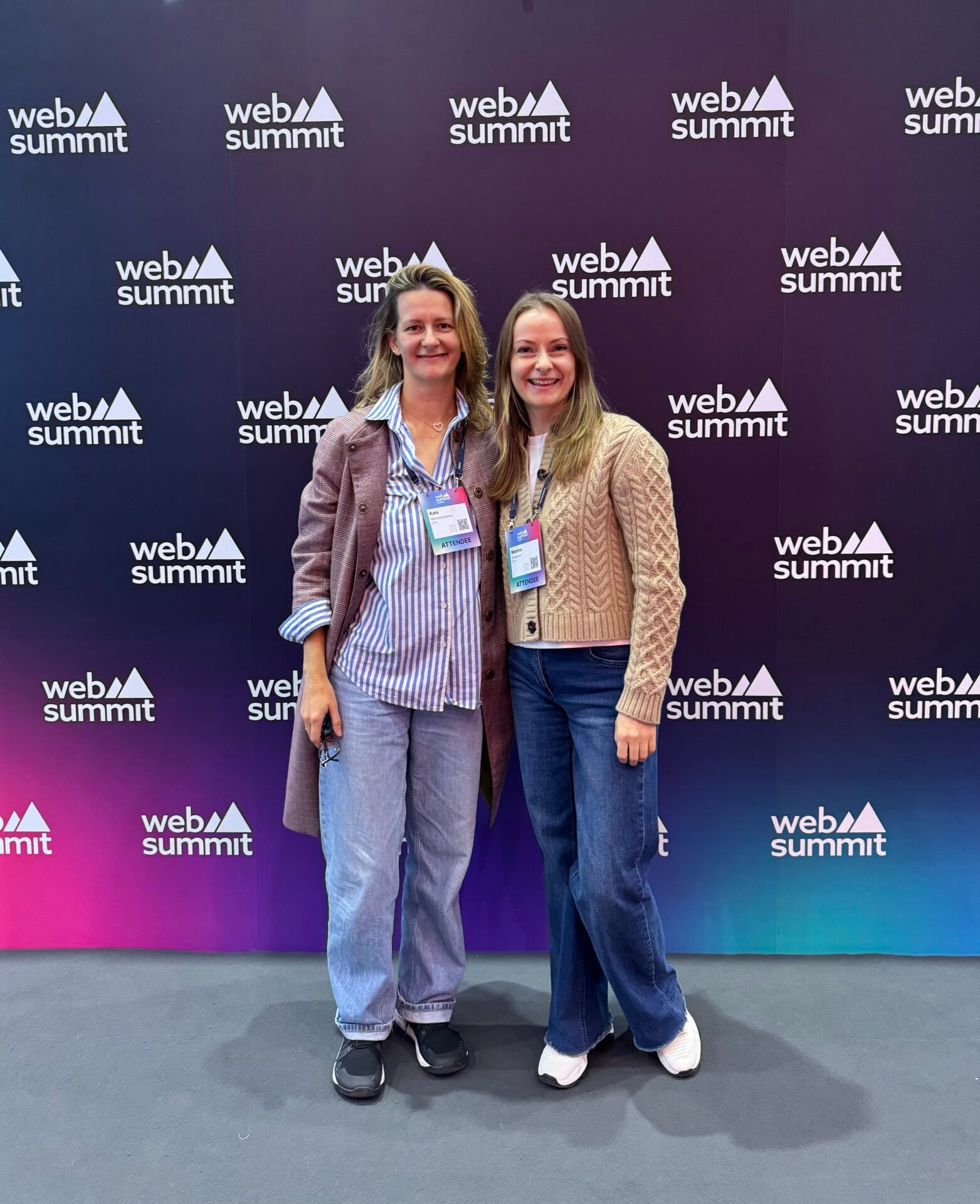
In this interview with The Future Media, Miroshnichenko and Stasevich discuss why founders become bottlenecks, what happens when strong specialists are promoted before they are prepared to manage, why treating HR as a payroll function proves costly, and which organisational decisions should be made before the next hiring wave begins.
1) For readers meeting you for the first time, can you introduce yourselves and what you were doing before SOTA?
We are Kate Miroshnichenko and Marina Stasevich. We first met when we worked in different parts of the HR department of the company, Wargaming. Kate served as the Head of HR and later led the Global Learning and Development department, focusing on leadership and people development across the company. Marina headed Talent Acquisition, driving the talent attraction strategy and its execution, and eventually also led the Early Careers Program across the company’s European locations. Before Wargaming, we both (separately) built our careers in talent management.
However, after we had left Wargaming, we each began developing our own practices, coaching individuals, and working with tech companies on leadership and organisational challenges. Then one day, Kate reached out to Marina with an idea: to stop working separately and build something together. We met, talked it through, and that conversation became the foundation of SOTA. We’ve been building the organisation together for about three years now.
2) What is the mission of SOTA, and what is the story behind the name?
SOTA’s mission is to connect business strategy with its execution through people and leadership development. We help companies scale by scaling their greatest asset: their people.
The name is an acronym for “State Of The Art.” We chose it deliberately to reflect our commitment to bringing companies not just good ideas, but best practices and data-driven approaches that help leadership teams make better decisions in people management, organisational design, and company strategy.
3) When you decided to start SOTA, what was or were the main problem(s) you were seeing that made you think “this needs to exist”?
One of the most fundamental problems we keep seeing is the tension between speed and structure. When a company is small, everyone knows everyone, so decisions are made faster, and the founder is personally involved in almost everything. Then they are hit with sudden growth, and the founder needs to leap into a different role that focuses on building processes and creating structure. That can feel bureaucratic and at odds with the startup spirit. Striking the right balance is hard, and most teams are simply not prepared for it.
What we call the “people” mistakes are also easy to fall into. Founders hire from their network rather than taking the time to understand who they need. They underinvest in developing their leaders, which turns those leaders into bottlenecks. A great engineer is promoted to a management role, and suddenly everyone is struggling. There just isn’t enough focus on helping those people grow into their new responsibilities.
Another trend we see is companies build a junior, operationally focused HR function and then wonder why people and culture become a blocker to growth. Treating HR as primarily a payroll function is one of the costliest mistakes a scaling company can make.
Strategy, even when it exists, often gets created and then forgotten. Research shows that while around 63% of leaders say they refer to their strategy weekly, only about 18% of their team members do the same. That gap is where execution dies.
Having lived all of this from the inside, in senior roles at fast-growing tech companies, we knew these problems well. That accumulated experience is what made us think that this kind of practical, strategic support needs to exist.
4) Your work lies between strategy and people. What do most leadership teams get wrong when they treat hiring and organisational design as something that comes after the product?
Managing an organisation’s capabilities is one of the most critical factors in executing a strategy and scaling a business. The core question is always: can we actually pull this off? Can we deliver what we promised? That is why hiring and organizational design need to become strategic priorities early, not afterthoughts that follow once the product is built.
When a company wants to scale from 20 or 30 people to 100, for example, hiring the right people is arguably the founder or CEO’s most important job. Those people will either carry the company to success or break it. It is not about going into your network and hiring someone you know but about understanding who you actually need for each critical role: what skills, capabilities, soft skills, and the kind of culture you are trying to build. Those first 100 people will carve the company’s trajectory for years to come.
Thinking strategically about people from the very beginning is an absolute must-have. It is foundational to the company’s future success and to the execution of any strategy you will ever put in place.
5) When a startup closes a round and suddenly has to grow fast, what are the first people decisions that should happen in the first 60–90 days?
When a startup closes a round, there is usually a clear roadmap already in place, one that was presented to investors. It typically covers the same priorities: awareness through marketing, customers through sales, retention through customer success, product delivery through engineering, and infrastructure through DevOps, all supported by people, finance, legal, and operations.
To deliver that roadmap, founders need three things: the right people, with the right capabilities, and the right processes. The right time to build that foundation is 60–90 days after closing.
The first decision is to honestly assess the founding team. Identify the gaps. What does the team do well, and what is being stretched too thin? Hiring without this insight leads to the wrong roles being filled first.
The second is to define culture and values before the team grows. Culture is easy to configure when you are ten people but almost impossible to realign when you are several hundred people. The moment after a raise is the right time to be intentional about what kind of company you are building.
The third is to put a management and operating system in place before scaling headcount. Most founders postpone this and default to micromanaging, and it is an expensive mistake. The good news is that the same system that works for 25 people will also work for hundreds or thousands. That’s why we recommend you build it early, and growth becomes manageable. If you skip it, every new hire adds complexity without adding much needed clarity.
6) What does a “talent market strategy” look like when you build it for a company?
A real example from our practice. A Series B startup had just raised investment from a major American fund and needed to scale from 300 to 1,000 people within two years. They came to us with these questions: Are we ready for this? Do we have the right processes and protocols in place? Do we have enough recruiters? How do we assess talent? Which locations should we target?
That is exactly where talent market strategy begins.
We started with a full audit of their existing processes. From there, we rebuilt the talent acquisition team structure, realigned the wider people function, identified the capability gaps, and mapped out which locations to target.
Hiring, however, is only part of the process. To scale sustainably, you have to retain the people you bring in. That means solid onboarding from the first day, a plan for developing people’s capabilities once they are onboard, structured learning in place, and investment in leadership skills: the ability to set clear goals, delegate, motivate, and keep people growing. The fastest way to lose the talent you worked hard to hire is to put them under managers who are not ready to lead at scale.
7) You do not just stop at the consultation and strategy stage but are actively involved in the overall training and development of teams through practice-heavy workshops. What impact have you seen, and how do you make sure behaviours actually change after a workshop?
It comes down to how adults actually learn. We all read books, listen to podcasts, attend training, but data shows we absorb only around 5–15% of that information and forget most of it if we don’t put that information into practice.
The only way to truly learn something is to start doing it. And how people relate to discomfort along the way matters just as much. As Ted Lasso put it, “If you’re comfortable, you’re doing it wrong.” Growth rarely feels good in the moment. If everything feels easy, we are probably just repeating what we already know.
There is also what we call creative incubation. Some of our best insights don’t appear while we are working hard on a problem, they emerge when the mind is quiet. Science shows that even short breaks after learning can improve recall by 10–30%.
We work through experiential methods: facilitated team sessions, action learning, executive and team coaching, and on-the-job approaches like shadow coaching. We work with real cases and real challenges, not theory. When a client tells us that following our work together, they saw revenue grow, that is a strong signal that the approach is working.
The work doesn’t stop after a session. We run follow-ups and facilitate quarterly business reviews to see what has actually changed and where further support is needed. Behaviour change is not an event, it is a process.
8) Investors often say, “We invest in teams.” From your vantage point, what defines a strong team at the Series A or Series B stage?
Our work with a Series B fintech company last year brought this into sharp focus. What we observed in a strong, high-performing team at that stage comes down to a few things.
First, they embrace a trial-and-error mindset. They test hypotheses, move quickly, and when something doesn’t work, they treat it as data rather than failure.
Second, there is a strong, clearly defined partnership between the founders. There is mutual respect, but there is also a line of accountability. Each person knows where their ownership begins and ends, which eliminates the friction that derails so many founding teams as complexity grows.
Third, communication is an underappreciated strength. They can disagree constructively, debate without damaging trust, and make decisions without forcing false consensus.
Fourth, the people are curious, ambitious, and execution driven. They are constantly developing because they understand that the company they are building in 12–24 months will require more from them than the one they are building today.
They also invest in diversity. This means bringing in people with different backgrounds and ways of thinking, because homogeneous teams have homogeneous blind spots.
9) What has building SOTA from Cyprus been like?
We never felt restricted in any way building SOTA from Cyprus. Quite the opposite. Cyprus has a strong and growing HR and founder community, and initiatives like TechIsland bring real value in developing the ecosystem here. We are also actively partnering with local initiatives, such as Women in Games, Women in Tech Cyprus, and White Nights. Within Cyprus itself, the community is remarkably international, diverse, close-knit, and accessible. It sometimes feels like you are just one or two handshakes away from almost anyone: founders, senior leaders, people from all kinds of backgrounds. It is a small community in the best possible sense, warm and tight but with an international reach.
That said, being geographically spread as founders has also turned out to be a great asset for building our network. One of us is based in Cyprus and the other is in Poland, and this helps us connect to the broader European landscape.
10) If you could leave one message with Cyprus founders and leadership teams who are about to scale, what would you want them to stop doing today, and what would you want them to start doing instead before the next hiring wave?
As Salesforce CEO Marc Benioff often says, hiring is “the most critical, time-consuming, and strategic task a founder can undertake.” So, we would say instead of putting hiring and HR at the end of the priority list, engage strategic HR early to help you get the best people possible, and treat this as your number one task at the scale stage.