

Hype cycles used to run three or four years. Now with AI, says Jeremy Brown, that window is being compressed to eighteen months. In a world where the market can turn against a founder that fast, he has built his approach to backing companies around the one thing he believes can survive the compression. The people who are ready to keep adjusting to both.
“It’s always the team. The best teams can always figure it out and pivot.”
Follow THE FUTURE on LinkedIn, Facebook, Instagram, X and Telegram
That is what he is listening to at his investment table.
Jeremy Brown is the Investment Principal at Anthemis Group. A former geophysicist, he has invested in early-stage companies across Silicon Valley, Berlin, and London, with a background spanning construction, energy, manufacturing, climate, and life sciences, and now focuses on AI in regulated industries.
Jeremy completed his PhD at Stanford. At a university where venture capital and startup activity are, as he puts it, “at your doorstep,” the pull towards entrepreneurship is constant.
“There are a lot of opportunities pulling you in many different directions,”
he says.
He watched classmates, people in his field and outside it, friends of friends, launch companies and get backed by tier one and tier two funds. “That slowly created this, like, oh, if they can do it, I can do it too,” he says. “I know the journey is not easy, but it’s doable.” After graduating, he joined a startup that his PhD advisor had founded a decade earlier. The startup had recently been acquired by a larger energy company, which meant Jeremy soon found he was building a product inside a big corporate organisation. Things moved more slowly than he expected, but there were plenty of lessons to learn.
His first venture role was at Plug and Play, inside their industrial IoT vertical. It was high-volume, fast-moving pre-seed investing. He was learning to navigate large corporations that wanted to appear innovative without really defining what that could mean. Then he left Silicon Valley entirely.
“I wanted to explore new tech ecosystems and get outside of the beautiful bubble,”
he says.
Berlin was the opposite of what he had become accustomed to. Where Silicon Valley’s network effects had taken half a century to build, Berlin, at the time, was still finding its footing, still pulling less capital than London, still without the name-brand funds. What it had instead was something Jeremy found even more appealing than the prestige of his previous address. “The egos were lower,” he says. “There was so much potential, and that potential just needed time to grow.”
He joined Fundamental, a construction-tech fund, as the first non-partner hire on the investment team.
“It was scrappy in terms of building a fund from scratch,”
he says.
He was refining investment theses over several months, then changing direction, realising that what looked like the right bet six months ago might not be, or that a market was maturing faster than expected. He has since watched Berlin become one of the top three startup ecosystems in Europe, which means the bet he made before there was any data to support it turned out to be right.
That experience informs how he answers a question that comes up often when people talk about smaller ecosystems like Cyprus: Does infrastructure have to come before culture, or can culture grow alongside it? His answer seeks to reframe the premise.
You don’t need big corporate infrastructure or large funds at the start. You need the grassroots version, hackathons, rooms where founders can sit together and exchange ideas before any of it is formal.
“That kind of originates a lot of community,” he says, “where really beautiful ideas can emerge. And then over time, if you have that, you start attracting the layers around building the big infrastructure.” He sees Cyprus building exactly that kind of layered ecosystem, founder-led at its core, with institutions like the DOERS Summit and Plug and Play’s arrival adding structure on top of what already existed.
He joined Anthemis a little over three years ago, drawn by the firm’s evolution from pure fintech into what it calls embedded finance across every industry. Anthemis has been investing for sixteen years, managing close to a billion dollars, and runs around 150 portfolio companies, with strategies including early-stage venture, a venture studio for female-led pre-seed companies, and a recently launched venture debt arm. What really caught his attention was the work around the intersection between academia and entrepreneurship. The organisation helps founders from pure science or engineering backgrounds realise that a payment rail, integrated at the right stage, can unlock growth they didn’t know was available.
When he meets a founder for the first time, the first twenty minutes are spent testing for founder-market fit. Have they actually worked in the industry they are trying to disrupt, or are they approaching it from outside? Then comes the team dynamics.
“I’ve been on calls where you just see this seamless chemistry between co-founders,” he says. “Someone’s not trying to be the loudest one in the room.” Underneath both, the thing he has come to weigh most heavily is resilience, tested before the hype cycle inevitably turns against whatever is currently trending under some hashtag.
“The founder does not have the luxury to say, okay, the VC appetite has changed, I’m going to go build something else,”
he says.
So during diligence, a question he likes to ask is: What was the biggest challenge in your life, and how did you overcome it? What are the top risks in building this company, and what are at least three mitigation plans for each? “Nothing’s fail-safe,” he says, “but you start getting into the thinking of a person.”
The main challenge he sees in the transition for academics who have spent a large part of their career in research to that of an entrepreneur is what he describes as their perfectionist instinct.
“As an academic, you’re trying to solve a problem. That means you’re drilling on something for months and months at a time to get to some end of enlightenment. And so that’s very, very different from building an early-stage company where you have to move very, very fast. You have to be willing to ship something that’s not perfect. You have to be willing to break things.”
he says.
His advice to any founder walking into a meeting with him is to avoid lecturing investors. Specialist investors have, for the most part, already done their homework, talked to your competitors, mapped the space, and possibly already been burned by something adjacent. “You probably need to do less educating than you think,” he says. What actually impresses him is a founder who assumes the investor already understands the landscape and moves straight into the differentiated argument. “This is how I’m going to win,” he says. “Let’s talk about how I can help you build conviction on that.”
The future he is building toward is about access.
“I think entrepreneurship is inaccessible to a lot of people, and venture investors are kind of concentrated in a few areas in the world. So I think it’s our job [as investors] to find and support entrepreneurs and entrepreneurial talent everywhere.”
The ambition is to make sure proximity to London, San Francisco, or New York stops being the thing that determines who gets backed. As easy as it would be, he says, to stay in the office and wait for founders to come to him, that is not the future he is building toward.
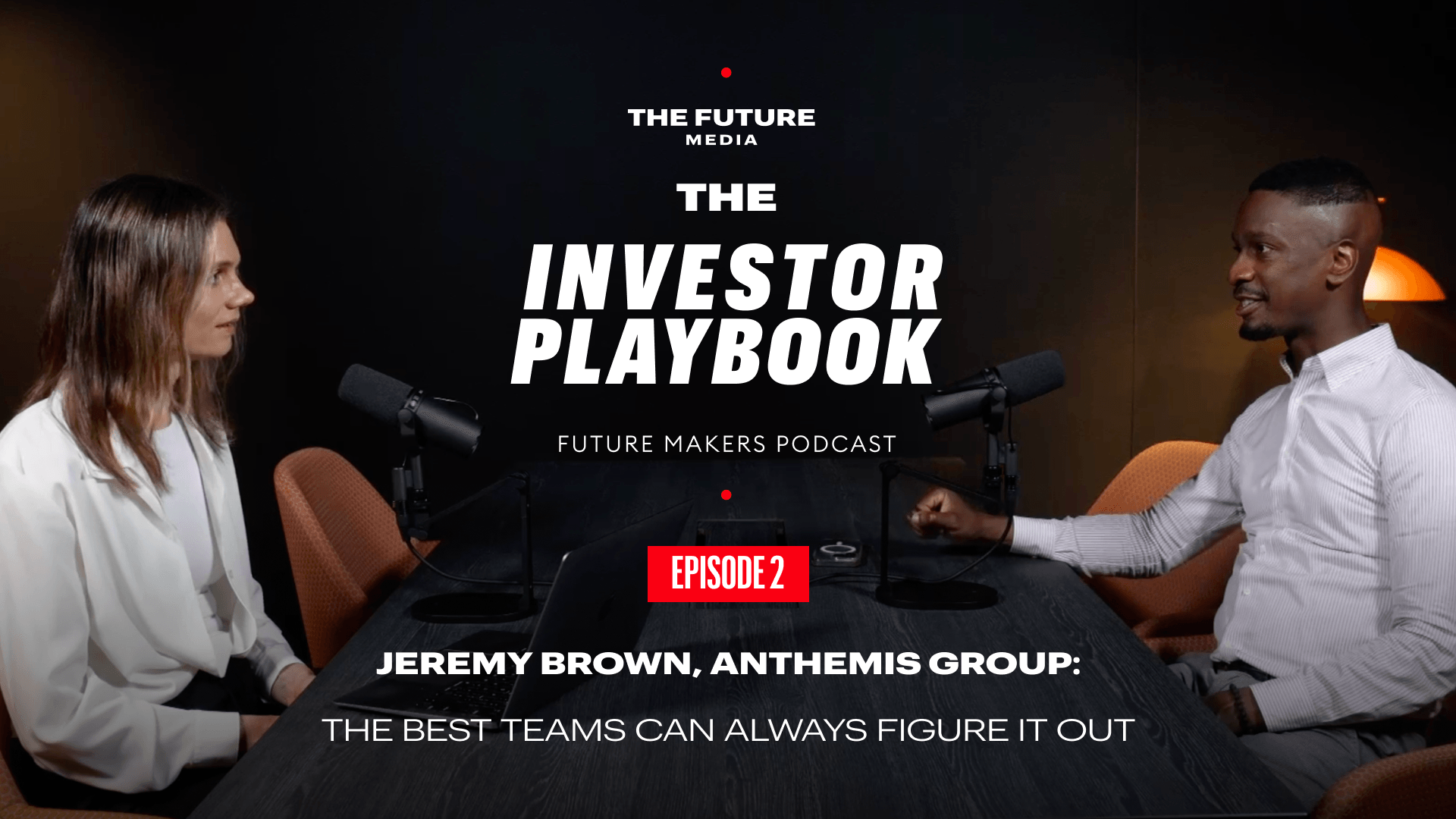
Jeremy Brown is the second guest on The Future Makers: The Investor’s Playbook. The full episode, including his views on the EU AI Act, what separates great deep tech founders from the rest, and how regulated industries are about to reshape the next wave of AI investment, is available to watch now.
The Future Makers Podcast: The Investor’s Playbook is a series of in-depth conversations with investors about the experiences, instincts, and decisions that shape how they back founders and ideas. Host Annetta Benzar looks beyond the deals to understand how investors think, what influences their judgment, and what founders can learn from the way they see the world.
A production of The Future Media.