

There is a photograph that she pulls from time to time to show her students. It’s from when she was at nursery back in London. Three years old, Asegul Hulus (known to everyone as Ace) is sitting in the corner, busy at the computer, while the girls play Barbies and the boys play cars on the carpet. Ace’s teachers did not take the photo to celebrate her student’s ability to pick up new skills, but as evidence of what is “wrong” with the girl. “She told my parents, ‘Your child is not being sociable. Your child is not acting according to norms.” Ace now uses this memento in her presentations on gender equity.
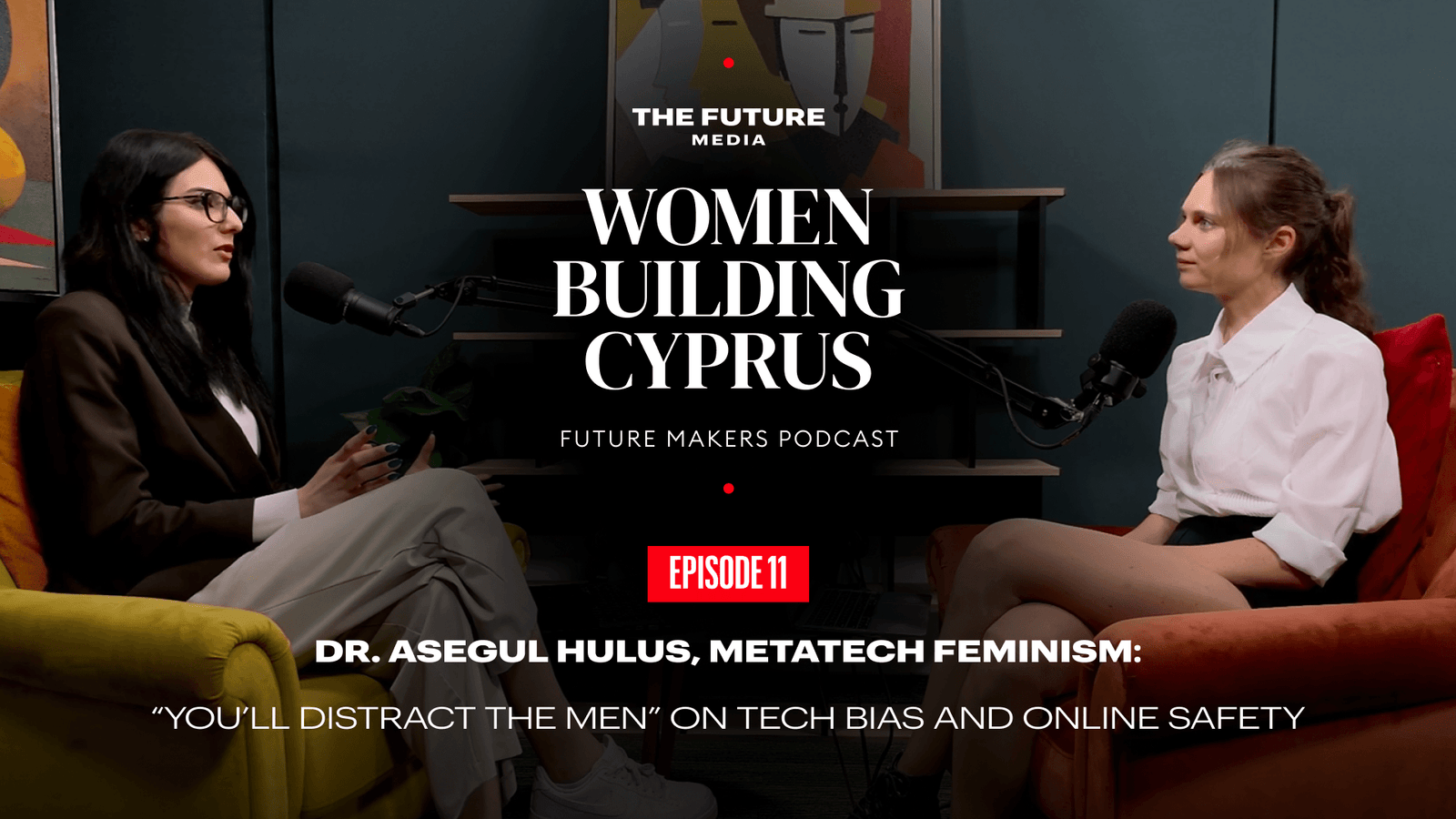
Dr. Asegul Hulus is an Assistant Professor in Computing, researching across interdisciplinary areas of computer science. She is the founder of Metatech Feminism, a framework redefining technology through inclusivity, ethics, sustainability, equity, and forward-thinking innovation.
Follow THE FUTURE on LinkedIn, Facebook, Instagram, X and Telegram
Ace grew up in London, and became known as the “Cypriot” girl who wouldn’t play Barbies, who picked the robot at the flea market when her grandfather said choose any toy, who showed up to a Halloween party as a pirate because she was deep in a “Pirate Treasure” video game era at the time. The phrase she most often heard when people described her was “not normal.” She fought it at first, but then shrugged her shoulders and decided to own it. In her teenage years, she wore alien t-shirts; if they were going to call her other-worldly, she would be the person to take that narrative forward. “I’m an alien,” she says. “I’m from outer space.” The rebellion, she says now, was the beginning of everything.
It wasn’t an easy childhood, though. The bullying was real. She remembers girls pushing her into the boys’ toilet because she preferred to play football, marbles and video games to the typical “girly” things. The boys, she says, did not seem to care that she joined them in their games. It was the girls who policed the boundaries, but even from an early age, she understood these young people were not the source of the rule, only its enforcers. “Kids are parrots,” she says. “Whatever society teaches them, they dictate it to others.”
It was not the first time she had faced that kind of judgment. When she applied to study Computer Science, she was informed that the university would not accept her. Not because of her grades (they were good enough to get her in) but because she would be the only girl in the class and, she was informed, her presence would “distract the men.” She was advised to study English instead. She did, briefly. Then she returned to complete a Master’s degree in Computer Science and a PhD in Computer Science. “It was like a revenge PhD,” she says.
But her new title of “Dr.” did not particularly impress those in her community back in Cyprus. On one occasion, a female professor looked at her and asked whether she thought she was successful. Ace said she supposed so (only 1% of people globally hold a PhD, she had recently read), but she was sure there was so much more to learn. The professor’s response to Ace’s educational achievement was to dismiss it.
“You don’t have a ring on your finger. You’re not successful.”
It was then that Ace was reminded that the measure of achievement, even from someone who had climbed the same educational ladder, was still the same as it had always been.
Ace was not one to fall into stereotypes. Instead, she has jumped headfirst into various projects. One is building research and guidelines to combat the explicit use of children’s images online. She works with the Internet Watch Foundation, which has reported that 98% of victims are women and children. The research gap exists, she argues, precisely because the problem primarily targets those two groups. She is one of the few people closing it, despite colleagues in the field telling her to keep to her lane and focus on programming instead. “So I shouldn’t be concerned about cybersecurity? If I’m talking about children and their risk,” she says, “what do you mean I should be programming instead?”
Her framework, Metatech Feminism, grew from the same frustration, the sense that existing feminist approaches to technology were addressing, if at all, only one part of the problem, but not the whole. She read extensive research across cyberfeminism, data feminism, ecofeminism, and found the gaps between them. So, she decided to merge them, grouping them into five themes: inclusivity and intersectionality, ethical responsibility, adaptability and forward thinking, social and economic equity, and sustainability and environmental justice. She drew the logo herself, a knight with a pirate eye patch and binary code, a nod at the three-year-old who wouldn’t leave the computer, three decades later, still at the screen. It might feel like a drop against an ocean of work still to accomplish in feminism, but it’s an important drop. “To make a wave of change,” she says, “you need drop by drop water.”
The same push for visibility that defines her research also defines her daily life in Cyprus, and not always on her own terms. She is passionate about bodybuilding and devotes herself to a strict six-day-a-week training schedule. Inside the gym, she says, she has never once encountered disrespect from a male gym-goer or a female one. It is the one space in her life where what her body can do matters more than how it looks or what it’s supposed to conform to. Outside that door is a different story. She cannot walk down her own street in the same gym clothes without a neighbour commenting, a car slowing down, someone deciding her tights are an invitation for an opinion. Or a cat call. But she will not let the eyes of others change her core self.
“I became the woman that the youngest version of me would run to,”
she says.
That, she thinks, is the right question to ask yourself. Would the current version of you be someone your younger self would trust?
Forget normal, be the alien.
Dr. Asegul Hulus is a guest on The Future Makers: Women Building Cyprus. The full episode, including her account of being told she would distract the men, the research she is doing to protect children online, and why she believes banning technology is never the answer, is available to watch now.
The Future Makers Podcast is a series of in-depth conversations about how future-makers are made, in Cyprus and beyond. Host Annetta Benzar sits down with people who are a leading force in our shared future and looks past the titles. Together, they travel back to the people and moments that shaped them, walk through the choices and challenges they are living through now, and look ahead to the futures they are trying to build.
The first season, Women Building Cyprus, follows women whose lives and decisions are changing what this island can be.
A production of The Future Media.