

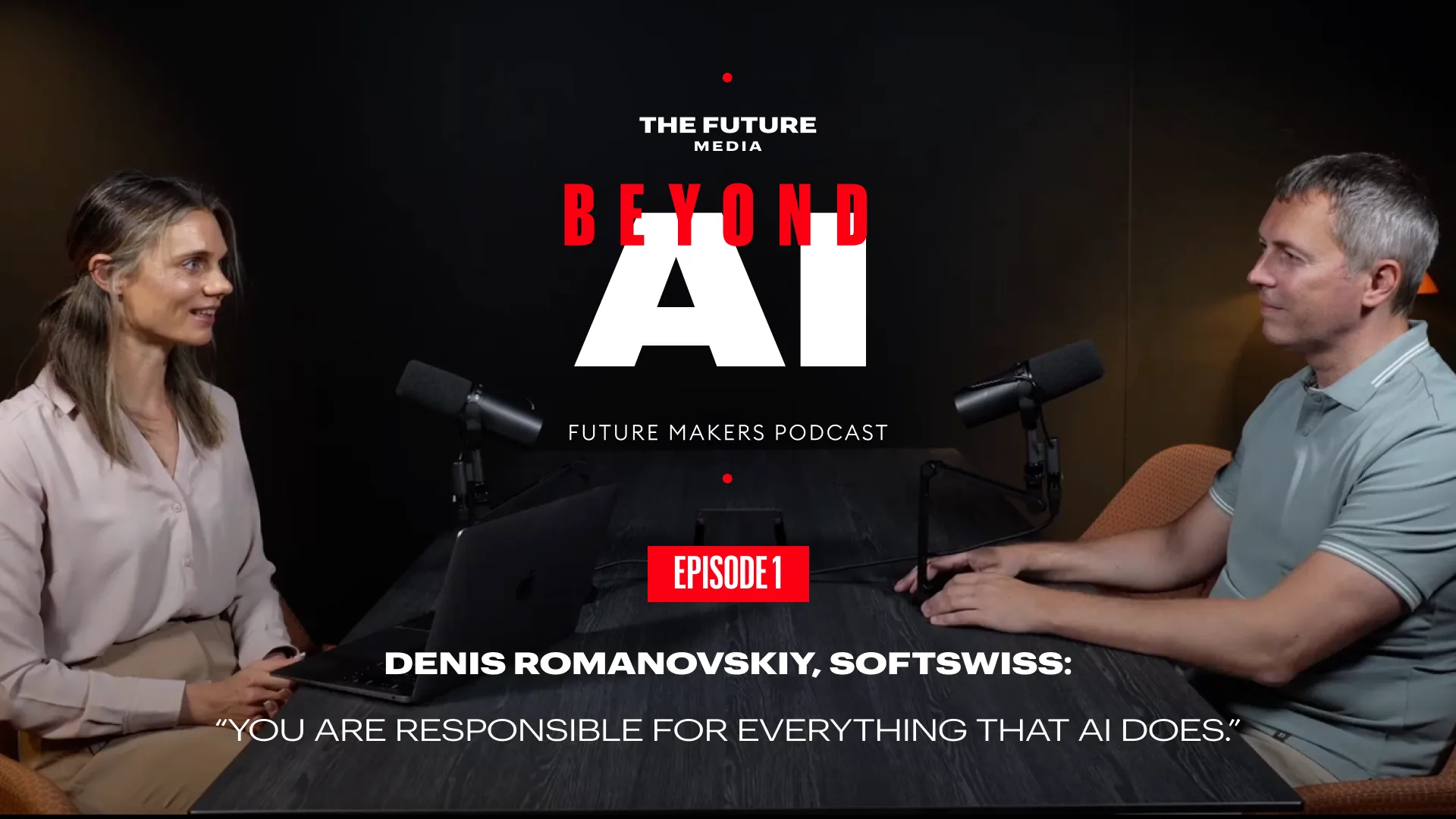
“You are responsible for everything that AI does.”
Denis Romanovskiy repeats this line in presentations, workshops, and one-on-one sessions with department heads because, as he puts it, it is what people need to hear most. It is also what they most quickly forget once they return to their screens.
Follow THE FUTURE on LinkedIn, Facebook, Instagram, X and Telegram
Denis Romanovskiy is Chief AI Officer at SOFTSWISS, the iGaming tech company behind casino, sportsbook, and affiliate platforms used by operators around the world. Before taking on the AI role, he served as the company’s Deputy CTO for five years, and previously held leadership positions at EPAM Systems and Wargaming.
His interest in technology began in the 1990s, when computers were new enough that handbooks could just about name parts of the hardware and a few keyboard shortcuts. The only way to learn programming was to build something and see what broke. At fourteen, he was already working with a small startup in Belarus, writing accounting software, testing it, delivering it, and handling client feedback himself. “I felt like I was the strongest guy in IT in the room,” he says, grinning at the memory. Then he adds, “Nowadays with AI, I feel the same.” The tools have changed, but that instinct to build where no one has built before has remained the same.
The Chief AI Officer role has only recently emerged as AI adoption has expanded across organisations and covers a much broader range of responsibilities than most people assume. Two years ago, in a company like SOFTSWISS, it would have meant machine learning engineers building prediction models. Now that the models exist, built and maintained by OpenAI, Anthropic, Google, and others, the role has evolved into developing the infrastructure that allows those models to be used effectively, from culture, skill mapping, and team workflows to company-wide security frameworks and budget controls.
Denis’s job is creating that infrastructure, and that work reaches into every part of the organisation.
What SOFTSWISS calls its AI platform is a secure system that connects company data to AI while protecting sensitive information. It is being built alongside a programme of workshops, training courses, one-on-one coaching sessions with department heads, and detailed spend tracking across multiple AI providers.
The change management work is often where resistance is most visible. When he walked into the legal department, for instance, the response, almost unsurprisingly, was immediately: “No, we don’t trust this technology. It will hallucinate.”
He did not argue but instead guided the team towards building systems that would help them feel more confident in adopting the technology. He showed them use cases, demonstrated how they could upload their own data in the system, see the results, and check them. Then, a couple of months later, he came back with a champion from inside the department, someone who had run a proof of concept and was now using it actively. There are now around 50 formally registered AI initiatives at SOFTSWISS and approximately 100 cases in total where employees are already using AI to automate and improve their daily work.
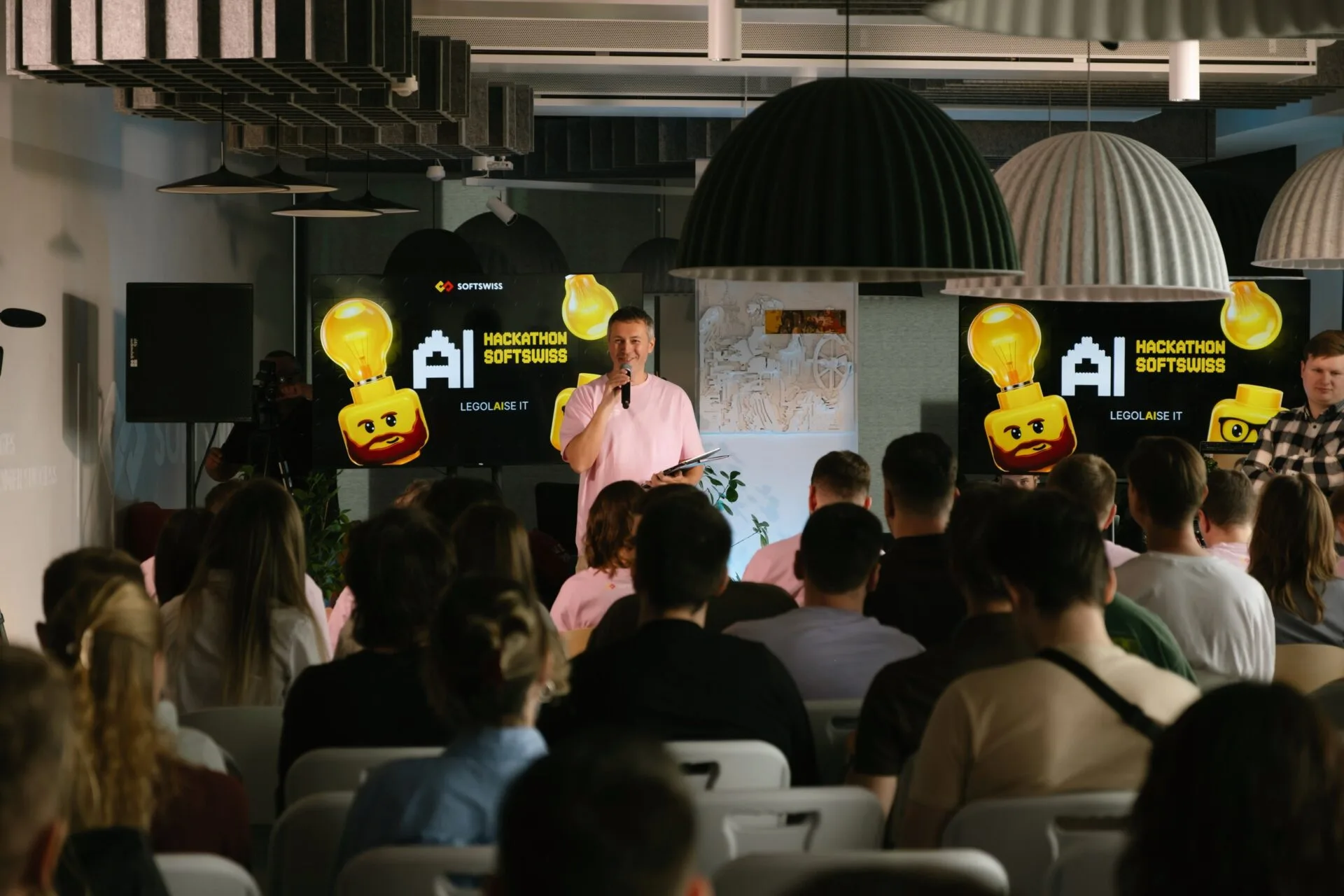
One recent example is the SOFTSWISS internal hackathon, which wrapped up two days after this conversation was recorded. Over 46 hours of intensive building, 34 teams pitched AI solutions built around real workflows and tools people in the company could actually use.
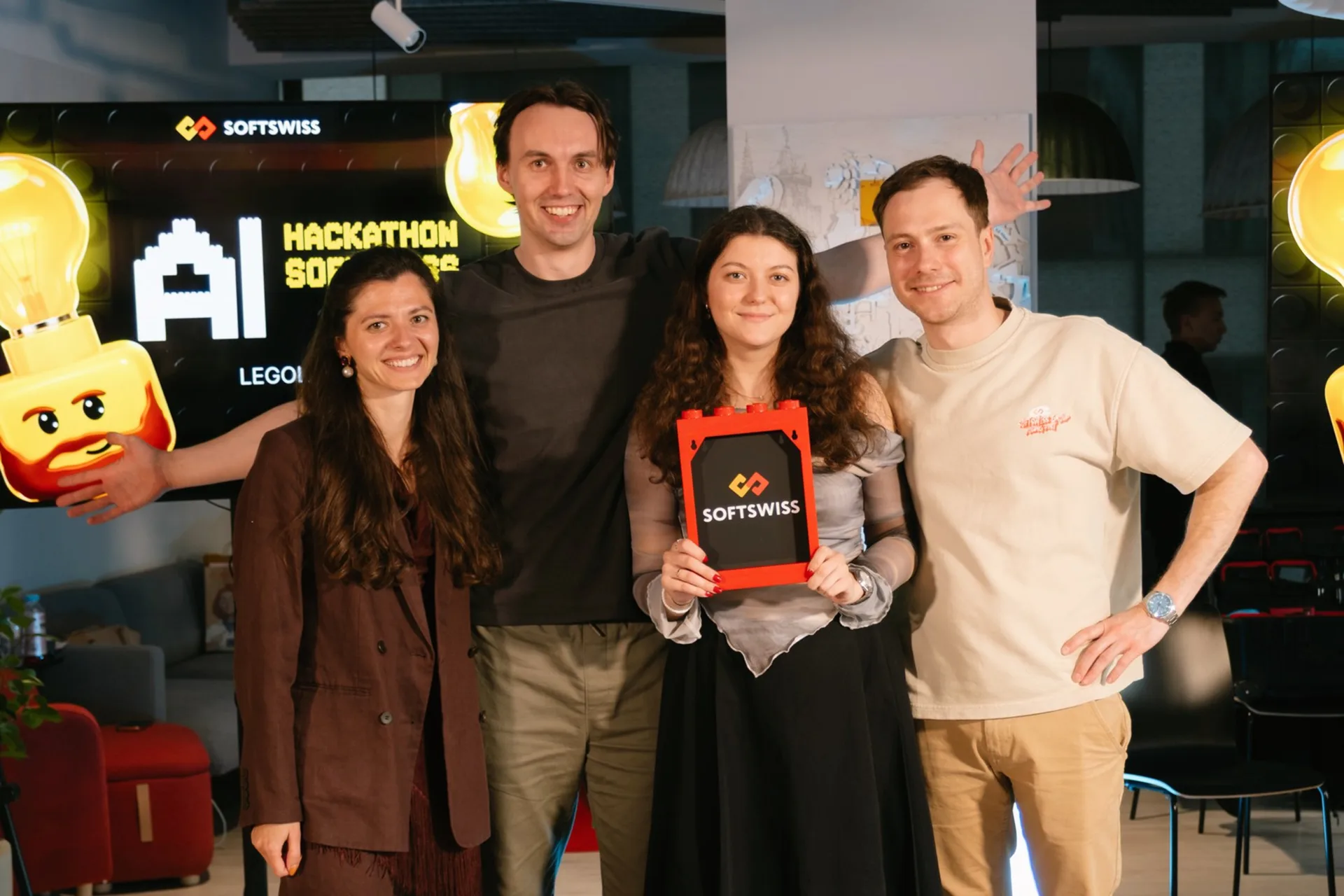
The judging panel ended up awarding joint first place because the standard made choosing impossible. What was most impressive was that half the participants were not engineers but colleagues from business functions across the organisation who had learnt enough, through Denis’s workshops and the culture being built around them, to build. The hackathon was, as Denis had predicted, evidence of what happens when you train people rather than merely handing them a tool and hope.
As a whole, the iGaming sector is still in the experimentation phase when it comes to AI in consumer-facing products. The models are expensive at scale, and the implementations far from ideal. “Many players and operators see that it’s not there yet,” Denis says. For internal operations such as technical support, client support, and even business process automation, there has been a lot of progress. He points to new capabilities from OpenAI and Anthropic around computer use and tool use as an indicative turning point. “With Codex, that is a tool of OpenAI, you can fully automate the work of an operator on a personal PC,” he says. He expects significant automation to become visible across the industry within three to nine months.
The more urgent argument he makes is about what people get wrong when they hand work to AI.
“The argument is that AI steals your execution of the job. But in fact, to do the job right, you need to think and plan how this job will be done with AI. You need to break it down into steps and choose the proper tools for each step. And then, after AI does the task, you need to validate the result, test it, and ensure that it was done properly,”
he says.
This is what he calls the system approach, and it is this framework that he teaches in every workshop he runs. You set the goal, give the context, and AI executes, but you then need to analyse, validate, and provide feedback, because you are the architect of the process and the person accountable for everything that comes out. The execution may be delegated, but the final judgment is your call.
Alongside the system approach, he introduces a concept from Nate Jones that he finds himself returning to in almost every conversation about AI capability. “Nate Jones says that we all need to develop taste,” Denis explains. “Sometimes you can understand if an artifact is good or bad just from the taste, and you can act quickly in response.” This taste, or instinct, is cultivated over years inside a field. It is what makes experienced people so valuable in an AI-augmented environment, and what newer entrants have not yet had time to develop. “Smart people will be in demand even more than now in the future,” he says. “People who can explain what they want better, who can very quickly understand what is wrong and correct it, they are the ones who will be successful.”
One concept he raises that is not yet talked about enough in AI is digital memory, an idea explored in his essay “Who Owns Your Digital Memory?” The main premise of the essay is that the more you work with an AI system, the more traces of how you think, your preferences, and how you like things done accumulate inside it. He already notices it in his own tools. “Some prompts that I do, my colleagues do the same prompts, and it doesn’t work,” he says. His system knows things about him that theirs do not. Then he poses the question nobody has yet answered.
“Imagine you’re already not working in this company, but some kind of agent with your memory continues to do the job on a similar level as you did. You trained this agent. Do you own part of it or not?”
Denis believes this will become a serious problem and that companies should be encouraging employees to use memory features in their AI tools now, before the implications become unavoidable.
The concept he uses to frame what a better future might look like is cognitive freedom. “Cognitive freedom is when you own your memories and thoughts that you put in a digital system. Ownership means you can manipulate them,” he says. “You can take it from one system to another. You can fully control them.” He calls it a possible future, maybe twenty or fifty years away. A future where humans remain capable, informed, and in full control, with AI serving the work rather than replacing the people doing it. Whether that version of the future actually arrives, he suggests, depends on the choices being made right now. By the companies building these tools, and by the people deciding how to use them.
Denis Romanovskiy is the first guest on The Future Makers: Beyond AI series. The full episode, including his arguments about AI regulation in Europe, why engineering degrees matter more than ever, and what healthy paranoia around AI actually looks like inside a company, is available to watch now.
Beyond AI is a Future Makers series of conversations on the reality and hype of artificial intelligence. How intelligent systems are changing work, culture, creativity, institutions, and everyday life, and what people need to understand about this evolving technology.
A production of The Future Media, hosted by Annetta Benzar.