

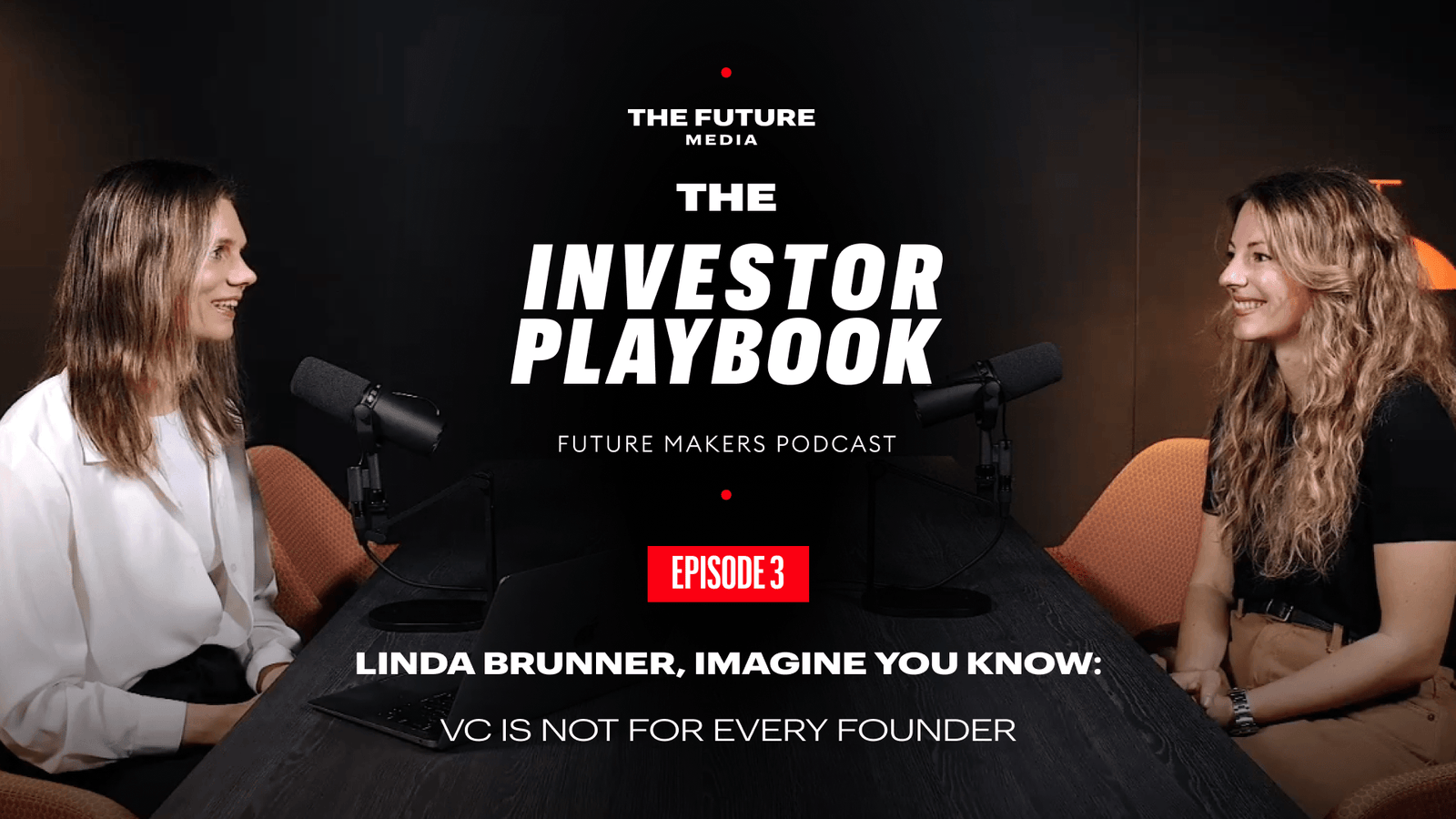
The first question Linda Brunner would ask a founder in their first meeting is one most of her colleagues in the sector save for later. “What is your ambition?” Followed shortly with: “What do you want to achieve? Why are you doing this?” The thinking behind these questions is not to test for confidence but for fit. If the answer is anything less than building the biggest company in the category, anywhere in the world, then the conversation she is about to have with them might end with her telling them to walk away from going down the venture capital route entirely.
Linda Brunner is the founding partner of Imagine You Know, an early-stage fund investing in cybersecurity and digital infrastructure across Europe. Linda is a serial entrepreneur and former Chief Commercial Officer at Futurae. She now backs technical founders building the next generation of digital resilience.
Follow THE FUTURE on LinkedIn, Facebook, Instagram, X and Telegram
Linda’s first feel of the venture world was from the other side of the table. She studied Finance and International Management, and felt herself pulled from the start to what she calls the non-tangible part of business, that is, software, banking, the work of creating value that isn’t visible until you look closer. Her first job was running online marketing campaigns for one of the first fintechs in Switzerland, and that was where she fell in love with the startup environment. What followed were years of building and scaling Futurae as Chief Commercial Officer, and somewhere in that journey she noticed something. The conversations she would have with her own investors that moved the company forward were not about finances.
“I’m very problem-focused,” she says. “Whenever I see something is not working, I jump on it, and I try to fix it.” What she saw not working was the European cybersecurity investment landscape. There was plenty of capital but almost no funds that combined experience with sector-specific knowledge. So, she decided to start a fund.
“When you’re in the founder journey, you have so many things you tackle for the first time every day, and you have no clue how to tackle them. And that’s totally okay. But imagine you knew some of the paths you could take or some of the solutions that are available to you,”
she says.
The company, Imagine You Know, is built around the gap between what founders need and what generalist investors can offer. Linda handles the go-to-market side and the commercial scaling. Partner Claudio Marforio tackles the product and technical aspects, drawing from his experience as a well-known researcher in cybersecurity who built and scaled his own company.
Honesty and transparency are the values Linda brings to the table, and she encourages the same from founders. When it comes to founders at the beginning stages of raising, her main advice is to consider all options carefully and with great caution.
“If you’re good, you anyway get the money. Usually you can select. So you should think of what else it’s worth besides the money,”
she says.
The money, in other words, is the floor, and the decisions worth making carefully are everything else around it. The most consequential thing she tells some founders is that not every great founder should be in the VC game at all. There is a path where you can build a profitable, sustainable business, grow in your market, work with business angels, and run a company you actually own at the end. But that means raising the means to sustain yourself, team, and company yourself. And then there is the venture path, which comes with terms such as devoting yourself to your startup 110% of the time, dreaming time included.
“That shows me [as an investor] you have the ambition to become the biggest or the most successful company in your category in the world. If you choose to get money externally, it means you need the money now. Otherwise, you lose the momentum, or the opportunity is less there in two or three years than it is now. So it’s all about timing and time. And you want people who are putting two hundred percent, three hundred percent into their project, and don’t give up. And this is all they’re thinking about,”
Linda explains.
It also means travel, sacrifices, and the fact that after a few funding rounds, you will no longer be the majority shareholder of the thing you started. Others will eventually make decisions in the company you built. “And this is sometimes painful,” she says.
“You need to decide which path is the right one for you.”
Linda is just as willing to back founders fresh out of university as she is to back industry veterans.
“I’m in my thirties now, and the world as a twenty-year-old looks completely different. They see things very differently. And this can be extremely innovative. Just because things have been done in a certain way doesn’t mean they need to always be done in this way going forward,”
Linda says.
What matters at that stage, she argues, is not just experience but a mindset built around curiosity and how a founder approaches the parts of the work they have not yet mastered. “It’s a testing ground,” she says of the early stage. A testing ground for both sides to see how the founder handles the more difficult bumps of their journey.
What investors most often misunderstand about cybersecurity, in her experience, is the shape of the growth curve. They expect the hockey stick they have seen in other sectors, but that is not the case for the cybersecurity market.
“It’s slower. It takes longer to win over customers, because it’s all about building trust,”
she says.
That slowness is seen in longer sales cycles, more due diligence, and more procurement. But once a customer chooses a security product, they seldom leave. The growth curve is slower at the start but far steeper later, and investors who do not understand that timing get impatient and create friction with founders who are doing exactly what they should be doing.
How a founder builds that trust in the first place, she says, comes down to two qualities most pitch decks forget to mention: precision and restraint.
“You need to be precise with everything you do. Everything you do, from your website to how you communicate, represents your product. So you cannot ship something that is halfway working or that has mistakes in it. You need to be extremely precise,”
Linda says.
The second quality is restraint. “You should also not oversell. You should be very open about what your product can do and what it cannot do. You should not make it about yourself but about the customer, what they care about, what’s top of mind for them, and how you can help them achieve their goals.”
The way she works with her founders is almost the opposite of the investor stereotype. She is not interested in the same shiny reports every investor gets. The investors who get the real picture are the ones who have built a relationship where founders feel safe enough to share the painful problems, the ones nobody knows how to solve yet, and that requires the investor to have done two things: spent the time, and demonstrated that hard information will be met with help rather than a hard slam of the door. “This open and honest line is when you can help best,” she says. This is the community approach that, in her view, made Israeli cybersecurity what it is. She is trying to build the European version of it.
When asked what she is ultimately building toward, she, at first, pauses. Then:
“I want to really help open doors and change how the industry works. Make it more open. And show that Europe can be a leader in cyber. And I deeply believe that.”
Cybersecurity, she acknowledges, is one of the least sexy topics if you only hear the name. But two things, she says, have always driven humanity.
“It’s magic, and it’s secrecy. Magic has been solved with AI. But what about the secrecy? And this is cyber for me. If you dive deep into it, it’s probably the most exciting topic you can dive into.”
Linda Brunner is the third guest on The Future Makers: The Investor Playbook. The full episode, including her view on what European founders consistently get wrong about building globally, how AI is reshaping the cybersecurity threat landscape, and why the relationship between investor and founder should never be one-directional, is available to watch now.
The Future Makers Podcast: The Investor’s Playbook is a series of in-depth conversations with investors about the experiences, instincts, and decisions that shape how they back founders and ideas. Host Annetta Benzar looks beyond the deals to understand how investors think, what influences their judgment, and what founders can learn from the way they see the world.
A production of The Future Media.