
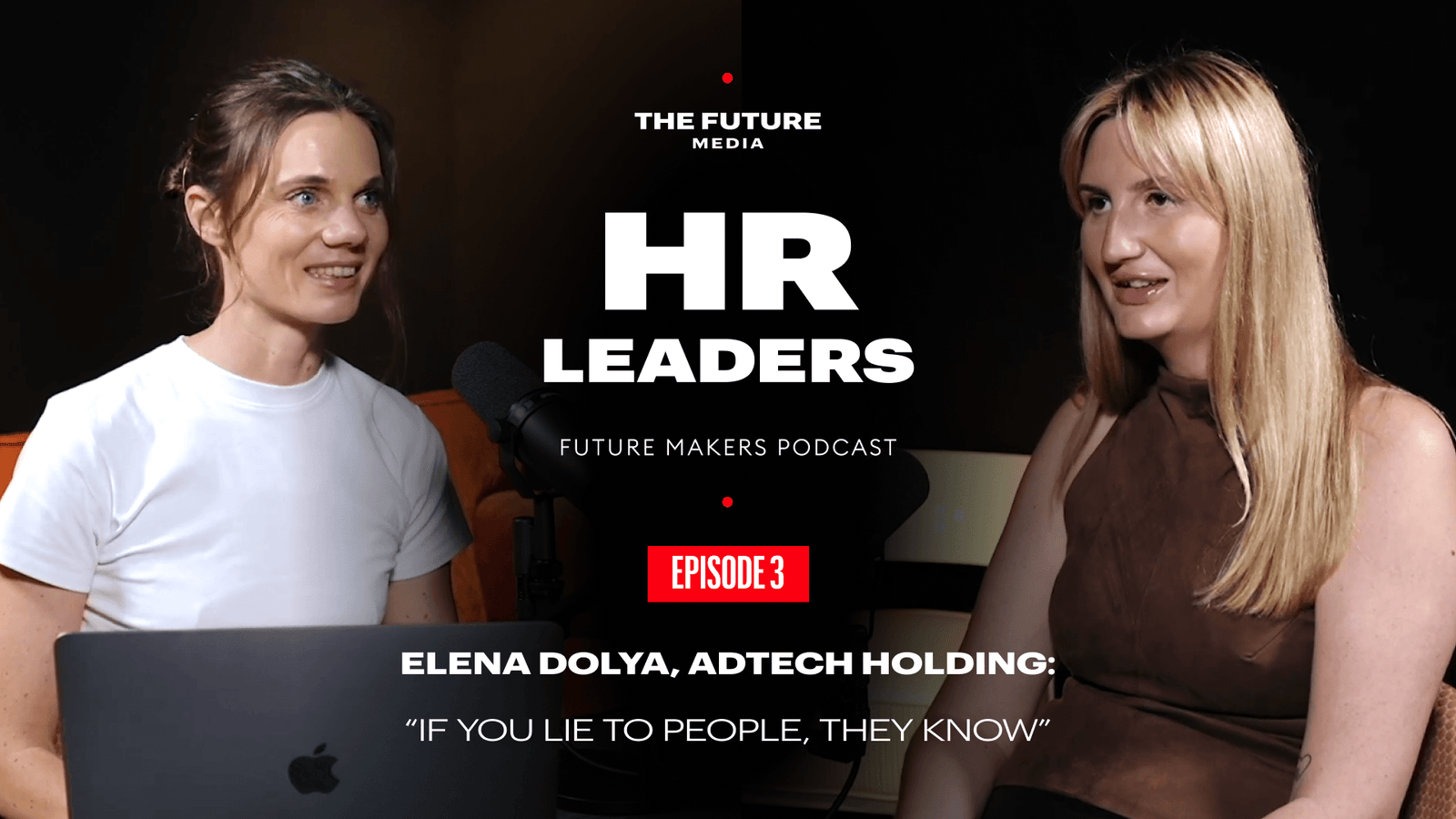
“I thought I would come and I would help people.”
Elena Dolya says it with the mild amusement of someone describing a version of themselves they no longer recognise. She was right, as it turned out, but the way she understood what helping meant would take a few years to change.
Follow THE FUTURE on LinkedIn, Facebook, Instagram, X and Telegram
Elena Dolya is the Chief Administrative Officer at AdTech Holding, where she has spent the last eight years building a transparent, inclusive corporate culture from the inside. She joined in 2018 and only a few years later, in 2023, was recognised as one of the top 100 Women in Tech in Cyprus.
Elena Dolya had studied Business Psychology because, as she puts it, both business and psychology derive from the same instinct, understanding people, reading between the lines to get to what they need and knowing how to respond. The combination felt like a natural foundation for HR. “I thought that HR would be a perfect place for me,” she says, “because [I thought at the time] HR was all about helping people.”
But it is also, she would learn, about helping the business, and understanding the difference between those two things, when they pull in the same direction and when they do not.
A few months into her first HR Business Partner role, whilst sitting in on a meeting, she glanced around the room, and thought: why does everyone say this HR role is so hard? I’m just listening to people. Six months later, the illusion was gone. “It is partly about help. But help is not only about listening,” she says now. “It’s about pushing people to take action. It’s about giving sometimes uncomfortable information. The person needs to hear it to be able to climb higher in their career.” The most useful thing she could offer, she discovered, was not comfort but honesty.
Her definition of HR has sharpened considerably over the years into something more structural.
A bridge, she calls it, between the people who make decisions and the people who carry them out, two groups working inside the same organisation that at times do not understand each other at all.
“HR goes in to build that bridge,” she says, “to explain to the manager if something they have put forward is too complex, that the expectations are too high or not realistic. But at the same time, to help the other team members understand why and how the managers came to this idea.” As the connective tissue of any organisation, HR cannot be put to the side. Organisations fracture slowly and expensively without it.
That connective function was tested most visibly when the world was faced with the pandemic. She does not dramatise that period but instead offers what she learnt from working under the pressures of the crisis: remove your own opinion first, stay neutral, push management to decide which path they are taking and push them to decide fast, because in unstable situations, time is the variable that matters most. Then communicate the plan to people clearly, even as simply as: “Hey guys, yes, the situation is like this. Our actions will be like that.” It may sound simple, but it’s something that must be built into the structures during the calm periods because when the storm hits, so does the temptation to delay, soften, or hedge.
“When people see the plan, they start to feel more stable, because they understand we are not just flourishing. We know as a company what we are going to do,”
she says.
The plan only works, though, if the trust was already there before the crisis arrived.
“I do believe that building culture starts before the situation comes. If you haven’t done anything and then something happens, it will be very difficult to build that trust,”
she says.
Trust, in her understanding, is not a feeling. It is an accumulated record of behaviour that the team collect as data. You keep your promises, so the data will show your word is reliable. You explain decisions even when the explanation is uncomfortable, so you will be believed, though it may hurt. You tell people the difficult thing directly, because the alternative always costs more.
“If you try to lie to people, or make an unpleasant situation a little bit better than it is, people will notice,” she says. “And then they will accumulate trust issues, because they see — aha, this person wants to play with information.” This is her team’s operating principle. “We try to say everything openly,” she says, “even if it is difficult information. We explain why we came to this idea, what the next steps will be, and how it can affect some employees or the company in general. And then, when something happens in the middle of nowhere, people already trust you, because you showed them before that you can be trusted.”
Her advice to any CEO who wants a stronger people culture this year comes down to one commitment she has watched succeed and fail over a decade in the sector. “I truly believe that changes are possible when your leaders behave in the way they want people to behave,” she says.
“When people see that you keep your commitment to what you are saying and what you are requiring from them, they start to understand that yes, it’s not just words. They really want us to be like this.” If you lie to people, they know. And if you tell them the truth, they remember that too.
Elena Dolya is the third guest on The Future Makers: HR Leaders. The full episode, including her approach to navigating crisis, what Gen Z is changing about the way we work, and the one HR buzzword she would retire forever, is available to watch now.
The Future Makers: HR Leaders, hosted by Annetta Benzar, is a series of conversations with people leaders focused on hiring, workplace culture, leadership, workforce transformation, talent strategy, learning, performance and building the workplace of tomorrow.
A production of The Future Media.