

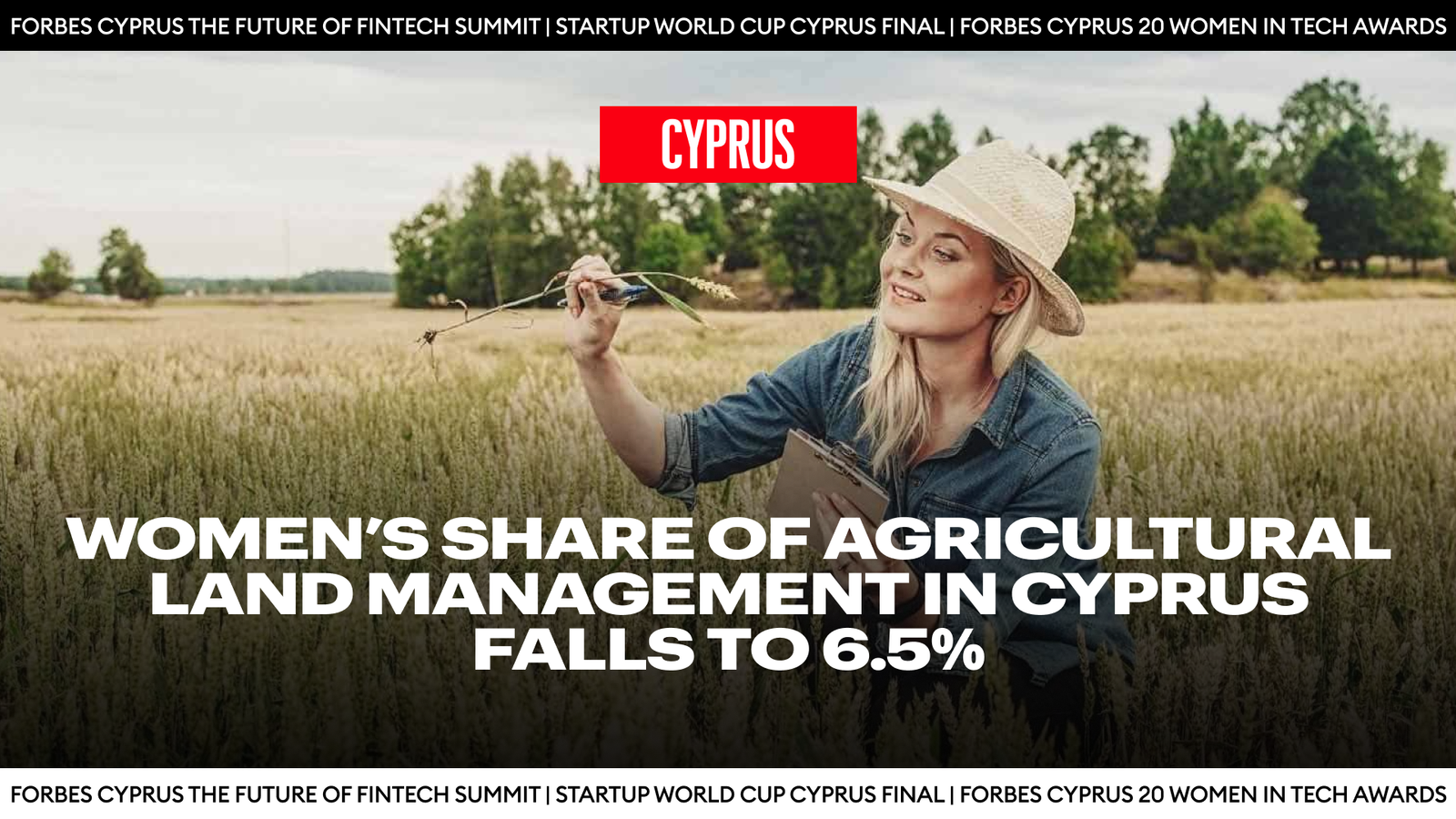
According to the latest Eurostat’s European findings, women managed 6.5% of agricultural land in Cyprus in 2023, down from approximately 9.6% in 2020 and well below the EU figure of 17.2%. Over those three years, women managed just over a third less agricultural land in 2023 than they did in 2020.
Eurostat’s European study compared the utilised agricultural area of holdings run by female farm managers, excluding very small holdings. Across the EU, women who manage farms are more likely to run relatively small holdings.
Follow THE FUTURE on LinkedIn, Facebook, Instagram, X and Telegram
In Cyprus, women managed 8,200 hectares in 2023, compared with 12,450 hectares three years earlier. Calculations from Eurostat’s figures show a reduction of 4,250 hectares, or 34.1%, in the area under their management. Their share of the agricultural area surveyed fell by 3.1 percentage points.
Over the same period, the area under men’s management remained relatively stable, rising from 117,170 to 117,720 hectares. The figures do not establish whether fewer women were managing farms or what happened to the land previously under their management.
A farm manager is the person responsible for the farm’s everyday financial and production decisions. The manager may also be the holder, who bears legal and economic responsibility for the business. These statistics do not show how much land women own or capture all the work they do on farms.
When considering women’s participation in agriculture, a woman may work in a farming business without being recorded as its manager, so the land figures describe one aspect of her involvement rather than its full extent.
Cyprus’s share was also below Malta’s 9.3%. Elsewhere in the Mediterranean, the regional figures show considerable variation. Eleven regions in Italy and four in Greece were among the 25 EU regions where women managed at least 28.5% of agricultural area. Molise recorded the highest share within Italy, while Voreio Aigaio led the Greek regions.
The United Nations has declared 2026 the International Year of the Woman Farmer, highlighting women’s contribution to the sector across food and agricultural businesses. The initiative also emphasises barriers women face globally, including access to land, finance, training and services.
In Cyprus, the Office of the Commissioner for Gender Equality launched “Women’s Stories – Rural Women” on 15 October, marking the International Day of Rural Women. The campaign features seven women working in the agricultural sector, sharing their experiences of working and running businesses in the countryside. It aims to give greater visibility to their contribution to the country’s economic and social development.