
In Cyprus, women are half as likely as men to start businesses. According to the OECD’s Inclusive Entrepreneurship Policy Assessment, while 12% of men are involved in early-stage entrepreneurship, just 6% of women are. Cyprus ranks above the EU average of 5% (which is already very low) for women entrepreneurs, but just barely.
The underlying reasons for such low stats are both structural and social. According to the Global Entrepreneurship Monitor, Cyprus ranks 48th out of 49 economies for social support for women entrepreneurs. Women entrepreneurs also have access to fewer resources than men.
Follow THE FUTURE on LinkedIn, Facebook, Instagram, X and Telegram
It’s a bit chicken and the egg. When there isn’t the support to encourage more women to enter business, their own self-esteem and confidence are bound to take a hit. The fear of failure is also cited as one of the main social barriers to even playing with the idea of taking the initial step into entrepreneurship. More than half of Cypriots (53%) admit that this is the reason they did not launch a venture. Women also report lower confidence in their skills, 21% less likely than men to believe they have what it takes. Only 2 in 5 adults see good local opportunities to start a business, and among those who do see opportunities, more than half still won’t start because of fear.
Some fear, but do it anyway.
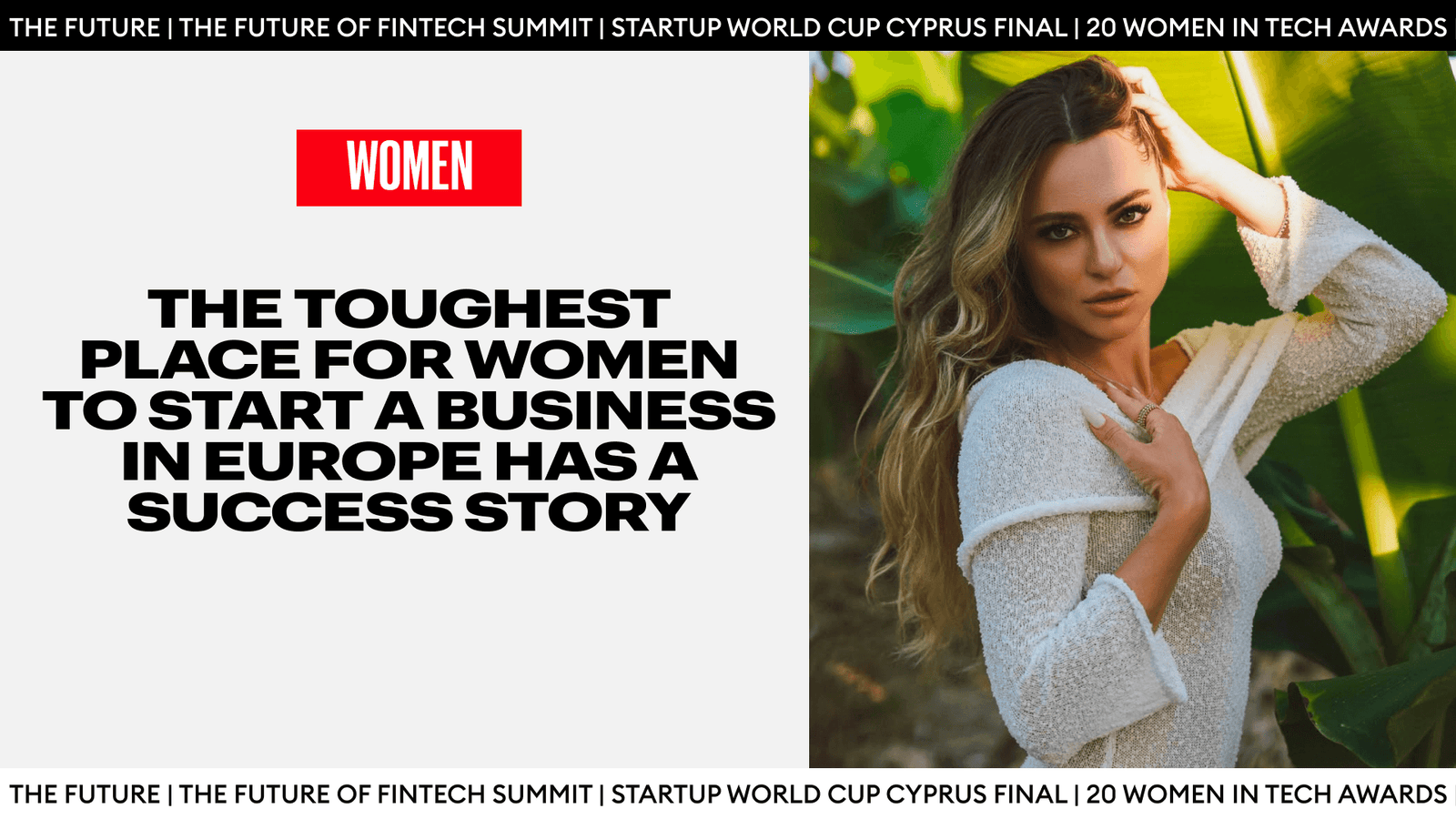
Alena Karas arrived in Cyprus four years ago with no network, no plan, and no intention of starting a business. She is a single mother of two; her son is now 3 years old, and her daughter is 1 and a half. She didn’t speak the language nor understand the culture. She just wanted to find a new pace of life.
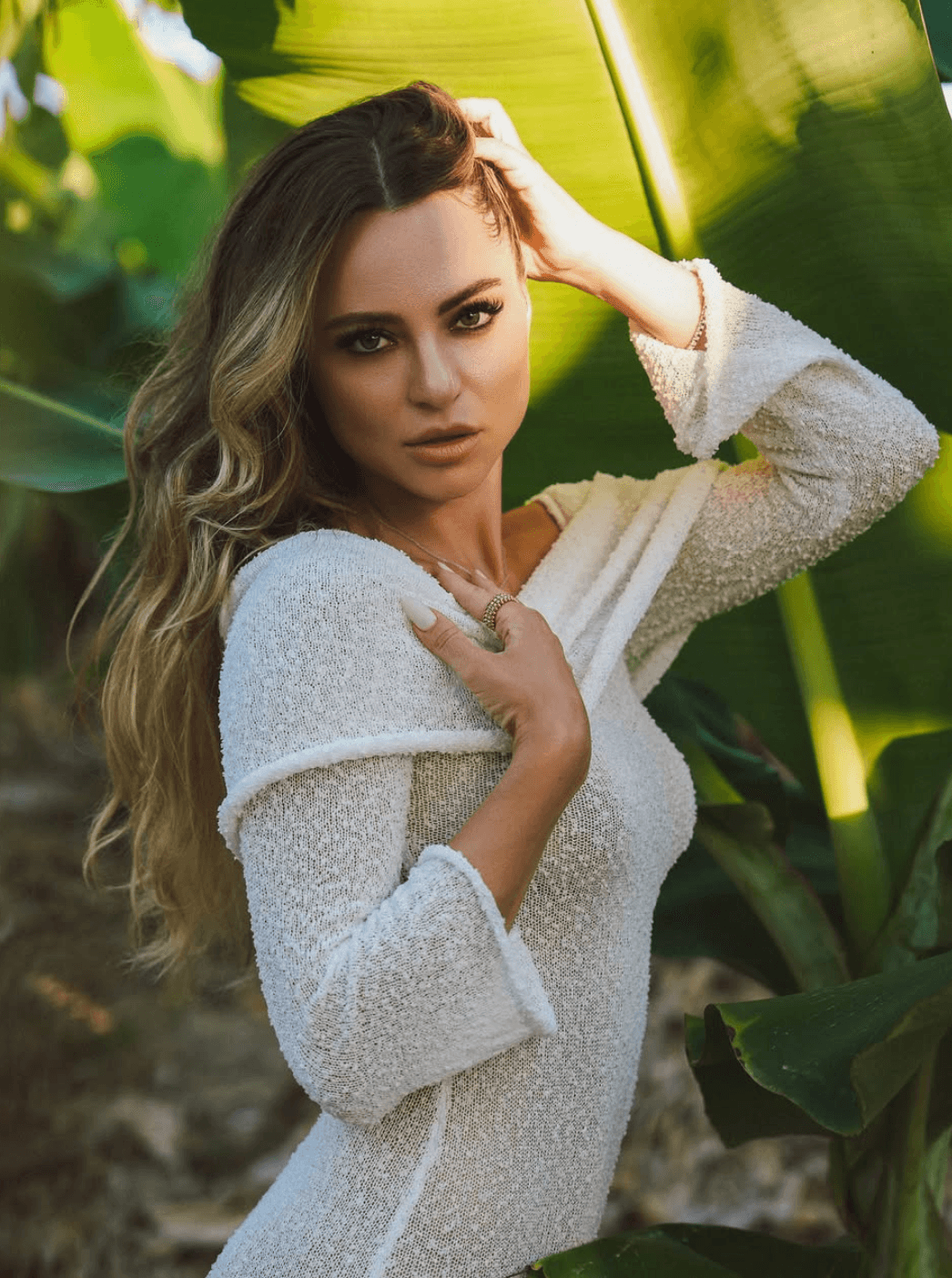
Today, she runs three businesses. SOK Color and SOK Beauty, beauty studios in both Kaliningrad and Cyprus, built around the principle that women need a space to breathe. In 2025, she launched ISEEME, a lingerie brand with roots in personal transformation.
In a market where women face structural disadvantage, Alena built not by fighting the system, but by understanding it. She found support among her community and learned that resilience wasn’t about pushing harder but removing from her space what didn’t serve her.
In this interview with The Future Media, Alena talks about building multiple businesses while raising two children, what it means to be a newcomer seeking to find a new life on the island, and the difference between building a business at any cost and building a life you actually want to live.
1. To start, tell us a bit about yourself. Where are you from, how long have you lived in Cyprus, and what was your life like before you started building businesses here?
My name is Alena Karas. I am 34 years old. I’m a mother of two: my son is three, my daughter is one and a half. I moved to Cyprus four years ago.
Before that, my life was closely connected to the beauty industry. I started as a colour specialist, then opened a small colour studio, and built my first team of professionals. What still surprises me is that during the pandemic we managed to open a larger studio in the city center of Kaliningrad.
When I moved to Cyprus, I had no plans to start a business here. I just wanted to settle in, get used to a new rhythm. But over time, beautiful things started happening. People who knew me from Kaliningrad would come here and say, “Alena, why don’t you open a studio here?”
And finally, I gave in. That’s how the Cyprus branch of my beauty salon, SOK, started in 2023.
Then, in 2025, I began my lingerie brand, ISEEME. Although the idea came to me much earlier, right after my first child was born. But it needed to live inside me for a long time, waiting for its moment to be born into the world.
The move to the island wasn’t easy, of course. A different country, a different language, a different pace of life. But over these last few years, I’ve experienced how warm and open the community in Cyprus is, and so, the main thing I’ve learned through living here is: we find support in a new country through our community.
2. Why Cyprus? What brought you here, and why did you decide you could build a business here?
To be honest, I didn’t choose Cyprus myself. Life just unfolded that way. I came here initially for family reasons, and only later did I fall in love with the island.
I don’t have a beautiful story to tell about choosing this country. Sometimes life just takes you where you need to be, but I don’t regret it for a second.
The first year, I went for walks almost every evening and mentally thanked Cyprus. Because it smells like flowers here, the sun almost always shines, and even difficult periods feel lighter.
Cyprus also taught me something important: it’s very easy to slow down here. But if you have that inner discipline, you can build a beautiful life where there’s more than enough room for business, family, and yourself.
3. What drew you to entrepreneurship?
I’ve always felt a pull towards creating.
Not so much to make a financial gain from it, but to the process of creating a space, an atmosphere, a product, a team.
I love that moment when an idea from your head is transformed into something tangible. I’ve always been a creative person; rigid structures don’t work for me.
I like to influence processes, to imagine things, to bring people together, and watch it all start living its own life.
4. Which business came first, and why that one?
My beauty business, SOK. It felt very natural to me. I’ve always been drawn to aesthetics, beauty, and the feeling you get from being in a space surrounded by women.
But I never wanted to run a typical beauty salon. I wanted to create a place where a woman could breathe. Where she doesn’t have to fit in, play a role, or hold herself together. I wanted a space where a woman can just be.
5. Tell us more about the projects you’ve built. What are SOK Color, SOK Beauty, and ISEEME?
SOK Color and SOK Beauty are my beauty spaces for women. But honestly, I never saw them as a business.
For me, it was always a space where a woman could feel beautiful, not through force, but through relaxing into the process and connecting with herself.
ISEEME is a very personal project. It is a lingerie brand born during my own inner transformation. For me, it’s not just lingerie. It’s about a woman’s inner self.
6. The beauty industry is highly competitive. What did you do differently from typical beauty salons?
It’s no longer enough to rely on providing just good service; that’s the absolute baseline. People come for an experience, for the atmosphere, and for moving through a state of mind.
From the beginning, I wanted to build a space where I myself would want to spend my time. I’ve always cared about the aesthetic of spaces, attention to detail, the team, and the feeling that someone thought about you in advance. Because women are very sensitive, they can feel when something or someone is not genuine.
7. How did you get your first stable flow of clients?
Instagram played a huge role, of course. But people played an even bigger one. When someone has a good experience, they start telling others about you. In Cyprus, this is especially important. Everything here is built on trust and word of mouth.
I think word of mouth became our most valuable tool.
8. What were the biggest obstacles when launching and growing your business in Cyprus?
Probably the hardest part was building a business while also going through my own adaptation to this new life on the island.
Delegation was a big challenge for me, too. When your business grows, you can’t control everything yourself anymore. You have to learn to trust people, find specialists you can rely on, and admit that your team knows things better than you do.
9. What stays “behind the scenes” in a service business?
I think people underestimate the emotional side of running a service business. From the outside, it looks beautiful: beautiful aesthetics, curated design, coffee, and beautiful women.
But behind all that are daily decisions, responsibility, working with people, expectations, and managing your team’s mood. Service is a demanding and “constantly on” business. It demands great resilience.
10. Why did you decide to develop multiple directions instead of focusing on one? How do you avoid burning out?
I have to admit, I chose to work on multiple projects because one project feels confining to me.
But if you look closer, everything I do is united by one idea. Beauty salons, lingerie — it’s all about women. About her body. About her state of mind. About how she feels.
Regarding burnout, I’ll be brutally honest. I used to work until I burned out. Now I’m slowly learning to live more carefully.
Resources and growth aren’t always about adding something. Very often, you need to remove something. Unnecessary tasks, unnecessary expectations, unnecessary rush.
11. How did becoming a mother affect your approach to entrepreneurship?
Motherhood changed my perspective on entrepreneurship entirely. After my children were born, I stopped trying to build a business at any cost. I changed my mindset from “how much” to “how.”
What state am I living in while doing this work? How much life is left inside me during this race?
Because children don’t listen to our words. They read our state of being. Motherhood has taught me to be gentler with myself.
12. Who became your support system in Cyprus?
Over these last few years, I’ve met many wonderful people.
I really like how the Russian-speaking community in Cyprus is changing to become warmer, more open, and more willing to connect.
I did a lot of networking in the beginning and watched new connections form organically, friendships grow, and even worked on shared projects.
But maybe the main lesson I learnt here is that we find support through people, but it’s also very important to be a support for yourself.
13. What would you advise a woman who has moved to Cyprus and wants to build a business here?
Don’t try to make everything perfect right away. In the first few months, I would dedicate time not to rushing, but to observing. Allowing yourself to meet people and understand the local culture.
A lot in Cyprus is built on trust. I wouldn’t waste energy trying to pretend to be someone else. People are very good at sensing inauthenticity.
Actually, I would say this:
Don’t be afraid to start.
Don’t be afraid of not knowing things.
Don’t be afraid to change direction.
Life rarely goes according to plan. But sometimes, because of that, it turns out to be much more interesting than we could have imagined.