

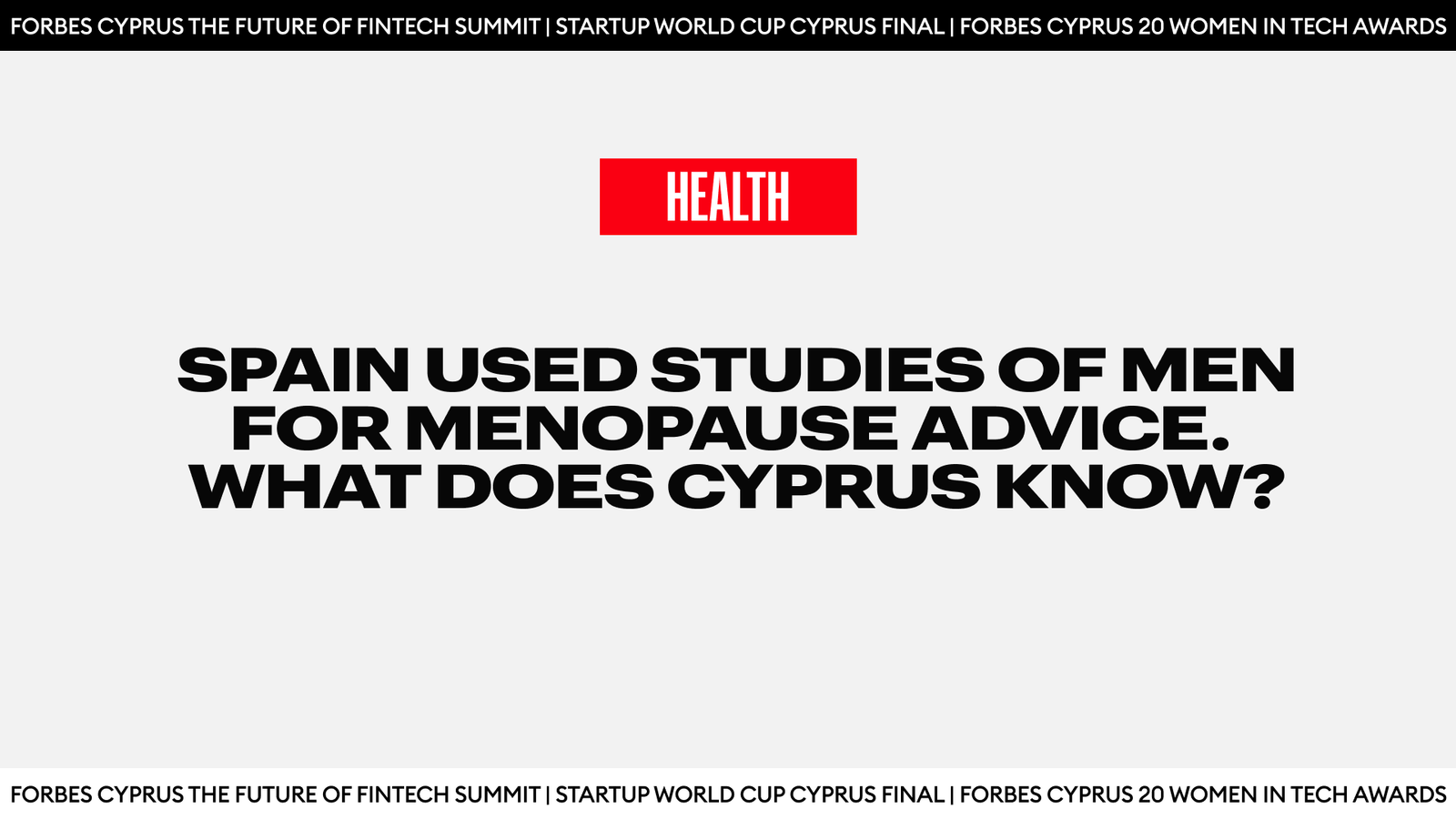
Spain’s food and nutrition agency is reviewing a report on diet and healthy habits during menopause after researchers found that some of its guidance relied on studies conducted exclusively on male subjects.
The Spanish Agency for Food Safety and Nutrition (AESAN) used reference values from the European Food Safety Authority when preparing parts of the report. Researchers warned that evidence concerning nutrients including iron and vitamin C came from studies of male populations, but this information was not clearly referenced in the document.
Follow THE FUTURE on LinkedIn, Facebook, Instagram, X and Telegram
AESAN has acknowledged that the report had omitted this warning and asked its scientific committee to review the work. The criticism concerns mainly some of the evidence included in the report and not every recommendation it contains.
The report examines nutritional risks during perimenopause, menopause and postmenopause. It recommends a healthy diet, regular physical activity and particular attention to nutrients that support women’s health during this stage. It also discusses the increased risk of osteoporosis, loss of muscle mass and cardiovascular risks.
Spain’s Equality Minister Ana Redondo called for the document to be reviewed and argued that women should be properly represented in health research instead of allowing the male body to serve as the universal reference.
However, this is not a single incident. The controversy reflects a much wider problem. The World Health Organization states that women have historically been underrepresented or excluded from clinical trials and biomedical research. This has left gaps in understanding how diseases affect women’s bodies and how they respond to treatments. In some cases, diagnostic tools and medical interventions continue to be based largely on male physiology and experience and yet are still used to treat women’s bodies.
What Does Cyprus Know About Menopause?
There is still limited research focused specifically on women’s experiences of menopause in Cyprus. A new project, however, has begun to provide a much clearer understanding of what women in Cyprus know about this period of their lives, which symptoms they experience, and where they look for further information.
The research project MENOWISE-CY was conducted by Kathy Kattashis of MITRA Cyprus Menopause Centre, in collaboration with Vikram Talaulikar of the UCL Institute for Women’s Health. The anonymous online survey was available in Greek, English and Turkish and included 875 women aged 35 and over living in Cyprus. Its findings were presented as an ePoster at the British Menopause Society’s annual scientific conference in June 2026.
The results showed that 40.69% of women before turning 40 felt completely uninformed about perimenopause or menopause. Only 5.31% had felt very well informed.
The symptoms they reported also challenged a familiar assumption about what menopause looks like. Mood changes were the most commonly selected symptom, reported by 56.91% of respondents. Fatigue followed at 47.54%, while memory problems, anxiety and difficulty concentrating were each reported by more than 40%.
Hot flushes ranked ninth, despite being one of the symptoms most commonly associated with menopause in public discussion.
The study also found that general websites were the most frequently selected source of menopause information, chosen by 47.77% of respondents. Health professionals were selected by 44.57%, followed closely by social media.
More than four in five respondents, or 83.31%, said menopause should be taught during gynaecological or general medical check-ups.
These results should not be treated as prevalence rates for every woman in Cyprus. MENOWISE-CY was an online survey promoted through digital platforms, social media and community organisations, rather than a randomly selected national sample. It nevertheless provides direct evidence of the experiences and information gaps reported by a substantial group of women living on the island.
A Menopause Bill Is Pending In Cyprus
The issue has also entered the Cypriot Parliament. MP Charalambos Theopemptou submitted a proposed Menopause Support Law on 29 January 2026. It has been referred to the House Health Committee and remains pending.
If enacted, the proposal would require access to scientifically documented menopause information and would introduce training for health professionals. It also provides for clinical support, including hormonal and non-hormonal interventions, and protections against menopause-related discrimination at work. Employers would be expected to make reasonable adjustments where symptoms affect an employee’s health or ability to work. These provisions are proposals and are not currently in force.
MITRA has been pushing for greater awareness of menopause and improvements in the support available to women in Cyprus. In an interview for The Future Makers podcast, founder Kathy Kattashis discusses the current treatment landscape, the difficulties women report when seeking help and the personal experience that led her to establish the non-profit.
Read our interview with MITRA founder Kathy Kattashis.
Spain’s disputed report and Cyprus’s emerging research expose different parts of the same problem. Health guidance cannot fully reflect women’s needs if researchers rely on evidence from men or fail to ask women what they are experiencing.