“No woman should live like this,” Serena Kara Gasparini says, her voice catching ever so slightly. “No woman should feel like her independence has been taken away.”
Gasparini says this after sharing a very personal story. She still struggles to be open about this part of her life. Her son was born with a serious health condition that meant his first three years of life involved surgery after surgery. What she had initially imagined would be a slightly longer maternity leave turned into Gasparini leaving her career to become her son’s primary caregiver. He is fine now, she says. But those years changed her.
Follow THE FUTURE on LinkedIn, Facebook, Instagram, X and Telegram
It wasn’t just the financial burden on the family. Her husband earned enough to sustain them, but that did not give Gasparini back the independence she had built for herself, the same independence that had taken her from her home in Australia to build a new life in London on her own. The long hours alone with a baby, in a country where she barely knew anyone, pulled her into a darkness she had never experienced before.
It was during that period of her life that her earlier idea for FemNEST came back to her.
Serena Kara Gasparini is a programme and community designer, creator of The DELIA Model™, fractional CMO, and the founder of FemNEST, a Cyprus-based community-first financial wellness platform for women. With two decades of experience across marketing, events, and community-building, she has spent the last several years working in femtech and women-focused communities. She was named a Top 100 Marketer 2025 by Alt Marketing School, Digital Community Leader at the Digital Women Awards 2023, and an Inspirational Womxn of the Industry finalist at the Hustle Awards 2022.
Gasparini grew up in Adelaide, Australia, between two cultures. Her grandparents were Italian migrants who moved to Australia after the Second World War. Her mother, as Gasparini puts it, was very Australian, “as far back as someone may have stolen the loaf of bread.” At school, she never felt quite Italian enough, but at home, she savoured the food, work ethic, family ties, and the strong belief in education her Italian family instilled in her. Her grandparents were adamant that she should go to university, and she did, becoming the first person in her family to do so.
After university, she worked in Adelaide and then Melbourne, trying to build the marketing and events career she imagined while studying. However, by 27, she had spent four years in event sales at a hotel and could not see a path forward. Instead, she decided she needed to see the world beyond the shores of Australia. She worked two jobs, saved the money, sold what she could, packed a suitcase, and landed in London with 30 kilos of luggage and no real plan.
The first few months were tough, working odd jobs just to make enough to cover the rent of her “Harry Potter closet” room in a shared flat. But not long after that, she got the job she still describes as one of the best career moments of her life. A friend told her about a role at the Office of the Agent General, representing South Australia in the UK, as a Business Development and Event Manager. It meant running high-profile trade and cultural events for South Australia in London, including gala dinners for 300 people and showcases of South Australian food, wine and talent around the Edinburgh Festival season.
“It was probably the best job that I could possibly ever have dreamed of,” she says.
It was what the industry would call her “big break.” It was the job that made her feel everything had fallen into place, the job that deepened her love of food, wine and events. Her next role in the wine industry looked to be an extension of that dream. Instead, the next job broke something in her.
The hours were long, and the pace was relentless. She could not keep up and eventually had to take time off to recover. “I fell into a depression,” she says. In 2018, she decided to leave the job and pursue freelancing.
That job changed how Gasparini understood work, especially for women. The problem, as she came to see it, was not only one bad job or one difficult industry. It was the whole system of work itself.
“I realised the corporate world is not built for women. Nine to five, Monday to Friday, doesn’t suit a woman’s life and how she’s made up. We work on a monthly cycle. So we can’t push ourselves 100% throughout that entire month,”
she says.
Rest, for Gasparini, should not be regarded as a reward for finishing everything. It is not something women earn by proving they can push past exhaustion. It is a basic requirement. “Rest is a must and a need,” she says.
She knows how strange that can feel after years of being taught to perform and maximise productivity between fixed hours. Even after she left the corporate world, she found herself clinging to the nine-to-five framework. It took a long time for her to stop feeling guilty about doing something personal between nine and five. It also took time to understand that working on her own terms did not mean working less seriously. It meant working in a way that did not destroy her.
Before having her son, she had finally created a system that worked for her. Monday and Tuesday were work days. Wednesday was rest. Thursday was work. Friday depended on her energy. Then motherhood arrived, and with it the old pressure to push herself back into the standard working week. “Oh my gosh, I forgot,” she remembers thinking when she found herself slipping back into the nine-to-five framework.
Now she protects her time more deliberately. She blocks three or four days a month in her calendar, linked to her cycle through an app called The Agenda. Strictly no work calls. No work. No need to explain herself.
That boundary did not come naturally. Gasparini remembers working in an office where a manager seemed able to identify when the women around her were on their periods. “I always had to hide it because there was always someone watching,” she says. There was always the risk that someone would decide a woman was not productive enough, not strong enough, not performing enough, because her body had become visible at work.
FemNEST is founded on the opposite premise. Women should not have to hide the realities that affect their lives in order to be taken seriously. They should also not have to wait until a crisis to understand what those realities can cost.
The idea had been with Gasparini even before she moved to Cyprus. Through her work in women-led and female-focused communities, she kept hearing versions of the same story. Women were getting pregnant and losing income, along with the independence that came with it. Women were dealing with PCOS, endometriosis, PMDD, or cycle-related health conditions that affected their ability to work. Women were taking time out to care for others. Women were reaching the edge of their capacity, losing work, losing income, and then being expected to recover quickly but privately.
“It’s not just me,” she realised. “This is a common narrative with a lot of women.”
In Cyprus, she sees that gap playing out in several ways. There are expat women who have moved to the island and are trying to build a life without the extended family structures others may rely on. There are Cypriot women who grew up inside a more traditional system and are now watching parts of that system fail to keep up with how their lives have changed. Women are having children later. Grandparents are not always available or able to become the default childcare solution. Rents in cities such as Limassol and Paphos can swallow a salary. Childcare services are expensive. Formal leave and support systems, as Serena describes them, can still leave families with a gap.
“One plus one does not equal two at the moment for people,” she says.
What she hears from women in Cyprus is urgency. In her conversations, she sees women asking how to set themselves up now, before the next life transition leaves them exposed. How do they stay in the workforce and survive? How do they earn if they are self-employed and cannot work? How do they protect themselves if pregnancy, illness, caregiving or menopause changes their capacity? How do they make sure that rest does not become a luxury only women with money can afford?
FemNEST is being built to answer those questions through three connected areas: health, wealth, and life. For Gasparini, women’s physical realities and financial outcomes cannot be treated as separate problems.
“If I’m unhealthy, I’m not working. I lose income. And then we have all the gaps,”
she says.
The platform is designed around community, verified resources, and financial confidence. First, Gasparini wants to create a space where women can talk openly about the points where their bodies, caregiving responsibilities, and earning power meet. “The moment that we start speaking is the moment things start to change,” she says.
The second layer is information. Gasparini wants FemNEST to help women understand their rights, their options, and the practical steps available to them without having to fight through confusing forms, unclear government processes, or unsourced online answers. She talks about building a bank of real, verified resources around EU and Cypriot policies, laws, and regulations, including maternity, parental leave, and other points where women often need guidance most.
The third layer is financial. Gasparini does not want FemNEST to speak only to women who already have money to invest. She wants to reach women who do not have much time or money at all. The goal is to help them build enough savings, enough knowledge, and eventually enough investment confidence to stand on their own two feet when they need to. The goal is not for women to become rich overnight, or to chase a fantasy of financial success that ignores the reality of everyday life. It is to have enough to rest, to recover, to buy something small for themselves. Enough to take their child to a class. Enough not to be trapped by the next emergency.
“A lot of these investment platforms or things that have been set up are about women already with money. But we’re talking about a lot of women that don’t have access to time or money,”
she says.
“No woman should ever have to decide if they’re feeding themselves that day,” Gasparini says.
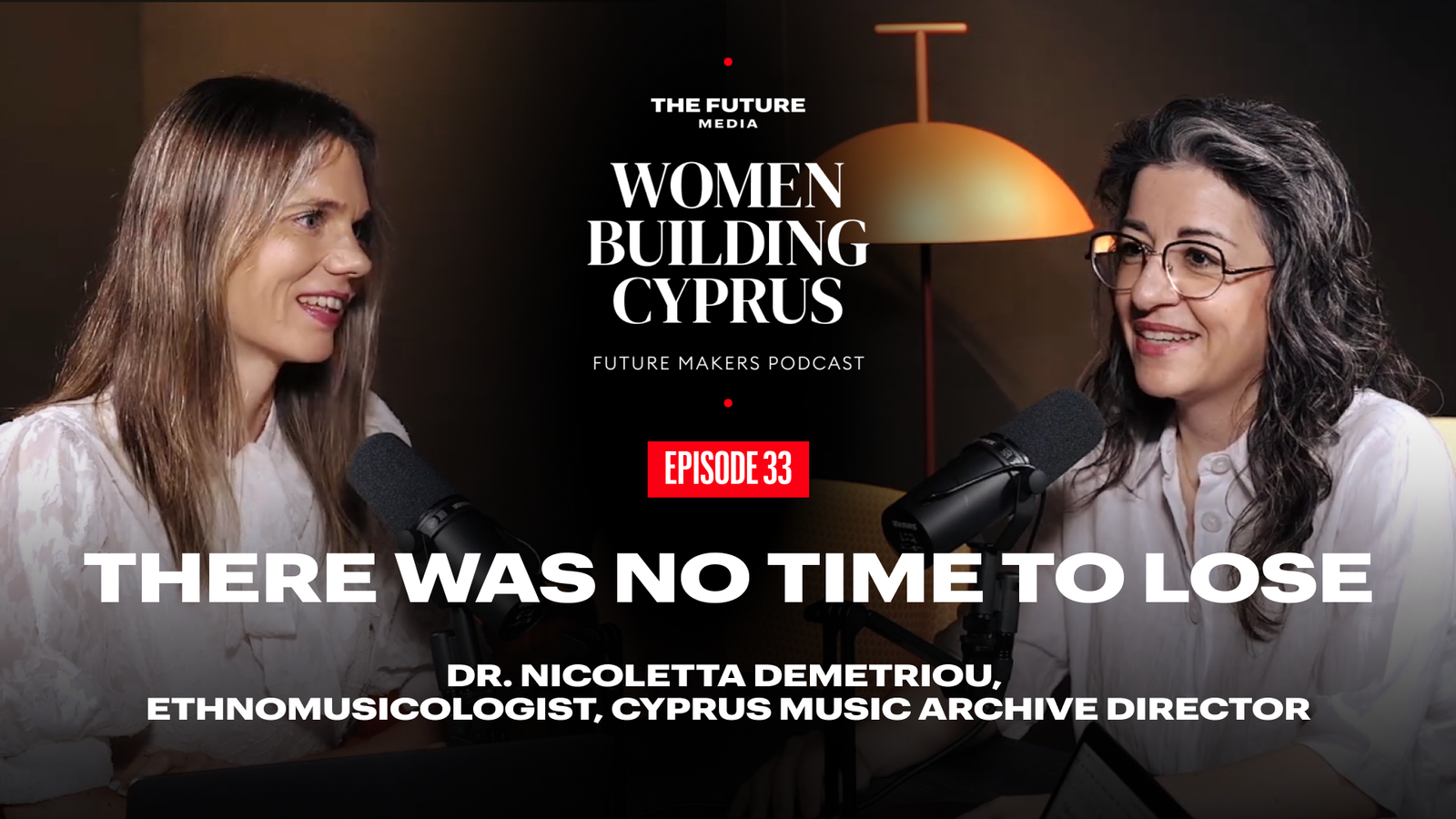
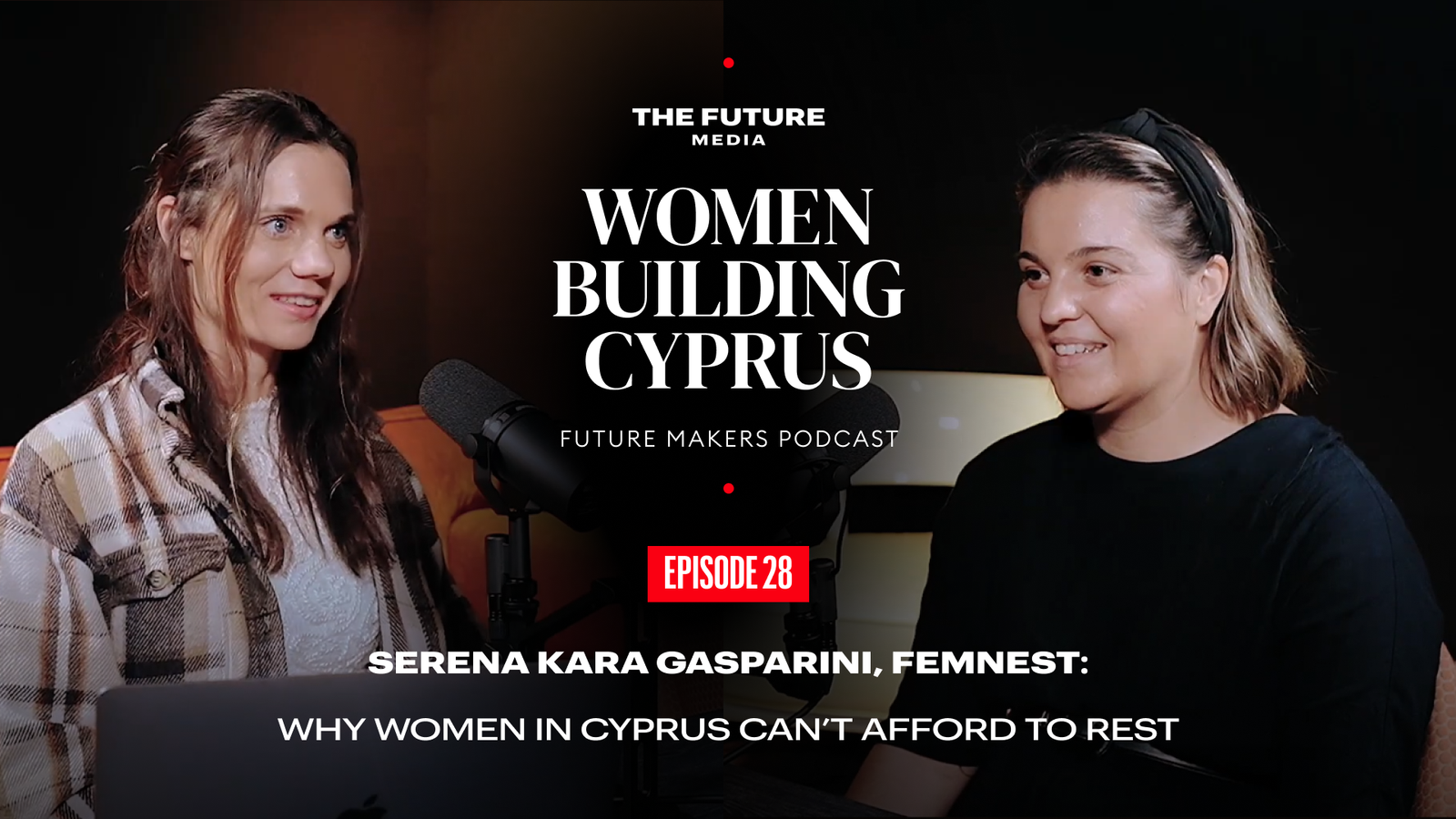
Serena Kara Gasparini is a guest on The Future Makers: Women Building Cyprus. The full episode, including her reflections on burnout in the corporate world, financial independence, motherhood, women’s health, Cyprus’s startup ecosystem, and how FemNEST is trying to build a safety net for women who cannot afford to pause, is available to watch now.
The Future Makers Podcast is a series of in-depth conversations about how future-makers are made, in Cyprus and beyond. Host Annetta Benzar sits down with people who are a leading force in our shared future and looks past the titles. Together, they travel back to the people and moments that shaped them, walk through the choices and challenges they are living through now, and look ahead to the futures they are trying to build.
The first season, Women Building Cyprus, follows women whose lives and decisions are changing what this island can be.
A production of The Future Media.