

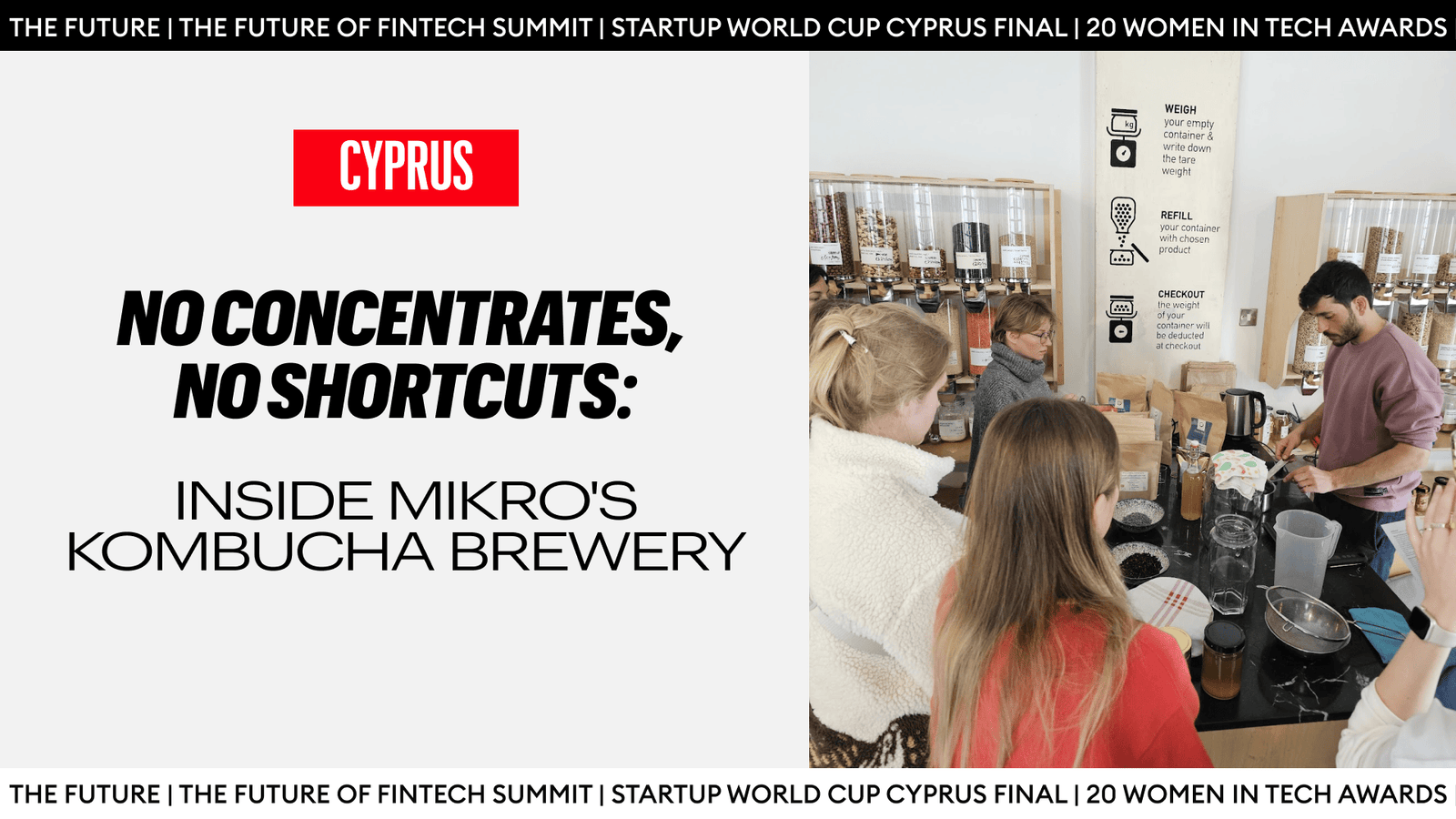
A $5 billion market doesn’t exactly emerge overnight. In this case, it took a couple of thousand years.
Kombucha, the fermented tea beverage that originated in China around 220 B.C. and was prized as the “Tea of Immortality,” is finally regaining momentum in the health and wellness conversation. The global market continues to grow, driven by consumers seeking functional beverages that deliver both wellness benefits and sensory pleasure without the compromises to their long-term health.
Follow THE FUTURE on LinkedIn, Facebook, Instagram, X and Telegram
The timing of the growing popularity in alternative products geared towards a “healthier” lifestyle is no coincidence. McKinsey’s 2025 Future of Wellness survey, covering more than 9,000 consumers in China, Germany, the UK, and the U.S., describes wellness as a $2 trillion global market.
Younger consumers increasingly treat wellness as a daily practice rather than occasional activities or purchases. The same report states nearly 30 percent of Gen Z and millennials in the United States report prioritising wellness “a lot more” compared with one year ago. This interest extends to what they drink. Gen Z and millennials are actively seeking beverages that don’t force them to choose between social experiences and health goals. They want functional options that support gut health, immunity, and digestion, without sacrificing taste or the ritual of drinking socially or as a “wind down” activity.
Kombucha fits this profile. The fermentation process produces organic acids, probiotics, and bioactive metabolites that research suggests may support gut microbiota regulation, offer antimicrobial and antioxidant activity, and contribute to immune system support. The drink’s characteristic tangy flavor comes from acetic acid produced by acetic acid bacteria, while yeasts contribute natural carbonation. Small amounts of lactic acid bacteria produce additional organic acids and antimicrobial compounds.
The wellness trend alone doesn’t guarantee business success. Euromonitor’s 2024 sustainability research finds that conscious consumers want sustainable products that also deliver quality and performance. Brands, however, need transparency and traceability to not only justify their premium pricing but also build trust with their customers. In a category crowded with mass-produced options brewed from concentrates or pasteurised for shelf stability, authenticity is the differentiator.
The Cypriot-born company, Mikro Kombucha, is doing just that. Founded by Demos Katsouris, the nano brewery produces unpasteurized, living kombucha through traditional fermentation that takes four to five weeks. The company is careful about choosing only the best quality ingredients for its product, from using only organic tea and cane sugar, juicing citrus in-house, processing ginger on-site, and sourcing local ingredients when possible. No concentrates, no artificial flavors, no preservatives, says Demos Katsouris.
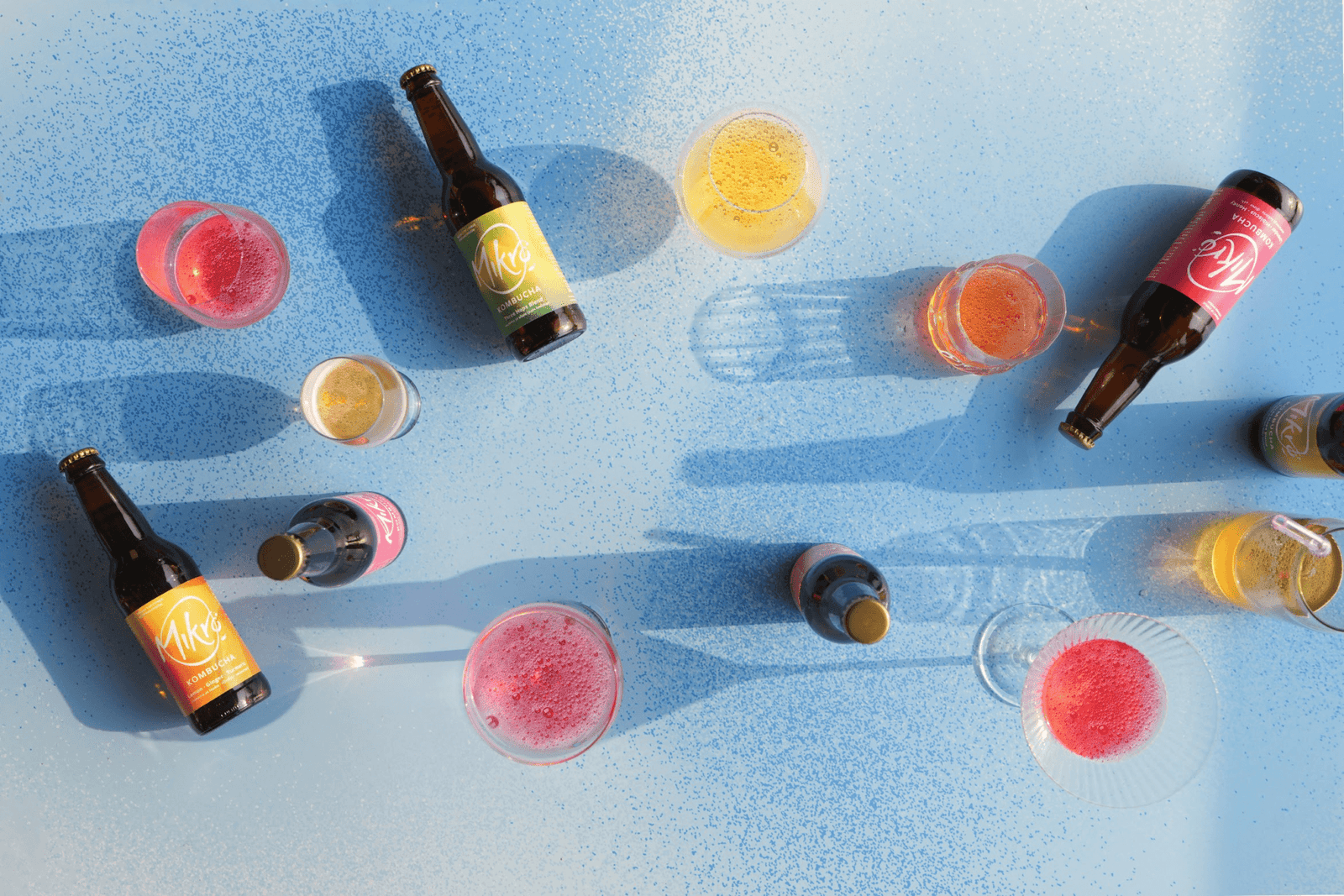
For Mikro, authenticity means transparency. The same table Katsouris eats from is the one he shares with his guests. Quality isn’t a buzz hashtag for them. It’s about not taking cheaper alternatives or shortcuts in the four-week fermentation process.
In this interview with The Future Media, Demos Katsouris explains how an industrial designer became a kombucha brewer, why authentic fermentation takes five weeks when most producers take five days, and what it means to build a craft beverage business in Cyprus when consistency competes with seasonality.
1. To start, could you briefly introduce yourself and what you do?
My name is Demos Katsouris. Both my parents are refugees, and I was born in Paralimni. I studied something completely different to what I’m doing now—I studied industrial design and got my master’s from TU Delft in the Netherlands.
I lived in the Netherlands for 10 years, working in user experience and tech. For the last three to four years, I’ve been building a small craft kombucha brewery in a village next to Paralimni.
2. For someone first coming across Mikro, can you explain your venture and its mission?
Mikro Kombucha is a nano brewery producing authentic, living craft kombucha made with organic and whole natural ingredients. We brew our kombucha the traditional way and let it ferment for two to three weeks. The whole process of making the drink actually takes between four to five weeks.
We are a small team that does not take shortcuts. We do not brew from concentrates. We don’t blend acids. We use local ingredients as much as we can.
Our mission is to give the best possible kombucha to the island of Cyprus and to also educate the community about authentic kombucha.
3. How did you choose the name Mikro?
My wife is not Cypriot, but she has learnt a few words. When we were trying to come up with names, she suggested “mikro.” It was genius because it really captured everything we wanted to say. It’s a microbrewery, a nano brewery. And it’s also a Greek word. It’s understandable in Greek and English.
There is also that connection to microbes and bacteria, the microcosm that we created around fermentation.
4. How did kombucha first enter your life?
Back in 2017, just before I left for my first trip to the US, a colleague of mine asked me to take a photo of all the brands of kombucha I found during my travel. I was so confused. I had no idea what kombucha was, never mind tasting it. It was not even on my radar at all.
Most people take some time to get used to the taste of kombucha, which is very normal. Same as your first coffee, beer or whiskey. But with kombucha, it was love at first sip for me.
I was also experiencing a few health issues at the time. I couldn’t drink alcohol or soft drinks. Not even juices. I would just drink a lot of kombucha, which I didn’t have any issues with, while I was in the US.
As soon as I got back from that first trip, I was craving more. This same friend had a SCOBY. I asked if she could give me one. That’s when I started brewing my own kombucha. I still brew for the most part, especially a lot of random experiments, mostly for R&D.
5. Before Mikro, how did you see yourself in relation to entrepreneurship? Was starting a business always part of the plan?
I had no relationship with entrepreneurship before. I always admired the people who had the energy and the drive to start a business, but it was not something I saw for myself. I knew that being an entrepreneur is not an easy job. I could understand, at least on a theoretical level.
But growing up, I had a lot of examples of entrepreneurs. My mom opened her own business when she was 23. I think a lot of people in Cyprus at that time, post-war, had to start their own business. In that sense, it is in the culture.
For me, it was only when I felt that I had found something worthwhile that I took the step. I didn’t jump all in, but did it part-time alongside my 9-to-5 job until November 2023. That’s when I put both feet in.
6. There are now more kombucha brands on the shelves, including imported ones. In your own words, what makes Mikro different?
We believe in creating a drink that is not only delicious but also has real health benefits. Our number one priority is that we have a really well-balanced drink. Not too sweet, not too sour, while still having fairly low sugars.
The main thing is that our drink is unpasteurized, which means it is living and full of vitality. It is naturally fermented for four to five weeks. The whole process may be more for some special flavors.
We focus on high-quality ingredients. Our tea, cane sugar, herbs, and ginger are organic. We juice the grapefruits and lemons in-house. We also process the ginger in-house. Basically, no nasties, no flavorings, no colors or preservatives. Everything is natural.
We don’t make kombucha from concentrates, and we don’t take shortcuts. We just make the drink we like to drink ourselves. We hope that people can eventually understand and taste the difference, and support our local brand.
I also want to mention the packaging. We always use glass. Kombucha is an acidic product, so we avoid plastic at all costs.
7. How did you choose the flavors?
We have four flavors currently. The first one is lemon, ginger, and turmeric. The other one is lavender, hibiscus, and honey. The third one is grapefruit and a little bit of hops. The fourth one is just hops. There are three types of hops, which we call the Three Hops blend.
I was the one who primarily developed the flavors. For the lemon ginger, we just wanted a lemonade. We used to call it punchy lemonade. Ginger and lemon is a good combo. From what we have learnt, kombucha sales are quite high when kombucha has ginger in it, and we have great lemons in Cyprus.
For grapefruit, I wanted something that I could get almost all year round. While grapefruit has a season, you can get grapefruits even from Cyprus within a big window of the year with refrigeration. So I thought, what should I do that can work all year round? What is something that we produce locally? Grapefruit.
For the lavender hibiscus, we actually used to have lavender hibiscus tea, and we would add a little bit of honey to sweeten it. We just really loved it in the Netherlands. We thought, maybe this will work in kombucha. It did.
Now for the Three Hops blend. I really like IPAs, and I really like hops. I felt like there was an opportunity to make not necessarily a beer alternative, but an IPA kombucha, which is something that could work at night, not just a day drink. You can have a lemonade in the day, but not necessarily at night. But you can have a non-alcoholic beer at night.
8. What misconceptions do you encounter most often?
I think the biggest misconception for us is when people hear that kombucha is made with sugar, and immediately think it must be “unhealthy” or “bad.” People need to understand that the sugar on the ingredient list is used mostly as fuel for the fermentation process so that the probiotics can develop.
Of course, there is some residual sugar left in the drink, which during fermentation is broken down from sucrose to fructose and glucose.
Because kombucha is an acidic beverage—it has acetic acid and other organic acids—it actually does not impact your insulin. It also helps with your digestion and protects you from absorbing carbs too fast.
The other challenge we have come across is this push for sugar alternatives. There is more and more evidence now that it can be more harmful to the gut microbiome to use artificial sugar alternatives than sugar. People have asked us, “Why don’t you add Stevia or xylitol or something else?”
What I want to say is that we want to create the drink the traditional way.
9. What are the biggest challenges of running a small brewery and beverage business in Cyprus?
This part is not super sexy, I guess. The biggest challenge, if you exclude the fact that it’s a self-funded project and you have to put in your own savings and hope for the best, is that it’s very hard to find people who have the sensibility to work with a drink. It is considered a food item, and so, there are some protocols you need to follow.
At the same time, nobody studies kombucha brewing or even brewing technology. Every time you have someone come into the team, you really have to be very diligent about teaching and helping them understand the dos and don’ts. For us, it has been the talent and keeping the talent.
The other one is consistency. If you work with a living product, it can be hard to manage. Imagine—a lemon from a different season or even from a different tree is different. You can’t always have the same outcome, which seems to be the expectation from consumers these days with mass-produced products.
After years of experimenting, we have found ways to find consistency and keep the differences between batches small. We hope that difference is seen as an expression of the ingredients at that time of the year, as opposed to “this is a good batch, this is a bad batch.”
Scaling is also another challenge. You don’t know what you don’t know. We grew organically, so we didn’t know what equipment we would need down the line. We could have saved a little bit of money if we had, but it’s the journey you have to follow.
We try to be a little bit more careful now with the new knowledge by being in contact with brewers from the UK, from the Netherlands, and taking one step at a time.
10. From your vantage point, how is the culture of health and wellbeing in Cyprus changing, especially around gut health, fermented foods and low- or non-alcoholic drinks?
There is definitely a change in Cyprus. People are trying to make better choices and try to incorporate these choices into their daily lives. But they still want to do it conveniently. You want someone to help you make a better choice, a coach, a dietitian, or a fitness trainer. But they also still want to have a great life experience and not sacrifice a good experience for a healthy choice.
For us, it’s great, because I think kombucha is a healthy choice that can also be enjoyable. It’s the perfect fit.
You can see runners’ clubs popping up, which were unheard of five years ago. Cycling clubs, more gyms, and yoga studios. There is a general trend in the world where the consumption of alcohol is slowing down. People are also looking more into the quality of the products they consume. People are more likely to choose a craft product that has a story and face behind it, and, preferably, local.
I think the combination of health and wellness and being a little bit more selective with how you spend your money creates this dynamic.
11. Looking ahead, what are your ambitions for Mikro over the next few years?
We wish and hope that we can become as local as possible. We want to move even more towards creating beverages using exclusively Cyprus ingredients, herbs, plants, or whatever else we believe makes sense. Due to the climate conditions and the soil conditions in Cyprus, our herbs are extremely potent.
Kombucha is a global phenomenon, but it can also be a platform. Our mission is to give our community a unique Cypriot experience through this beverage that is made from ingredients from the island.
On the other hand, we want to connect more with the pioneers of Cypriot gastronomy. More collaborations and just move more towards the highest possible quality non-alcoholic beverages that can be enjoyed at different occasions. Not just the health drink or a soft drink alternative, but create a more complete portfolio of non-alcoholic beverages.