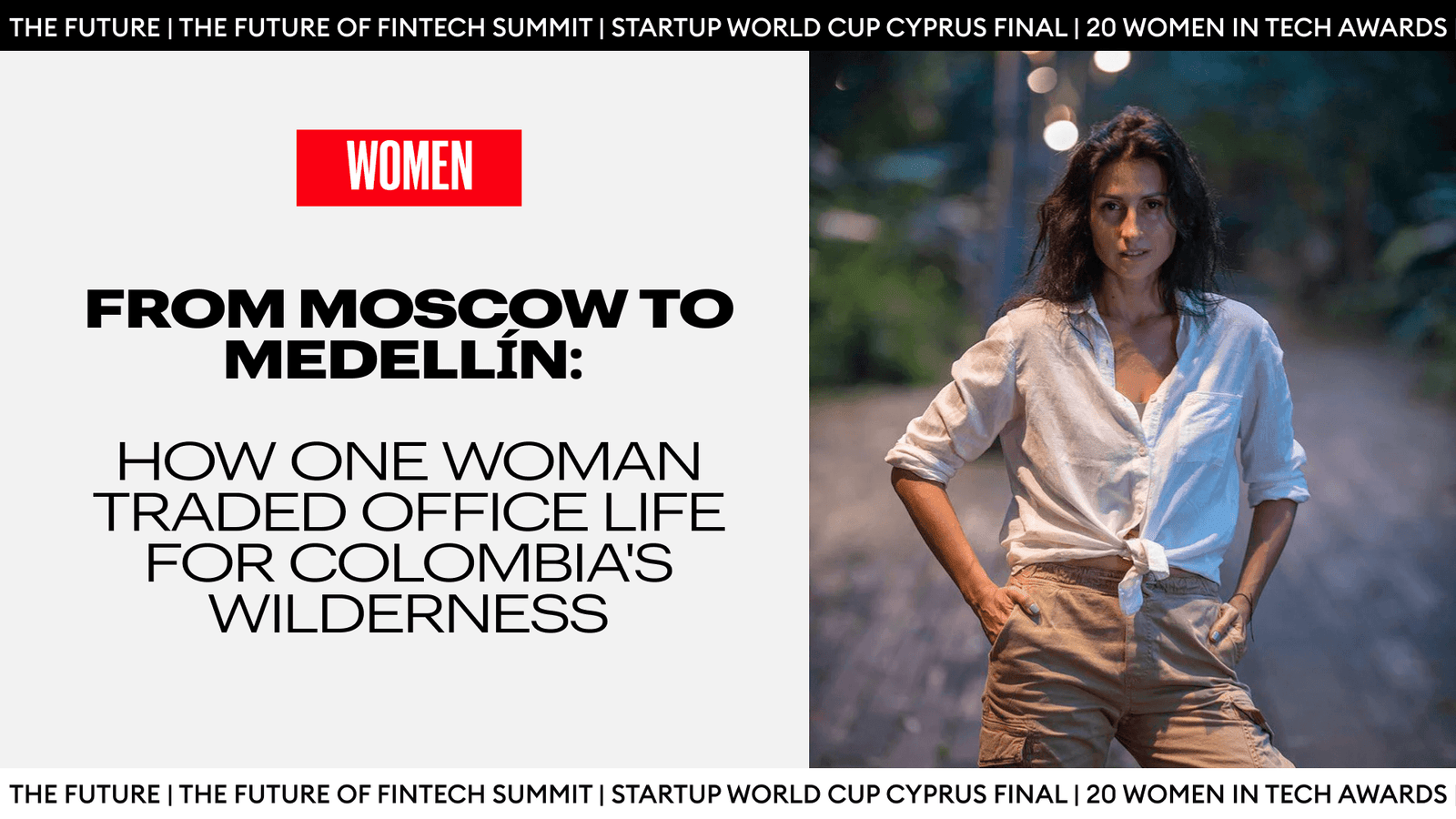
Irina Shateeva had a successful career in Moscow’s commercial real estate events industry. Good job, clear prospects, comfortable salary. But when she thought about the seven-year-old girl who watched wildlife documentaries and dreamed of mountains, she felt an overwhelming pang for a life she didn’t yet know was possible. One that, for a long time, lived only in her imagination.
In 2019, she quit. She bought a one-way ticket to Nepal with no plan for what came next. Five years later, she found a home in Medellín, Colombia, running active tours through the country’s coffee regions, Amazon rainforest, and Pacific coast while working remotely in PR and marketing.
Follow THE FUTURE on LinkedIn, Facebook, Instagram, X and Telegram
The path wasn’t smooth. But somewhere between the Annapurna Circuit and Medellín, she stopped trying to fit her life into the outline others expected of her, and she found so much more: a version of herself that wakes up smiling.
In this interview with The Future Media, Irina Shateeva explains why she left Moscow, what those first weeks in Nepal taught her, and why taking that first step towards your dream is worth more than your fears.
1. You went from a successful career in Moscow’s real estate events industry to buying a one-way ticket to Nepal. What finally made you buy that ticket?
When I was young, I read a lot of stories that inspired my sense of adventure, exploration, and curiosity. I think it’s so important to feel this inspiration. We seem to fall into the trap of underestimating ourselves and the decisions we take. I want to share my story in the hopes it will inspire even one person to take that chance to follow what they truly want to in life.
I think there were two main reasons why I decided to buy that ticket.
First of all, since I was a little girl, I felt this pull to nature and travelling. I remember watching documentaries about wildlife with my dad when I was eight years old. It was always a big part of my life and my dreams. But back in those days, I didn’t know how to come to this life.
I have always been the kind of person who craves freedom. This feeling of inevitability—like you have to go to the office and be there from nine to six or sometimes even more—I never wanted that. The thought made me physically ill. I never wanted to live in the city, but I found myself working in Moscow. I tried compromising by living in the countryside, but that meant I spent a lot of time commuting from my home to the office. Sometimes it would take one and a half hours, sometimes up to three hours, just one way. I could have easily removed the long commute by renting an apartment in Moscow, but I just didn’t want to live in the hustle of the city. I felt stuck.
But life took an interesting turn. I was encouraged to take on a project in a very picturesque place in Crimea. It’s not so much the job but the fact of the offer that helped me understand something very important: my life doesn’t necessarily have to be in Moscow. Or Russia. Yes, I wanted to earn decent money, but there are other options. Don’t get me wrong, I had a comfortable life, successful in what society would call success. But I wasn’t happy.
It was then that I began to remember that I never dreamt about office life.
The question I remember asking myself was if seven-year-old Irina was asked, “Is this the life you imagined?” the answer would definitely be no. That made it easier to quit my office job and just buy a one-way ticket with no plan at all for how I would earn money.
I just needed some fresh air, freedom. In the worst-case scenario, I would just return to my office job after a very needed break.
2. What was it like when you landed in Nepal and realised, this is it, I’ve actually done it?
It didn’t hit me until I stepped out of the airport in Nepal. I spent a month there, and part of that time was hiking the Annapurna Circuit trek with a group for 12 days. It was the most beautiful experience I’ve ever had in my life. I’m so in love with the Himalayas. After the Himalayas, there are no other mountains that have such an effect on you. I’m actually afraid of heights, so people are surprised when I tell them that’s one of the reasons I like mountains. There, I feel I can control my fear, sometimes well, sometimes not so well. That month was really special as it was my first time abroad, when I didn’t have to think about my job and just enjoyed the country. But in the beginning, I have to admit that it was stressful. And my body felt it. I got a horrible pain in both my knees, which was out of the ordinary for me as I’ve never had problems with my knees before. I put it down now to too much stress, thinking constantly about my one-way ticket with no further destination. Because as soon as I started enjoying myself, relaxing, it went away, and I’ve never experienced it again.
From Nepal, I went to Bali, Indonesia. I thought I had enough money for months of travelling, but it’s one thing when you’re on vacation, and you allow yourself to splurge and another when you’re on a long travel and you have to try to be more frugal. I was spending like crazy, which is why my savings were slowly getting low.
3. Why did you choose Colombia as your home?
It wasn’t a very popular destination for Eastern Europeans, but I read a lot about the country. I knew that the country was extremely biodiverse—the second most biodiverse country in the world. I already knew that I would like it. The thing I didn’t know was that I would like it so much that I would stay.
My initial idea was to go to Colombia, continue working from there for three months, then move to Mexico, or to some other country, and continue this digital lifestyle because I felt it gave me what I was craving: freedom.
But by the second month in Colombia, I was already convinced that I wanted to settle down there.
There were some objective reasons. The city of Medellín has a very good climate, with temperatures of around 25 degrees all year round. It is very picturesque because it’s surrounded by mountains. It is a big city where more than two and a half million people live, but it doesn’t feel like a big city. Instead, it feels like a town because it’s so green with parks that are basically a tropical rainforest. You can easily feel you are out of town, still being in the city. But if you truly want to escape, a 15-minute drive will take you to the mountains, waterfalls, hills, and the list goes on.
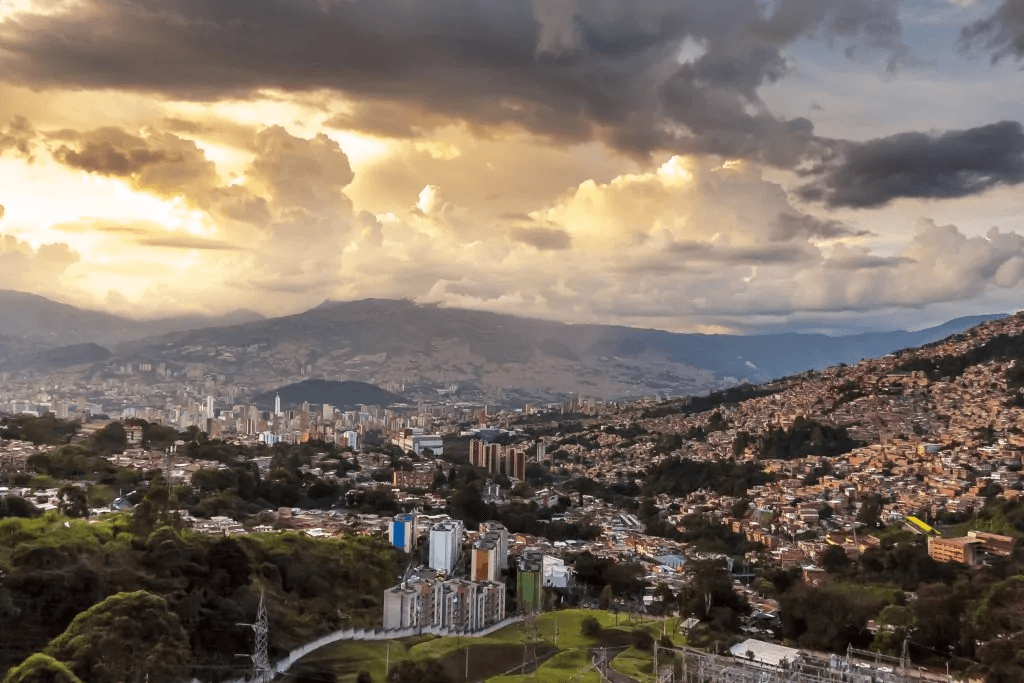
On top of that, it’s very easy to travel through Colombia. One hour by plane, you’re in a cold region, one hour in the other direction, and you’re in a warmer region. Or you’re on the coast, or in the Amazon, one of the most biodiverse places in the world.
But on top of all these reasons, there was also something I couldn’t explain. I felt pulled to Medellín, despite it being once considered one of the most dangerous cities in the world. As soon as I arrived, I fell in love with the city. I didn’t know anybody. I didn’t even know Spanish. But I felt this connection to this place I wanted to call home.
It’s like falling in love. You can try to explain why you are in love with this person, but there is always a part that you can’t explain, and that makes this person special to you. I think it’s the same with places.
4. You arrived in Medellín not speaking Spanish and not knowing anyone. How did you build a life there from ground zero?
It’s the thing I love about Latin America. Culturally, I feel closer to them than to Southeast Asia.
From the very moment I arrived, I was very lucky to have this immersion into the culture. Now, I do speak Spanish. I was lucky to make some Colombian friends very quickly, and they helped me grasp the language.
But I do remember when, in the third month, I got acquainted with a Colombian girl, who didn’t speak English at all, and my Spanish was also weak. Despite the language barriers, we had such a wonderful connection. We were in a really remote place with no signal, so there was no way to use Google Translate. The only way to communicate was through the limited word bank I had and gestures. But it was this type of immersion that was part of my experience learning to embrace the language.
When I moved to Medellín, I began to search for groups with common interests, whether that was nature, hiking, adventure, or language exchange. It is a popular destination for people from the U.S. and Europe, so there are a lot of foreigners, and a lot of events that connect locals with foreigners.
5. How did you get started running active tours in Colombia?
The project didn’t start off with a financial gain in mind. It began because I wanted to show Colombia’s beauty to the world. It’s an underestimated country. Everybody knows Peru—Machu Picchu. If you say Argentina—Perito Moreno, Buenos Aires, Iguazu waterfall. People from my part of the world usually know why to go to Argentina, why to Peru, but they have no idea why to go to Colombia.
I initially reached out to a local company with an offer to collaborate with them on a few tours, and I provided them with my itinerary. Now, I am organising long tours that can last 10 to 14 days to different regions of Colombia and tours around the city of Medellín and its surroundings.
I love guiding long tours where people can fully immerse themselves in Colombia’s beauty because Colombia is not a country like Brazil. In Brazil, you can get to Rio and stay there for one week, and you’ll start to understand what Brazil is about. But in Colombia, you need to travel, you need to change locations.
6. Walk us through your favourite tour. What makes it special?
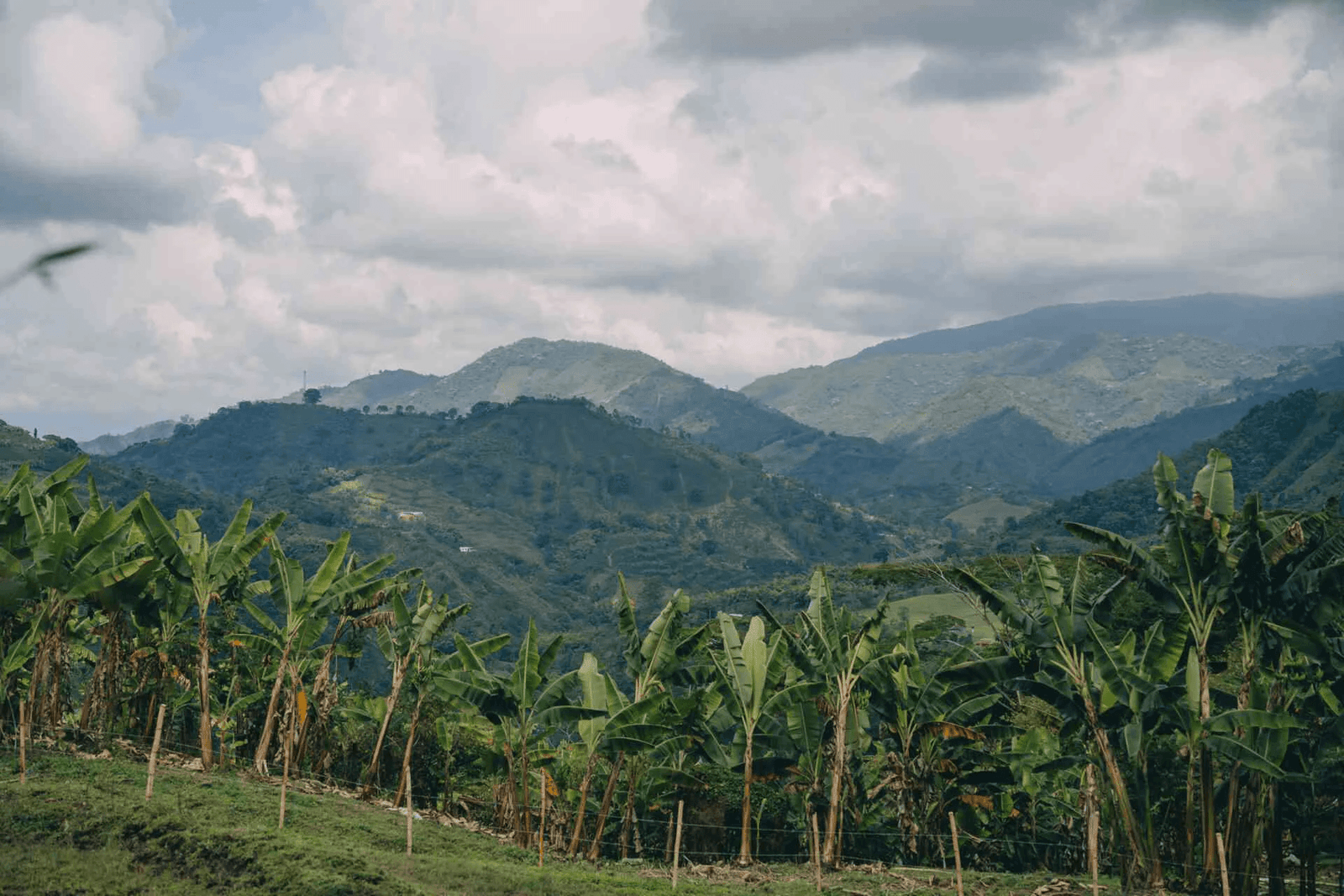
One of my favourite tours was visiting the Coffee Zone in the Andes Mountains, which is an extremely beautiful region with fifty shades of green. It’s where the best coffee grows. The sights are absolutely breathtaking.
Then there was a tour down to the Pacific Ocean. Part of the trip was to accompany recently hatched turtles all the way from the beach to the sea to make sure that no motorcycle or bird kills them. The experience was very emotional. The Pacific region in Colombia is very remote, with a lush jungle and black sandy beaches. It’s one of the most biodiverse places in the world. The locals there have a slightly different culture with a more Afro-Colombian population. It’s another type of experience.
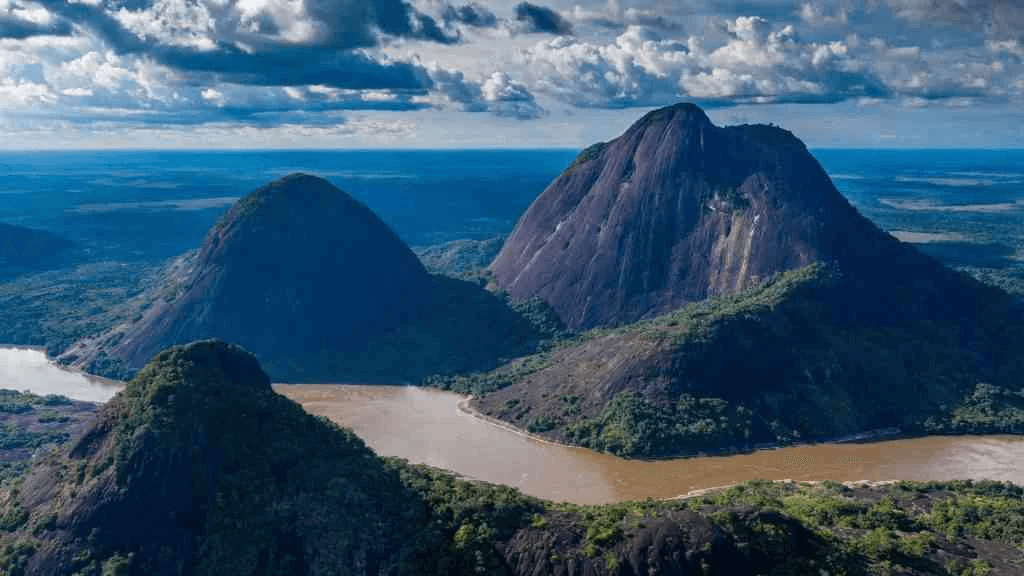
In this same tour, we also visited the Amazon rainforest—caimans, piranhas, and spiders all included. The tourists played football with some of the local kids, which was a beautiful opportunity to connect with the people who live there, not just watch them. It certainly gave a deeper level of understanding of the humanness behind what people read or see in the media.
7. What did Colombia teach you about yourself that you wouldn’t have learned anywhere else?
What I like about living in different countries, you can always choose the traits of yourself to explore. I don’t like to generalise by saying, for instance, all Germans are like this, or all Colombians are like this. But of course, there is something that can be a characteristic for many people in this country.
What I love about the Colombians I have met is their ability to enjoy life. We Eastern Europeans are bad at this. If you go to some Eastern European country, people are not smiling. For an outsider, it looks like we are in a constant state of suffering. Colombians don’t have an easy life, and for some, their life is very difficult, but their ability to enjoy life, whether they are rich or poor, is amazing. They are constantly smiling. It’s something that I really appreciate in them.
Smiling more, I think that’s what Colombia taught me. But also, to be more open because if you are constantly surrounded by people from different cultures, you can’t help but open up more.
More kind, more willing to change and stay flexible, and less judgmental. I like this version of myself that Colombia, and travel in general, has helped me become.
8. When you picture the next chapter, what does growth look like on your own terms?
I would like to spend more time in the wilderness. In 2024, I volunteered at RAREC, a rescue and rehabilitation center for wild animals that were subject to animal trafficking. I worked there as a Marketing/PR Specialist and combined it with my main job. That’s an avenue I would like to explore more, whether as a wildlife conservationist or simply as a person who is involved in wildlife conservation or even volunteering. I am open to all options.
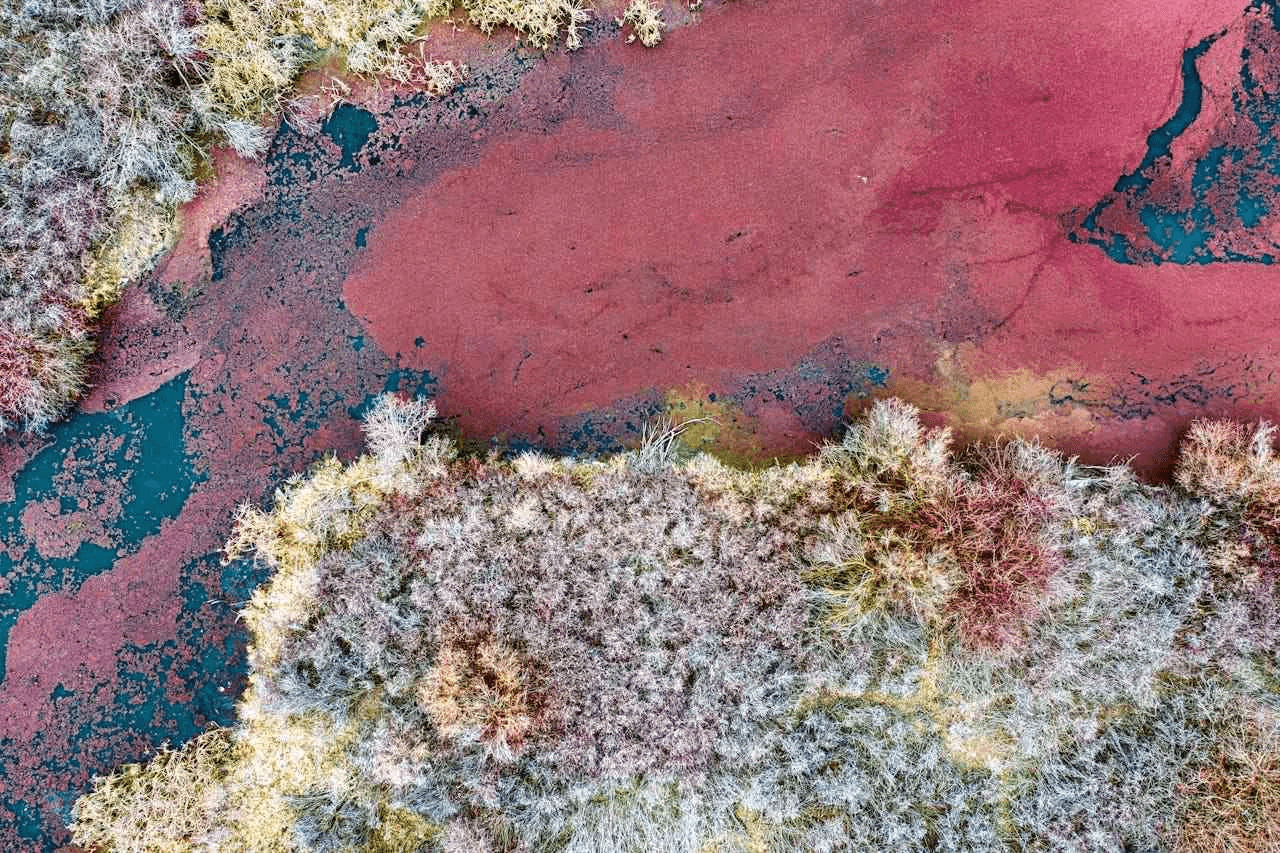
Of course, I would like to have more tours in Colombia. Not only more in quantity but also more nature-focused. For instance, going for a 12-kilometre hike one day and the next catching piranhas. I would like to do more adventurous things in relation to tourism.
And connecting, helping local and indigenous communities more. Right now, it plays a part in my tours, but I would like to be even more involved.
9. What advice would you give someone in Cyprus who wants to try the nomad path but is afraid to start?
Buy a ticket. That is the only advice I can give. Just buy a ticket and go for it. Otherwise, your fears and anxieties will take over and stop you from even taking that step.