



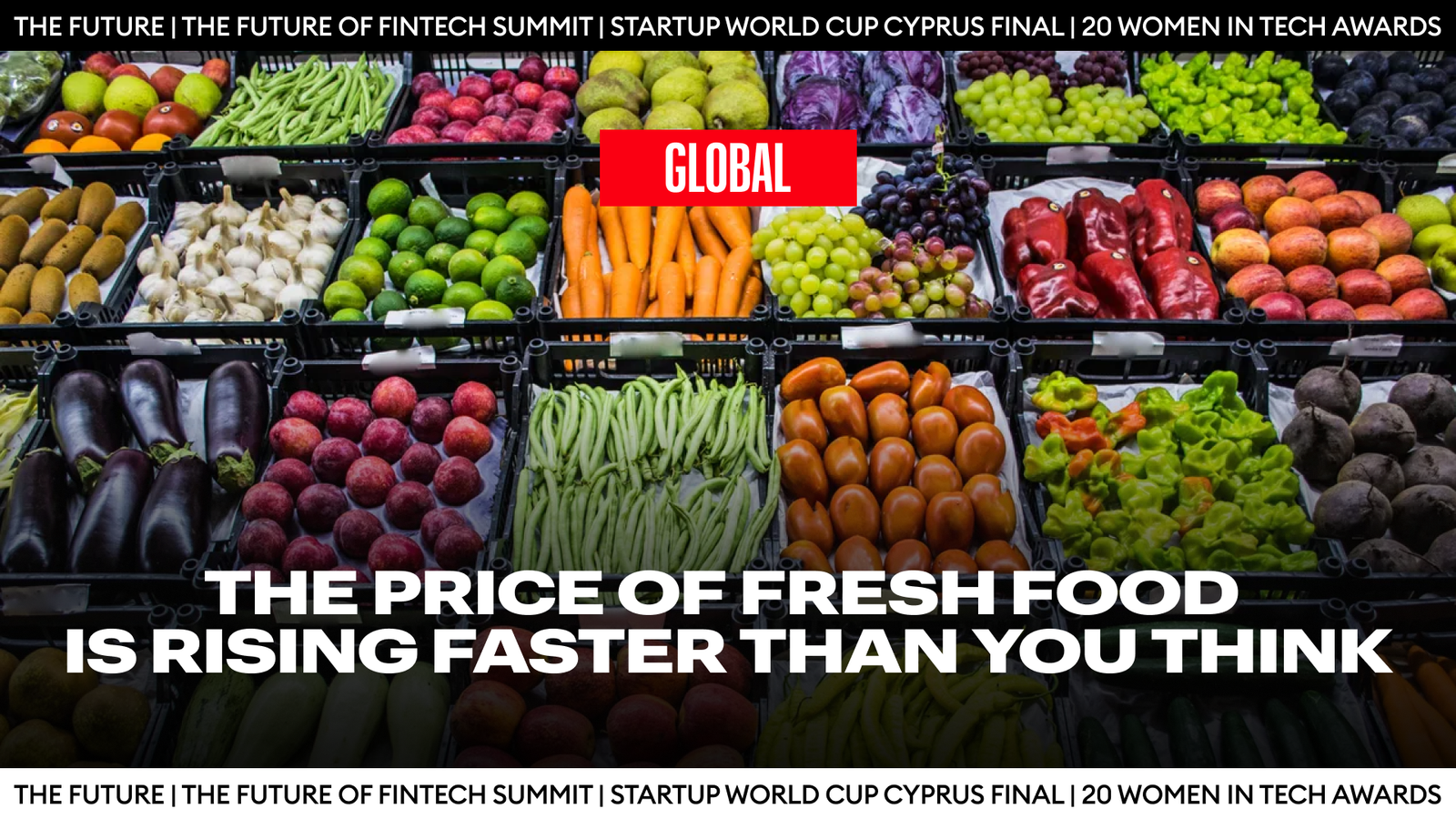
Food inflation across Europe is increasingly uneven, with prices for fresh essentials rising faster than processed products. Households in Bulgaria, Greece, Italy and Cyprus are facing higher costs for meat, fish, dairy and vegetables, despite more moderate price growth in packaged goods.
Final October 2026 data released by Eurostat on November 18 show annual inflation reached 4.0% in both the euro area, which now includes Bulgaria and has 21 members, and the EU, up from 3.8% in September.
Follow THE FUTURE on LinkedIn, Facebook, Instagram, X and Telegram
Fresh Food Prices Accelerate
Energy remained the main driver of inflation, rising 21.0% in the euro area. Food, alcohol and tobacco prices increased by 1.5% year over year, compared with 1.3% in September.
Within the category, unprocessed food prices, including fresh meat, fish, fruit and vegetables, rose 4.6%, accelerating from 4.0% the previous month. Processed food prices, including pasta, cereals and canned products, increased by just 0.4%.
The divergence highlights how lower inflation in packaged products is offering limited relief from rising prices for fresh food.
Bulgaria, Greece And Italy Record Higher Food Costs
Bulgaria recorded inflation of 5.9%, the highest among the countries cited and the third-highest in the EU. Its National Statistical Institute reported monthly price increases in meat and meat products of 0.6%, and milk, dairy products and eggs of 0.5%. Bakery prices remained unchanged.
Greece followed at 5.7%, up from 5.1% in September. Food and non-alcoholic beverage prices rose 2.1% year over year, with increases in bread and bakery products, beef, lamb and goat, fish, cheese, eggs and vegetables. Lower prices for olive oil, fresh whole milk, pasta, cereals, fruit and juice partially offset the increases, according to ELSTAT.
Italy recorded inflation of 5.6%, alongside a 1.2% monthly increase in food prices. According to ISTAT, unprocessed food prices rose 7.5% year over year and 1.8% month over month, while processed food prices declined 0.2%.
Cyprus Food Inflation Exceeds The Euro-Area Average
In Cyprus, food and non-alcoholic beverage prices increased 5.32% year over year and 1.62% compared with September, according to the Cyprus Statistical Service.
The annual increase was more than three times the euro-area average for the broader food, alcohol and tobacco category. Fresh fruit and vegetables, dairy products and meat recorded some of the strongest price pressures.
Energy prices in Cyprus also rose 24.1%, adding to production and transportation costs and potentially contributing to pressure across the supply chain.
More Moderate Increases Elsewhere
Food prices rose 2.4% year over year in Spain, while unprocessed food prices in Portugal increased 3.7%.
Price growth was more subdued in parts of Central Europe and the Baltics. France recorded a 1.2% increase in food prices, while Estonia’s rate was 0.7%. In Estonia, butter prices fell 27.1%, although vegetable prices increased 8.5%.
Germany recorded a 0.2% increase in food and non-alcoholic beverage prices, while Latvia was the only country in the group to report an annual decline, at 5.3%.
A Two-Speed Food Market
The figures point to an increasingly divided food market, with prices for processed products remaining relatively stable while fresh essentials continue to become more expensive.
For households, retailers and policymakers, the distinction is significant: moderating overall inflation does not necessarily translate into lower grocery bills when the cost of everyday fresh products remains elevated.