


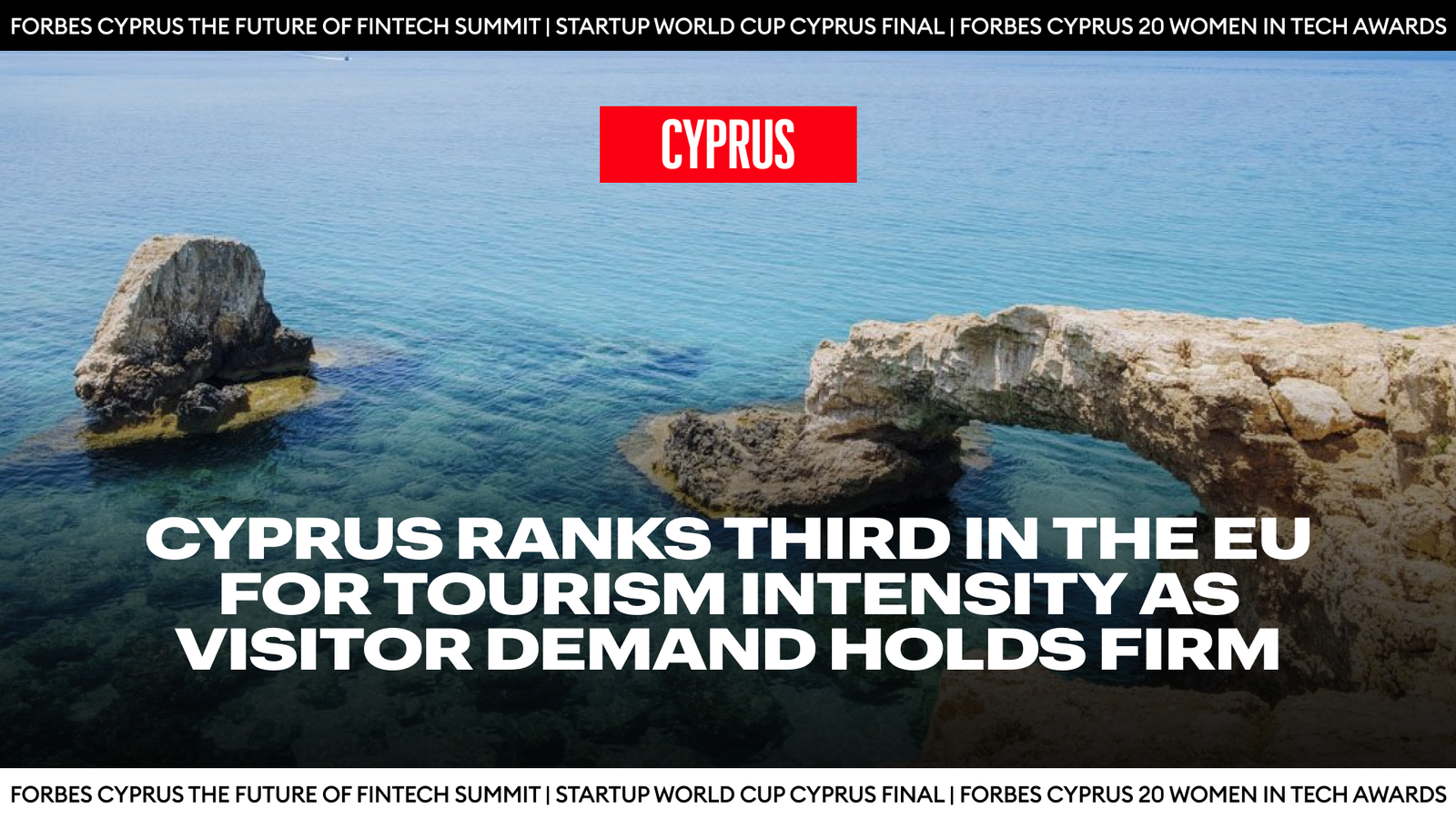
Tourist accommodation establishments across the EU recorded 3.1 billion overnight stays in 2025, an increase of 4.1% from the previous year, according to Eurostat. The total was also 26.5% higher than in 2015, when the bloc recorded 2.5 billion nights.
Tourism intensity varied considerably across member states. Romania recorded the lowest level, at 1.6 overnight stays per inhabitant, followed by Latvia at 2.7 and Poland and Slovakia at 2.9 each.
Follow THE FUTURE on LinkedIn, Facebook, Instagram, X and Telegram
Domestic And Regional Travel Dominate
Domestic travellers and visitors from other EU countries accounted for 80.9% of all overnight stays in 2025, equivalent to approximately 2.5 billion nights. Tourists from other European countries contributed a further 10.4%.
Long-haul visitors represented a smaller share of the market. Travellers from the Americas accounted for 4.9% of overnight stays, or 155.5 million nights, while Asia contributed 2.6%, equivalent to 81.6 million. Oceania represented 0.5%, or 15.2 million nights, and Africa accounted for 0.4%, with 12.9 million.
Asian And African Markets Record Strongest Growth
Visitors from Asia recorded the fastest annual growth between 2024 and 2025, with overnight stays increasing by 15.4%. Africa followed with a rise of 13.7%.
Over the longer term, the Americas emerged as a significant source of growth. Overnight stays by visitors from North, Central and South America more than doubled between 2015 and 2025, rising by 101.9% from nearly 77 million.
Eurostat measures tourism intensity by comparing overnight stays in tourist accommodation with a country’s permanent resident population, providing an indication of tourism activity relative to population size.
Cyprus Tourism Shows Signs Of Recovery
Cyprus has also recorded strong results in individual markets, despite a softer overall performance earlier in 2026. The island welcomed a record 580,889 tourists in September, an increase of 1.8% year on year, according to the Cyprus Statistical Service (Cystat).
Deputy Tourism Minister Kostas Koumis attributed the growth to stronger arrivals from key source markets. Israel led with a 31.4% increase, followed by Greece at 16.1% and the United Kingdom at 2.8%. These gains helped offset declines in several other European markets.
However, arrivals between January and September fell by 5.6% year on year to 3,401,538. The decline has narrowed steadily since spring, suggesting that the island’s tourism market is gradually recovering from earlier geopolitical disruption in the Middle East.