Breaking news

Eurobank Takes Command with Over 98% Stake in Hellenic Bank

In a significant corporate development, Eurobank recently completed its mandatory public offer to significantly increase its stake in Hellenic Bank, now owning a substantial 98.46% of the bank’s issued share capital. This move follows the public offer, which closed on April 9, 2025, adding 4.99% to Eurobank’s previous 93.47% stake.

Over the coming months, Eurobank plans to exercise its squeeze-out right, aiming for full acquisition. As outlined in their takeover announcement, the bank intends to acquire all remaining shares at a price of €4.843 each.

This transaction, completed with Cyprus Investment and Securities Corporation Limited (CISCO) serving as the advisor and underwriter, is set to reshape the Cypriot banking landscape, aligning with broader trends in regional economic transformations.

Upon completion, Eurobank’s acquisition will mark a pivotal moment in Cyprus’ financial scene. The increase in ownership follows regulations under the Public Takeover Bids Law, ensuring compliance throughout the process.

The acceptance rate for this takeover bid stands at 4.989%, with attention to final verification potentially leading to minor adjustments. Stay tuned as we monitor this significant acquisition and consider its implications for the dynamic Cypriot market.

Europe’s Open-Source Gap: Why The US Still Leads The Funding Race

Open-source startups are booming—but most of the money is flowing west. A new report from French VC firm Serena highlights a stark reality: despite a surge in investment, Europe’s commercial open-source software (COSS) companies are still playing catch-up with their US counterparts.

The numbers tell the story. In 2023, COSS startups raised a staggering $26.4 billion globally, nearly 5% of all VC software investments. That’s a dramatic rise from the $9 billion annual average between 2019 and 2024. But a huge chunk of that capital—especially mega-rounds like Databricks’ $10 billion Series J—stayed in the US. Serena’s research, which analysed 850 VC-backed COSS firms from 2000 to 2024, found that 65% of these companies are headquartered in the US, while just 25% are in Europe. Given that Europe accounts for 20% of the broader software sector, its share of the COSS market remains disproportionately small.

The Business Of Free Code

Open-source software, by definition, is free. That’s both its strength and its biggest business challenge. “There’s a collective belief that you should sell software, not give it away,” says Matthieu Lavergne, Serena partner and report lead. But modern COSS companies have found ways to turn open code into serious revenue—typically by offering a free core product while monetizing advanced features, security, or governance tools.

And the strategy works. Serena’s research shows that COSS startups reach a Series A round 20% faster than proprietary software firms, with valuations 1.33x higher at that stage. The payoff is even bigger at exit: since 2000, COSS companies that went public had a median valuation of $1.3 billion—compared to just $171 million for closed-source software firms. The largest IPO? GitLab, which debuted at $15 billion in 2021.

Europe’s Missed Opportunity

Despite the strong fundamentals, Europe has been slow to back open-source companies at scale. “Few investors here truly understand the business model,” says Lavergne. As a result, many of the region’s most promising COSS startups—including AI firms like Mistral and Black Forest Labs—end up looking west when it’s time to scale.

The data backs that up. While 25% of COSS firms that IPOed since 2000 were founded in Europe, only 8% actually listed on European stock exchanges. The US, meanwhile, attracted 91% of those IPOs.

Part of the issue is market size: “Half of the total addressable market for software—open-source or not—is in the US,” Lavergne notes. For European founders, that often means a choice between struggling to raise late-stage funding at home or moving operations to where the capital flows freely.

Can Europe Catch Up?

There are signs of change. A new generation of European open-source startups—including Coqui, Formance, and Zylon—is making waves, and investors are starting to take notice. But without deeper support from European VCs and public markets, the continent risks remaining a talent incubator for startups that ultimately scale and succeed elsewhere.

For now, the US isn’t just leading—it’s lapping the competition.

Cyprus’ Minimum Wage: Mid-Tier In Europe but What Does It Really Mean?

Cyprus has positioned itself in the middle of the pack when it comes to minimum wages in the European Union, ranking 12th among the 22 EU nations that set a national baseline. As of January 2025, the island’s minimum wage stands at €1,000 gross per month, according to Eurostat.

That figure is nearly double Bulgaria’s €551—the lowest in the EU—but only a fraction of Luxembourg’s €2,638, the highest in the bloc.

The European Minimum Wage Landscape

Out of the 27 EU countries, only Denmark, Italy, Austria, Finland, and Sweden do not enforce a statutory minimum wage. Across the remaining 22, there’s a stark divide in earnings.

  • Below €1,000 per month: Ten EU countries, mostly in Eastern Europe, fall into this category, including Hungary (€707), Latvia (€740), Romania (€814), and Greece (€968).
  • Between €1,000 and €1,500 per month: Cyprus sits in this range, alongside Portugal (€1,015), Poland (€1,091), and Spain (€1,381).
  • Above €1,500 per month: Six Western European nations lead the pack, with France (€1,802), Germany (€2,161), and Ireland (€2,282) among them.
AD 4nXeusta4cI dM zYo0dvZbUgKuqWFML69 v i D9WVFQ7a3TiUM3sKScsriWyc QWQh6cLkviYKp9b79nfVQZ6ALS aoYt53CBUaVL9UubfFhG5eYF1UUeodTlFlNlPkHbIrrleE g?key=0svtzUJR5NqvA1EgOrhU20m8

The gap between the highest and lowest minimum wages is striking—Luxembourg’s rate is 4.8 times higher than Bulgaria’s. But when adjusted for cost of living, the picture changes.

What Happens When You Factor In Living Costs?

Eurostat’s data shows that once purchasing power parity (PPS) is considered, wage disparities shrink. In real terms, the lowest adjusted wage is 878 PPS in Estonia, while the highest is 1,992 PPS in Germany—meaning the biggest gap is actually 2.3 times, not 4.8.

This metric is critical in understanding how far wages actually go in each country. A €1,000 salary in Cyprus does not stretch as far as it would in lower-cost economies like Romania or Latvia, but it also doesn’t carry the same weight as it would in high-cost markets like Germany or Ireland.

How Minimum Wages Compare To Median Earnings

Another way to assess fairness is to look at minimum wages as a percentage of median earnings. In 2022, France, Portugal, and Slovenia stood out, with their minimum wages accounting for 66% of median gross monthly earnings—suggesting a stronger safety net for low-wage workers.

At the lower end, Belgium (49%), Malta (46%), and Estonia and Latvia (43%) had the weakest relative minimum wages compared to median earnings, indicating a larger income gap within their labour markets.

Cyprus At A Crossroads

While Cyprus’ €1,000 minimum wage keeps it competitive within the EU, the bigger question is whether it provides a decent standard of living relative to local costs. With rising inflation and housing pressures, policymakers will need to consider whether this mid-tier ranking is enough—or if adjustments are needed to ensure workers are not just getting by, but getting ahead.

Cyprus Strengthens Its Position As An International Funds Hub: Key Takeaways From CIFA’s AGM

The Cyprus Investment Funds Association (CIFA) held its Annual General Meeting (AGM) on April 10, underscoring the country’s growing appeal as a global investment funds destination. With assets under management (AUM) now exceeding €9 billion and over 330 licensed investment entities operating in Cyprus, the sector is gaining serious momentum.

A Vision For Sustainable Growth

CIFA President Maria Panayiotou credited the industry’s progress to “vision, consistency, and collaboration.” Addressing the AGM, she emphasized the association’s commitment to fostering responsible capital flows, strengthening investor confidence, and ensuring Cyprus remains a competitive jurisdiction for investment funds.

A major focal point of the AGM was the anticipated legislative changes aimed at reinforcing the regulatory framework. The long-awaited fund administration law is expected to be approved soon, alongside the proposed Foreign Direct Investment (FDI) Screening Law and national tax reforms—key steps in enhancing Cyprus’ attractiveness to international investors.

Strengthening Regulatory Foundations

CIFA is actively working with the Cyprus Securities and Exchange Commission (CySEC) to refine the Alternative Investment Funds Law and the Partnership Law, focusing on clearer legal definitions and ensuring alignment with evolving EU regulations. This collaborative approach is designed to bolster Cyprus’s reputation as a well-regulated, investor-friendly jurisdiction.

Expanding Global Reach

Following the success of its 2024 roadshow in Athens, CIFA is ramping up efforts to promote Cyprus as a fund domicile in high-growth markets. Germany and the Middle East have been identified as priority regions, with targeted promotional activities set to take place in the coming months.

Additionally, CIFA is partnering with Invest Cyprus to conduct a gap analysis of the fund ecosystem, identifying growth opportunities and addressing any existing barriers to expansion.

Talent Development And Financial Literacy

Beyond regulatory and promotional efforts, the AGM highlighted CIFA’s push for education and capacity-building. The association has expanded its member-training programs, offering specialized workshops and accredited sessions to keep industry professionals at the forefront of global best practices.

On a broader scale, CIFA continues to contribute to financial literacy initiatives through its role in the Cyprus Financial Literacy and Education Committee (CyFLEC), aiming to equip individuals with the knowledge to make informed investment decisions.

ESG Takes Center Stage

The AGM wrapped up with a panel discussion on environmental, social, and governance (ESG) investment trends, reinforcing the growing role of sustainable finance in shaping the future of the sector. With ESG compliance becoming a key differentiator in global capital markets, Cyprus is positioning itself as a forward-thinking player in this space.

Looking Ahead

CIFA’s AGM painted a clear picture: Cyprus is not just keeping pace with international fund trends—it is actively shaping them. With regulatory reforms in motion, strategic international outreach, and a strong emphasis on investor confidence, the country is set to further solidify its status as a premier investment funds hub in the years ahead.

Cyprus Pioneers Legislation Against AI-Driven Child Exploitation

In a significant legislative move, Cyprus has introduced a new law to combat AI-generated child abuse materials, a step that positions the nation at the cutting edge of child protection globally. Initiated by AKEL MP Christos Christofides, the law revises existing child protection statutes, addressing the threat posed by AI technologies.

Stricter Penalties And Broader Definitions

The amendment now includes AI-generated imagery in its legal scope, tightening penalties with potential imprisonment of up to 15 years for offenders. This pioneering statute not only broadens the legal definition of child pornography but also arms law enforcement with necessary tools to tackle these emerging digital threats.

AI’s Double-Edged Sword

AI technology, often trained using real images of exploited children, poses enormous challenges. According to Christofides, this legislation is crucial as Cyprus becomes the first EU country to enact such laws, setting a precedence even as larger-scale regulations are discussed at the European level.

Global Perspective: As of now, only a few countries, like South Korea and parts of the United States, have similar statutes. The urgency for international cooperation is underscored by staggering figures indicating that over 300 million children could potentially be affected annually by AI-assisted exploitation.

In exploring how technology reshapes our world, it’s evident that legislative measures like these are pivotal. For a wider view on AI advancements, see our article on How AI is Reshaping Game Development.

Workations In Europe: The Best Destinations For Remote Professionals

The rise of remote work has blurred the lines between business and leisure, fueling a trend known as “workations.” Professionals are increasingly seeking destinations that offer seamless connectivity, affordable living costs, and a dynamic environment to balance productivity with cultural exploration.

The Best Countries For Workations

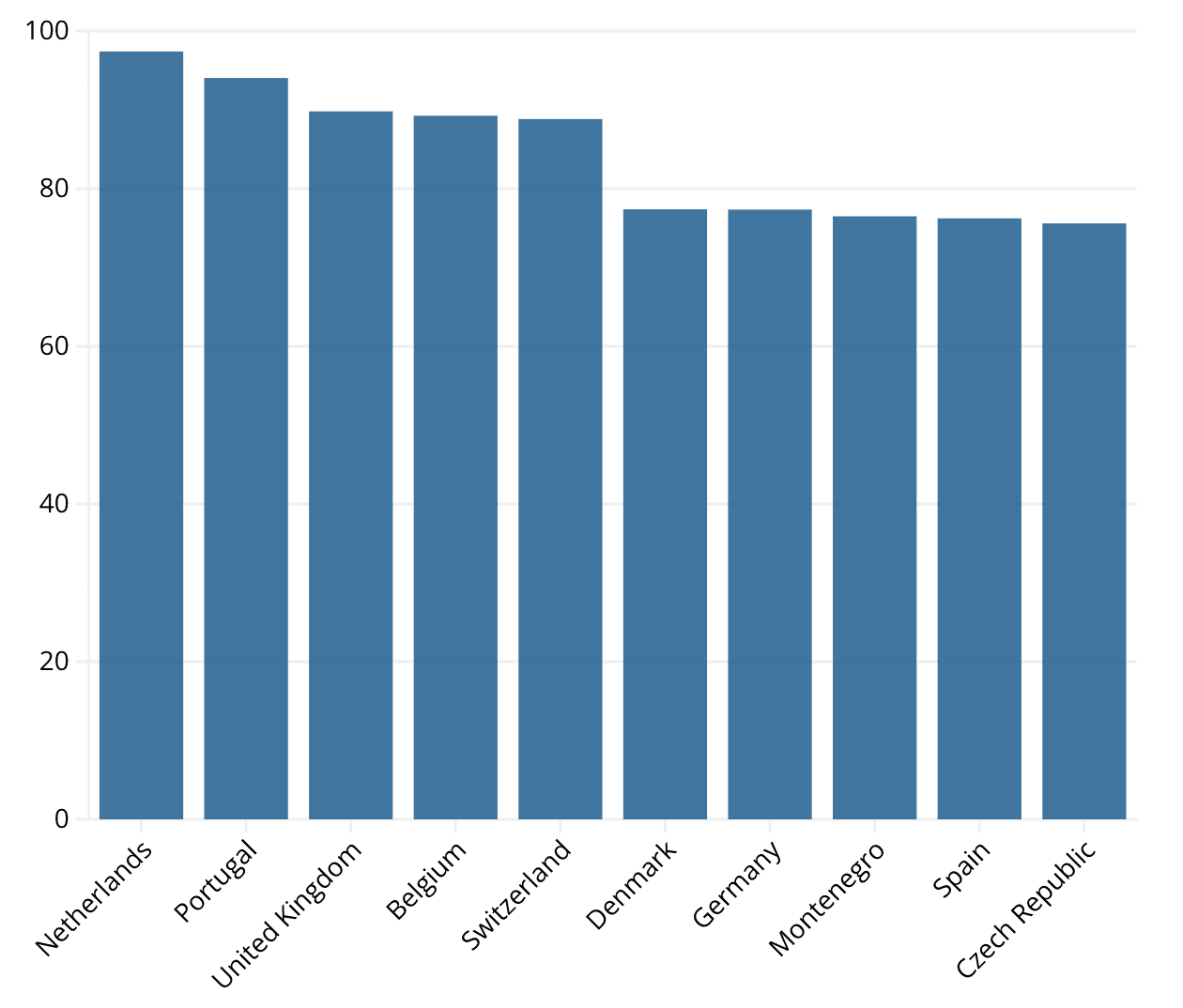
In Europe, the Netherlands, Portugal, and the United Kingdom stand out as prime locations for remote workers. Portugal leads in public Wi-Fi density, offering thousands of free hotspots across major cities, making it an attractive option for digital nomads. Meanwhile, Denmark ranks highest for internet speed, ensuring seamless video calls and uninterrupted workflows.

image 124
Top 10 European Workation Destinations: Workcation Score

For those prioritizing collaborative spaces, the UK boasts the most developed coworking infrastructure, with hundreds of spaces catering to professionals in need of an office-like setup. Montenegro has also emerged as a hidden gem, thanks to its low cost of living and reliable connectivity, making it an appealing option for budget-conscious remote workers.

The Hidden Costs Of The Workation Boom

While the flexibility of remote work has opened new possibilities, it also presents challenges—particularly in countries already struggling with overtourism and rising living costs. Spain, which ranks among the top workation spots, is experiencing mounting pressure as short-term rentals surge, exacerbating the housing crisis. In the past decade, rents have doubled, driven by real estate speculation and a shortage of affordable housing.

The strain on local economies has led to growing tensions. Earlier this year, mass protests erupted across 40 cities in Spain, with demonstrators calling for stricter housing regulations to combat soaring costs. As the demand for work-friendly destinations continues to rise, European cities face the challenge of balancing economic benefits with the need to protect local communities from the unintended consequences of the remote work revolution.

Game Gears: How AI is Reshaping Game Development

Game Gears, a subsidiary of GDEV Gaming Holding, has fully embraced AI as a core driver of innovation. Their latest release is a testament to how artificial intelligence revolutionizes game development, slashing production times while enhancing creativity and efficiency.

CEO and AI evangelist Alexander Vaschenko recently shared insights on how AI-powered tools have fundamentally reshaped their workflow—accelerating processes, optimizing game mechanics, and streamlining content creation.

How AI Is Driving Game Development At Game Gears

Game Gears has integrated AI across multiple production areas, leveraging tools for:

  • Content Creation: AI-generated 2D and 3D assets
  • Programming: Automating code generation and module development
  • Game Design: AI-assisted balancing, character abilities, and economy modeling
    Marketing: AI-driven ad creatives and campaign optimization
  • Administrative Processes: Automating accounting and document management

One of the most notable shifts? The complete removal of dedicated scriptwriters—game designers now craft all in-game text with AI assistance.

The AI Toolkit: Key Technologies In Action

Game Gears employs an extensive range of AI tools, including:

  • GPT, Cline, Claude for writing and dialogue generation
  • Midjourney, Flux, Krea, Kling for visual content
  • Runway, Hailuo, Tripo AI, Rodin for video and 3D modeling

These tools, alongside additional AI-powered services for animation and image processing, allow the team to iterate and refine at unprecedented speeds.

The AI Edge: Faster, Smarter, More Efficient

While full automation remains out of reach, the impact of AI on efficiency is undeniable. Game Gears reports a 4x acceleration in game development speed, with specific areas seeing even greater improvements:

  • Game Design: Processes like documentation, balancing, and testing are now 2.5x faster.
  • Graphics Production: AI has accelerated 2D and 3D content creation by 10x to 30x.
  • Marketing & Analytics: AI-driven real-time optimization has led to exponential efficiency gains.

Striking The Right Balance: AI + Human Expertise

Despite AI’s capabilities, human oversight remains critical. While AI-generated assets handle 80% of the workload, the final 20% still requires human refinement. This principle extends across animation, game balance, and narrative design—areas where AI assists but doesn’t replace human creativity.

Game Gears doesn’t just use AI—they live and breathe it. Hiring decisions prioritize adaptability and enthusiasm for generative AI, ensuring the team stays ahead of technological shifts. 

The Future: AI Is Reshaping The Entertainment Industry

Vaschenko is convinced that both gaming and film will soon be inseparable from AI. The entertainment industry is heading toward an era where anyone can produce high-quality content with minimal resources, disrupting traditional models.

AI is no longer just a tool—it’s the new frontier of creativity. And for Game Gears, the future isn’t coming. It’s already here.

Amazon’s High-Stakes Experiment: Turning Delivery Drivers Into First Responders

In a bold move that blurs the line between logistics and lifesaving, Amazon has been quietly testing a program that equips its delivery drivers with defibrillators to aid cardiac arrest victims. Dubbed Project Pulse, the initiative launched in Amsterdam in November 2023 before expanding to London and Bologna, according to internal documents seen by Bloomberg.

The idea is simple but powerful: Amazon’s fleet is constantly moving through residential areas, often closer to an emergency than paramedics. By arming drivers with automated external defibrillators (AEDs) and linking them to local emergency response networks, Amazon aimed to cut down the crucial minutes that determine survival.

A Test Run With Real Impact

Over 100 contract drivers participated in the pilot, carrying AEDs manufactured by Koninklijke Philips NV. When alerts from citizen responder apps came in, some drivers arrived at the scene—sometimes even before professional medical teams.

“More than 70% of cardiac arrests happen at home, far from AED-equipped offices or public spaces,” said Paul Dardel, a chief doctor with the Paris-based emergency app Staying Alive, which trained dozens of Amazon drivers last year. His hope? That Amazon would take the program nationwide. For now, the company is prioritizing expansion in the UK.

Amazon spokesperson Anneliese Hellwig-Schuster confirmed that the pilot has concluded and the company is “evaluating feedback and exploring further opportunities.”

A Calculated Bet With A PR Upside

The stakes are high—both for cardiac arrest victims and Amazon’s reputation. The company’s last-mile delivery network has faced scrutiny over traffic congestion, emissions, and driver working conditions. But Project Pulse positioned Amazon in a new light: as a corporate player leveraging its logistical reach for the public good.

Beyond goodwill, there’s precedent for success. Philips previously partnered with Volvo in the Netherlands, deploying 25 AED-equipped vehicles that assisted in 11 emergencies in six months. The British Heart Foundation ran a similar initiative in 2021, outfitting telecommunications workers with defibrillators, likely saving a life in the process.

Scaling Up: Logistics Vs. Reality

Internally, Amazon estimated it would take less than $17 million in the first year to equip 15% of its 1,100+ global delivery depots with AEDs—a fraction of its multibillion-dollar logistics budget. But scaling the program remains uncertain. Tight delivery schedules, driver turnover, and funding constraints are all hurdles.

There’s also the legal aspect. Amazon’s legal team assessed the risk of drivers facing lawsuits as low, citing European laws protecting bystanders who step in to help. That’s one less obstacle—but convincing thousands of contract drivers to volunteer remains a challenge.

Meanwhile, Philips’ recent sale of its emergency care unit to Bridgefield Capital adds another layer of uncertainty. Though the AEDs will retain the Philips brand for up to 15 years, the long-term availability of devices for a full-scale rollout remains unclear.

The Verdict: A Vision Worth Pursuing?

Project Pulse highlights Amazon’s ambition to leverage its logistics empire for societal impact. Whether this experiment becomes a permanent fixture—or remains an intriguing but short-lived test—depends on whether Amazon sees enough value, both in lives saved and corporate goodwill earned. For now, the company is watching, evaluating, and deciding whether its drivers will continue doubling as first responders.

Wall Street Sees Historic Surge As Tariff Delay Boosts Market Sentiment

In a dramatic turn of events, Wall Street rallied to one of its largest single-day gains ever, following President Trump’s announcement of a 90-day suspension on tariffs. This came just hours after their implementation, which had initially roiled financial markets.

Key Highlights

  • The S&P 500 skyrocketed nearly 10%, showcasing the robust recovery of 500 top US companies, while the Nasdaq, driven by tech firms, surged by 12%. Dow Jones wasn’t left behind, marking an 8% increase.
  • Data from FactSet underscored this as a record percentage increase for these indices since events in early 2020 and 2008.
  • Trump’s move to halt tariffs on goods from over 75 countries catalyzed this explosive market reaction. His message on Truth Social incited further investor confidence: “NOW’S A GREAT TIME TO BUY!”

Read more about how Cyprus’s market dynamics might also influence global economic patterns here.

Which Stocks Benefited The Most?

Tech giants saw significant gains: Amazon, Apple, Nvidia, Meta, and Tesla stocks each appreciated by over 10% within just a day. The rally also uplifted the travel industry, with airlines like Delta and United Airlines among the top beneficiaries.

Cautious Optimism Prevails

Despite the day’s enthusiasm, the indices remain below their peaks from late 2024. Analysts caution that it is premature to predict if the trend will continue beyond the 90-day pause.

Jamie Dimon, CEO of JPMorgan Chase, foresees a potential recession, emphasizing the need for strategic trade alliances with Europe and Asia.

Bitcoin Poised To Hit $250,000 This Year Amid Tech Giants’ Entry, Predicts Cardano Founder

The world of cryptocurrency is buzzing with speculation as Charles Hoskinson, the founder of Cardano, predicts Bitcoin could soar to $250,000 by the end of this year. This prediction coincides with tech behemoths like Microsoft and Apple venturing into the crypto space, accelerating the digital currency’s potential growth.

Key Insights

The crypto market has experienced volatility, recently impacted by global trade tensions. Following the U.S. tariff adjustments, Bitcoin’s value saw fluctuations, currently resting below its previous highs. Despite these challenges, industry experts remain optimistic.

Charles Hoskinson, with over a decade in the crypto industry and a notable founder of Ethereum, is confident in Bitcoin’s potential rise, possibly within the next year. His predictions align with the anticipation of regulatory changes and stablecoin adoption, potentially influencing market dynamics.

Expert Commentary

Hoskinson believes the eventual stabilization of international trade conflicts, coupled with reduced interest rates from the Federal Reserve, will funnel investments into cryptocurrencies. “With swift access to digital currencies, the landscape of transactions could be revolutionized,” he asserts.

The Road Ahead

Global digital currency users have surged, showing a 13% increase in 2024, with stablecoin legislation in the pipeline. Such regulatory frameworks could see major tech firms adopting stablecoins, enhancing their transaction efficiency globally. This progression might rejuvenate the crypto markets by late summer, driven by speculative interest and stablecoin legislation.

The revival of the Bitcoin market is tethered to regulatory acceptance and mainstream crypto adoption by leading companies like Apple and Amazon.


Disclaimer: This analysis is for informational purposes only and does not constitute financial advice.

eCredo
Aretilaw firm
The Future Forbes Realty Global Properties
Uol

Become a Speaker

Become a Speaker

Become a Partner

Subscribe for our weekly newsletter