


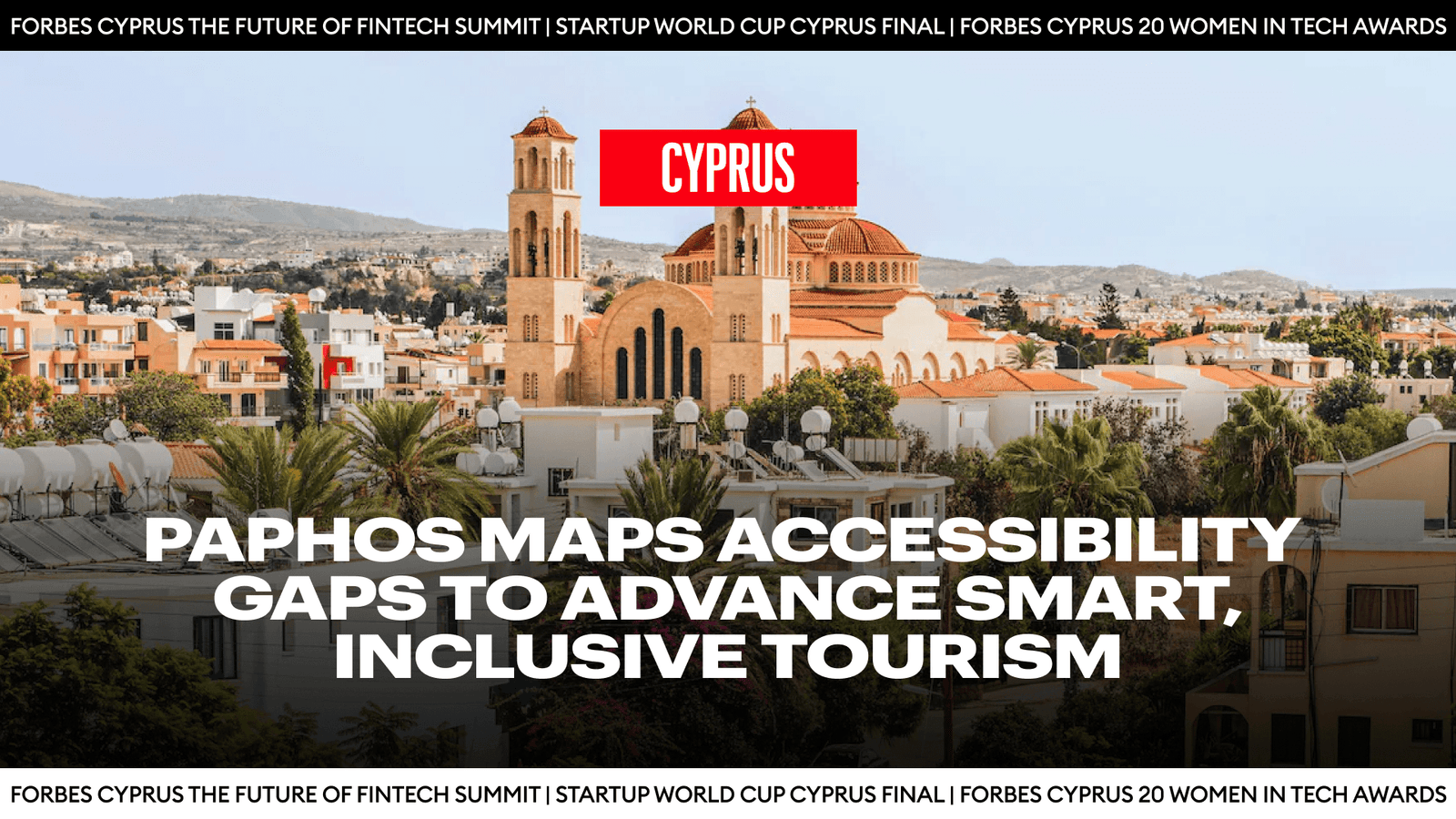
Paphos is assessing accessibility barriers across its tourism infrastructure to improve access to beaches, cultural attractions, rural communities and other visitor sites for people with mobility and other access needs.
The study is being carried out for the Paphos regional tourism board, Etap, by European University Cyprus, with support from the American University of Beirut. It is expected to be completed by mid-2027.
Follow THE FUTURE on LinkedIn, Facebook, Instagram, X and Telegram
Assessment To Map Accessibility Gaps
Etap executive director Nasos Hadjigeorgiou said a scientific team has been formed and work is under way to record public and private infrastructure across the district.
The assessment will identify existing gaps and define measures needed in each area. Its aim is to replace fragmented interventions with a coordinated accessibility strategy aligned with Paphos’ ambitions as a Smart Destination.
European Programmes Support Inclusive Tourism
Etap’s approach follows European principles including non-discrimination, equality, digital inclusion, independent living and freedom of movement.
The tourism board participates in European programmes focused on accessible, sustainable and smart tourism, including Smart Tourism – Smart Destinations, which involves partners from nine other countries and is 80% funded by the European Union.
Etap also participates in Interreg Euro-MED through the MED-Routes project, focused on knowledge transfer and accessible cultural tourism, as well as the I-DEMO project and the European Cultural Tourism Network.
Accessible Beaches Already Expanding
Practical measures are already under way. With support from the Deputy Ministry of Tourism and other funding programmes, Etap has purchased and distributed specialized floating wheelchairs for public beaches.
The board completed an investment in eight wheelchairs and delivered them to local authorities on Sept. 7. It also supported accessible ramps and related facilities at beaches in Ierokipia within Paphos municipality during 2026.
The longer-term goal is to expand accessible beaches across the district, from Timi to Polis Chrysochous and Pomos.
Digital Tools Improve Access
Etap has introduced QR codes and interactive applications at points of interest, allowing visitors with hearing or visual impairments to access tourism information.
More than 150 smart signs and two navigation applications have been deployed across the district. Planning is under way for the eighth phase of the smart-sign programme, while digital content is being prepared for guided tours of the Marion-Arsinoe archaeological museum.
Accessibility Extends To Rural And Natural Sites
Etap is also promoting eco-trails and walking infrastructure designed to improve access for people with disabilities and older visitors. Accessible routes have already been created and promoted within the Kato Paphos archaeological park.
The assessment will inform Etap’s 2027–2028 action plan and guide further investment in infrastructure and services. Particular attention will be given to rural and remote communities, while digital inclusion will remain a priority for people with disabilities, older users and those with limited digital skills.