
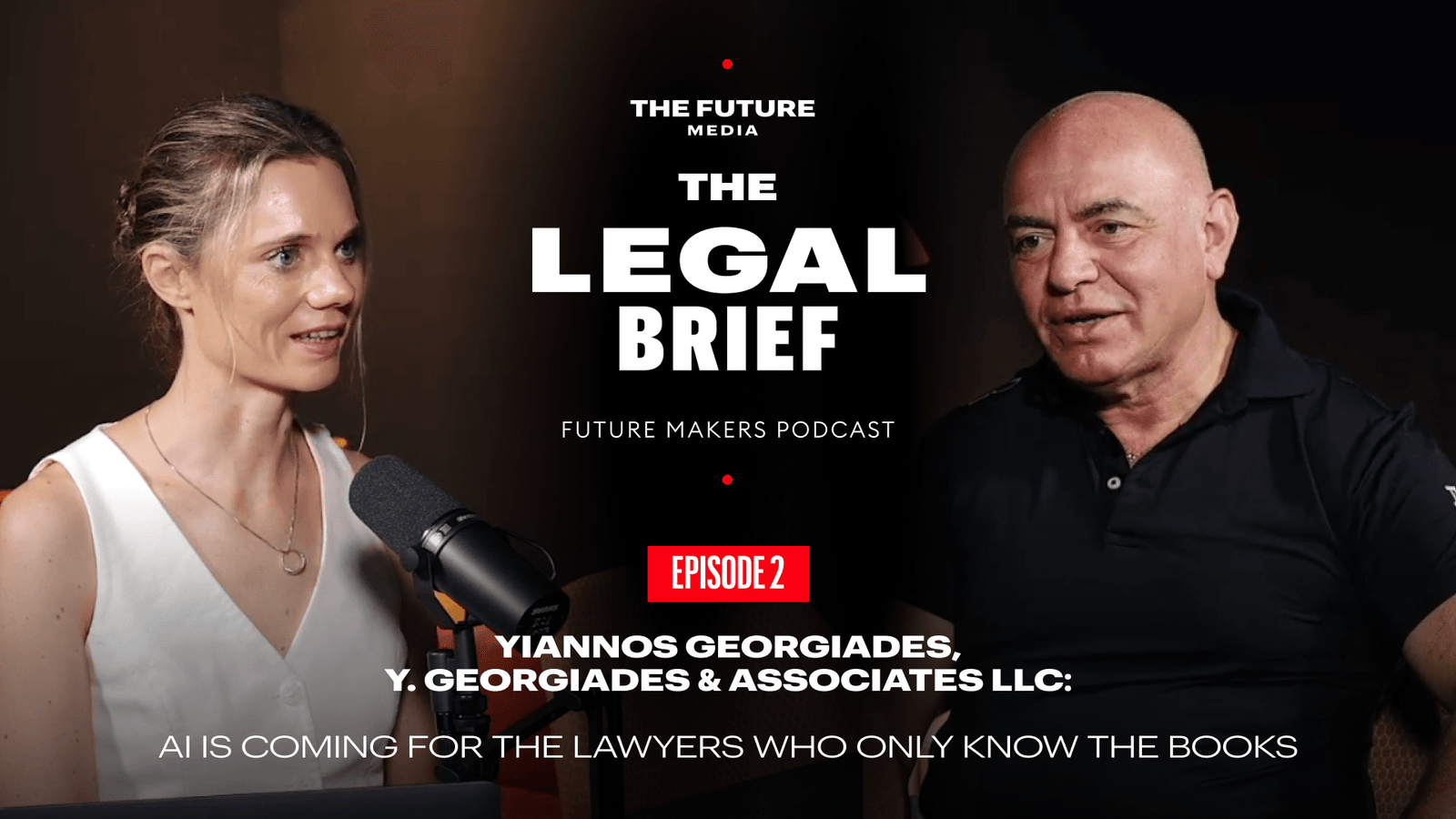
For 34 years, Yiannos Georgiades has watched what happens when a profession refuses to change until change is forced upon it. For instance, when manual legal research moved from hours of combing through thick volumes of books to LexisNexis. Or when legal drafting went through its own evolution from typewriters to Word. Both transitions came with media hype and warnings that the profession was facing its end, but in both cases the profession merely needed to take a different path and grow into something else. AI, in Yiannos Georgiades’s view, is the same narrative, with the pace levelled up. The lawyers who understand this will thrive in the sector. The ones who confuse knowing the books with being a lawyer are about to discover that AI knows the books better than they do.
Yiannos Georgiades is the founding partner of Y. Georgiades and Associates LLC, co-founder of Kinisis Ventures, and President of the Cyprus Chapter of the European Court of Arbitration. He has served on the government’s AI task force in an advisory capacity, submitting a policy paper on how Cyprus can position itself as a hub for AI.
Follow THE FUTURE on LinkedIn, Facebook, Instagram, X and Telegram
Georgiades remembers being a curious child.
“I always found myself being a kind of person who likes to solve problems,”
says Georgiades.
His father was a police prosecutor. As a child, Georgiades watched him work with case files at home and go into court in the summers. The boy was drawn to the profession, and so choosing it as a career was not so much of a surprise either to himself or family. What he did not expect, when he opened his own firm in 1992, was that the work would grow well beyond the courtroom he had envisioned. Business clients started coming to him for something that sounded closer to strategic counsel than legal advice. “I was also acting as an advisor for their business. For example, for how to establish their business, and how to build things,” he says.
That instinct, where a lawyer’s work goes beyond the strict boundaries of the law, is what made the second phase of his career possible. A childhood friend, Andreas Panayi, who had just arrived from the United States, called him with an idea: a business accelerator in Cyprus. Georgiades knew the local market, understood the regulatory landscape, and could see immediately how the accelerator’s success would require the same skills he had developed in his decade-long career as a lawyer and founder. Trust. Environment-building. Judgment about people. The conversation, which began with Panayi looking for legal advice on the structure of the accelerator, eventually led to the founding of Kinisis Ventures, of which Georgiades’s is now a co-founder. The firm and the fund have grown and developed in parallel, each fuelled by the most valuable thing both professions can offer: interpretation, not merely knowledge.
AI, in Georgiades’s words, has redefined which interpretation is worth putting money on. When he began his career, legal research meant sitting with the books, working through indexes, checking keywords, opening to the correct page, copying paragraph by paragraph by hand. Then came LexisNexis and Westlaw, and the profession moved to the internet almost overnight, because retrieving case law that way was significantly faster. That transition, Georgiades says, was already the beginning of what we are seeing now. AI has really compressed the retrieval window further, and taken it one step further. AI now reads case law, summarises articles, drafts contracts, and offers analyses. What it cannot do is decide which of those outputs is right for a client’s specific situation. That decision, still, belongs to the lawyer.
“The fear people have of technology is the fear of the unknown,”
Georgiades says.
He has heard the same fear hype before.
The Industrial Revolution.
The Internet.
The narrative is always the same. Some jobs become less necessary and shift. Then new jobs emerge. What is most important to understand about these shifts, he says, is that what actually determines who survives the change is not whether the technology is threatening, but whether the professional has adapted.
“We shouldn’t really worry about AI taking over. We should worry about those lawyers or any other professionals who are not ahead with this, and they don’t know about AI, and then they can be replaced by those who do know it,”
he says.
Which lawyers are at risk? Georgiades says the lawyer who has spent their career as a knowledge retrieval mechanism, reading, memorising, citing, is doing work AI now does faster and cheaper. The lawyer who has spent their career building judgment about how to solve a client’s actual problem is doing work AI cannot yet do at all.
“Now you can distinguish the creative lawyer, the lawyer who has good judgment, a lawyer who can be trusted, is accountable, from that one that only knows how to read books and just retrieve knowledge. Because now it’s done very fast.”
Judgment. Trust. Accountability. Ethics. These are the qualities the profession has always claimed to value, and the qualities it now has to price accordingly.
Another question that interests Yiannos Georgiades is around ownership: who owns what AI creates. Georgiades uses the analogy of the relationship between a painter and a piece of art to explain how he interprets ownership. Imagine, he says, an experienced painter who also has an apprentice. The painter stands in front of the canvas with a picture in mind. Instead of holding the brush himself, he directs the apprentice to put to paper this line and that, this colour and that colour, this brushstroke here and another there. The final painting is beautiful, and it is the painting the painter visualised. Who is the author? The painter, Georgiades says. Not the apprentice. Now imagine the opposite: a lazy painter who tells his apprentice, “paint me a picture with a blue sky, a sea, and a boat.” Who is the author now? The apprentice. In this analogy, the apprentice is AI. The output of the guided, disciplined lawyer working through AI can be protected as their creation. The output of a lawyer who prompts once and hits enter, in his view, cannot be protected at all for it has no value. Nor will investors be interested in this type of product by lawyer entrepreneurs. The person creating it has, in his phrasing, created nothing.
The technology, he says, is neutral. How people use it determines whether the work they produce is worth anything.
The question of what actually holds value in an AI-augmented professional world is one Georgiades returns to several times during the conversation. His answer is data and not the model, nor the algorithm, and not even the interface. The proprietary data a firm has built up over years, from, for example, the client files and employee workflows, the way the firm works, is what is difficult if not impossible to replicate by anyone else. A law firm that connects AI to its own curated data becomes something no one else on the market can be or have. “It’s a unique asset that you have, and nobody else has the same as you.” The professionals who understand this early will build platforms that are useful for their own work and potentially attractive to investors. The professionals who do not, in his view, will be absorbed by the bigger platforms and outpaced by their competitors.
Regulation, he acknowledges, has fallen behind. The EU AI Act is one of the strictest pieces of AI legislation in the world, and Georgiades supports the principle behind it, particularly Article 53’s obligation on companies to maintain copyright policies and disclose how their models were trained. But the law is being fully phased in over years, and technology is not waiting. His proposal for closing the gap? Use AI to ensure the law can keep pace with the technology. A general statutory framework, passed by parliament, could delegate to an AI platform, supervised by a human authority, the ability to issue rules, amendments, and clarifications at the speed the technology is moving and will move. “You can only match technology with technology,” he concludes.
This is what he means when he talks about a lawyer’s job in the AI era. Retrieving information faster is not the goal in today’s era. However, noticing the gaps no one else has yet defined, and then designing the structures that will exist five years from the present, is. The lawyer who spends the next decade doing what the last decade required is going to run out of career. The lawyer who spends it paying attention to what has changed and building creatively for what comes next will step into the future with confidence.
Yiannos, three decades in, is the second kind. It is, in his own description, what he does for fun.
Yiannos Georgiades is the second guest on The Future Makers: The Legal Brief. The full episode, including his views on the EU AI Act, why he believes Cyprus should become the European certification authority for AI-generated IP, and how lawyers can turn their firm’s own data into a proprietary asset, is available to watch now.
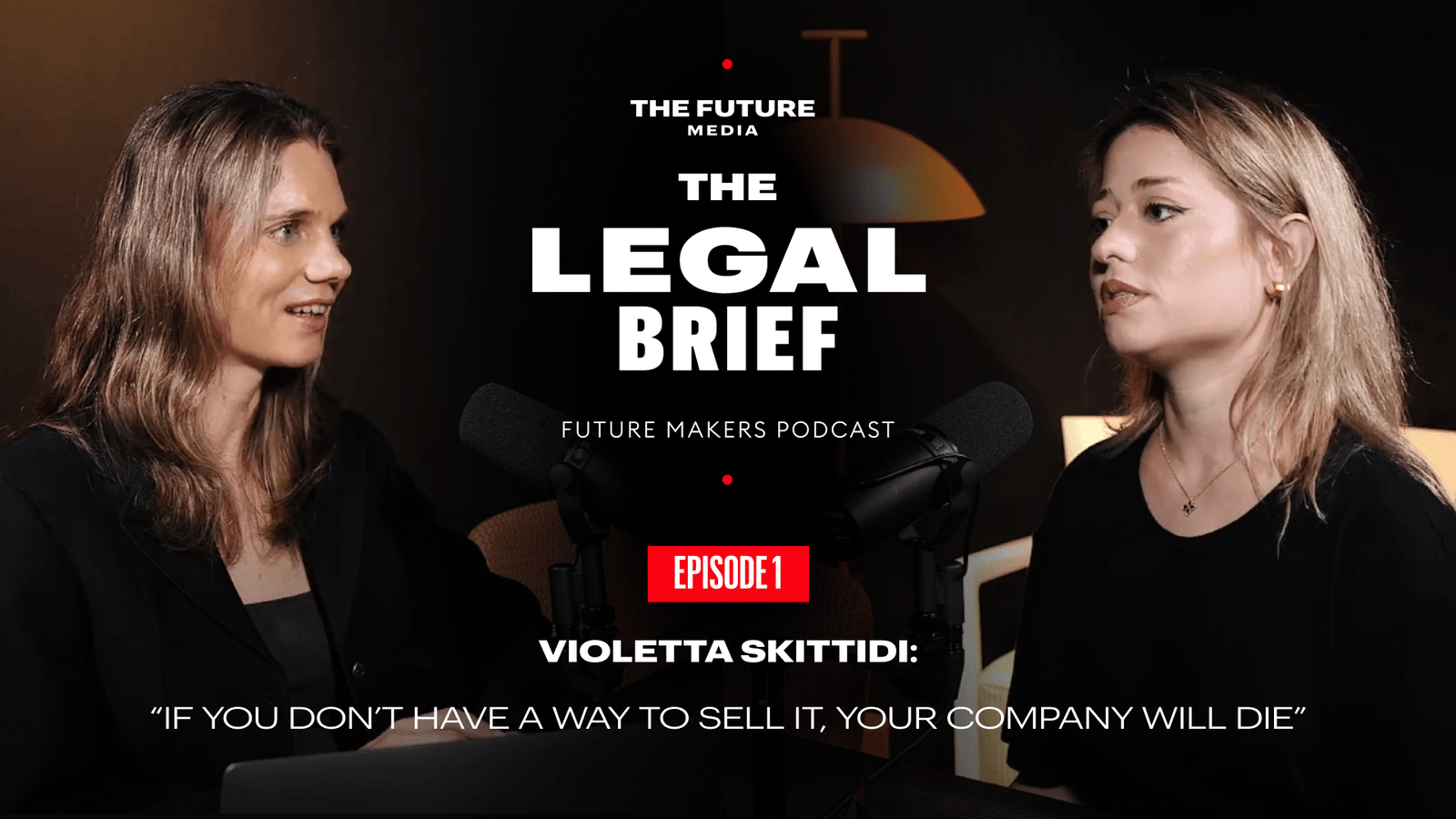
The Future Makers Podcast: The Legal Brief is a series of in-depth conversations with legal professionals about the profession, its blind spots, its clients, and the technology that is reshaping how the work gets done. Host Annetta Benzar looks past the credentials to understand how lawyers think, where they are ahead of the curve, and where they are being left behind.
A production of The Future Media.