

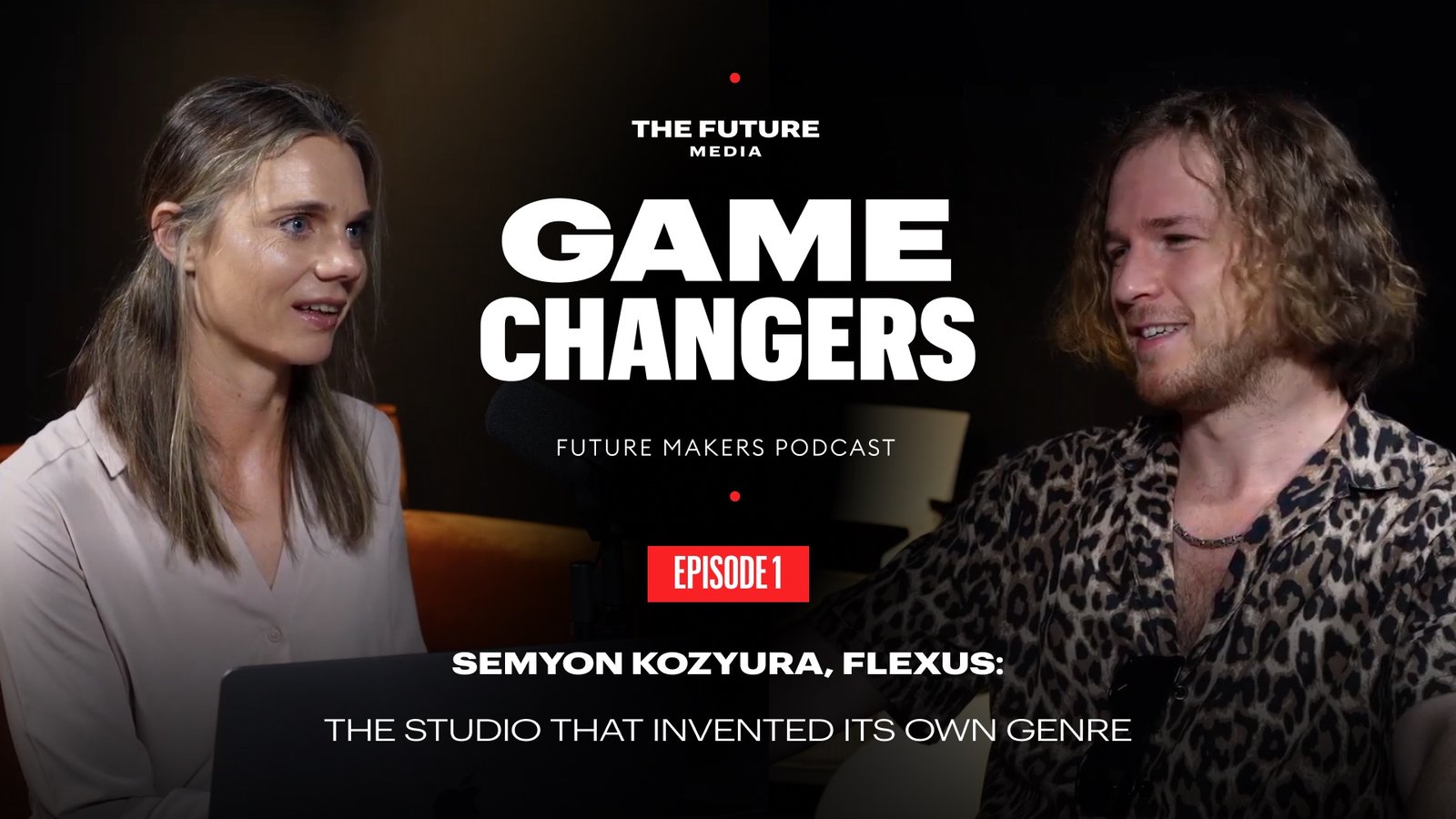
Twas midnight, maybe or maybe not before Christmas. Seven-year-old Semyon Kozyura was engrossed in the images playing on the TV. The movie? Back to the Future. The movie that would change little Semyon’s perspective on fate, choice, and reality, enough that there was no time to lose. That night, he pulled out a piece of paper and drew the blueprint of his very own time machine. Unfortunately, his calculations were not quite correct, and this prototype was not going to see any serious… sugar. Living in this reality would have to do.
Semyon Kozyura is the founder of FLEXUS, a game studio that has released four mobile titles with a combined player base of more than 300 million and is currently preparing to launch its first PC game. Despite the studio’s growth, Kozyura says he is still surprised by its success, considering he built the company from nothing while couchsurfing at a friend’s apartment, unable to afford a ticket home and without any formal background in game development.
Follow THE FUTURE on LinkedIn, Facebook, Instagram, X and Telegram
What Semyon did have was a passion for making things. He grew up in a small city in the south of Ukraine, and from early childhood, he says, his instinct was never just to have something or play with it but to understand how it worked and whether he could make it better himself.
“If I saw something I liked, I didn’t only want to have it or play with it. I always started thinking: how can I make it by myself? How can I maybe even make it better?”
he says.
When he got his first PC at eleven, a machine that was older and nearly as big as he was, his first thought was to try to create his own game for his friends. The problem was that he had no programming skills, nor anyone to teach him. So, he opened up one of the few programmes he could use and created his first game in Microsoft PowerPoint. “I made a game where you were a thief in a library,” he says. “You had to move the cursor between walls and not touch them. If you touched them, there was a slide with an alarm, so you failed the game.” In just a few years, he would be known as the “hacker” in his friend group from all the mods he could and would make on the games he and his classmates were playing. It was all curiosity; he just wanted to understand how things worked and whether he could make them better.
His parents didn’t say much about his passion other than to ask him not to skip school, which he did constantly. When he eventually got to university, the pattern repeated, and after two years of skipping classes, he was expelled. He was 18.
“I didn’t know what to do next. Home was around 900 kilometres away. I had zero contacts. I didn’t know anything about life, really. So I thought: I’ll make another game.”
He went all in and built it in six weeks. It was a simple clicker game, but it worked, and he released it with zero marketing because he didn’t know how to do marketing.
The next year, he checked his bank account and was shocked… The game had made him a total of $100,000, which was just enough to keep going and try to get himself more integrated into the gaming industry through networking and conferences.
Four years after that, the money had run out again. An old classmate offered to pay his rent and suggested they make something together. Semyon grabbed at the chance. The format they landed on was hyper-casual, a category he disliked intensely at the time. “Everybody was doing it,” he says, “and the whole quality and gameplay looked bad to me. Like people weren’t even trying.” The standard process in hyper-casual was a two-week prototype, tested and thrown away if it failed, with a success rate of around 3%. Semyon and his team spent three months on theirs instead, part of that time with him working from a hospital bed with pneumonia. When they launched their first game (on the first try), it reached 100 million downloads.
It was time to grow the team. The third team member was found unconventionally, but convention was never a goal of Semyon. At a rave, Semyon’s partner found someone lying in the bushes, too wasted to speak for himself, while a friend of the said bush-resting-wasted-person spoke for him: “He needs a job. Look at him. He’s a 3D artist.” The two interviewed him the next day, and Semyon thought he seemed like a cool guy and gave him a shot. He is now the studio’s lead 3D artist. It’s not all about stiff CVs and credentials for FLEXUS.
“It’s much easier, and much more interesting, to work with people who really love what they’re doing. Who want to make games, play games, and care about it. Not people who are just sitting and waiting for tasks, or waiting for 5 p.m. to come,”
he says.
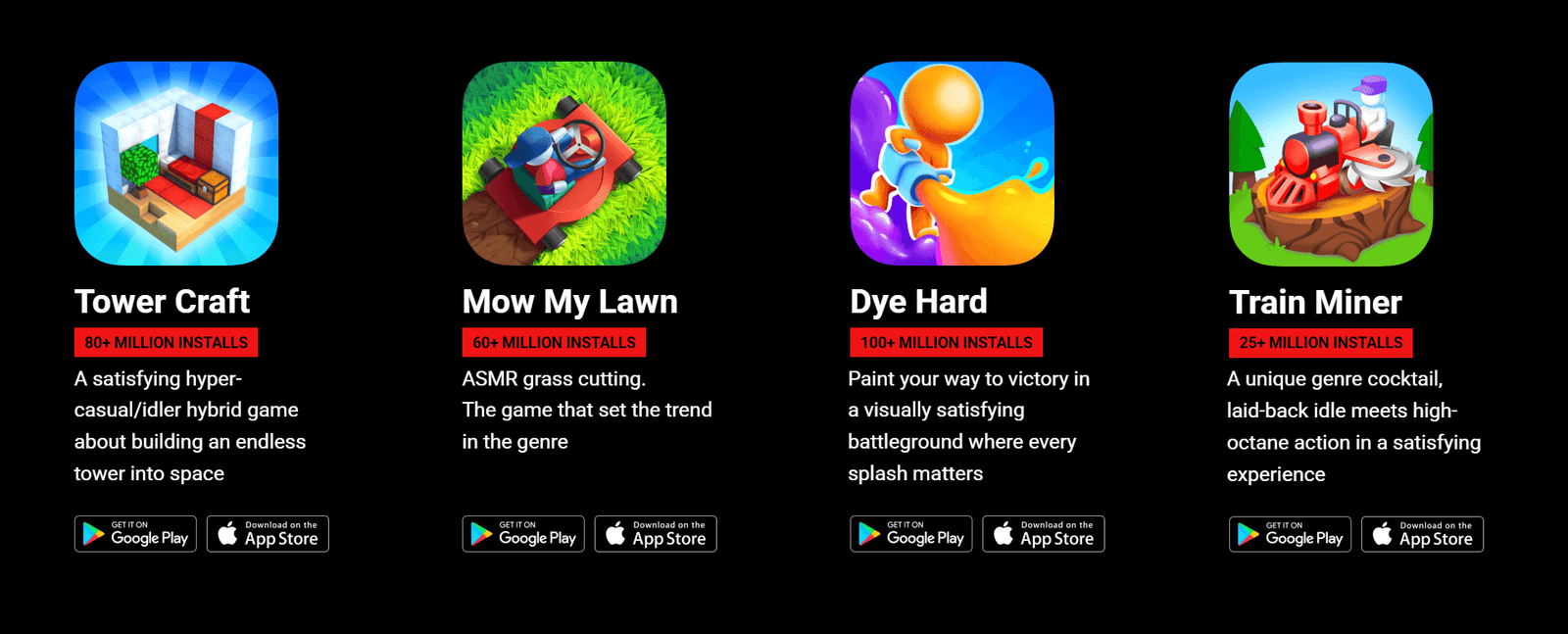
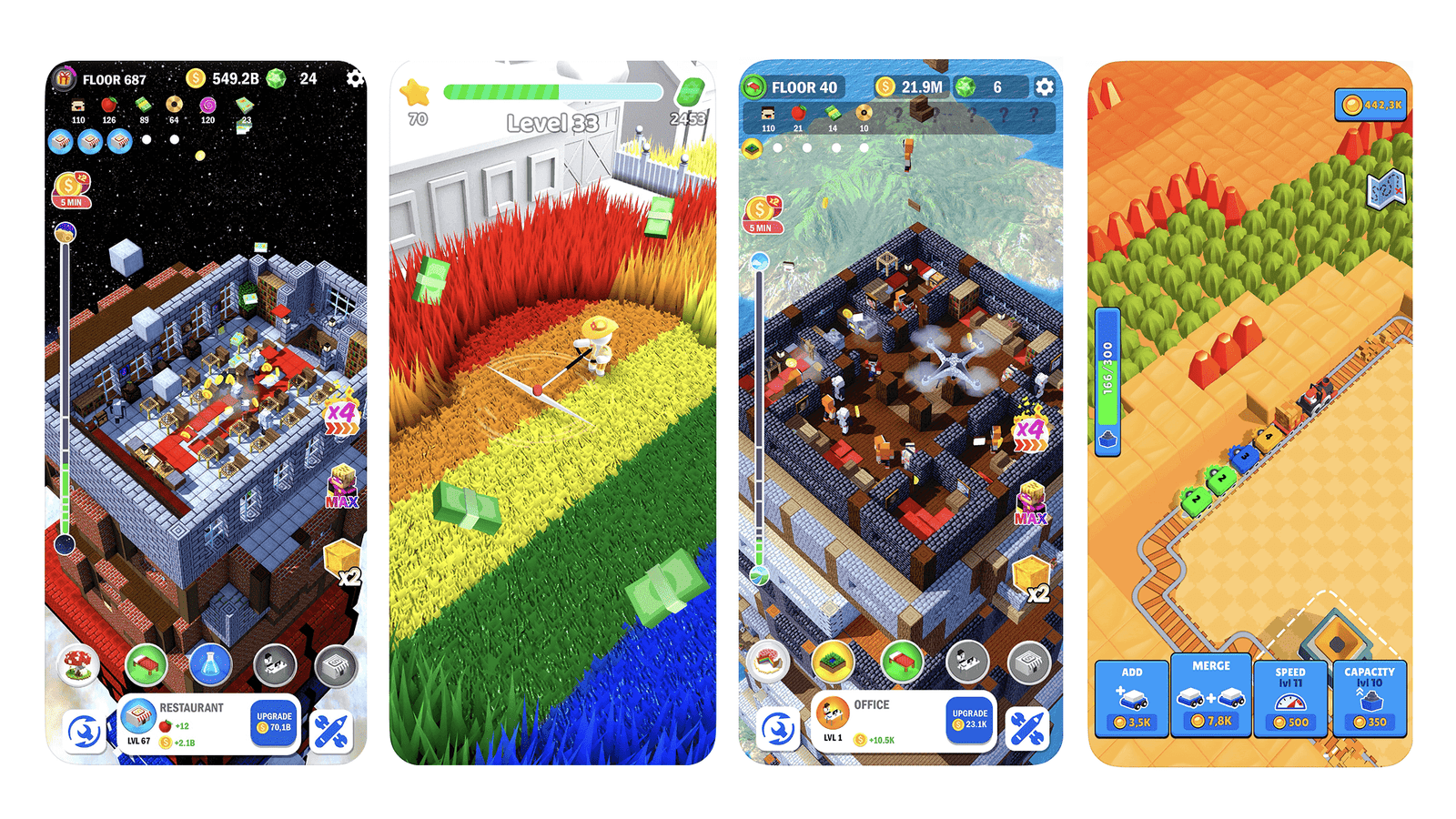
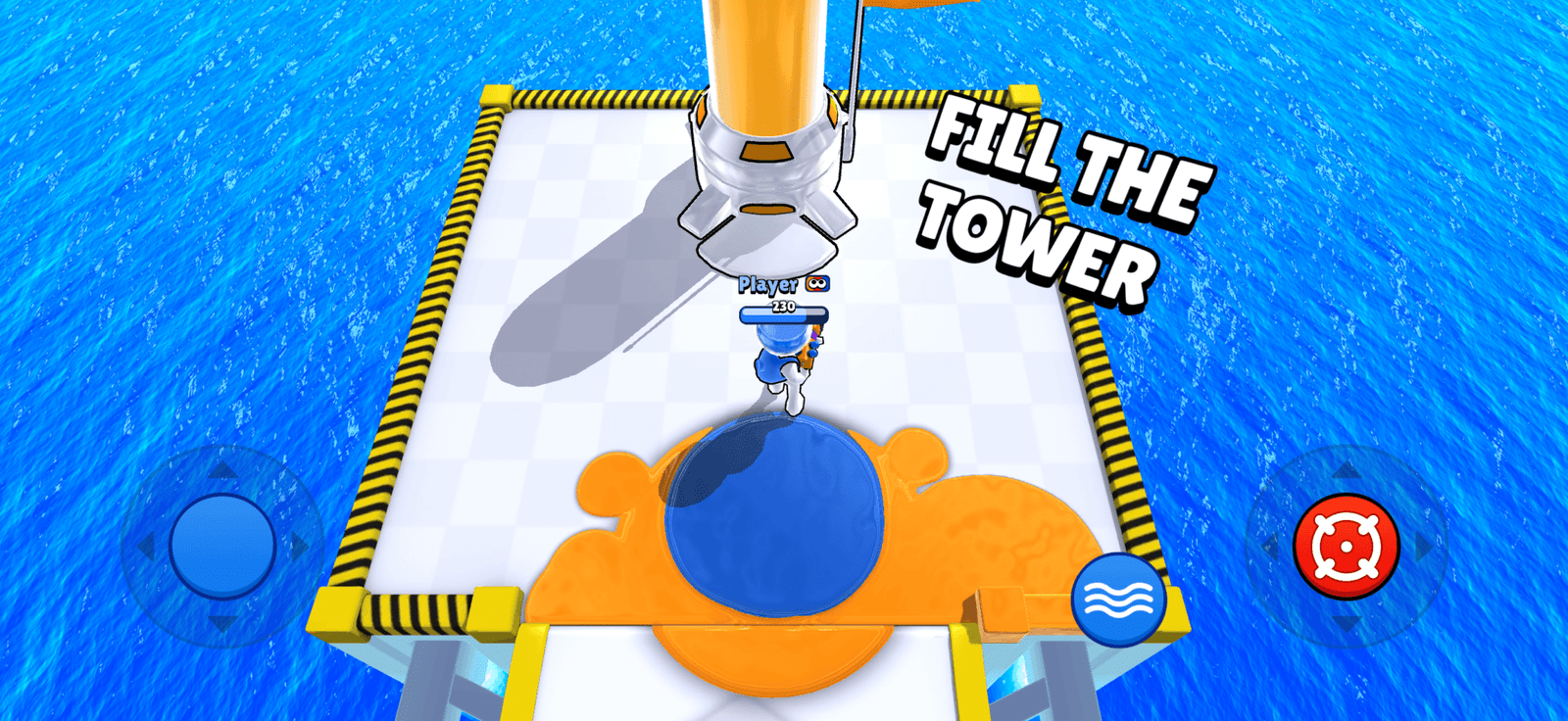
The two games FLEXUS now focuses on are Dye Hard and Train Miner. Between them they represent what Semyon has started calling a satisfying idle game, a subgenre the studio stumbled into rather than designed in advance. “We never designed it to be like this in advance,” he says. “It’s interesting to discover mechanics that could only exist inside that genre.” The mechanics of the subgenre are that you press the screen and hold, an action happens while you hold, and when you release, everything stops.
Semyon had not seen games structured that way before, which meant no references to work from, but it also turned out to be his secret weapon against cloning. In mobile gaming, where cloning is a systematic problem studios face (where other studios watch what works on the market, strip it to its bones, rebuild it faster and cheaper, and flood the market before the original has found its feet), not having a template to use as a premise for copying turns out to be its own kind of protection. If there is no genre to copy, there is no shortcut. You have to invent the thing from scratch, and most studios will not bother.
“Why learn some genre another guy just invented, when there are much more understandable genres you could try to copy?”
he says.
Most studios make exactly that calculation, and it is, for now, the best protection FLEXUS has.
The deeper question of what makes games worth making at all is one Semyon has thought about for a long time. Fun, he argues, is not the opposite of learning. It is learning. When you are going down rabbit hole after rabbit hole of Wikipedia pages at 3 a.m. about something completely random, that is fun, you just do not call it that. Stimulation is something different entirely: the psychological architecture of slot machines, daily quest systems, and loot boxes that creates compulsion without curiosity.
“You can’t learn anything from a slot machine.The rules are always the same,”
he says.
The mobile market is built, in his own words, “like a machine for squeezing money,” and while he built games inside that machine and built them well, he feels it is time to move on.
PC is a different world. PC players are more critical; they hate the psychological tricks of the mobile market, and they want the game to be right in a way that mobile players, trained by years of compulsion mechanics, no longer demand. On the gaming platform Steam, for instance, he says, you cannot buy your way to success. If the game is good and you do the basic marketing, you will be fine, and if it is not, money will not save you. That accountability is, for him, the appeal.
FLEXUS’s first PC game is in the making, with a trailer planned in the next few weeks, a demo aiming for Gamescom at the end of August, and a release he hopes to launch before the end of the year. After that, he already has ideas for something more personal, more ambitious, the kind of things people dream about even when the market calls them unrealistic. The seven-year-old with the time machine blueprint is still, underneath everything, the same person doing the same thing, just with better tools and fewer design flaws.
This interview is part of The Future Makers: Game Changers series. Game Changers is a series of conversations exploring game development as one of the world’s most influential creative industries, covering storytelling, design, production, publishing, community building, and the business behind the virtual worlds people play in.
A production of The Future Media, hosted by Annetta Benzar.