Women founders in the US raised $3.9 billion across 770 deals in 2025. The number looks impressive until you zoom out to the full picture. According to Pitchbook’s 2025 report, all-female founding teams received a mere 1.1% of total VC capital. Startups with at least one female founder fared a little better, accounting for 21.1% of VC deals (which totals 3,096 deals). Now zoom out even more, over a decade, and the picture is even more murky. Women-founded startups have secured only around 2% of all VC funding since 2015, according to PitchBook’s US All In series. The imbalance, therefore, is not a temporary blip but embedded in the culture of VC funding.
The skew extends beyond who receives capital to who controls it. In 2024, women made up just 17.3% of decision-makers at VC firms managing $50 million or more in assets, with only 10.8% of those firms having a majority of female decision-makers. At smaller firms, women are in a slightly better position, making up 19.5% of decision-makers at firms below $50 million AUM, with 29.2% of those firms having majority female decision-makers. But the decision-making concentration remains overwhelmingly male.
Follow THE FUTURE on LinkedIn, Facebook, Instagram, X and Telegram
The UK shows stronger progress in workforce representation, though top positions continue to be male-dominated. BVCA and Level 20’s 2025 study reports that women make up 27% of UK investment professionals and 15% of senior investment roles, with VC outperforming private equity on gender balance. When it comes to decision-making, women hold 16% of Investment Committee seats and 19% of GP-nominated board positions overall. Regarding VC specifically, those numbers rise to 26% of IC seats and 32% of board roles.
Across Europe, the OECD finds that all-female founding teams receive approximately 2% of European equity investments. On the investor side, women make up around 14% of top GP and senior VC roles. Placing fewer women in positions to make decisions affects who is viewed as “investable,” and, according to the numbers, women are in the margins of that (in)visibility.
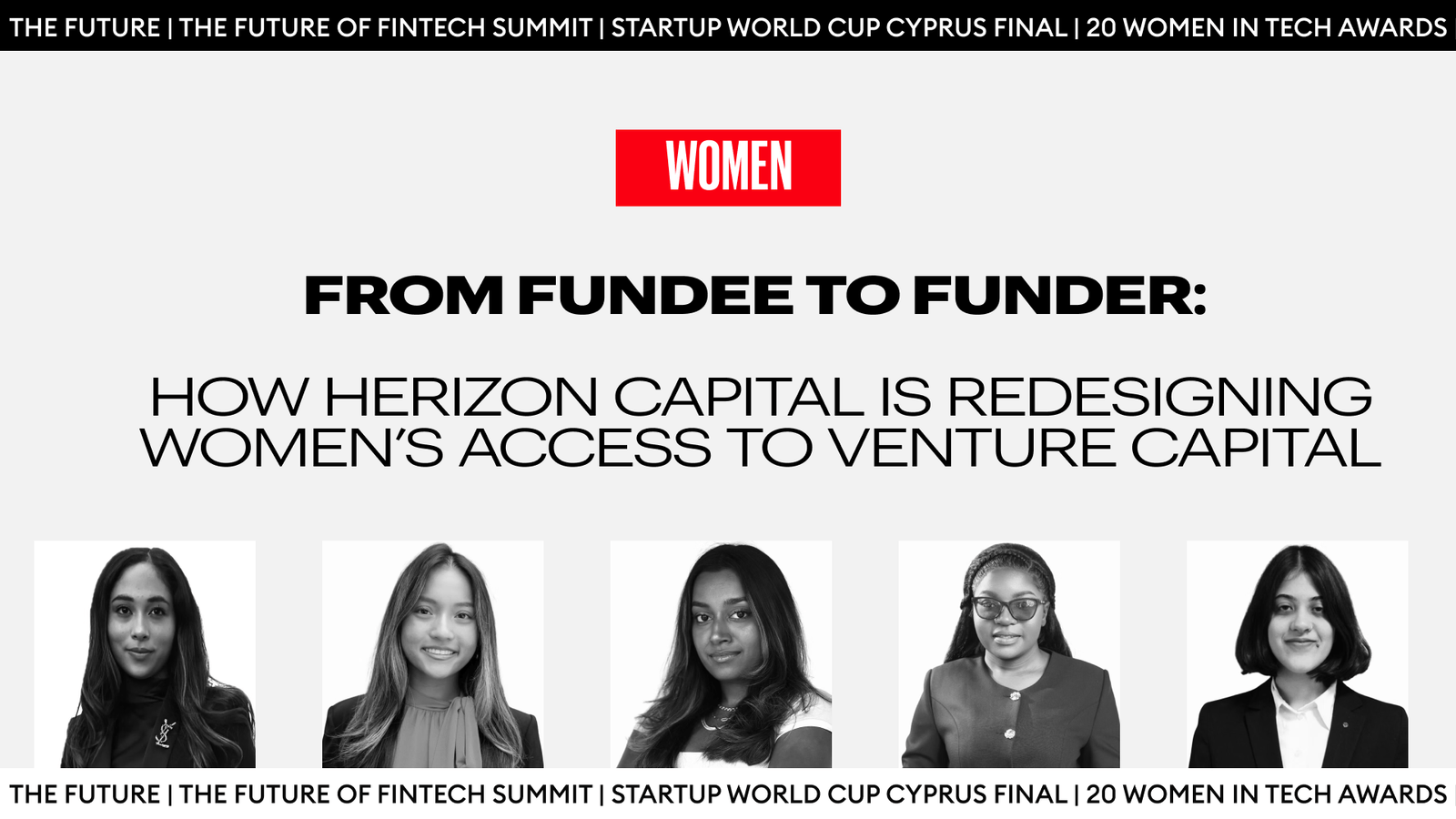
Herizon Capital began on the premise that the funding gap is not a market inefficiency that will, in time, self-correct. The problem is structural and, therefore, needs to be intentionally targeted to even begin to build towards a more inclusive, and a more sustainable, and resilient future. The problem lies within the infrastructure and requires capital, education, and visibility to move together. Therefore, the Herizon Capital team has built a platform to fund female-led ventures across Arts, STEM, and Sports, intending to move women “from fundee to funder.” Not just accessing capital, but learning to deploy it, recycle it, and ultimately control it.
In this interview with Forbes Cyprus, the Herizon team explains why they are building a non-profit capital platform rather than waiting for traditional VC to change, how they define “investable” in sectors often overlooked by institutional investors, and why they believe the system will not correct itself without intentional redesign.
1. What is Herizon, and what are you trying to build in the women founders ecosystem?
Isabella Maldonado (Managing Partner Strategy & Capital)
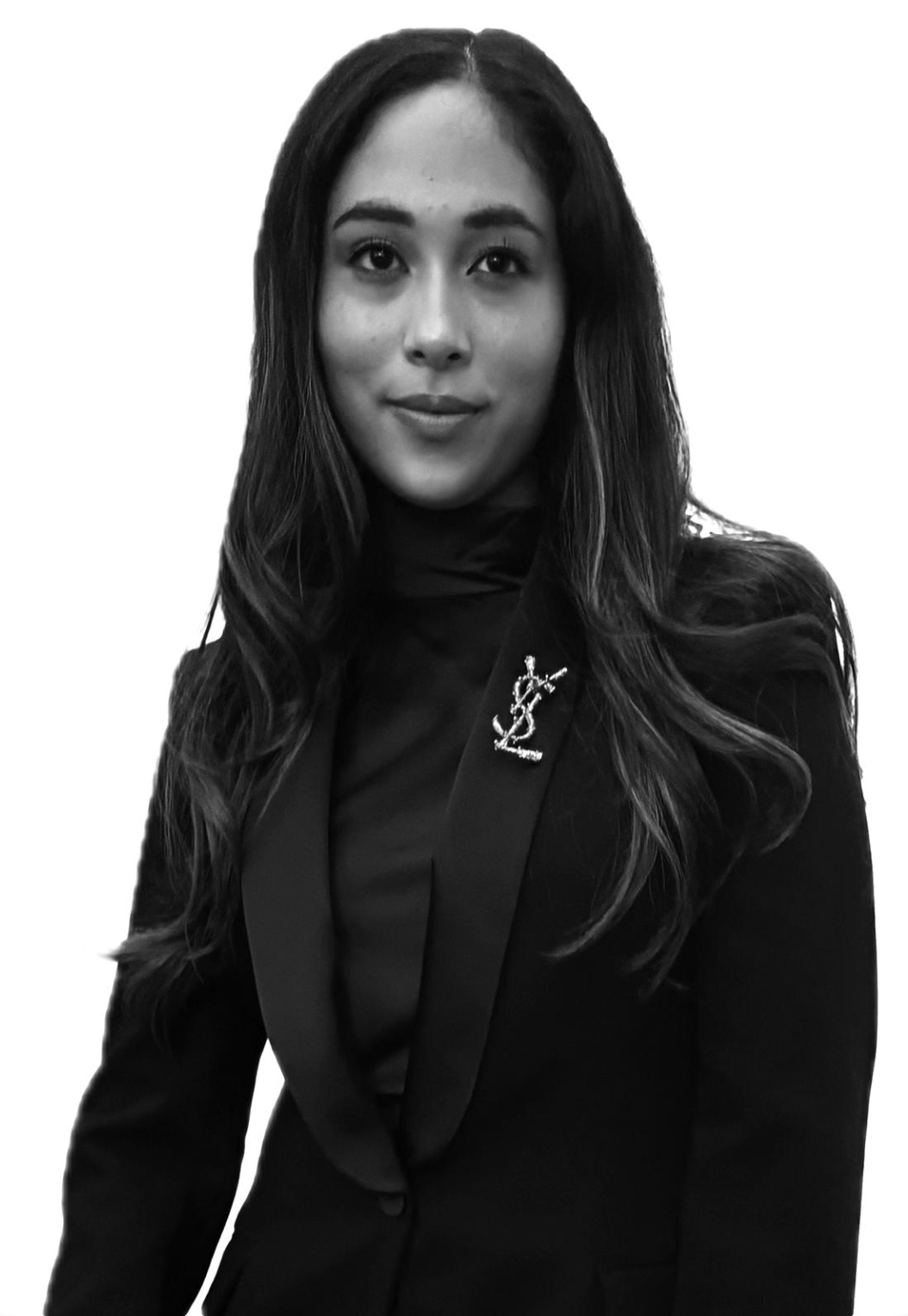
Herizon is a non-profit capital platform funding female-led ventures across Arts, STEM, and Sports. The goal is to directly address the 137-year economic gap facing women. Our ambition is not incremental inclusion, but structural redesign, integrating capital allocation, financial intelligence, and sustained execution into a single, self-reinforcing system.
This redefines not just where capital flows, but how it is learned, managed, and multiplied, enabling women to convert access and capability into ownership and long-term wealth. We are not closing the gap alone, but catalyzing the women who will.
2. What in your own background led you to build Herizon, and what made you feel you needed to take this on rather than wait for the market to correct itself?
Isabella Maldonado (Managing Partner Strategy & Capital)
As a LATAM-born female founder, I saw early that capital in the hands of women is transformational. A single angel investment didn’t just change my trajectory; it expanded what was possible for the women in my family and for generations to come from me. It reinforced the idea for me that when women have access to capital, they don’t just build companies, they reshape entire ecosystems.
From my vantage point, the opportunity is structural. Capital defines markets, and the existing system was built by design, not by accident, which is why the next era of “Unicorns” will not come from refining existing filters but from redefining them entirely.
The market was never going to correct itself because overlooking women was never something observed as an error; it was a preconceived decision. I founded Herizon Capital alongside exceptional women not to fix what to our eyes is broken, but to generate a whole new set of rules and metrics that define what “success” is, and ensure women are at the center of it.
Coco Villamar (Brand Strategy & PR Partnerships)

Growing up in the Bay Area, home to nearly 20% of all U.S. startups, I was constantly surrounded by innovation. But even in that environment, the founders I saw, whether in the news or in real life, were almost always men. Even early on, it became clear to me that this wasn’t a problem of lack of talent; it was a lack of access and opportunity for women.
As I moved through classrooms and into startup environments, that pattern only became more apparent. There were incredibly capable women all around me, but far fewer of them had access to capital, ownership, or real decision-making power.
When I learned that only 2% of venture capital goes to women, it didn’t surprise me; it only validated what I had already been seeing. That’s what made it clear that waiting for the market to correct itself was never a real option.
I’ve always believed that you don’t wait for change, you become it. With Herizon, we’re not just addressing the gap; we’re building a completely new model. By combining capital, education, and community, we are creating a system where women don’t just access funding, but learn to deploy it, recycle it, and ultimately lead it. Because the goal isn’t just participation, it’s multigenerational wealth, owned and driven by women.
Prateeksha Prabhakar (Platform Development & Stakeholder Relations)
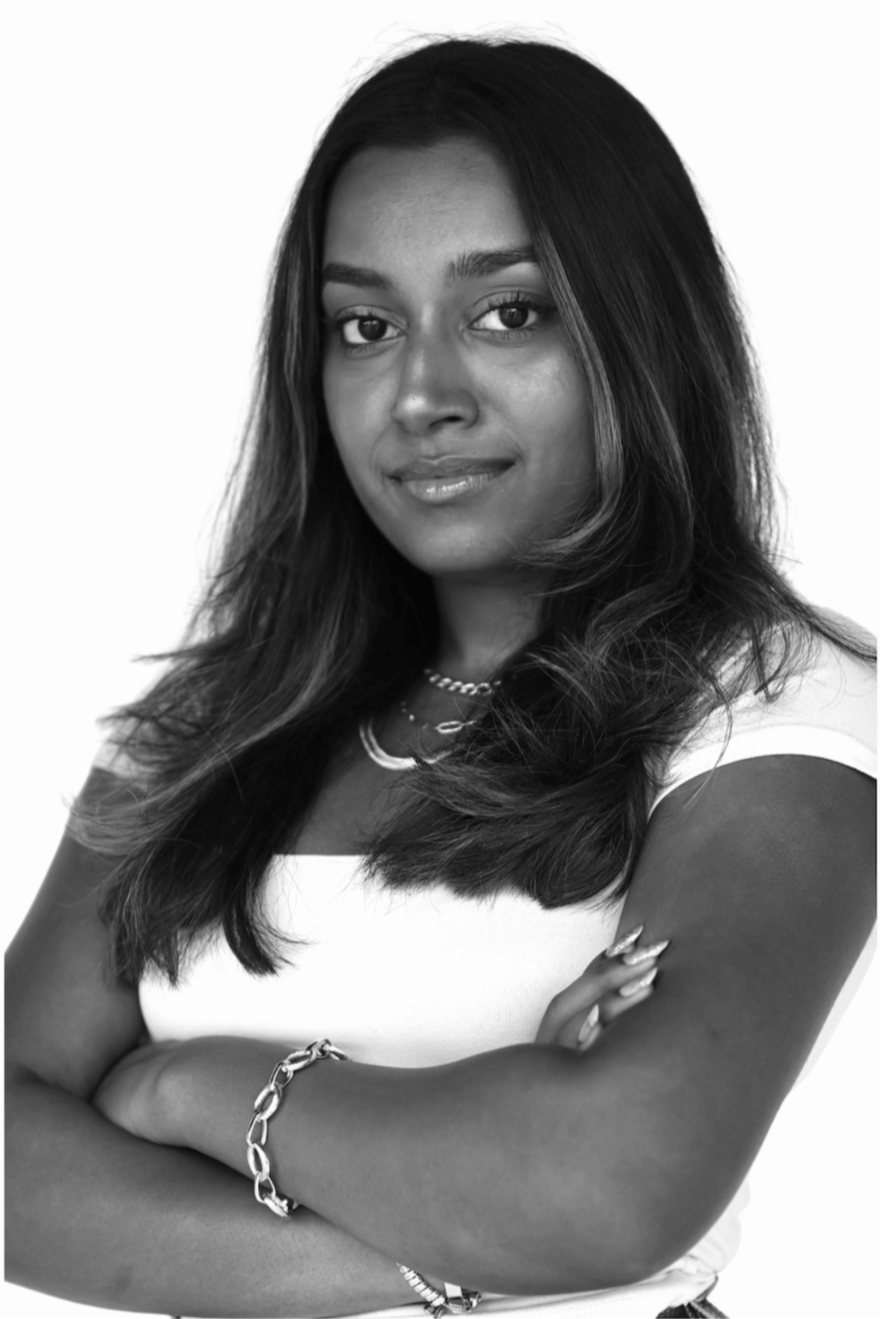
Six-year-old me peeked through the door with curiosity, overhearing my grandmother murmuring as she taught herself my class curriculum before she then taught it to me. This stemmed from her determination that my mom and I would have an education she was once denied, because to her, education meant power and freedom. During this time, my mom had made a tough decision to leave everything familiar and self-fund a PhD abroad. They were incredibly capable and deeply ambitious women, but they had to fight for access at every step.
As I moved through my own path in business school, national competitions, and now strategy, I kept seeing the same pattern repeat itself in more polished environments. Women were doing the work, driving ideas, building value, but they weren’t always the ones holding the capital, the ownership, or the decision-making power. It’s in my DNA to take matters into my own hands as systemic issues simply continue to reinforce what already exists. And in today’s world, where women are navigating layered roles and increasing economic pressure, time is not a luxury we can afford.
Oslie Murambiwa (Finance & Impact Reporting)
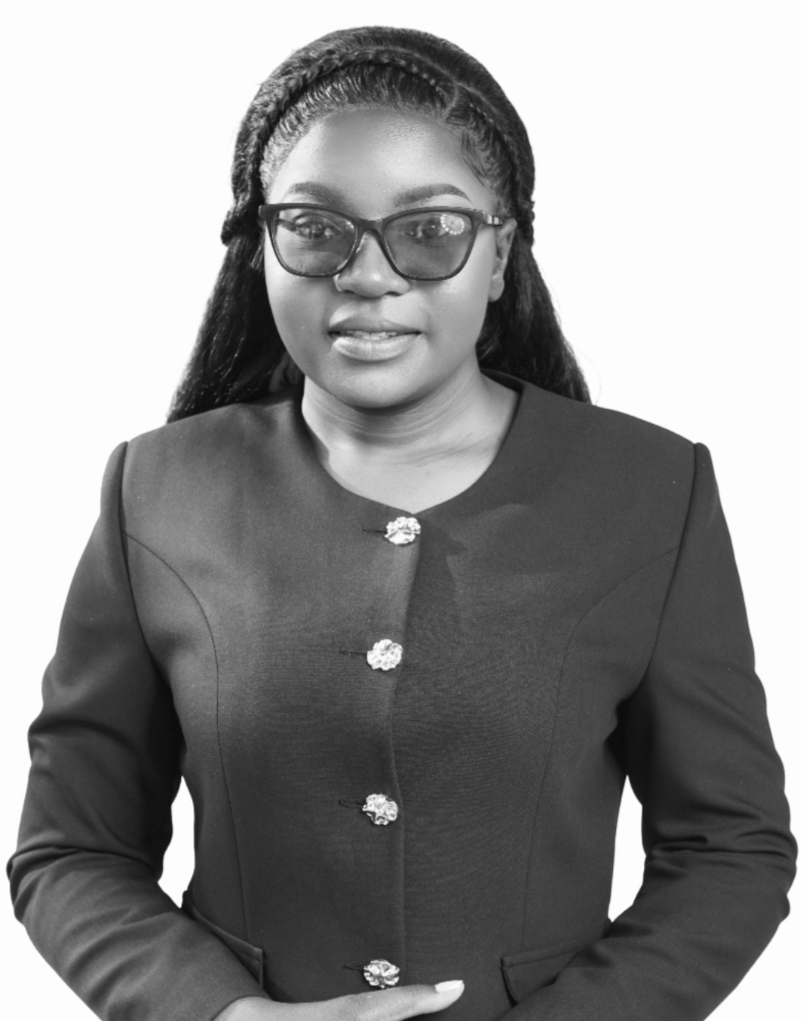
My background in accounting has really shaped how I see the world of finance and investment. I’ve spent time understanding how capital is allocated, how risk is assessed, and where opportunities are often overlooked. Along the way, I kept noticing a consistent gap in incredibly capable women with strong ideas, yet limited access to funding, networks, and the kind of support needed to scale. Being surrounded by ambitious women in different spaces made it even more real for me; the talent is there, but the system doesn’t always meet it halfway.
Coming from Zimbabwe has deepened that perspective even further, because I’ve seen how these gaps are even more pronounced in emerging markets where access is already limited. What made me step in rather than wait is the realization that markets don’t just “fix themselves.” They reflect existing biases unless something intentionally disrupts them.
Hardika Arora (Portfolio & Investment Analyst)
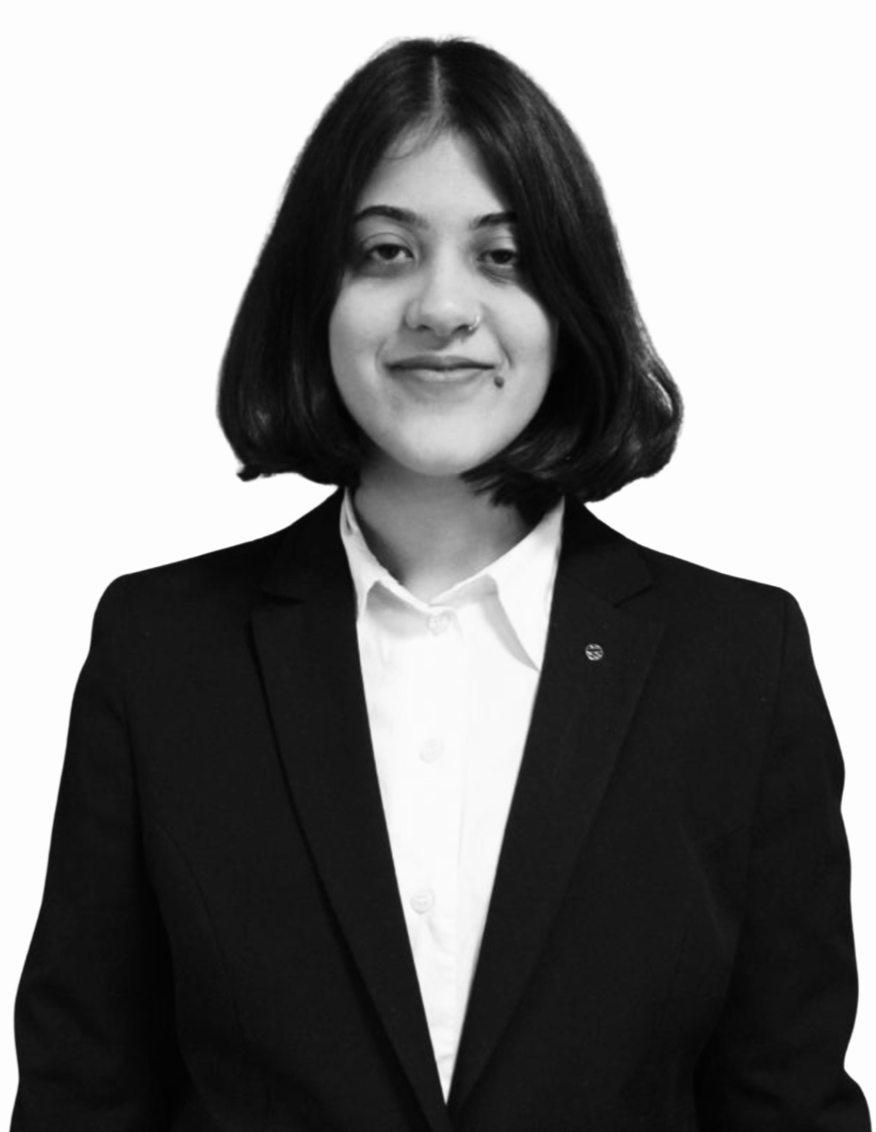
I come from India. Early on, I witnessed how closely financial independence is tied to autonomy for women. In many families, money shapes decision-making power, whether you can take risks, move cities, delay marriage, or pursue something unconventional like entrepreneurship. I also saw how capable women often chose stability over ambition, not because of a lack of ability, but because the cost of risk was disproportionately high.
This made me realise that the issue isn’t just talent, it’s access, whether to capital, networks, mentorship, and sometimes even permission. These constraints are often invisible in traditional investment models. A woman building alongside a full-time job, navigating family expectations, or operating quietly without support may not fit the typical founder profile, but she is often demonstrating exceptional resilience and execution.
That’s why I don’t see Herizon as waiting for the market to correct itself. We want to be part of that correction. Markets eventually adapt, but they tend to move slowly and reward already-visible pipelines. We’re intentionally looking beyond those pipelines, identifying women who are already building despite structural constraints, and giving them the tools to accelerate.
This goes well beyond funding businesses. It’s about shifting who gets seen as investable. Once women have financial independence, the impact extends beyond the individual. It influences households, communities, and the next generation. My roots in India have shown me just how powerful that ripple effect can be.
3. What does your team bring to this work that a typical accelerator or early-stage fund team doesn’t?
Coco Villamar (Brand Strategy & PR Partnerships)
What we bring is an intentionally different perspective on capital. We are not coming from traditional venture or accelerator backgrounds alone. Our experience includes strategy, finance, brand, and partnerships, which means we have directly seen how capital moves, not just through numbers, but through perception, positioning, and access.
That gives us an edge most teams don’t have. We understand that who gets funded isn’t just about performance. It’s about who gets seen, trusted, and believed in. Because of that, we don’t just deploy capital, we build the conditions around it. We focus on capital literacy, visibility, and positioning, so founders aren’t just funded, they’re equipped to navigate and leverage capital long-term.
Supported by Dior × UNESCO, we are also able to operate within global networks that connect institutions, culture, and capital, bringing both credibility and reach to the women we back. That’s the difference: we’re not just funding founders, we’re building future capital allocators.
4. Who is Herizon for?
Prateeksha Prabhakar (Platform Development & Stakeholder Relations)
Herizon is for women who are building with intention. We support founders across the Arts, STEM, and sports who are often overlooked by traditional venture pathways because they don’t fit the narrow definitions of what a “venture-backed founder” looks like. We primarily support women at the early to growth stages, from idea and validation through initial traction.
Herizon is for founders with high conviction and long-term vision. Not everyone needs to build a billion-dollar company, but they must be serious about building something scalable, sustainable, and economically meaningful.
The right Herizon founder is:
- Curious and coachable: open to learning the mechanics of capital, not just receiving it
- Action-oriented: moves quickly, executes consistently, and takes ownership
- Culturally aware: understands the impact of what they’re building and how it resonates beyond just profit
- Community-driven: believes in growing alongside other women, not in isolation
5. Your model combines a 12 to 18-month cohort with capital released in tranches tied to progress. How do you define progress, and what unlocks the next tranche?
Hardika Arora (Portfolio & Investment Analyst)
Progress for us is not just measured in absolute scale, but in trajectory. We look for founders who are consistently becoming better than they were the day before, showing genuine interest, being driven, and demonstrating a willingness to learn and adapt. Especially in early stages, capability development is often the strongest signal of long-term potential.
For example, a founder may not understand CAC on day one, and may not know how to build a financial model on day two. But if over the next few weeks she actively learns, asks the right questions, tests assumptions, and begins using those metrics to make decisions, that’s progress. We’re looking for that type of momentum to unlock the next tranche, where curiosity turns into understanding, and understanding turns into execution.
We evaluate progress across a combination of learning milestones, execution milestones, and commitment signals. This could include validating demand, refining the value proposition, improving unit economics understanding, building a basic financial model, securing first customers, or demonstrating consistent effort and iteration.
The idea is not to expect perfection early, but to reward trajectory. A founder who is deeply engaged, learning quickly, and applying that learning to move her venture forward is showing the kind of capability that compounds over time.
6. You’re operating across Africa, the US, Latin America, and Europe. What differences have you seen in how women are (and not) supported across these regions?
Oslie Murambiwa (Finance & Impact Reporting)
Operating across Africa, the US, Latin America, and Europe has made it clear that while gender gaps exist everywhere, they are far more structural and visible in Africa. From my perspective, Africa is full of entrepreneurial women, but a large number of them operate in informal spaces, selling in flea markets, running small shops, or trading within their communities, and only a few have formally registered companies.
It’s not a lack of ambition or innovation, but rather the barriers to formalisation, access to information, and limited entry points into funding ecosystems that hold many back. This creates a very different challenge compared to regions like the US or Europe, where systems are more established, even though bias still exists. In Africa, many women are already doing business and generating income, but they remain excluded from opportunities to scale because they are outside formal financial systems. That’s why the focus isn’t just on funding, but on bridging the gap, helping women transition from informal businesses into structured, investable ventures while giving them the tools, networks, and support to grow.
Hardika Arora (Portfolio & Investment Analyst)
I see similar structural barriers in Asia. In India, for example, bias often appears in subtle but powerful ways. I’ve heard women founders share that during VC pitches, they were asked, “Where is the founder?” assuming a male counterpart must exist. These moments reflect deeper perceptions about leadership and credibility.
Family and societal expectations also play a significant role. Many women are encouraged to prioritise stable careers over entrepreneurship, or face pressure around marriage, caregiving, and financial risk-taking. So while the ecosystem may appear more developed on the surface, these underlying constraints shape who actually gets to build and scale companies.
As a result, the challenge in Asia isn’t only access to funding, but also navigating cultural expectations, building confidence to take risks, and gaining legitimacy within traditionally male-dominated networks.
Isabella Maldonado (Managing Partner Strategy & Capital)
In Latin America, entrepreneurship is not an exception among women; it is embedded in daily life. From domestic services to education, from informal commerce to artisanal trade, women are already sustaining the backbone of local economies.
The constraint has never been ambition or capability. It is access to strategic education, to visibility, to positioning, and to the infrastructure required to scale. In the absence of these systems, even the most capable women are funneled toward traditional paths, not for lack of vision, but for lack of precedent and support.
In Europe, the constraint is not a lack of talent. It is a question of visibility and perception. The archetype of what a founder is “supposed” to be remains narrow, often excluding highly capable individuals who do not fit the conventional mold.
Redefining the founder is, therefore, the first step to unlocking untapped innovation. Across Europe, as in Latin America, Africa, and the United States, the opportunity lies in challenging entrenched systems and expanding the lens through which ambition, leadership, and success are recognized.
7. What would success look like in five years for Herizon?
Isabella Maldonado (Managing Partner Strategy & Capital)
By 2031, if Herizon performs as intended, it will prove that women’s access to capital is not a matter of luck or proximity, but of infrastructure. We aim to deploy $5–7M to 45+ women, backing ventures that generate measurable economic and social value, while unlocking job creation, income growth, and financial independence that extends beyond the individual to families and communities.
These outcomes signal a broader structural shift: women building scalable, revenue-generating ventures in sectors long overlooked, equipped not only with capital but with the knowledge, confidence, and leverage to access and negotiate it on their own terms. The narrative of “leaky pipeline” dissolves when women are made visible, prepared, and systematically supported to upgrade, from fundee to funder and beyond.
Most importantly, this creates a compounding effect across generations. Women and girls will see real, modern examples of success they can step into, while the pathways to build, fund, and lead are no longer inherited or restricted, but actively created, financed, and expanded by the very women who once lacked access themselves.