Breaking news

Workations In Europe: The Best Destinations For Remote Professionals

The rise of remote work has blurred the lines between business and leisure, fueling a trend known as “workations.” Professionals are increasingly seeking destinations that offer seamless connectivity, affordable living costs, and a dynamic environment to balance productivity with cultural exploration.

The Best Countries For Workations

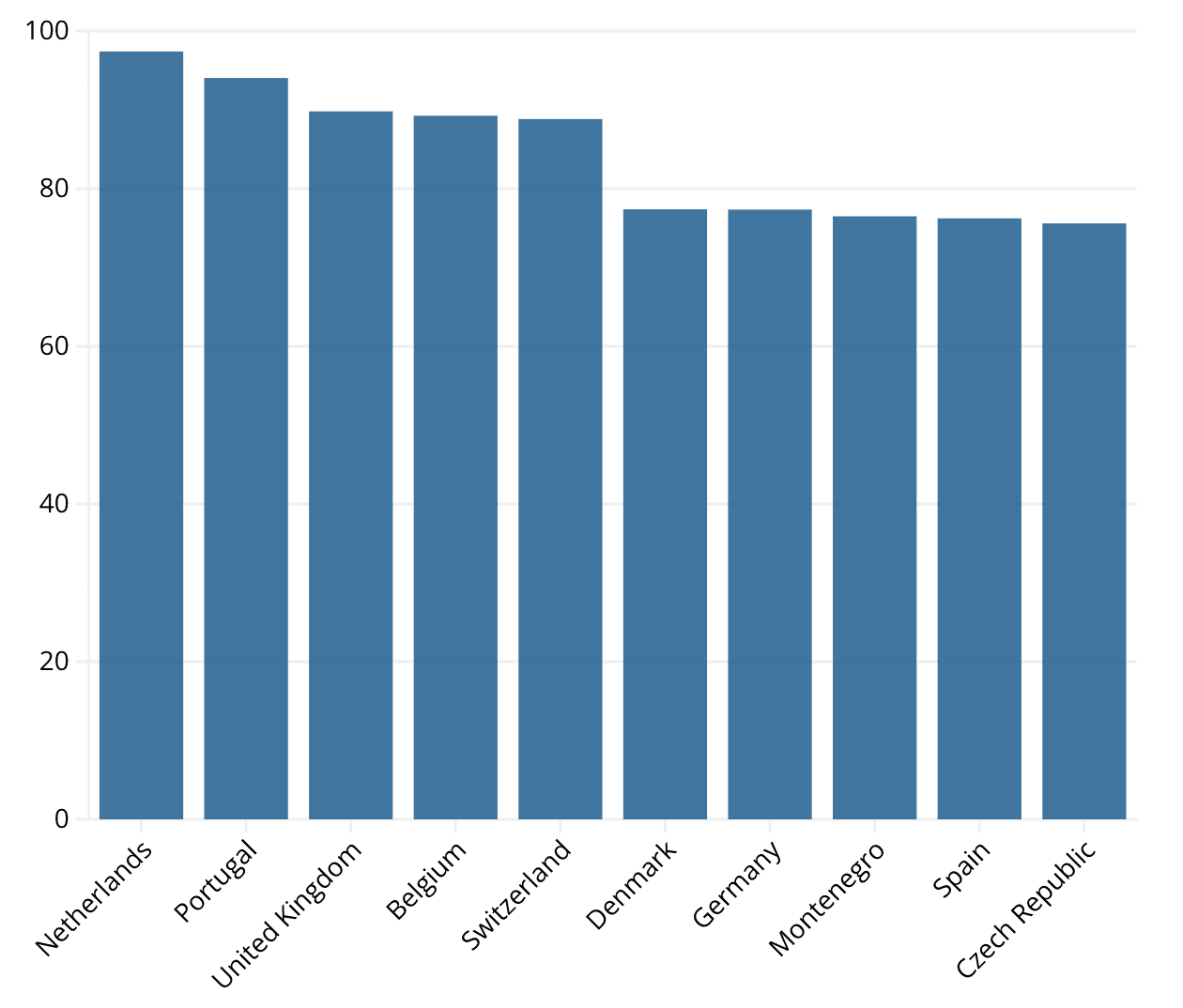
In Europe, the Netherlands, Portugal, and the United Kingdom stand out as prime locations for remote workers. Portugal leads in public Wi-Fi density, offering thousands of free hotspots across major cities, making it an attractive option for digital nomads. Meanwhile, Denmark ranks highest for internet speed, ensuring seamless video calls and uninterrupted workflows.

image 124
Top 10 European Workation Destinations: Workcation Score

For those prioritizing collaborative spaces, the UK boasts the most developed coworking infrastructure, with hundreds of spaces catering to professionals in need of an office-like setup. Montenegro has also emerged as a hidden gem, thanks to its low cost of living and reliable connectivity, making it an appealing option for budget-conscious remote workers.

The Hidden Costs Of The Workation Boom

While the flexibility of remote work has opened new possibilities, it also presents challenges—particularly in countries already struggling with overtourism and rising living costs. Spain, which ranks among the top workation spots, is experiencing mounting pressure as short-term rentals surge, exacerbating the housing crisis. In the past decade, rents have doubled, driven by real estate speculation and a shortage of affordable housing.

The strain on local economies has led to growing tensions. Earlier this year, mass protests erupted across 40 cities in Spain, with demonstrators calling for stricter housing regulations to combat soaring costs. As the demand for work-friendly destinations continues to rise, European cities face the challenge of balancing economic benefits with the need to protect local communities from the unintended consequences of the remote work revolution.

Nvidia Paves The Way For Orbital Data Centers In Space Computing Revolution

Nvidia introduced computing platforms designed for orbital data centers during its GTC 2026 conference. The systems are intended to support artificial intelligence workloads in space-based environments. CEO Jensen Huang said the development reflects a shift toward processing data closer to where it is generated, including in orbit

Redefining The Final Frontier Of Computing

During the keynote, Huang said satellite networks are expanding rapidly, increasing the need for computing infrastructure beyond Earth. He stated that AI systems may need to operate directly within space-based data environments. These developments are linked to the growth of satellite constellations and space-based data collection.

Innovative Modules And Strategic Partnerships

Nvidia introduced the Vera Rubin Space-1 module, which combines IGX Thor and Jetson Orin processors adapted for space conditions. The hardware is designed to operate within constraints related to size, weight and power.

The company said it is working with partners including Axiom Space, Planet Labs and Starcloud on related initiatives.

Overcoming Engineering Challenges

Huang noted that cooling systems remain a key technical challenge in space environments. Heat dissipation differs from Earth-based systems, as cooling relies on radiation rather than convection. These constraints require adjustments in hardware design for orbital use.

Expanding The Scope Of AI And Data Centers

The initiative comes as energy consumption and operating costs increase for terrestrial data centers. Space-based systems could rely on solar energy, which remains more consistently available in orbit.  Companies, including Google and SpaceX are also exploring concepts related to space-based infrastructure and AI systems.

Looking Ahead

As orbital data centers inch closer to reality, the integration of space computing into AI infrastructure represents a transformative leap for technology. Nvidia’s bold vision underscores an industry-wide shift, promising to expand the capabilities of digital infrastructure even beyond the confines of Earth.

Aretilaw firm
Uol
The Future Forbes Realty Global Properties
eCredo

Become a Speaker

Become a Speaker

Become a Partner

Subscribe for our weekly newsletter