The global cultural and creative industries now employ more people than the combined car industries of Europe, Japan, and the United States. A report by UNESCO produced with CISAC and EY estimates that CCIs generate US$2.25 trillion a year, around 3% of world GDP, and support 29.5 million jobs worldwide.
The wider entertainment and media economy is also growing. PwC forecasts global revenues reaching US$3.5 trillion by 2029, with live and offline formats still accounting for 61% of consumer spending. The future of culture is expanding in digital directions, but the spending data suggests the pull of shared, physical experiences remains strong. That creates room for “phygital” performance. These formats blend the physical intimacy of live culture with digital experiences that expand access, perspective, and reach without replacing the real stage.
Follow THE FUTURE on LinkedIn, Facebook, Instagram, X and Telegram
But with the advent of new technologies, however, those behind the artistic works —writers, musicians, filmmakers, designers —are being left behind. Their work is being mimicked, monetised, and exploited, without consent, compensation, or any form of credit. For the most part, cultural policy, especially in Europe, where it is known to be more stringent, is trying to keep up.
The EU AI Act has set a regulatory baseline for synthetic media, and is rolling out transparency obligations that recentre trust and disclosure from “nice-to-have” into compliance territory. That includes requirements that AI-generated outputs be marked in a machine-readable way and that deepfakes be disclosed as such, with limited exceptions.
Copyright policy is adjusting, too. The EU’s Digital Single Market directive recognises the importance of preserving culture in the digital age. It builds a mandatory exception that allows cultural heritage institutions to reproduce works in their permanent collections for preservation, in any format or medium, to the extent necessary.
But is this enough to ensure a fair future for the creative economy, one that honours artistic exploration, protects authorship, and ensures AI tools lift up, and not take away from, the people who have inspired them? Or do we need actors to step up and not leave the future of artists in the hands of regulators and, let’s be honest, hope?
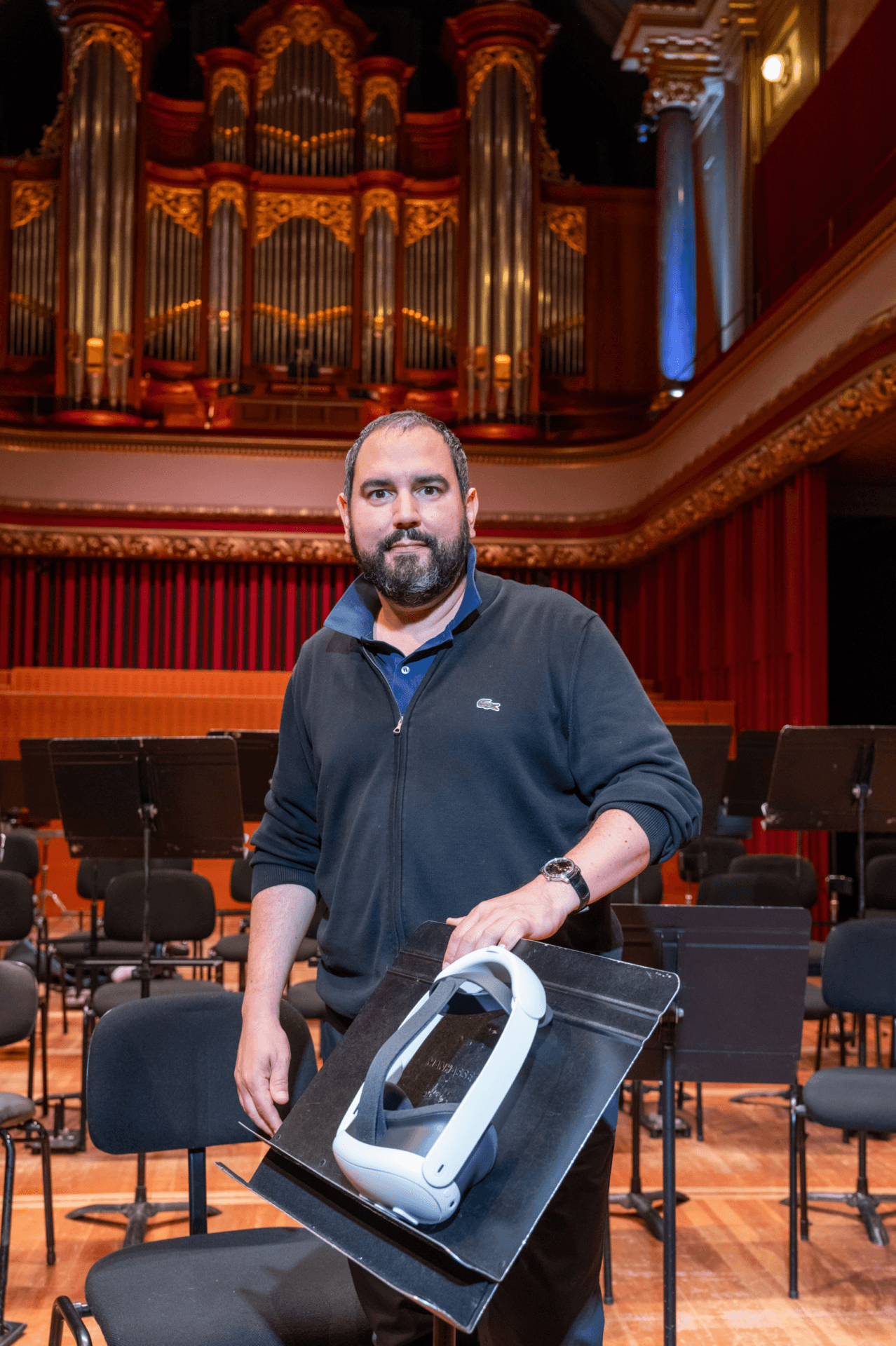
This is where Cybel’Art comes in. Founded by Pierluigi Christophe Orunesu, the company aims to capture living artists at high fidelity and extend performance into new environments without collapsing their identity into an anonymous avatar or an ungoverned deepfake. It’s a vision of immersive culture that treats presence as something to protect, not just distribute.
This year, Cybel’Art has announced a new phase of that vision through their new product, .icolo, the infrastructure designed to standardise verified digital humanity by connecting identity, rights, preservation, and future payments in a way that can scale across the emerging phygital economy. .icolo is far more than a new platform to experience performance. It’s an opportunity to reimagine how cultural value is authenticated and monetised in the next era.
In this interview with The Future Media, Pierluigi Christophe Orunesu shares how he is building Cybel’Art and .icolo to protect artistic legacy, strengthen trust in immersive culture, and shape a new economic model for high-fidelity performance in the AI age.
Before we discuss the work of Cybel’Art, let’s talk about you. Who is Pierluigi Christophe Orunesu?
I am an industrialist of the intangible. My background is Swiss Italian, and I operate at the intersection of heritage and innovation. I was raised at “La Paisible” in Tolochenaz, Audrey Hepburn’s Swiss sanctuary, where my family served her for over thirty years. Witnessing her life taught me the brutal distinction between a public image and a private soul, a realisation that forms the DNA of my current work.
Before founding Cybel’Art, I spent fifteen years industrialising niche markets. Most notably, I founded Eurolactis in 2008, scaling a complex biological product, donkey milk, into a global value chain. That experience taught me that vision is nothing without logistics. With Cybel’Art, I am applying that same industrial rigour to human legacy. My mission is to use holographic and volumetric technology to ensure that artists leave behind a living presence, not a synthetic avatar. We are building the custodians of the human essence.
What was your introduction to the world of art and technology, and was there a moment you realised the two didn’t have to be in tension?
My immersion began at age ten in the garden of La Paisible. Audrey was behind the lens, filming, and she asked me to jump in and play with her dogs. The defining moment came immediately after, when she invited me to watch the raw playback on her television.
Seeing my own reality instantly mirrored on that screen was a revelation. It was my first collision of art and technology. When she gifted me my first camera the following Christmas, she wasn’t just giving me a gadget; she was passing a torch.
That moment taught me that technology should not be a machine for distortion or fantasy, but a tool for capturing and verifying the living moment. That ethos drives Cybel’Art. We use technology to reveal the truth, not to manufacture a lie.
What drew you into preserving living artists in digital forms?
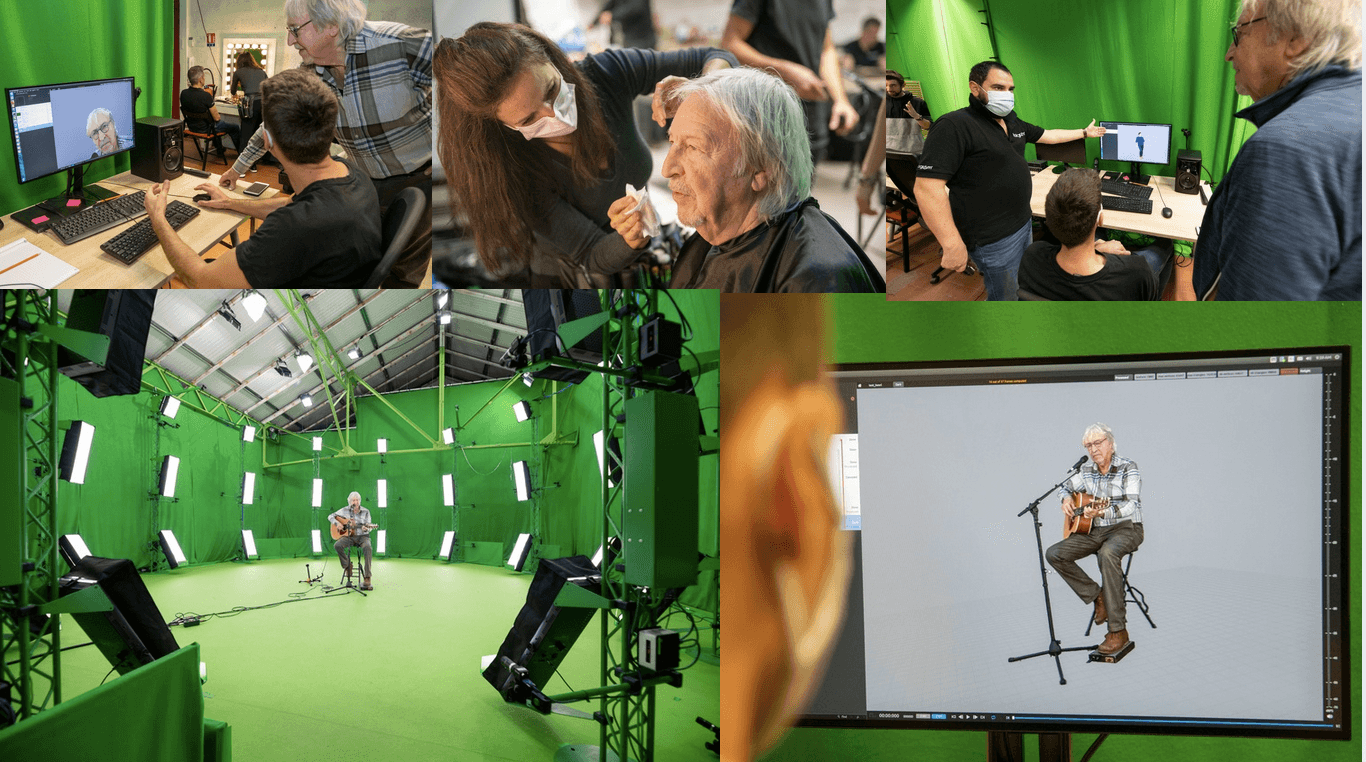
I saw that the digital age was eroding the concept of “legacy.” We built the icologram®—a contraction of icon and hologram—to be a certified ecosystem for human preservation, not just a visual effect. It is a holographic will that allows an artist to perform in a thousand places simultaneously without degrading their essence.
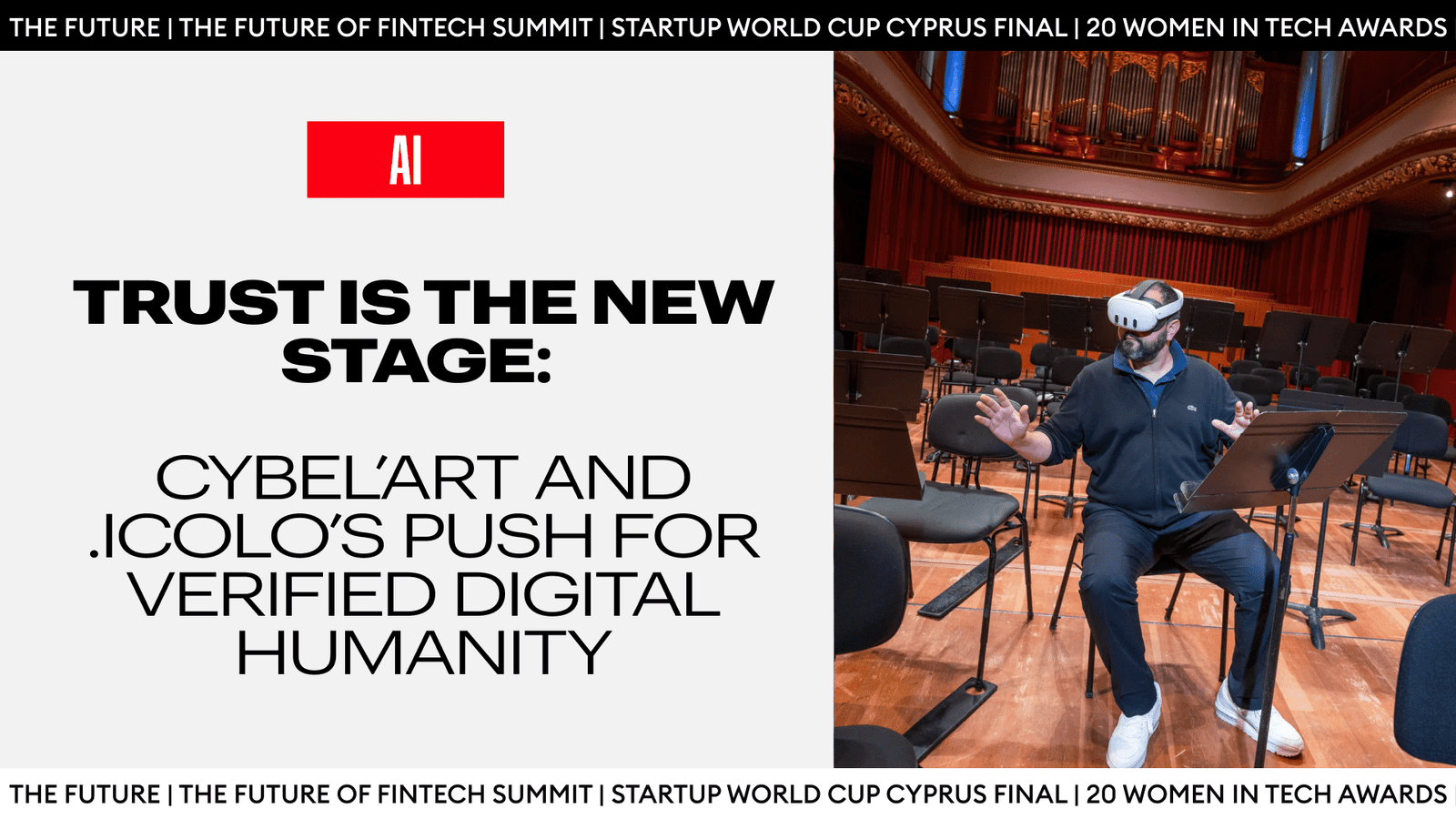
We proved the maturity of this model through a deliberate escalation of complexity. We started with the intimacy of Maestro Philippe Entremont at the piano in 2019, moved to a commercial volumetric album with pop legend Henri Dès, and recently successfully captured the full symphonic Orchestre de la Suisse Romande (OSR) for Art Genève.
Commercially, this decouples performance from logistics. An artist can now tour through virtual halls, cruise ships, and living rooms without ever leaving home. It is the scalability of Spotify applied to live performance.
You have said you are not building “zombie holograms” or posthumous recreations with Cybel’Art. Instead, you work with living artists to create icolograms, digital twins with legal consent, embedded rights, and emotional authenticity. What led you to build this human-first approach to immersive storytelling?
Our philosophy can be summarised in the following: we humanise the digital.
The current metaverse standard of cartoons and “skins” is insufficient for high culture. You cannot reduce a prima ballerina’s decades of discipline to a low-poly avatar. To capture emotional truth—the micro-expressions, the breathing, the scars—we demand total fidelity.
To ensure this, we follow a three-pillar approach. First, artist-centricity. We design the capture workflow around the human being. Comfort comes first, and consent is explicit and contractual. Second, digital patrimony. We treat every icologram as a long-term asset, recorded today to be compatible with the spatial computers of “2050.” Third, the intergenerational bridge. We want a child born decades from now to be able to physically experience how a pianist phrased Beethoven today.
We don’t build gimmicks. We preserve human legacy.
What is the Virtual Hall® concept, and how does it differ from a simple 360 video?
Virtual Hall® is the interactive evolution of what I call the “Netflix for spatial performance” model. Standard 360° video is passive and flat. Our proprietary architecture makes the user the editor. You are not just watching a stage; you are inhabiting it. You can switch angles synchronously, analyse the conductor’s score in real-time, and move through immersive data layers.
We have already built a dedicated user base on Meta Quest 3 and Pico 4 Ultra, but the vision goes far beyond entertainment. We are currently integrating this platform into national media centres across Europe, bringing world-class culture into classrooms. We are also preparing a native architecture launch for the Apple Vision Pro in 2026, because we want to remain at the leading edge of the premium spatial computing market.
What is the most straightforward setup that still feels real? Can a chamber ensemble or soloist achieve the same emotional impact as a full orchestra, or is scale non-negotiable?
Scale commands respect, but intimacy commands attention. We proved this definitively on 29 November 2025 during a residency at Schloss Elmau with the Verbier Festival Chamber Orchestra. We captured Beethoven’s 7th, and what came through was less a spectacle and more a private conversation. The viewer can virtually feel the ensemble breathing.
We have successfully captured the kinetic energy of massive symphonies, like Beethoven’s 9th in Lausanne Cathedral. However, our work with soloists is a very different experience. A single pianist projected into your living room via the icologram protocol creates a “one-to-one” emotional bond that eclipses a full orchestra on a flat screen. We now believe that presence is not about headcount; it’s more about absolute fidelity and the freedom of perspective.
How do you record and package a performance so it remains artistically faithful while still working across headsets and screens?
We tackle market fragmentation with a rigorous “Capture Once, Deploy Everywhere” strategy, split into two proprietary layers.
First is the Immersive Layer (Virtual Hall®). For large ensembles, our VHapp toolkit captures the artistic director’s vision in a single multi-camera 360° master with spatial audio, optimised for everything from an Apple Vision Pro to a laptop.
Second, the Human Layer (icologram®). For soloists, we enforce strict holographic and volumetric standards to create an “icologram” secured by blockchain.
I often compare it to a master photographic negative. You capture the moment once at the highest standard. The delivery device may change—from a VR headset today to a holographic lens tomorrow—the artistic truth remains immutable.
Deepfakes and artists’ rights have been a significant topic in debates over the last couple of years. Your .icolo hub lists building blocks like rights assets and anti-deepfake safeguards. How do these protect artists day to day, and how do you prevent misuse after an artist’s death?
We designed the .icolo ecosystem (icolocard®, icolobook©, icologram®, icolocoin®) to serve as the global standard for verified digital humanity.
Our legal rigour was proven when we successfully defended our brand against Instagram, and our technical rigour is evident in our anti-deepfake protocols. These include immutable metadata, whitelisted production, and a strict ban on post-mortem AI generation.
We are now leveraging this trusted infrastructure to conquer the “phygital” frontier. Through new strategic agreements, we are connecting XR content with physical experiences and scaling ‘augmented’ art from niche collectors to the mass market. One example is a deal we are currently closing with a significant European art book editor for our icolobook© project. This partnership will bring their curated books to life through augmented reality and make them fully interactive through the .icolo platform.
You’ve worked with OSR, ArtGeneva, and others. What’s the most significant friction point in onboarding traditional arts institutions?
Historic institutions often fear that technology will cheapen their work, reducing a maestro to a caricature. We overcame that resistance by holding ourselves to absolute standards. We didn’t just hire coders. We built a team that unites spatial computing engineers, opera specialists, and even high jewellery designers.
This multidisciplinary breadth allowed us to deliver complex milestones, from the intimacy of Philippe Entremont to the massive scale of the OSR. Partners like the Verbier Festival trust us because they see we are not a “tech circus.” We are a high-fidelity conservation lab dedicated to the future of performance.
You plan to introduce icolocoin® in 2026. What problem in the arts economy are you aiming to solve with this token?
The global creative economy is a $2 trillion asset class, but it is handicapped by a “speed of money” problem. Content travels at the speed of light, but payment logic is stuck in the paper age. Settlement delays can stretch up to 18 months, and intermediaries bleed 15-20% of the value.
Launching in 2026, icolocoin® is our infrastructure solution to that liquidity crisis. We are not building a speculative asset. We are building the dedicated payment rail for the exploding XR market.
By pairing icolocoin® with smart contracts, we replace manual licensing with programmable money. Every icologram carries its own licensing logic, so that every transaction triggers an instant, immutable royalty split. We are effectively building the “Visa” for digital culture.
You’ve said icolocoin® will enable “micro-licensing” for fans (e.g., paying to use a 10-second clip of a dancer in their own project). But how do you prevent value dilution?
Micro-licensing does not dilute value. It captures value that is currently leaking away. Right now, viral content sharing is a “copyright leak.” Billions of views generate zero revenue for creators.
What we are building replaces this chaos with a structured marketplace where fans purchase specific “rights of use” encoded in smart contracts.
Every remix or meme triggers a programmed payment in icolocoin®, instantly split among the creators. The idea is to transform unlicensed virality into a granular, high-volume revenue stream, treating usage like a music catalogue where volume drives yield.
If icolocoin® works as intended, how might it change how performances are financed, owned, and experienced over the next few years?
We are deploying icolocoin® to fix the broken unit economics of the arts. We are transitioning the industry from a “project economy” (relying on grants) to an “asset economy.”
First, in financing, we turn future royalties into current working capital by pre-selling rights through smart contracts. Second, in ownership, we replace opaque contracts with immutable ledgers, eliminating administrative friction that has been normalised for decades.
Finally, we democratise access through microtransactions, allowing fans to become micropatrons. We are building a self-sustaining flywheel in which assets generate transparent income to finance new art, turning the audience into stakeholders in their own culture.
What’s your biggest fear about icolocoin?
My biggest fear is cultural, not technical. It is the risk of the “human” getting lost inside the “digital.” For artists, the fear is surveillance. If they feel we are tracking them rather than protecting their work, we have failed. For the audience, the fear is speculation.
We refuse to let icolocoin become a “meme coin” where price action matters more than patronage. Our entire mission, from icologram® to .icolo, is to humanise digital experiences. If our ecosystem ever feels like a panopticon for artists or a casino for fans, then the technology has betrayed the people it was meant to serve. We counter this with radical transparency and artist-first governance.
What will count as success for Cybel’Art over the next two years?
To unlock genuine scale, we have deliberately unbundled our activities. Cybel’Art Ltd remains the creative engine, designing premium immersive experiences. Meanwhile, our subsidiary “.icolo Ltd” is being built as the high-growth infrastructure layer, the “plumbing” of the spatial computing era. Both are domiciled in Switzerland, leveraging a robust regulatory environment to underpin trust.
Success means establishing “.icolo Ltd” as a foundational utility. We are currently opening our Round 2 capital raise for .icolo, structured to support a global compliance and identity layer. This is not a content bet. It is an infrastructure thesis. We are building the rails through which assets, identity, and finance must flow to power the global phygital economy.