

Skincare advice used to come from dermatologists, pharmacists, or your aunt who swore by rosewater. Now, it comes from a 17-second TikTok clip filmed in someone’s bathroom at 2 a.m.
The problem isn’t that people are learning online. It’s that the advice they are ingesting is often wrong, unvetted, and sometimes dangerous. In a 2025 peer-reviewed content analysis of popular TikTok sunscreen videos, only 35% met accuracy criteria aligned with guidelines, and references were typically absent. In another analysis, this time of popular dermatology-related Instagram influencers, researchers found that board-certified dermatologists made up only a small fraction of top accounts and that credentials were often not clearly stated.
Follow THE FUTURE on LinkedIn, Facebook, Instagram, X and Telegram
Meanwhile, teens are layering six products a night in routines averaging $168, yet fewer than one in four include one of the most extensively researched and evidence-supported skincare products on the market: sunscreen. Instead, many include high-risk ingredients linked to allergic contact dermatitis, with researchers concluding these regimens offer “little to no benefit” for their young audiences.
The problem isn’t that there isn’t enough research to highlight the risks of misinformation or the dangers of certain ingredients. In a 2025 survey, 95% of acne patients said they used social media for skincare advice, but 97% said they’d side with their dermatologist over an influencer if the two disagreed.
If their first stop is social media, then the problem is less about finding information and more about a lack of access to clear, research-supported advice that they can not only hear but understand.
This is where the personal skincare assistant app Lóvi comes in. Its mission is to build a bridge between where people seek answers to their skincare questions and who they can ultimately trust.
The company doesn’t sell miracle serums or chase viral trends. Instead, it offers something increasingly rare: clarity. Lóvi helps users cut through the noise by delivering personalised guidance built on three things: what they want to achieve, what their skin actually needs, and the real-world constraints they live with, whether it is budget, product availability, or sensitivity.
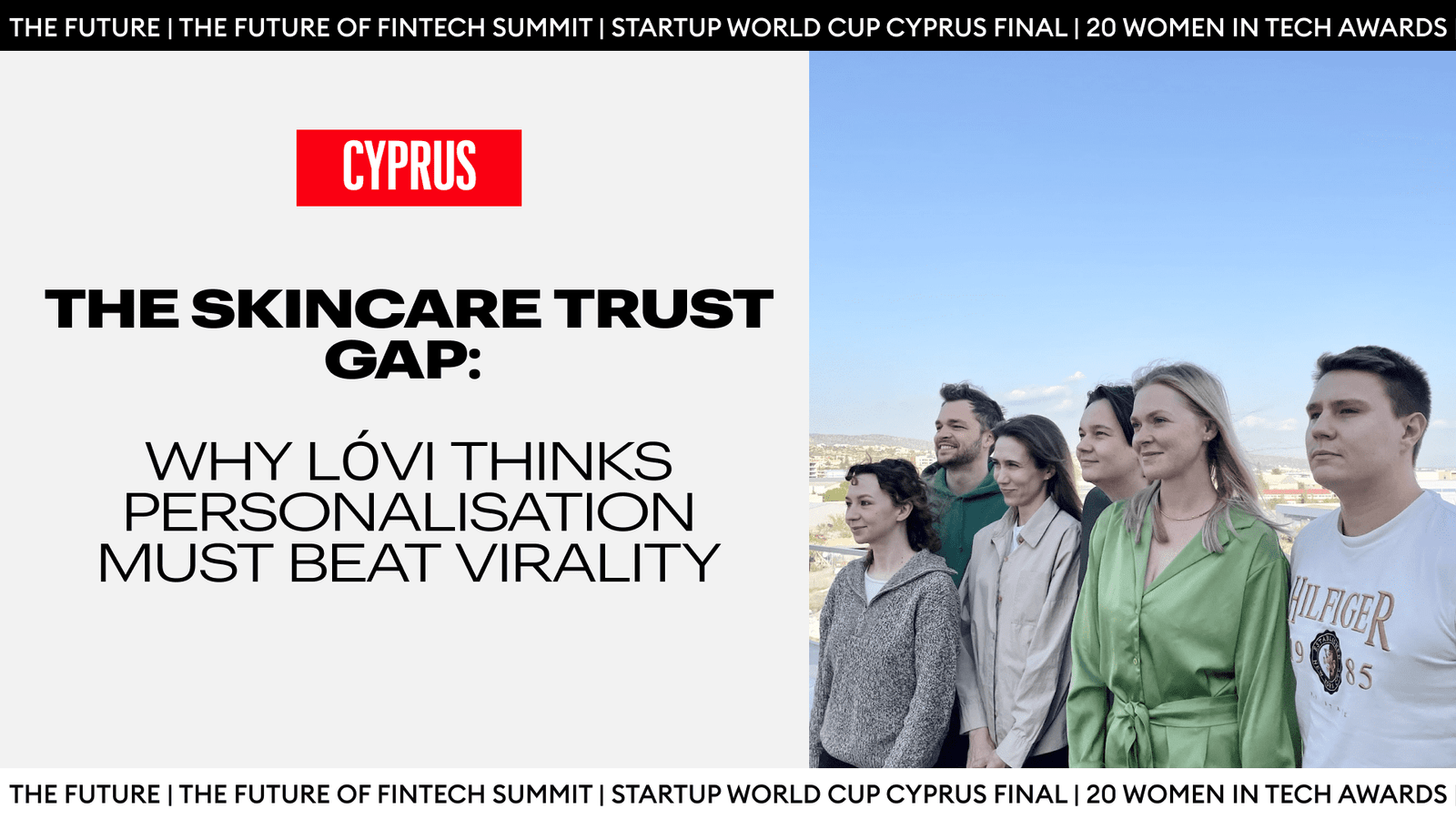
In this interview with The Future Media, Alexey Shagraev (CEO and co-founder) and Nadia Kapleva, MSc (Medical Director) explain why true personalisation starts with listening, not algorithms, and how they’re building a system where science, not marketing, sets the standard for health and longevity.
1. For someone new to Lóvi, can you explain its mission and where the name originated from?

Alex:
The brand name itself was a complicated process. At the beginning, we tried different variations that sounded more medical, more skin-specific. But at some point, we realised people really need support as the primary focus. Not just a “support” button in an app, but a whole experience that creates a supportive, safe space where they can talk about their self-care, beauty, and longevity.
We also saw that users don’t try to separate “skincare” and “beauty” the way the industry does. So, if you help them with their face care, they also expect help with body and hair routines, because from a user perspective, it’s all part of the same thing. “I use these things to look and feel better, so why wouldn’t you help me with that?”
So we’re trying to move away from a reference to skin, towards the general self-care direction. That’s where the name came from: love yourself. We tested it a lot, and it consistently felt more like self-care and a safe space, and less like you are entering a clinic. A medical name creates trust, of course, but with beauty and self-care, you also need comfort and safety. That’s how Lóvi came to life.

Nadia:
Our mission connects two big problems we see in the market. First, there isn’t a unified education approach to skincare solutions, so the advice varies from professional to professional.
There is a lot of conflicting information online, even about the same ingredients like retinoids, vitamin C, and so on. People end up even more uncertain about their skincare options. That is why we first developed a structured approach to skincare solutions, a methodology that defines how recommendations should be built and evaluated. We use this approach as the foundation for all recommendations in Lóvi, to make it more widely accepted and accessible, and ultimately help to unify the market.
The second thing is that even when someone goes to a professional for recommendations, the professional isn’t with them at all times. That’s one of the main reasons people aren’t satisfied with the results. They do not stay consistent with their routine or use the products incorrectly.
So what we do is recommend products, show where to buy them, and then stay with the user daily, supporting them with their routine, consistency, and questions as they come. 24/7.
In short, Lóvi provides users with personalised solutions from the skincare market.
2. You both use the word “personalisation” a lot. How would you define the term, and how does it play out in Lóvi’s approach to skincare?
Nadia:
Personalisation is not just a word to throw about. Real personalisation is when the recommendation takes into account what this person wants to achieve, their skin concerns, and all the details that matter to them. Our metrics show this makes a difference because when people can see that the routine reflects their needs, they trust it more. And because they trust it, they’re more likely to follow the routine, stay consistent, and get results.
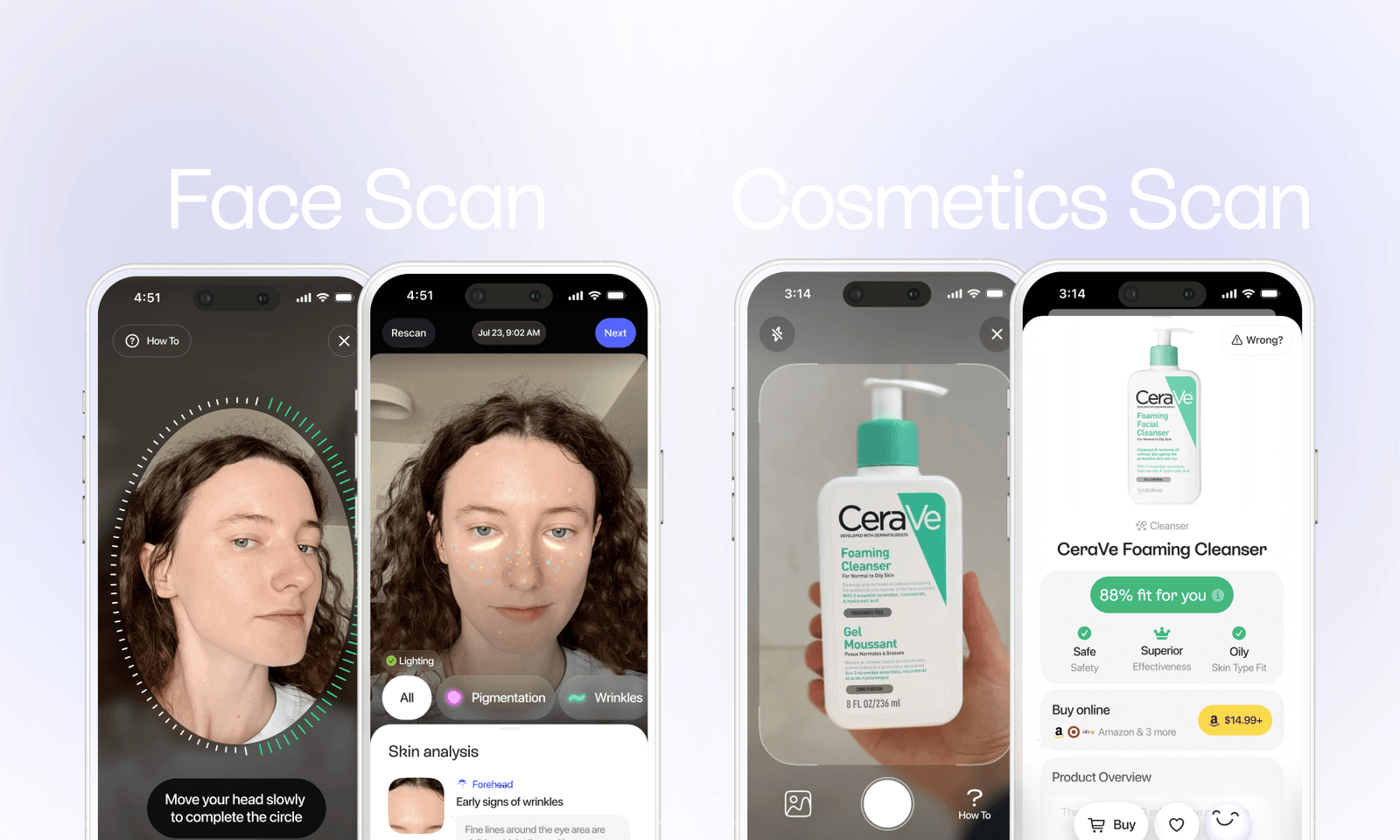
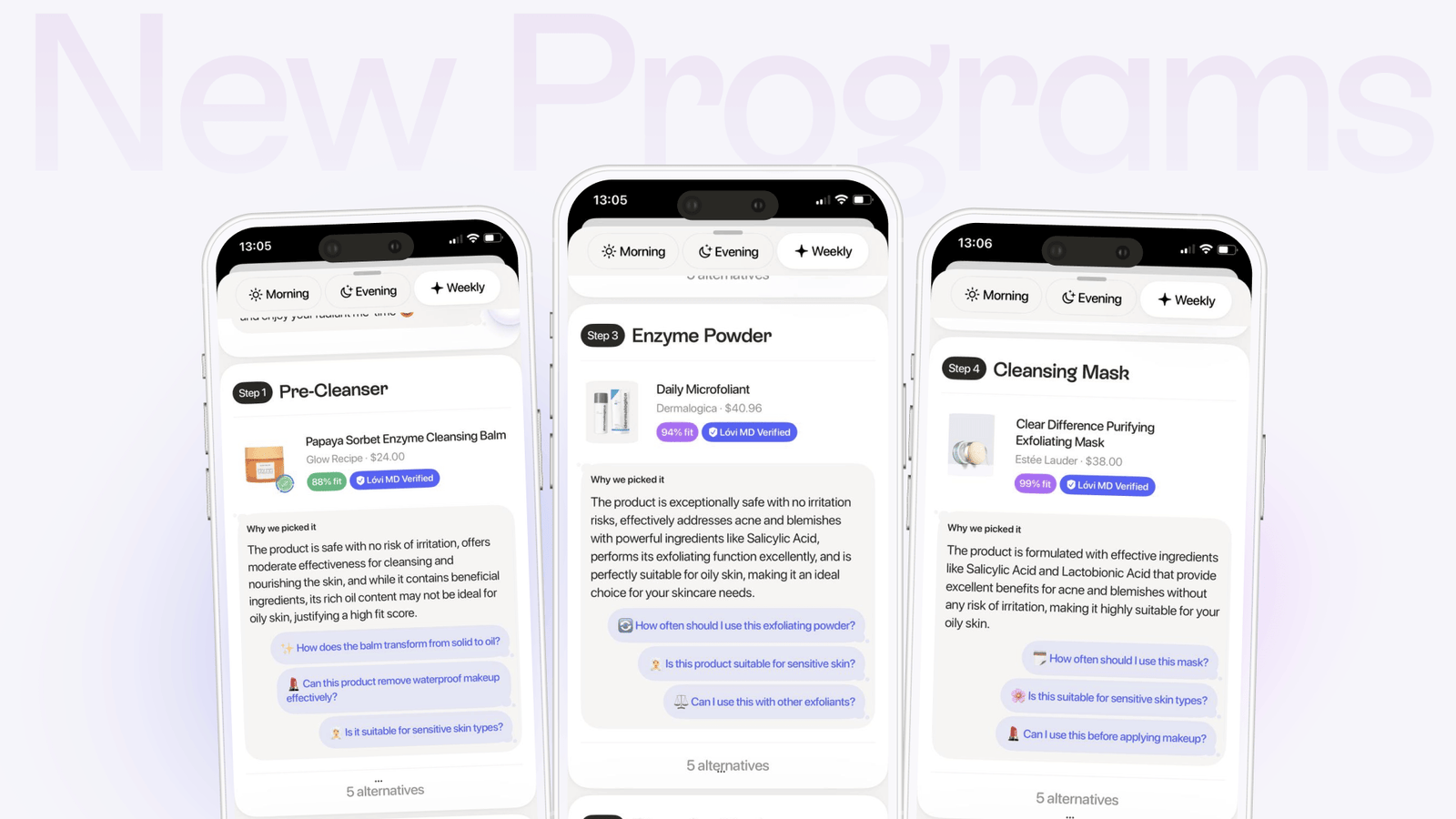
Another aspect we also offer our users is discoverability. Even if the program is set up and they’re fine with the results, people still want to try something new. In many cases, that variety brings additional enjoyment and essentially better results. It’s not that you need to do it, but if you want to try, it’s better to try something that really fits you, that we check is safe again, and at least somewhat effective, and that you can buy and try in a few days.
So, discovery and tracking become a large portion of what people do long-term. But what’s important is we deliver a lot of value during the first day, and we wouldn’t change that. We are trying to make the program in a way that people see results as fast as possible, because with skincare, there’s a lot you can see within a week in many cases, and that helps with adherence.
The best sign for me that we’re approaching this correctly is the feedback we get. People say, “I spent so much time choosing skincare. I tried influencer products, friends’ suggestions, and even what my dermatologist recommended. Then I bought what you recommended in Lóvi, and in just a few weeks, I saw the results. It gets better, better, and better.”
For me, that’s the proof. Of course, the idea is to spread this positive feedback around the world.
3. Data sits at the centre of what you’re building, especially with something as personal as skin. How do you minimise bias in your datasets and models, and what principles guide your approach to data ethics and privacy?
Nadia:
When we talk about bias, it starts with the data.
A lot of datasets in this space have a lack of initial diversity. We put a lot of focus into diversity in our photo labelling for different skin types and phototypes, so we can analyse faces not only from the “common” medical datasets, but also faces from all around the world.
Concerning privacy, often the people who lead the skincare research are not always fully in the picture on the best practices around digital data privacy. The advantage of Lóvi is that Alex and the tech team have set the foundation for building on compliant data privacy approaches from the beginning, so the best practices on the market were implemented from day one.
Alex:
Data security and privacy are very important to us. We follow the regular regulations like GDPR, CCPA, etc., but what makes our app special is face processing, right? We’re making these face scans, and we also have the scanner for products. People scan whatever they have in real life, in different circumstances, from their private spaces, so we need to be super mindful. This is not the place to say, “There’s a regulation, we follow it, so we’re good.” It’s a place where we need to go the extra mile to really care about the user.
So, we take a few additional measures. We primarily use crowdsourced data for training. It’s not the data that people leave in the app. It’s collected separately, and people explicitly consent to how their data will be processed. We process it only with the internal team, our medics. We don’t share the data with anyone else.
Then, with user data, it’s primarily processed on-device. So, unless you provide very specific consent, the data would never really leave the device. All the models are applied locally, so nothing really leaves your device.
With the skincare product scanner, we do even more: we have a special network that figures out what’s in focus in your camera frame, and we blur everything else. Imagine you’re in the bathroom taking a picture. Your leg or something could appear in the mirror, and that would probably not be good. So the only pictures that leave the device are blurred images that contain only the product. You can’t really discover anything other than the product from that picture, even if you want to.
In many cases in the AI space, privacy is an afterthought, but not in ours. From the first day in 2021, even when we didn’t really have the company yet, we already had a ticket for how to process the data, so that it’s safe for the user. And I’m proud of that.
4. How have users responded to Lóvi, and what kind of feedback are you getting from professionals?
Alex:
What’s really firing me up is that we have a lot of people telling us our app is genuinely helpful, and that they’ve saved a lot of money and time selecting products. People say they’re really learning about skincare products. The feedback on the face-scanning process has been very positive. It’s around 97%+, depending on the measure.
I would also say we’re not so much a product for complete beginners right now, because there’s a lot of specific language in beauty and cosmetics, and for a beginner, even “moisturiser” isn’t always clear. That’s something we need to work on. But for intermediates, and even experts in some cases, it’s really, really helpful.
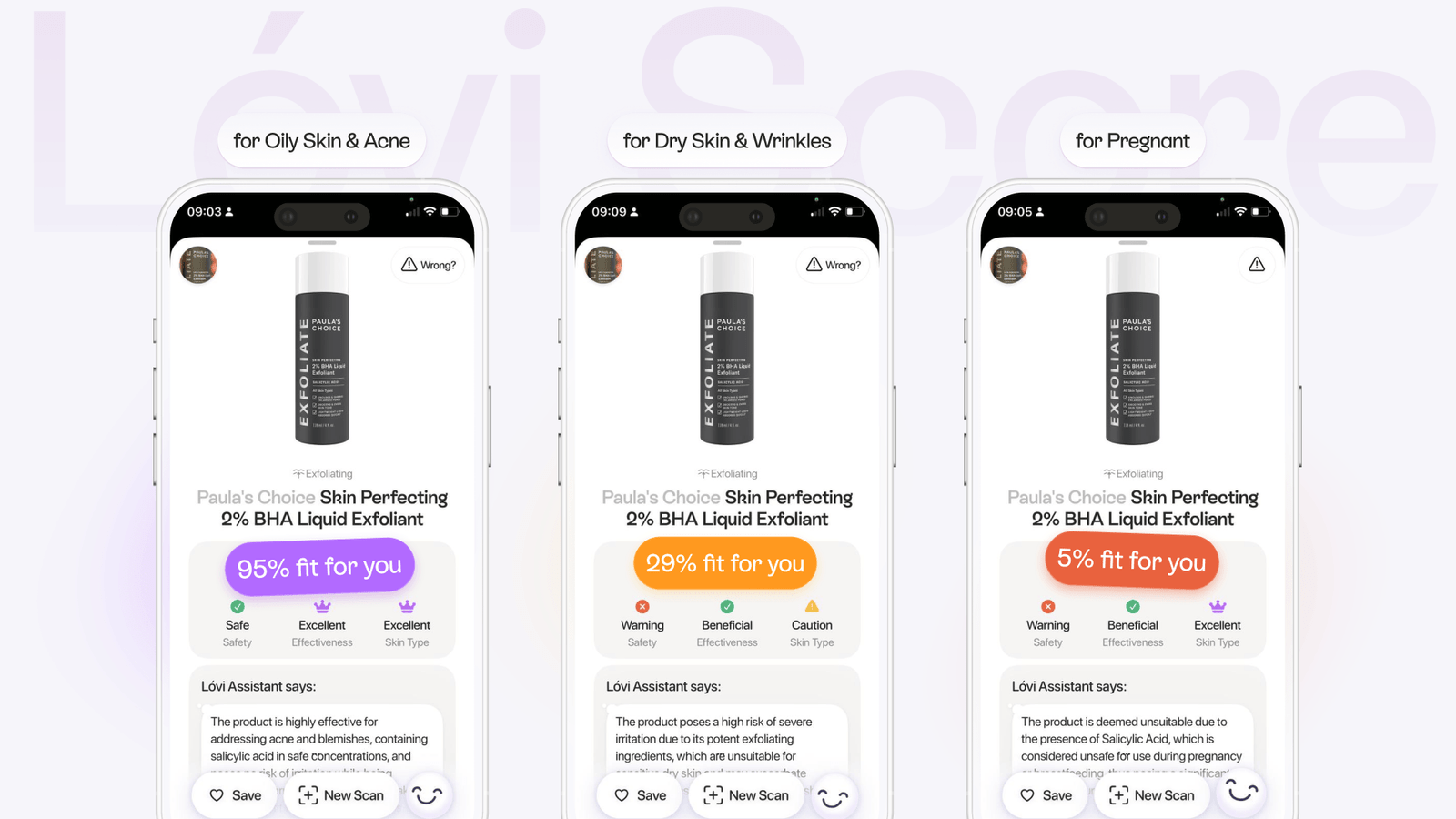
We see a lot of appreciation from scientific circles. The whole idea of building a methodology and bringing structure is pleasing to many people. They want a scientific approach. For many specialties in beauty, it’s a big help, because not everyone has a degree in cosmetic chemistry. You don’t necessarily need a dermatologist, for example, to be able to read an ingredient list and interpret what it means. So, for someone like a beauty consultant in a shop, they can use our scanner to help people figure out what to buy.
We also see that people really want to buy the recommendations. It shows up in our e-commerce metrics. Conversion rates are something like 20 times higher than typical affiliate marketing, which is a pretty strong sign that the flow works.
Nadia:
Just to add to this, from a professional’s perspective, one advantage is speed. If a client is already using a product, a professional can scan it and, in a few seconds, see the full ingredient list and supporting data, including reviews, and then match it against the client’s skin type and skin issues to understand if the product suits them or not.
Because, as Alex mentioned, there is a common misconception in the market that dermatologists are automatically experts in skincare product analysis. They may be in skin diseases, but not necessarily in the skincare market or in reading INCI lists. That’s additional knowledge, and not everyone has the time to deep dive into cosmetic chemistry after their general education. So for beauticians, especially, it can be a useful tool.
It’s especially relevant in smaller markets like Cyprus, where professionals tend to know what’s already on the market, and then a new product appears, and they don’t always have time to test it or research it while running a business. Being able to analyse quickly helps them decide if it’s worth recommending to clients.
5. Influencers shape a lot of skincare behaviour, but many have no clinical or scientific training, and some recommend genuinely risky routines. As a company built on science, how do you respond to that ecosystem?
Nadia:
We can’t escape social media in this day and age. For many, this is where they source their information from, recommendations, and a sense of community. We collaborate with dermatologist influencers. For organic growth, it’s important, but we want to collaborate with science-based influencers who share the same values and mission as our company. That’s very important.
Of course, we also want to be a voice in that influencer space, especially around skincare, providing science-based information about, for instance, ingredients, so that it’s both useful and based on actual research, so our audience can make informed decisions about skincare products.
Alex:
I approach this very philosophically, to be honest. In my mind, there’s a business market, where people pay money for goods, and there’s an ideas market, where people exchange ideas, and whatever sticks, sticks. I don’t think it’s a “problem” that people share what they share.
If we’re really passionate about science, it’s our job to make the scientific ideas stick. I can tell you, because I spent 11 years teaching maths, it’s not easy. But it’s not like we have something magical that everyone should automatically believe. It’s our job to validate these ideas and make them understandable.
To some extent, it’s also the flaws in scientific communication that make this situation possible. If the information were reliable, easy to access, easy to check, and presented well, it would probably be popular too. So in my mind, it’s our obligation to find ways to approach people and help them navigate better. People have the right to share their opinions. But in a world of information overload, it’s on us to help them find actual knowledge.
6. You’ve spoken a lot about identity, self-care, and self-love. How do you translate that into the actual experience inside the app?
Nadia:
First, we have the voice of the app. That also shows up in the language and how we communicate with the user. Our voice needs to be supportive and friendly, so the user feels that Lóvi is a place where they can feel confident and safe.
We support users in their daily flow through simple things like daily affirmations, daily plans, and small phrases after you do your morning routine with us. Some of our favourites are: “keep going” and “you’re doing really well.” There’s a lot of research around the connection between how people feel and what they have on their face. Sometimes, even a small amount of acne can bring so much anxiety into someone’s daily life, so we need to show compassion towards those who may really be suffering.
Alex:
It’s also about what we don’t do. In beauty, nutrition, and exercise, you see a lot of communication based on fear. For example: “How would you look if you don’t use our app?” or “You are doing everything completely wrong.” A lot of apps don’t think about the message they are sending their users or the journey the user experiences through their product, but focus on what they value: results. It’s super easy to make viral content from it, but it doesn’t mean it’s really safe.
We realised early on that when we ask people what they want, it’s really important to tell them that we’re not here to “fix” them. We want them to feel welcomed and understand that the space we’ve designed is trying to make them feel better.
7. Looking ahead, what do you want Lóvi to become over the next five years?
Alex:
In my mind, there are several very important things. From a business perspective: huge growth: 10x, 100x, 1,000x. We want to do our job well and reach as many people as we can because we genuinely believe our product can change lives.
The second is that we want to bring knowledge back to the scientific field. For us as founders, that would be one of the biggest signals that we did something really important. To do that, we need to be fully integrated within the industry.
Personalisation is something the whole beauty space needs, whether in skincare, makeup, or supplements. Our app is the first step, but we think of ourselves as a global player that can bring personalisation to any point where it is needed.
Nadia:
I just need to add that what we are building is not only a cosmetic scanner or a face scanner. We’re building a longevity app, something that helps not only with skincare but with lifestyle, habits, and the feeling of taking care of yourself. We want to elevate the level of our users’ lives.