
According to the Founders Forum Group 2025 report, female-only founding teams received 2.3% of global venture capital in 2024, or $6.7 billion out of $289 billion. All-male teams took 83.6%.
In the US, PitchBook’s 2024 US All In report revealed that all-female-founded teams captured a mere 1.9% of US VC deal value in 2024. In the same report, companies with at least one female founder represented 19.9% of deal value and raised $38.8B.
Follow THE FUTURE on LinkedIn, Facebook, Instagram, X and Telegram
In the UK, the British Business Bank’s 2025 Investing in Women Code annual report shows that in the wider market, 27% of equity deals involved companies with at least one female founder, but only about 17% of investment value went to those teams. All-female founder teams represented 7% of deals, and the report puts the wider-market share of investment value for all-female teams at 2%.
Across Europe, Dealroom reports that startups founded and co-founded by women accounted for 9.6% of all venture capital raised in Europe in 2023, and stresses how progress has largely stalled around the 10% mark in recent years.
The World Economic Forum points to BCG analysis suggesting that if women entrepreneurs received the same investment as men, global GDP could rise 3% to 6%, amounting to $5 trillion annually. That makes the funding gap as much of an economic issue as an equity one.
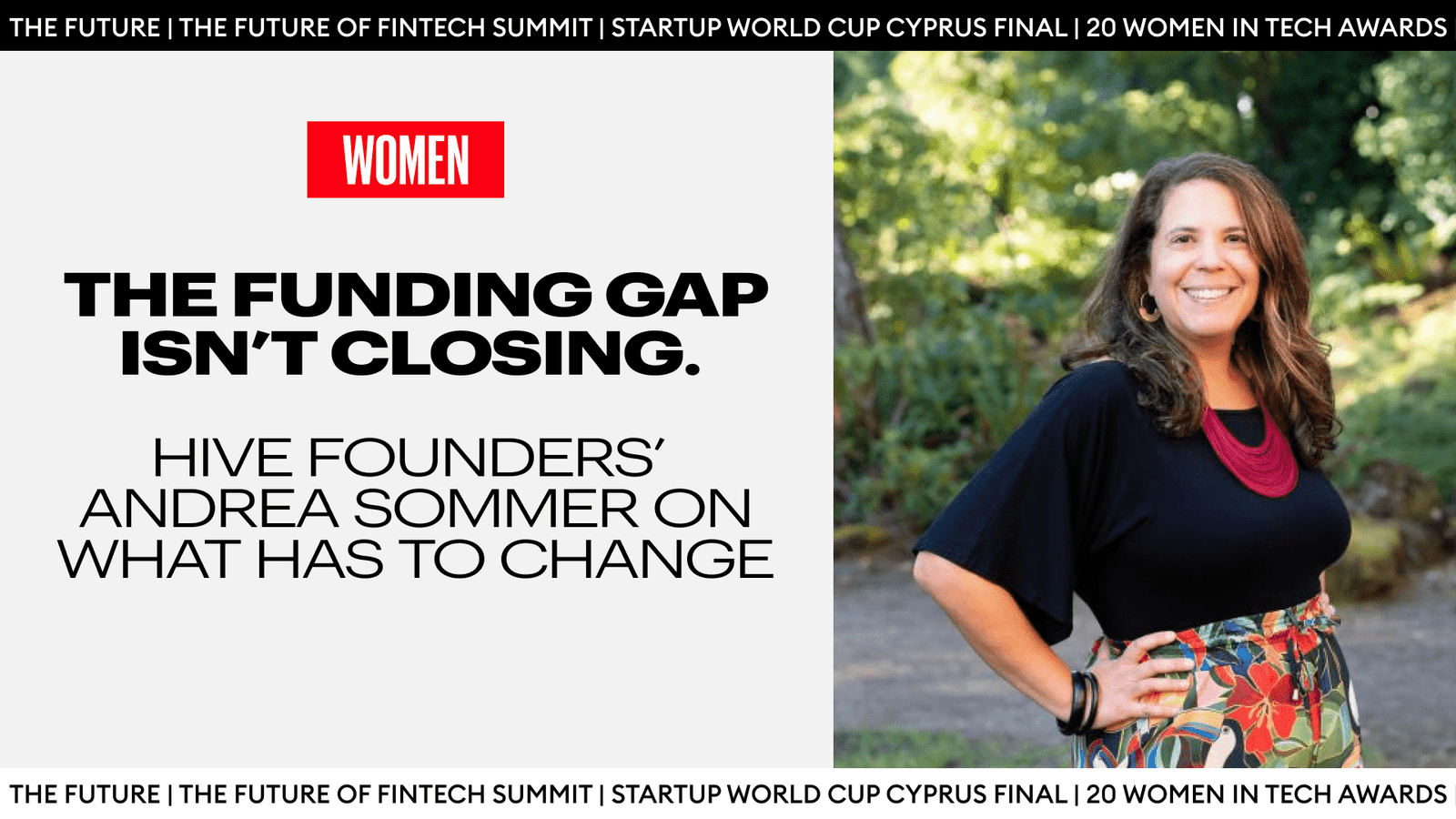
This is where Hive Founders comes in. The organization describes itself as a global startup consultancy built by women entrepreneurs, focused on helping women launch, fund, scale, and invest. Its founding team includes Andrea Sommer , Caroline Hughes, and Felicia Meyerowitz Singh. Andrea Sommer’s view is that closing the funding gap starts with admitting that founders do not enter fundraising on equal footing. Hive works directly with women to build the commercial and investor-readiness skills needed to navigate the funding process. “Women fundraise and grow their businesses in very different ways, and they need that tailored approach,” she says.
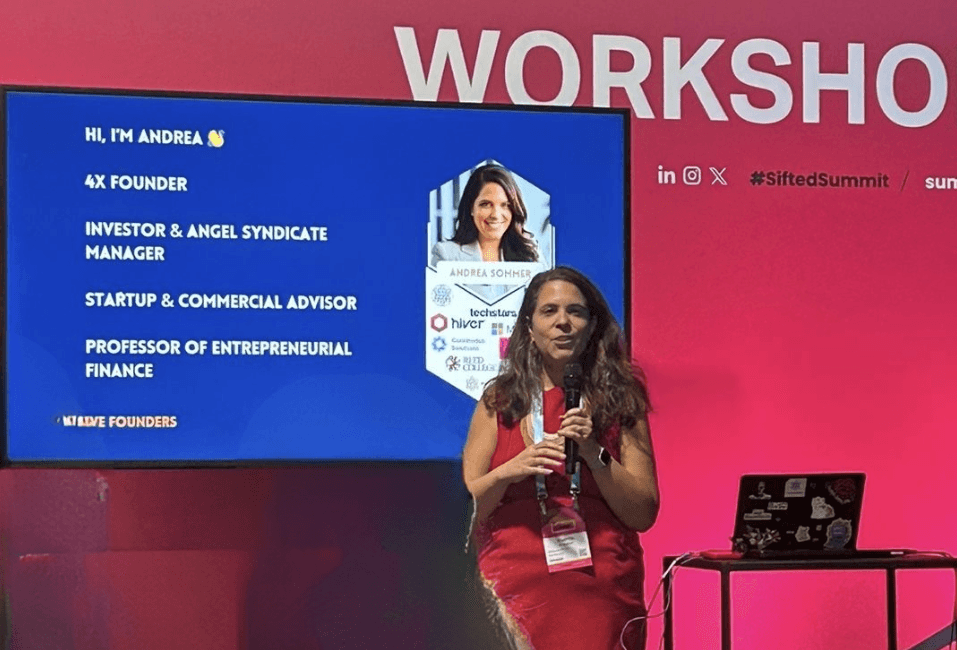
In this interview with The Future Media, Andrea Sommer, co-founder and CEO of Hive Founders, explains what founders are up against when the funding conversation defaults to risk, how Hive tries to rebalance the room, and why “commercial confidence” is often the difference between a polite no and a term sheet.
1. Before we discuss Hive Founders, let’s start with your journey. How did your career in tech and startups lead you to co-found Hive Founders, and what problem were you trying to solve?
I was a strategy consultant for many years, focusing on technology. My remit was really around growth and optimisation. I’ve always been fascinated by what makes things grow. I have a soft spot for robotics and automation because they’re all about bringing efficiency to the equation. I’m a big believer in the power of technology to free up our time. That is what led me to pursue the entrepreneurial world and build something of my own.
This was in 2015, and I had just graduated from London Business School. However, I was on a mission to build this new company, but I was having an awful time raising funds. All I could think was, I just graduated from one of the top business schools in Europe. Why is this so difficult?
At the same time, I kept running into one other woman at different pitch events. The reason she was memorable was that she was literally the only other woman there. So, I reached out to her and met up for a glass of wine. What we realized is that we had very similar backgrounds. Hers was more in finance, mine in consulting. We had also gone to the same business school, and now we were both fundraising and struggling at it.
One conversation led to another and then finally to co-funding Hive Founders alongside our day jobs and primary businesses.
This started as a support group for women facing the same fundraising struggles. We would gather once a month, share contacts, and talk through ideas and strategies.
2. You mentioned struggling with fundraising, especially as a woman. What was happening, and what did you later realize was behind it?
At the time, I didn’t know what the problem was. Now, in hindsight, it’s very clear to me because I see this with female founders all the time. Investors evaluate risk differently for women than for men. When it comes to a male-led company, investors will ask companies questions about opportunity and upside, whereas we women get a lot of questions about risk and risk management. So, there is already a biased split in how businesses are evaluated.
But more specifically, women are not socialized in two very important ways.
First, we are not socialized to talk about numbers confidently. In fact, we hear from founders all the time that financial modelling is the most intimidating part of the funding conversation. In combination with the investor mindset around risk, it creates a double bind. The most effective way to overcome risk bias is to show up with the numbers, but many women struggle to do that with confidence, and that is what makes fundraising so difficult.
3. Hive began as a support circle and is now a global network. When did you realize it needed to become a full-time venture?
It was a very gradual process. For the first four years of Hive’s life, it was something that I did on the side. But in 2021, Felicia Meyerowitz Singh, my co-founder, sold her business. At the time, I was wrapping up an interim CEO role at a company that I had been advising for a few years. Felicia and I had a little bit of extra time to talk about what’s next for Hive.
At that point, we had about 350 members who would come to our events regularly.
We decided it was time to give it a go at turning Hive into a business. We recruited another longstanding member, Caroline Hughes, who is a lawyer, to also come in as a co-founder. The three of us set out to formalize what we had been doing informally as a support group.
We spun off the first iteration of our accelerator to test out whether there was an appetite for women to get the training the three of us wish we’d had, instead of having to fight through the process of fundraising with blood, sweat, and tears.
4. For someone coming across Hive Founders for the first time, how would you describe the organisation and its mission?
Our mission is to bridge the funding gap for women.
On the founders’ side, we do this through our programs, particularly our accelerators and pitch clinics. We also work on the investor side, providing training on rethinking the investment process more holistically, especially around anti-bias practices.
The goal is to bring women founders and allied capital allocators closer together. We do this by guiding founders to become more robust commercial communicators and helping investors recognize bias and take a more holistic approach in their analysis.
5. What did you learn from your first program and cohort?
The first thing we learned was that there was a lot of demand for accelerator programs that are tailored for women. We were massively oversubscribed. There were numerous accelerators out there, but none that truly addressed the issues that are unique to women. Our program was very focused on that female founder playbook because women fundraise and grow their businesses in very different ways, and they need that tailored approach.
The most important aspect of our program was the commercial robustness of a business. We were able to bring that value to the program because of the combined backgrounds of our founder team: I brought my consulting background, Felicia, finance, and Caroline, the legal side.
So many programs give you a surface level of information about the mechanics of fundraising. They don’t dig deep into how exactly you can optimize your business, whereas we did. The feedback was incredible. Our founders kept repeating how clear they felt about the business that they were building and, therefore, more confident in communicating that clarity.
Over a couple of cohorts, we saw that 70% of our graduates were raising within six months of graduating, which was far above the typical fundraising odds for women-led companies. We attributed that to the commercial core of our program and the focus on getting to conversion.
The program also gave us, as micro-investors, a unique view of businesses. Another investor might only see the pitch deck and materials, whereas we are spending weeks with the founder.
6. You’ve said women often need a different approach to fundraising. What does that actually look like?
There are a few things that women need to do differently.
First, they need to understand that they are entering a game that is not rigged in their favor. Investors are looking for ways to say no, and it’s their job not to give them a reason. If a male-led team can be light in their preparation, women need to be overly over-prepared, especially when it comes to numbers and the commercial robustness of the business.
They also need to learn to speak in the language that investors understand, which is the language of commerce. So, it’s about building confidence for women to speak about their own numbers, metrics, and performance.
Another area where women struggle is that they do not ask for what they want. It is seen as “unladylike” to be assertive. But in the investment process, you must be direct and assertive. As the founders, it is their responsibility to guide the investment process. Many women expect the investor to lead, and they end up waiting for the investor to tell them what to do. And in doing so, they miss the opportunity to get to the conversion.
So, it’s confidence in the commercial side, clarity on what the fundraising journey looks like, and the ability to push the deal forward and guide the process, showing investors that you understand the investment process and you can defend the business.
7. Walk us through your core programmes. What can founders and investors expect to get out of them?
The Investment Readiness Accelerator is our flagship program for founders. It is an eight-week bootcamp for pre-seed and seed stage companies that are looking for investment. It is focused on building that commercial robustness and understanding the playbook for fundraising and growing the business commercially.
Next, we have our Hive Angel Investing Academy, which is our investor program. It’s a seven-week program that’s for new and emerging angels. We tend to work with people who are senior finance operators, senior legal people, entrepreneurs who have exited or who are far enough in their careers that they want to start to give back, as well as other operators and corporate individuals who want to build their confidence and learn more about angel investing systematically and strategically.
Our later-stage program, Harvest, is aimed at companies that reach profitability and are starting to think about an exit. The program is designed to help founders think about the possible paths that they can take as they focus on growing and exiting that business, whether it is an IPO, M&A, or running the business long term.
On the opposite end, we have our Zero to Launch Incubator, which is for very early-stage founders who are still at the idea stage. Before they quit their day jobs and spend their life savings trying to build it, we help validate their concepts and make sure that there is enough commercial weight there to create a business around it.
8. Why was it important for you to create a program for angel investors?
One of the things that we spun off out of our first accelerator was Womankind Ventures, which is our angel investment syndicate. It came from our own selfish reasons, because we wanted to invest in some of the great businesses we were working with.
As we were building this group of investors, I realized that many people, particularly women, who are new to becoming angel investors, do not feel they have enough confidence to invest, even though they are exceptionally competent women in senior roles across all industries.
This led us to create the Angel Investing Academy using the same principles of our Investment Readiness Accelerator. We train angels, women, and their allies to build an investment thesis, assess deals in a way that fits their risk appetite, and, most importantly, invest together with their cohort. We believe that entrepreneurship is a team sport, and investments should be as well. You should have your own trusted group of people to share deals with and discuss opportunities, so the journey does not feel so lonely on either side.
9. Can you share one or two success stories you’re particularly proud of?
I’d love to share the story of Cult Mia, a business that went through Cohort 2 of our Investment Readiness Accelerator. Nina, the founder, had already secured investments from a strategically aligned family office when she came to us, but she was struggling to get traction from VCs. They weren’t seeing the potential of the opportunity.
She graduated and participated in our Demo Day. She was aiming to raise one and a half million pounds, and I’m proud to say she raised an oversubscribed two and a half million-pound round, and an additional two million pounds 10 months later. What stayed with me is that she later said that since doing the accelerator, she has never had a VC say no.
Nina also became the first investment that we made with Womankind, and we’ve followed up as investors since. Cultmia is one of the UK’s fastest-growing companies, and it’s really great to be able to share in its success and to see its growth.
10. How important is community and peer support for women founders?
Like I’ve mentioned previously, entrepreneurship needs to be a team sport. Being an entrepreneur can be really lonely. It’s a very lonely journey, and there are a lot of doubts and questions. It’s an emotional rollercoaster. Having a network of other people who are going through the same journey is essential, not just to help you feel lifted when you need it, but also to learn from.
Nine times out of 10, someone else has experienced the same problem you’re struggling with.
Your first task as a founder is to find people to build with you, whether those are co-founders, employees, or customers; it’s all about community and about bringing people together.
To become a successful entrepreneur, you need to tap into the power of the village.
11. Looking ahead, what’s your ambition for Hive Founders over the next five years?
Our ambition for Hive is to continue on this mission. We want to grow our network. We want to build more reliable sources of capital for women. We want to get more women funded and more women crossing the chasm between Seed and Series A, where most of them fall away.
We also want to have a wider geographical reach.
Right now, we have a slight skew towards Europe, the UK, and the US, but we are seeing some really interesting companies coming out of Africa, Latin America, and Asia.
We would love to have a presence there and support the businesses coming out of these regions.
It’s about growth, but systematically to help more women achieve their objectives and build the incredible things they envision. In this way, we really want to change the world.