South Korea has made history as the first country to have robots account for over 10% of its industrial workforce, marking a milestone in automation and technological advancement. This achievement highlights the nation’s proactive approach to addressing a declining working-age population due to persistently low birth rates.
Key Facts and Figures
According to the World Robotics 2024 report, South Korea now boasts a staggering 1,102 robots per 10,000 employees—the highest robot density globally. This figure is more than double that of every other country in the ranking, except Singapore, which follows with 770 robots per 10,000 workers.
Follow THE FUTURE on LinkedIn, Facebook, Instagram, X and Telegram
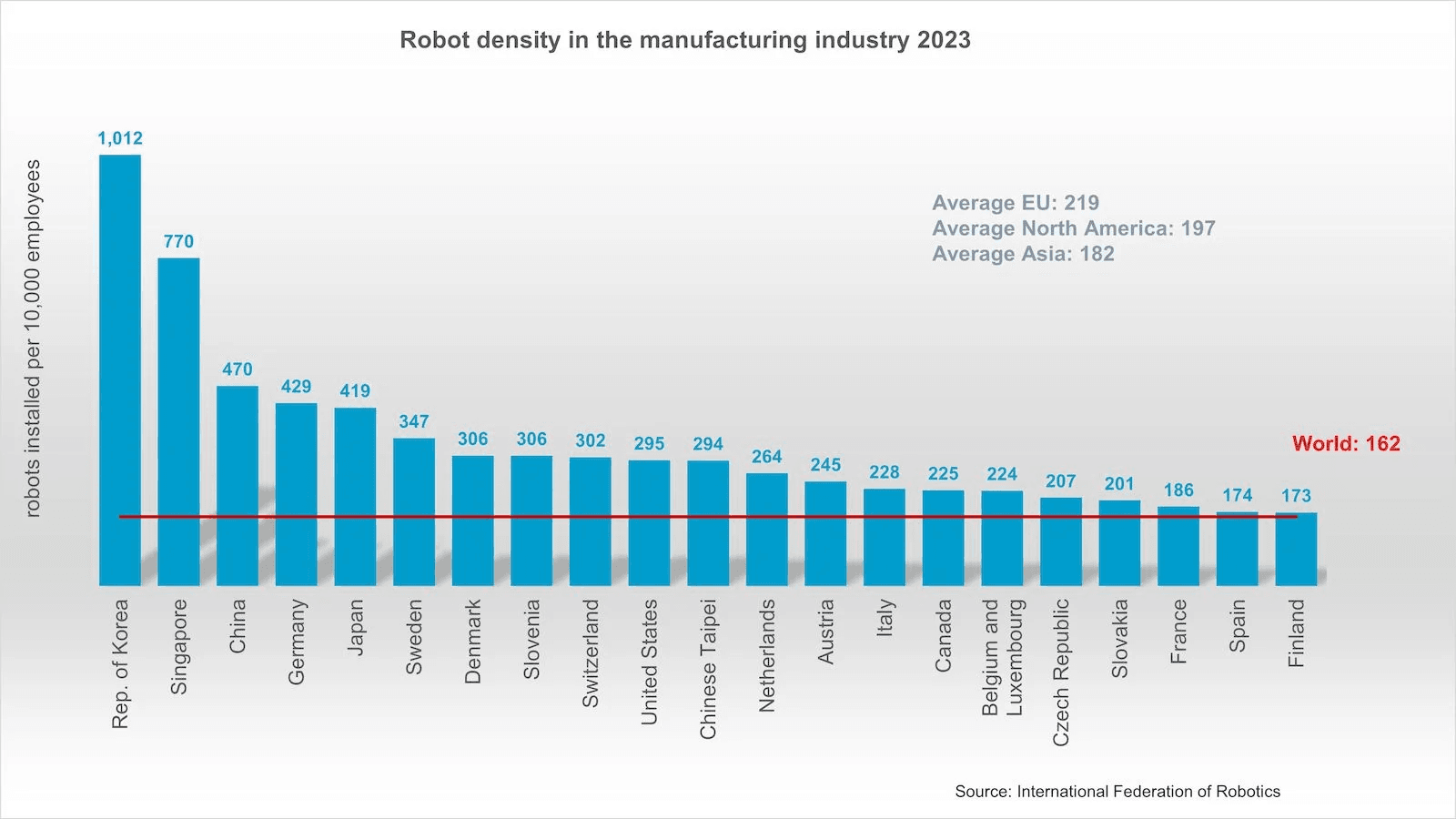
Since 2018, robot density in South Korea has grown by an average of 5% annually. The nation’s electronics and automotive industries, two major pillars of its economy, are among the largest consumers of industrial robots. Globally, robot density has also seen significant growth, doubling over the past seven years from 74 to 162 units per 10,000 employees.
Expanding Beyond Factories
South Korea’s use of robots extends far beyond manufacturing. Robots now operate in diverse fields, including healthcare, hospitality, agriculture, and even defense. Hospitals employ robots to assist with surgeries, while restaurants use them for food preparation and delivery.
Government’s Vision and Investment
This progress has been fueled by substantial investment from the South Korean government, which views robotics as a solution to its workforce challenges. Earlier this year, the Ministry of Trade, Industry, and Energy introduced the Fourth Intelligent Robot Basic Plan, committing $2.4 billion to the development of the robotics sector by 2030.
The plan outlines a strategic approach to integrating robots into critical industries, such as logistics, healthcare, and social safety. It also sets an ambitious target to increase the local production of core robot components from 44% to 80% by 2030, ensuring a self-reliant and competitive robotics industry.
A Model for the Future
South Korea’s advancements in robotics illustrate how technology can address societal challenges like population decline while driving economic innovation. With its continued investment and adoption of robots across various industries, the country is setting a benchmark for others to follow in the age of automation.
Full report here.



