
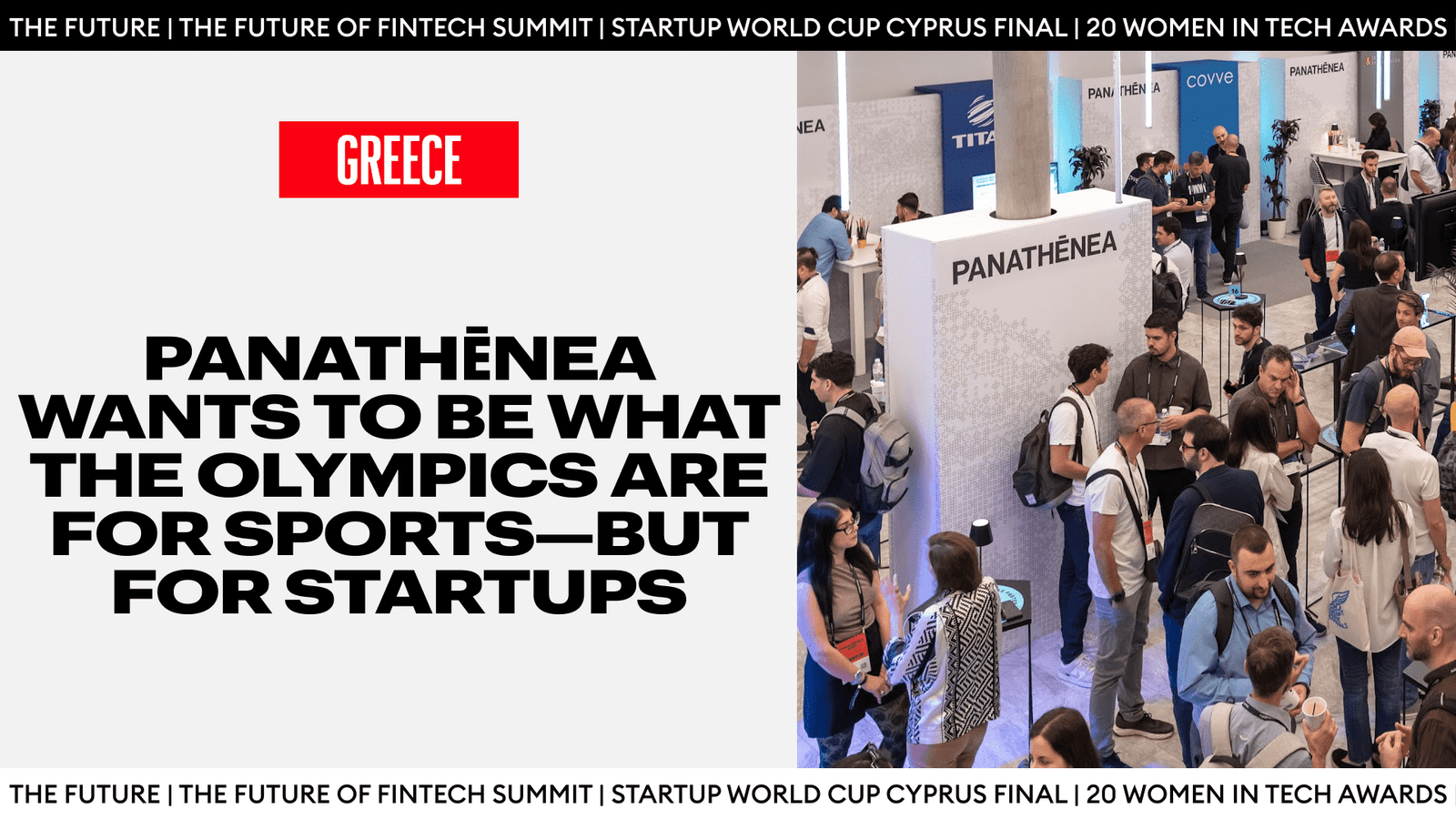
Lefteris Katsiadakis was still a student when he decided Greece needed a startup festival that didn’t exist yet. He’d been president of a student innovation organization in Athens, competed in global startup competitions, and spent time in the local ecosystem—but something was missing. “I was going to events abroad,” he says, “and I kept thinking: why doesn’t Greece have this?”
Then, at Slush in Helsinki, he met the co-founder of Google Maps, Danish computer scientist Lars Erasmussen, who, as fate would have it, had been thinking the same thing. On the flight back to Athens, Lefteris texted him: “When can we meet?” The reply was almost immediate: “Tomorrow. Saturday morning.” Within ten days, five co-founders, all students or recent graduates, had quit their jobs and started building Panathēnea. Four and a half months later, they’d pull off a three-day, city-wide festival that would draw 3,500 founders, executives, and innovation-enthusiasts from across the globe and sell out five days early.
Follow THE FUTURE on LinkedIn, Facebook, Instagram, X and Telegram
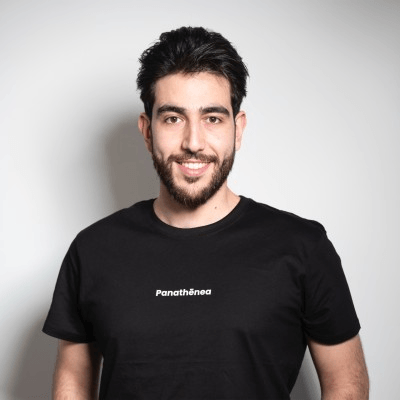
In this conversation with The Future Media, Lefteris Katsiadakis, co-founder and CEO of Panathēnea, explains why the next generation of founders shouldn’t wait for permission, and how a team of recent graduates proved it by building one of Europe’s fastest-growing startup festivals.
1. What is the current startup scene like in Greece?
The ecosystem is growing rapidly. You are seeing more successful startups, more founders being represented, and the whole ecosystem starting to come together. I think that’s why Panathēnea was successful in its first year. The ecosystem was ready for it. They backed us because the need for a space to gather and connect was already there.
2. For someone hearing about it for the first time, how do you explain what Panathēnea is?
Panathēnea is inspired by an ancient Greek festival, just as the Olympic Games are. Back then, Panathēnea was one of the most important festivals in Athens. We’re reimagining that for today.
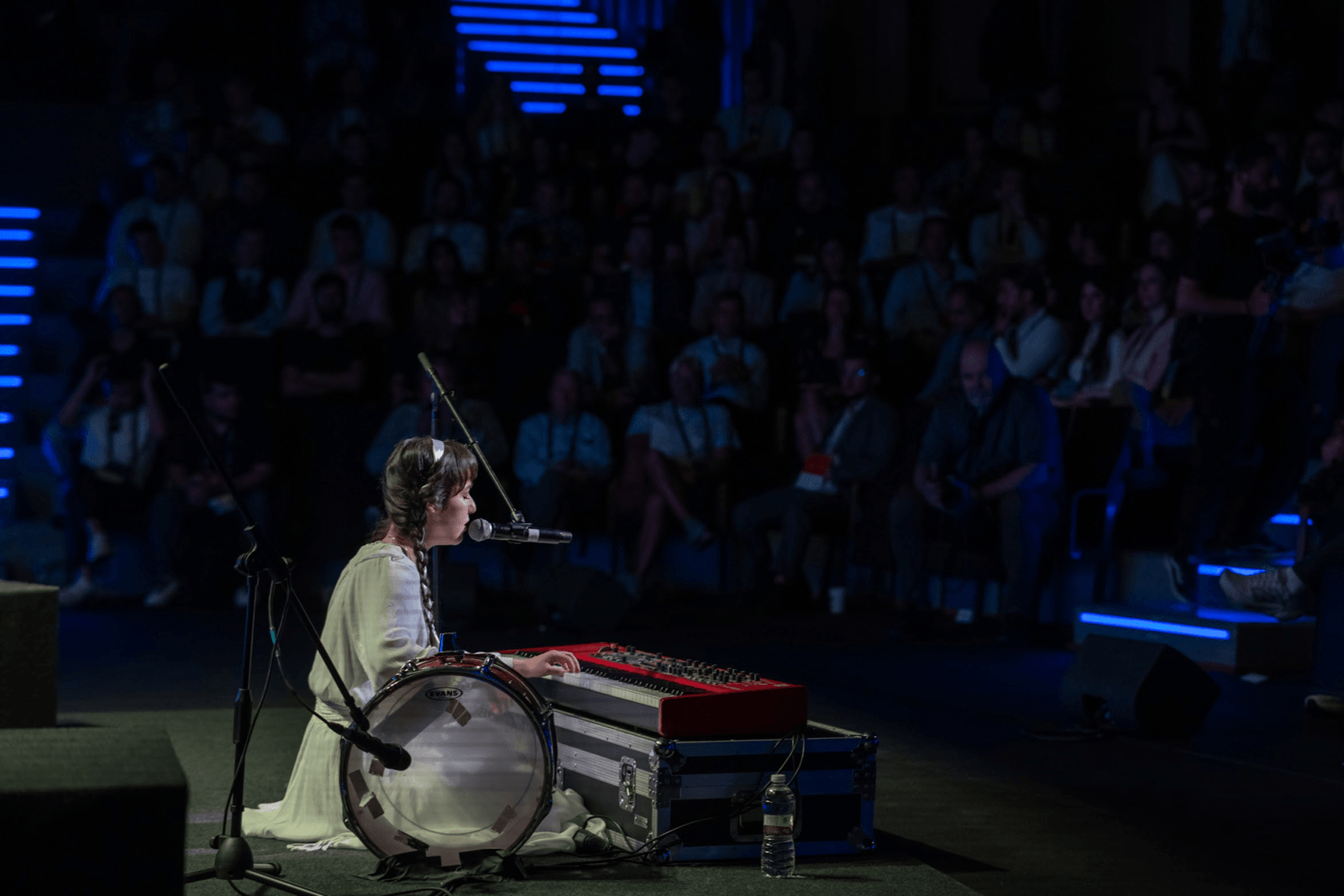
It’s a festival that brings together the tribes of tech, business, and art—the people we believe are changing the world. It happens all over the city of Athens, so you actually experience the city while you’re there. Founders, investors, creators. They’re all part of it. It’s vibrant, it’s youth-led, and it’s deeply connected to culture.
3. You and the team were very young when you started this. What was missing from the event scene that made you think, “We need to build this,” instead of joining existing conferences or waiting for someone more experienced to do it?
There were small initiatives, such as networking events and coffee meetups. But there wasn’t a central hub that brought everyone together for two or three days. Something that could be the marketing arm of Greece for innovation. Something that attracts top founders and investors from abroad and inspires the local ecosystem.
I felt it was our position to create this. Panathēnea isn’t a for-profit company. It’s an NGO. Our vision is for it to become what the Olympics are for sports, but for innovation. Athens already has that legacy.
And having young people build this matters. When we went to Slush, we saw how a festival can shift an entire country’s mentality. We came back inspired. Now the whole ecosystem, from big companies to startups to VCs, is working with us. The young people on our team are the next generation of founders. They get experience, exposure, networking, and then they go build. That’s how ecosystems evolve.
4. And why did you choose that specific heritage to follow for this event?
The idea is simple but actually quite profound. The most well-known festival in the world is the Olympic Games, which is basically a reimagining of an ancient Greek sporting festival. So we asked: what else from that history was really important back then?
Panathēnea was. It had religious, sporting, and cultural elements. And we believe that with that history, with that ethos, we can build something that’s distinctly European, rooted in Athens, but with a vision that speaks to the whole continent.
5. How did the core team come together?
To be honest, it all came together so fast, but it all felt natural.
I had already been thinking about creating a startup festival. I was president of a student innovation organization in Athens. We had organized events, brought students together around innovation and startup ideas, and I kept feeling like Greece needed something bigger. A major event that could bring the whole ecosystem together, attract international attention, and put Athens on the map. I had been going to startup events abroad and thinking, “Why doesn’t Greece have this?”
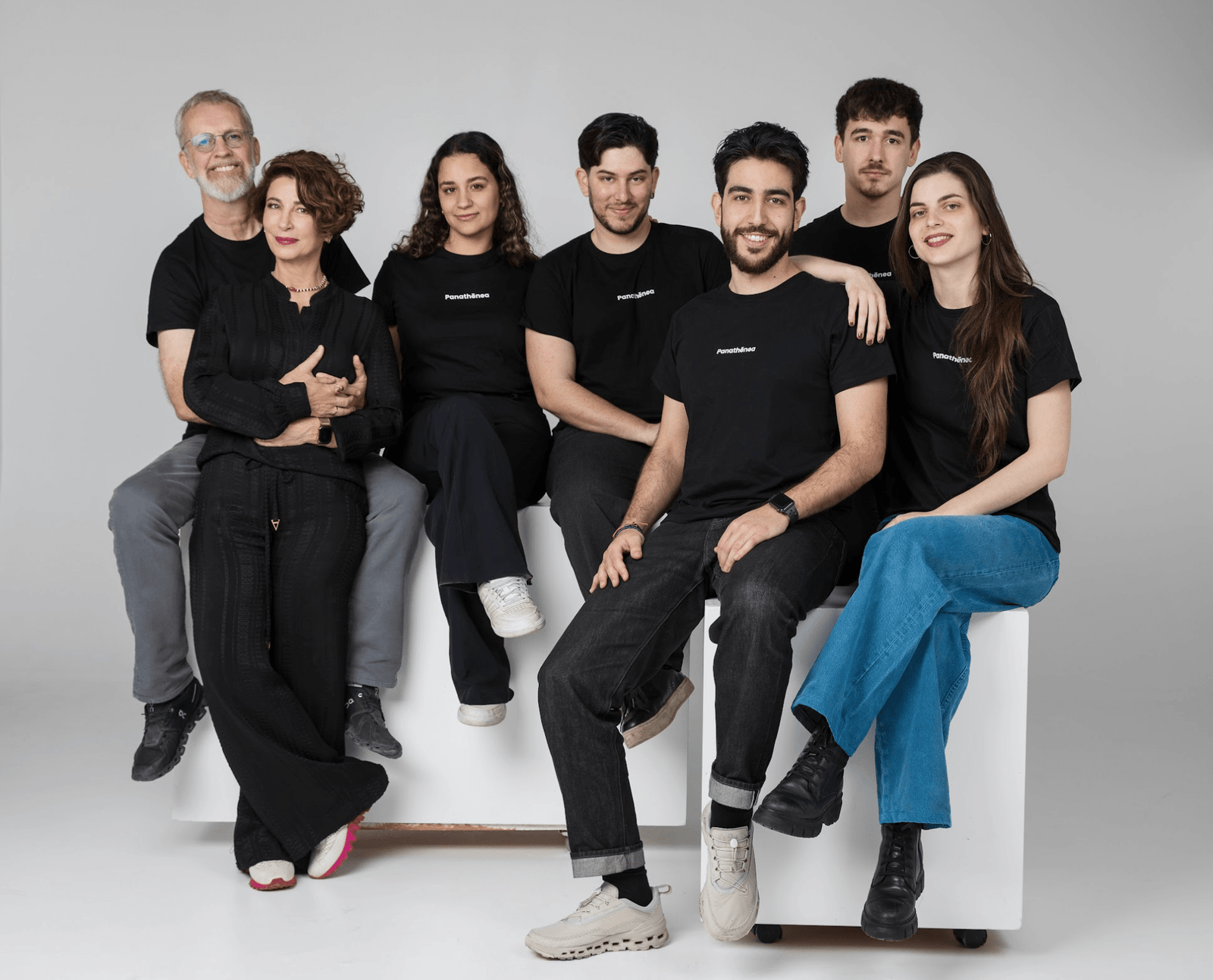
Then I met Lars Erasmussen, who later became our Co-founder and Mentor, on the last day of Slush 2024 in Helsinki. Funnily enough, he had been thinking the same thing. There were conversations at the event about bringing a big international event to Greece and someone recommended that we connect. On the flight back to Athens, I texted him: “When do you have time to meet?” He said, “Tomorrow. Saturday morning.” I went straight to the house of Fotis Athanatos, who would become our Co-founder and Head of Business Development, that night, and we started working on our pitch.
Then our other co-founders, Evi Kourounakou, Head of Marketing, George Papanikolaou, Head of Operations, and Anastasia Kotsa, Head of Experience, joined. We worked together in the same student organization before. We were friends first, and we loved working together. Within ten days, the five of us were fully committed to Panathēnea. I was working another job at the time. I quit the next day after that text from Lars and started on this full-time.
Everything moved incredibly fast.
6. Last year, you hosted a very strong lineup of speakers and partners. How did you build trust in Panathēnea quickly enough to convince those people to become part of a new festival run by a young team?
We started by reaching out to everyone, that is, every key player in the Greek ecosystem. We invited every VC in Greece to sit down with us in their own offices. No one knew who we were. We just described our vision and said, “We believe this can happen. We’ll work day and night. But we need your help, and we need the whole ecosystem working together.”
It was actually the first time all the Greek VCs gathered in a room to collaborate on something. They helped us with speakers, attendees, ideas—everything. And we kept doing that every month. It became a national effort.
Even the people who thought we were crazy (Can you blame them? Five students with zero experience saying they would bring 2,000 people to a festival in four and a half months.) even they started believing after the first or second meeting. They felt like it was their festival too.
Five days before the event, we sold out. We had 3,500 registrants on the platform. We thought it was a bug. We were aiming for 2,000 people, and suddenly there were 3,500. We couldn’t physically fit anyone else in the venue.
In the end, more than 3,100 people attended. Twenty percent were international, from 44 different countries. We expected most to come from the Balkans, Cyprus, and the Mediterranean region. But when we looked at the data after the event, the most represented country after Greece was the UK. Then the US. It was incredible.
7. What did you learn from the first edition, especially about what worked, what didn’t, and what it takes to run a three-day, city-wide event?
The most important lesson we learnt from that first year was that working together with the whole ecosystem actually works. When everyone feels ownership, they show up.
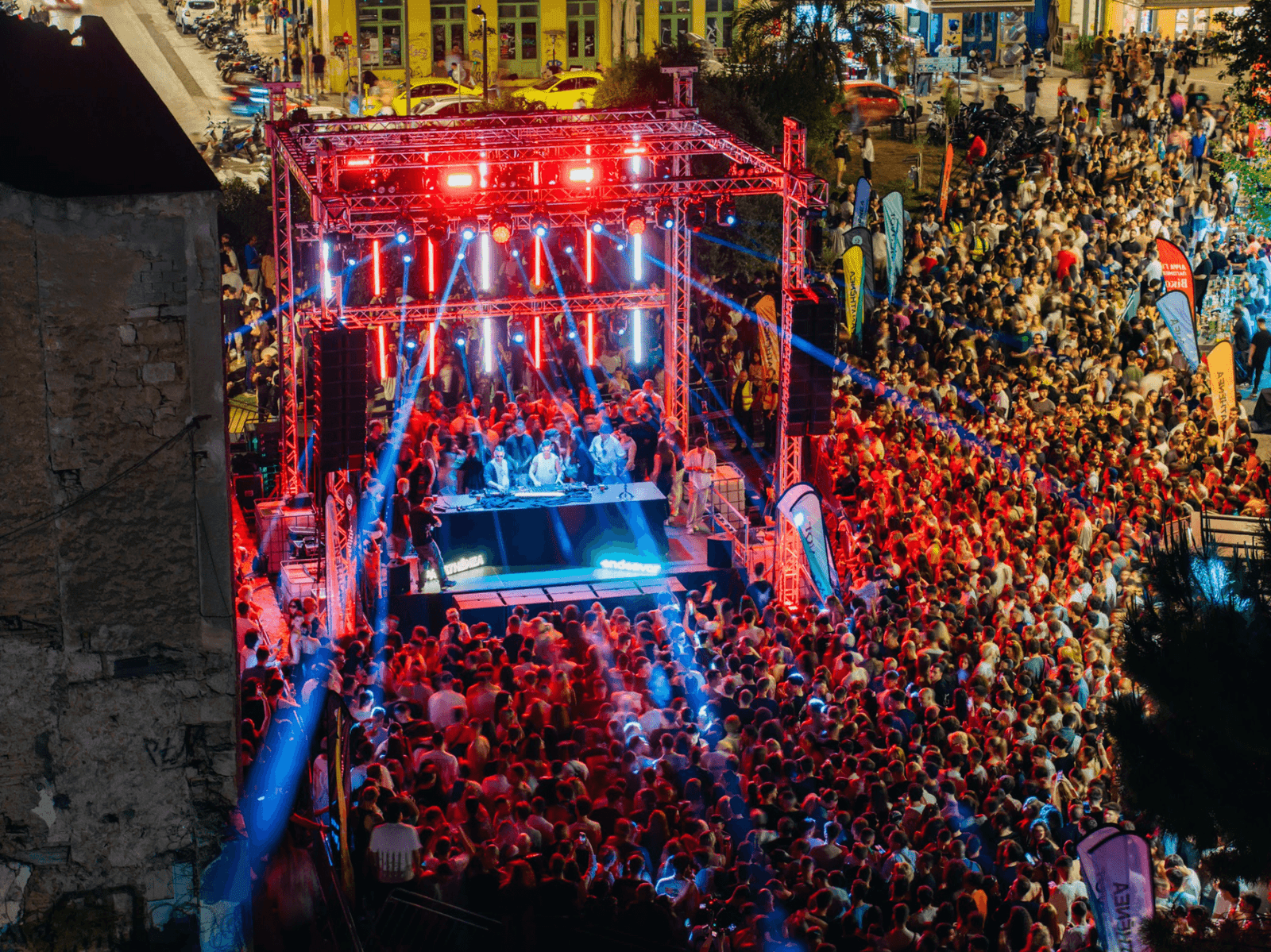
The second lesson was about creating a festival, not just a tech event. We had arts as part of Panathēnea. For the closing, we held a street party under the Acropolis, open to the entire city of Athens. More than 6,000 people came. Creating something open, that is inviting, that’s what makes it special.
And having young people run it was so important, but not just for the vibe. All those young students who volunteered, who helped, who were part of the team—they interacted with world-class speakers, they met potential co-founders, they heard new ideas. That’s how you change an ecosystem’s mentality. That was the biggest lesson.
8. At a time when there are many conferences, where does Panathēnea come in on the map?
Panathēnea happens in Athens in May, so springtime. It’s the best time to visit the city. The weather is great, the whole city is vibrant, and music festivals are happening.
And timing-wise, we are exactly six months apart from Slush. We believe technology is moving so fast now that even a great festival like Slush, which happens once a year, isn’t enough. You need another checkpoint for founders, for investors, for the whole ecosystem. That’s where Panathēnea fits.
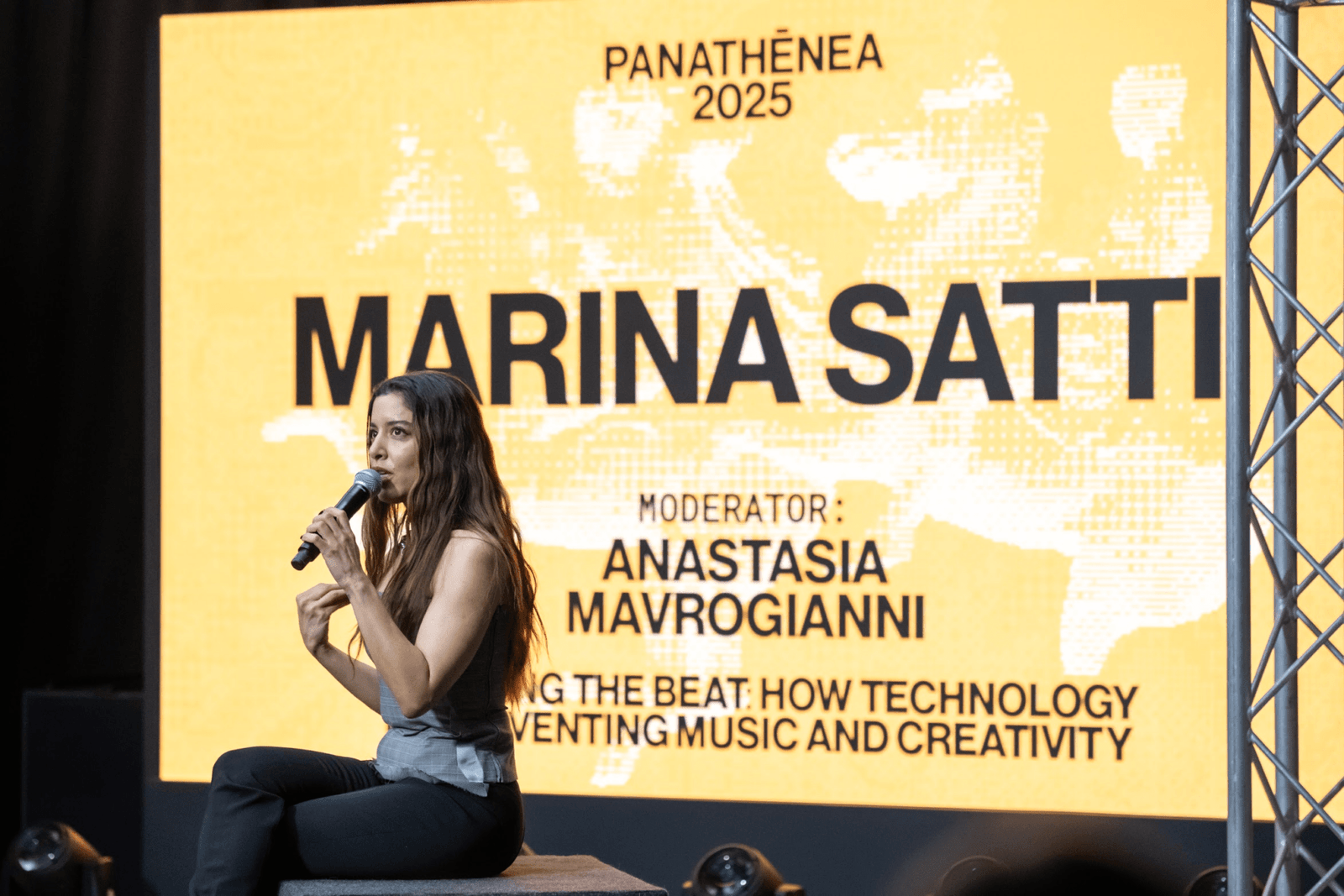
This year, we are also launching an arts and culture track. It’s not just a tech festival anymore. We are bringing in artists and creators as full participants. We will have stages, sessions, workshops, and panels dedicated to young artists and creators.
9. What do you want to change in the Greek and wider regional innovation ecosystem?
I want to see more young people trying things without being afraid of failure. Having the space to launch something, to create. That’s what I really want to change.
And I believe that happens when you bring generations together. Young people working alongside experienced ones—that’s how you change the world, change Europe, and drive real innovation.
10. For a founder coming to Panathenaia, what can they expect to get out of it?
They’ll meet other founders, of course, but also some of the biggest VCs in the world—Atomico, Index, Sequoia, Northzone, Speedinvest, and many more European and global funds. They will have direct access to those investors.
They will have a great time. We create experiences all over the city throughout the event. And they’ll find real business value, whether that’s meeting a potential client, a co-founder, or just getting the kind of feedback that moves their company forward.
11. Building something this ambitious so early in your career is intense. What have you personally learned about leadership and risk from this process?
I may be controversial here, but I believe that for leadership, the most important thing is the team. For Panathēnea, we’re all young people aligned around the same vision. That alignment is the catalyst for everything we are doing. You have to work together, be there for everyone, and share the vision constantly.
Now, about risk. As a leader, you have to be willing to be the crazy one. You have to take that risk without being scared of failure. I love working with other people willing to take that leap. Those are the people changing the world.
12. Looking five years ahead, what would success look like for Panathēnea?
Success means we’ve changed the ecosystem. More startups are being created, and more young people are willing to take the risk and build something without fear of failure. And artists have the space to create, too. It’s a mentality shift, which is the most difficult change.
We would also love to see some of the startups that got their start through Panathēnea become successful companies.
And for the event itself, we want to see 100,000 people in Athens for a 10-day festival, one of the most important festivals in the city, that brings together tech, art, music, and film.