

Venture capital fundraising in Europe has slowed. In the first half of 2025, European VC fundraising reached just €5.2 billion across 65 funds. The median fund size fell to €50 million, the smallest since 2019.
The European Commission has also been direct about the structural problem. It describes the EU’s venture and growth capital ecosystems as “fragmented and underdeveloped” compared with the US. Strict legal, regulatory, and tax barriers, rounds take longer, introductions are harder, and the “who you know” mindset limits cross-border investment and restricts access to institutional capital.
Follow THE FUTURE on LinkedIn, Facebook, Instagram, X and Telegram
Deal activity has also declined. KPMG reports that the number of venture deals in Europe dropped from 2,358 in Q1 2025 to 1,737 in Q2 2025.
For founders in smaller markets, access to early-stage capital is constrained even before the cross-border friction conversation begins. Cyprus is a good example. The Global Entrepreneurship Monitor’s 2023/24 report scores Cyprus’s perceived availability of VC at 3.1 and business angels at 3.6 on a 1–9 expert scale.
Time and access, therefore, are integral for success in that environment. This is the problem Onstage is built around as it launches Fund I. The team describes European fundraising as “slow, fragmented and time-consuming,” and it proposes to accelerate the path between founders and investors so that “exceptional founders” do not get left behind.
Onstage
Onstage began in 2020 as an organiser of standalone demo events for early-stage startups in Europe. Founded by Hector Mason (Episode 1 GP) and Taos Edmondson (dmg ventures Partner), and led operationally by co-founder Issie James, its flagship demo day has attracted more than 2,000 startups and worked with over 330 venture funds from Europe and the US, including Sequoia, a16z, Balderton, and LocalGlobe.
Over the past few years, demo day finalists have collectively raised more than £500 million, with companies such as Scan.com (£60 million) and Lawhive (£44 million) among those securing significant follow-on funding.
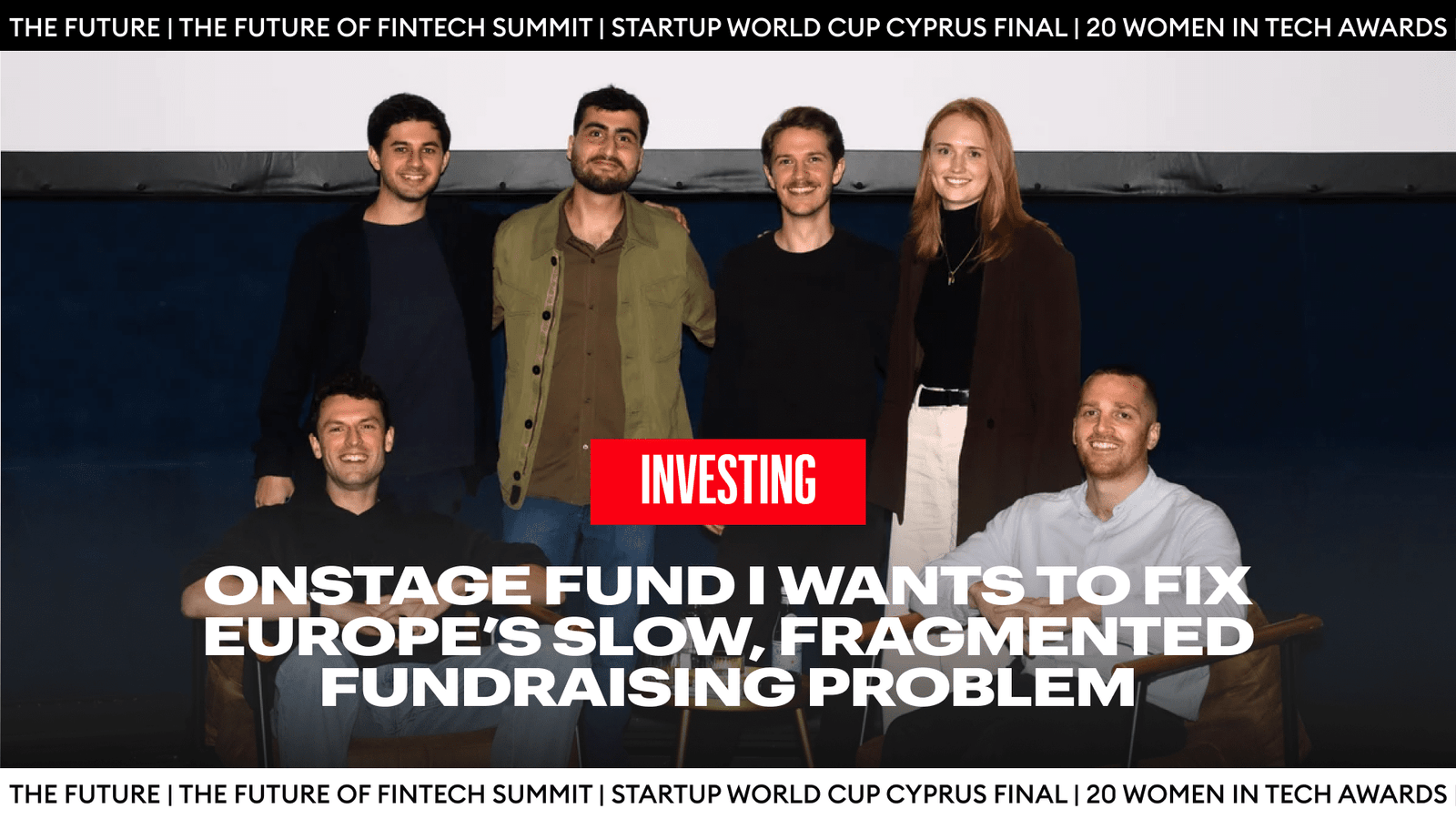
Recently, the team has announced the next step in its mission: the launch of its first venture fund, with an initial close of £10 million. The fund is intended to support European pre-seed and seed-stage companies across Europe. Joel Hambly leads the fund as Founding Partner.
Onstage is taking full advantage of its impressive network around the fund. Fund I includes Peter Simon, President of US investment firm Simon Sports, joining as a Partner and investor. LPs include European founders and investors such as Alex Chesterman, alongside GPs from Concept Ventures, Creator Ventures, Chapter One, and Episode 1.
The fund’s investment committee includes external members Emma Phillips (LocalGlobe), Laura McGinnis (Balderton), and Jamesin Seidel (Chapter One), working with the Onstage team on sourcing and selection.
The Fund
Onstage says it plans to make around 80 investments over the next three years, using its existing platform to connect founders and investors across Europe. In the team’s own words, “Most funds start by raising capital and build out their platform later (if at all). We inverted this process.”
In this exclusive interview with The Future Media, the Onstage team shared how they assess early-stage potential, and why, in their view, access is only half the battle.
1. What would make a company a strong fit for Onstage Fund I?
We are raising the funds on top of the platform that we have built over the last six years, which gives us a unique access to early-stage companies. So, we are primarily targeting companies at the pre-seed and seed stage. As our competitive advantage is the number of companies we see, we are investing across a broad range of industries and highly collaboratively with other VCs. Our focus is on European startups, as this is where we have strong reach through our platform, helping our portfolio companies reach various stakeholders.
2. You’ve seen thousands of applications and have a front-row view of what VCs respond to through the Onstage ecosystem. How does that experience translate into an investment advantage for Fund I?
We have live data on what sectors and attributes our peers are interested in, and we have an early view on which VCs are the best stockpickers. As a result, we have a stronger view than perhaps anyone else of who the best VCs in Europe are and can tailor our efforts accordingly.
We also have incredible context on what good looks like for a startup in terms of growth metrics, and which startups are most likely to attract VC interest at their current or subsequent funding round.
3. You’ve described giving founders a “platform advantage from day one.” What will founders receive beyond capital, and how is your support structured differently from a traditional pre-seed/seed fund?
Most funds start by raising capital and build out their platform later (if at all). We inverted this process. Contrary to the ecosystem in San Francisco, in Europe, the fundraising process is slow, fragmented and time-consuming.
Over the last six years, we have built a format that accelerates this process for European startups. The value proposition is pretty unique in Europe. Startups that successfully attend Onstage Demo Day get dozens of inbound messages from some of Europe’s leading funds.
For portfolio companies, we can leverage our network of more than 350 VC Partners, more specifically, and help them with their fundraising. Additionally, we help portfolio companies find talent and customers through the reach of our media channels and our vast network of stakeholders.
4. When reviewing early-stage teams, what are the top 2–3 things that raise your conviction, and what are the most common reasons promising founders don’t progress?
At an early stage, there is little more than the founder and an idea. Ideas are abundant; exceptional founders are rare. Exceptional people reveal their trajectory if you know what patterns to look for. This can take very different forms and shapes – some more conventional than others: having been an early employee at a high-growth startup can be an indicator, as can having sold their parents’ clothes at age 11, or being a Paralympic athlete.
The most common reason founders don’t progress is that they quit. There are only two reasons for a startup to fail: Number one is running out of money, and number two is quitting.
If you remove one from the equation, the chances are not bad. However, for a company to actually return the funds is a different challenge. Many things have to align for this outcome, most of which are hard to foresee.
Generally, we like to back founders with a strong ability to storytell, as this helps attract subsequent investment, world-class talent, and customers. Speed of execution is also critical in today’s AI-fuelled world.
Conclusion
For founders in European markets, especially from smaller markets, Onstage Fund I offers not just capital, but accelerated connection.
In an ecosystem where fragmentation is the default, Onstage’s platform gives founders from Nicosia to Lisbon a platform advantage from day one.