Stylino has launched as Cyprus’s first dedicated fashion price comparison platform, aggregating over 385,000 products from 65 online retailers across Cyprus, Greece and Europe. Built and operated by a single founder based in Limassol, the platform processes product feeds from dozens of retailers in real time, enabling consumers to compare prices on clothing, footwear and accessories across the entire market in one search.
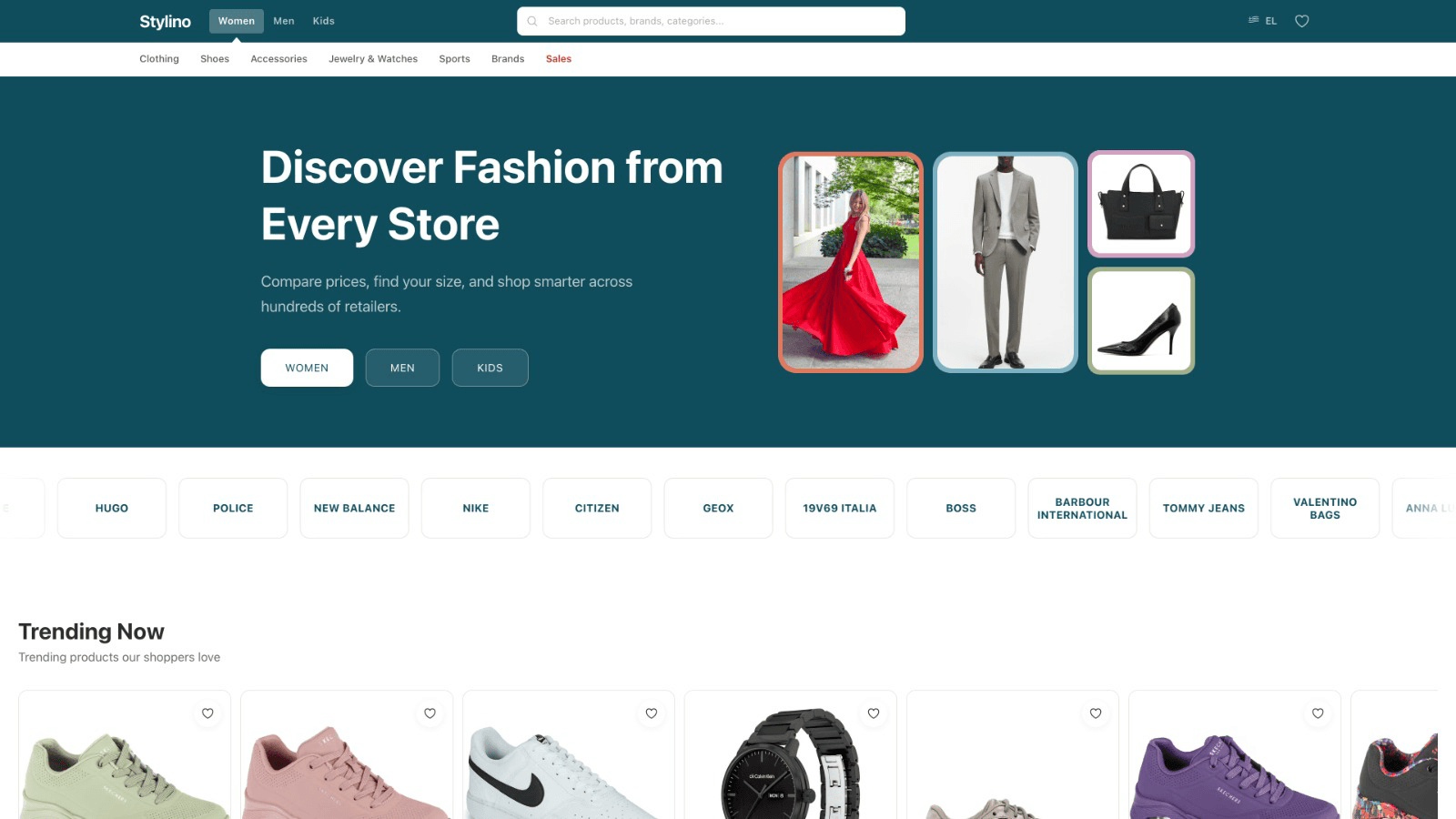
The Market Gap
While mature European markets have established comparison platforms — PriceRunner in Scandinavia, idealo in Germany, Kelkoo in France — Cyprus had no equivalent for fashion. The market is fragmented across dozens of online retailers, from large international chains to independent local e-commerce stores, each operating in isolation with no unified search or price comparison capability for consumers.
Follow THE FUTURE on LinkedIn, Facebook, Instagram, X and Telegram
“The same product can have a 30% price difference across stores operating in Cyprus. That inefficiency is the opportunity. We built an automated pipeline that normalises product data from 65 different feed formats into a single searchable catalogue. Using advanced algorithms and artificial intelligence, we can accurately match and deduplicate products across different retailers,”
says Aris Ioannou, founder of Stylino.
How It Works
Stylino ingests product feeds from 65 retailers through a combination of network APIs and direct data partnerships. An automated processing pipeline normalises product attributes — titles, categories, sizes, colours, prices — across disparate feed formats, deduplicates entries, and indexes them into a searchable catalogue covering 3,350+ brands. The consumer-facing platform, built using state-of-the-art technologies and artificial intelligence, serves bilingual (English/Greek) results with sub-second response times.
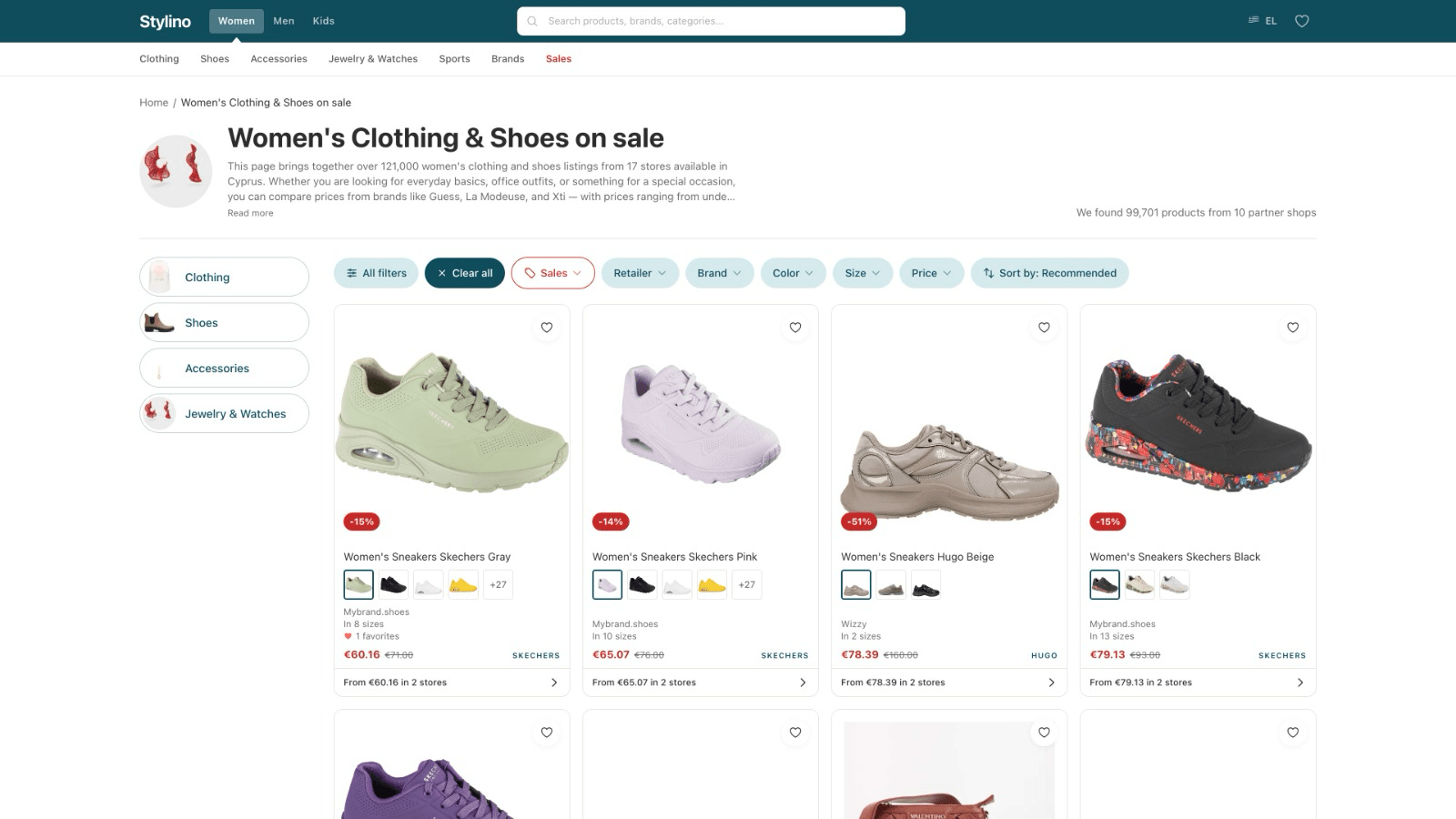
The platform covers categories including women’s, men’s and children’s clothing, footwear, bags and accessories, with dedicated sale tracking and brand-level browsing.
Traction and Roadmap
Since launch, Stylino has indexed over 385,000 products from 65 retailers and 3,350+ brands, with the catalogue growing weekly as new retailer integrations come online. The platform is already gaining traction among Cypriot consumers and establishing partnerships with major retailers across the region.
Near-term plans include price alert notifications, personalised recommendations based on browsing behaviour, and expansion of the retailer network. The underlying data infrastructure is designed to scale to additional verticals and geographies.
“Cyprus is a small market, but that’s what makes it a good proving ground. If you can build comprehensive coverage in a fragmented market with limited data standardisation, the same approach works anywhere”.
adds Aris.





