

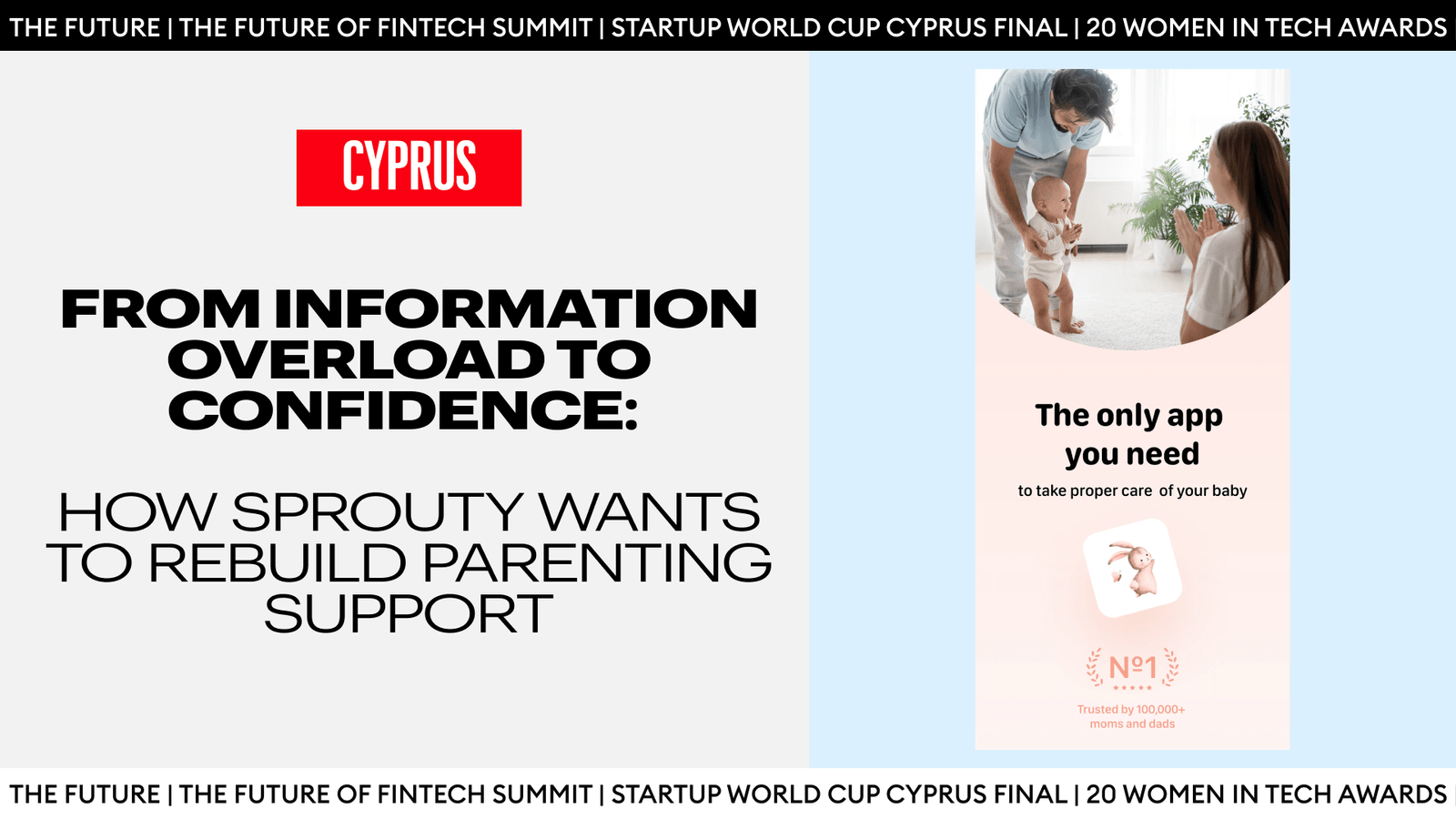
At 3 a.m., the baby is finally asleep. And that’s when the scrolling begins. One Reddit thread says don’t worry, a blog post says call someone now, and the WhatsApp group chat keeps pinging with home remedies and hot takes. In a Guardian column about the loneliness of early parenthood, comedian Daisy May Cooper’s line lands close to the heart because it’s familiar for so many new parents: “the WhatsApp [support] group was just thousands and thousands of messages about mashing up avocados.”
The Internet promised to make modern parenting easier. More access, more options, more community. But what this endless sea of options and opinions does is often make the first year of parenthood into a decision marathon, where every choice is wrapped in conflicting “evidence.”
Follow THE FUTURE on LinkedIn, Facebook, Instagram, X and Telegram
A King’s College London report describes the online parenting problem as “information overload and inconsistency.” In one survey, around 71% of parents said they start with an internet search when they have a question about children’s health. Another study cited found 82% of parents use social media for child-health information, yet only 26% said they always verify the source.
The problem of information overload and the lack of transparency about what’s credible pushes the burden of judgment back onto the parent. Parents are more connected to information than ever but less connected to certainty, and it is in that gap where loneliness begins to take hold. A 2022 Systematic Reviews scoping review defines loneliness as “a negative emotional experience related to an appraisal of deficiency within a person’s social network,” and reports that across studies, the prevalence of loneliness ranged from 32 to 100%, commonly experienced alongside parenting difficulties, with parents feeling alone in their struggles. When support thins out, the load gets heavier. One 2025 study on parents who had babies during COVID-19 found restrictions amplified difficulties through “limited childcare resources” and “reduced social interaction.”
So what actually helps when the problem is both emotional and cognitive? The evidence is increasingly pointing to structured, low-barrier interventions that reduce friction and narrow choices to those that are supported by research. A 2024 meta-analysis of technology-based, self-guided postpartum interventions found small but significant reductions in depression and anxiety symptoms compared to controls. Not all technological tools are built the same. The evidence on postpartum digital interventions suggests that when support is structured and evidence-based, it can produce measurable reductions in anxiety and depression symptoms, small at post-intervention, and stronger at follow-up in some studies. That’s why tools that put expert-led knowledge at the core may be better positioned to ease the lonely stretch of early parenthood.
Enter Sprouty, a mobile app for parents of babies that pairs routine planning with a baby journal, then uses what parents log to deliver personalized informational guidance in “clear, simple language” and a “warm, empathetic tone,” “grounded in science and reviewed by pediatricians,” designed to give parents only what they need, when they need it, without the overwhelm.
In this interview with The Future Media, Dmitry Rumbeshta, the founder of Sprouty, races the product back to his own first months as a new father and argues that the next wave of parenting support won’t win by piling on more features or content, but by connecting the fragmented parts into digestible pieces of knowledge built from parents’ own logs, so they don’t have to interpret everything alone.
1. Let’s start with you. Before Sprouty, what did your career and life look like, and which experiences do you feel helped prepare you to become a founder?
I was born and raised in Tomsk, deep in Siberia, Russia. I studied engineering with a strong foundation in physics and mathematics, and I began a PhD —but didn’t finish it. Instead, I moved abroad to work, and that’s where I realised my true home was in technology, and specifically in IT.
My career began at a custom software development studio, where I grew from a management role into CEO. That experience gave me a solid understanding of how to lead and scale a technology company, work with clients, and build high-performing teams. Later, I took on product leadership roles in a large fintech corporation.
Before founding Sprouty, I also served as Chief Product Officer on the founding teams of two startups— one was a fully digital bank in the UK, the other a global contactless payments service that integrated loyalty mechanics and crypto. While I wasn’t the founder in either case, those roles gave me hands-on experience in how startups are built, validated, and scaled from the ground up.
2. You’ve said Sprouty began from your own experience as a new father. Can you tell us about that period?
Sprouty emerged directly from my experience as a new father. It was a challenging period in our lives. In early 2022, my wife and I moved countries to Cyprus. She was already pregnant at the time.
Our daughter was born here, without family nearby or familiar support. We were forced to navigate parenthood, relocation, and uncertainty all at the same time. That period made the emotional and informational overload of early parenthood very tangible for me — and became the foundation for Sprouty.
3. What were you seeing in those early years of parenting that convinced you new parents needed something better than the tools and advice already available?
In those early months of parenthood, everything felt unfamiliar and overwhelming. We had no support system around us. Our entire lifestyle changed overnight, and we were suddenly fully responsible for another human being. Despite being experienced professionals in our own fields, we simply didn’t understand what was happening or what we were supposed to do. That sense of confusion was constant.
We looked for tools or services that could help us structure daily life, build a routine, and regain at least some predictability — even the ability to plan a few weeks ahead or think about something as simple as travel. We couldn’t find anything that truly helped, so together with a friend, we started building a small app for ourselves.
We realised the problem was much broader when we released it publicly and began receiving frustrated reviews in the app stores. At the time, we were using free infrastructure that limited registrations to 30 users per day, and people were angry simply because they couldn’t get access. That was the moment we understood many parents were facing the same problem and were equally unsatisfied with the tools and advice already out there.
4. For someone hearing about Sprouty for the first time, how do you explain what the app does?
Sprouty is a mobile app for parents of babies. It helps parents understand what is happening with their child in clear, simple language and in a warm, empathetic tone, always grounded in science and reviewed by pediatricians.
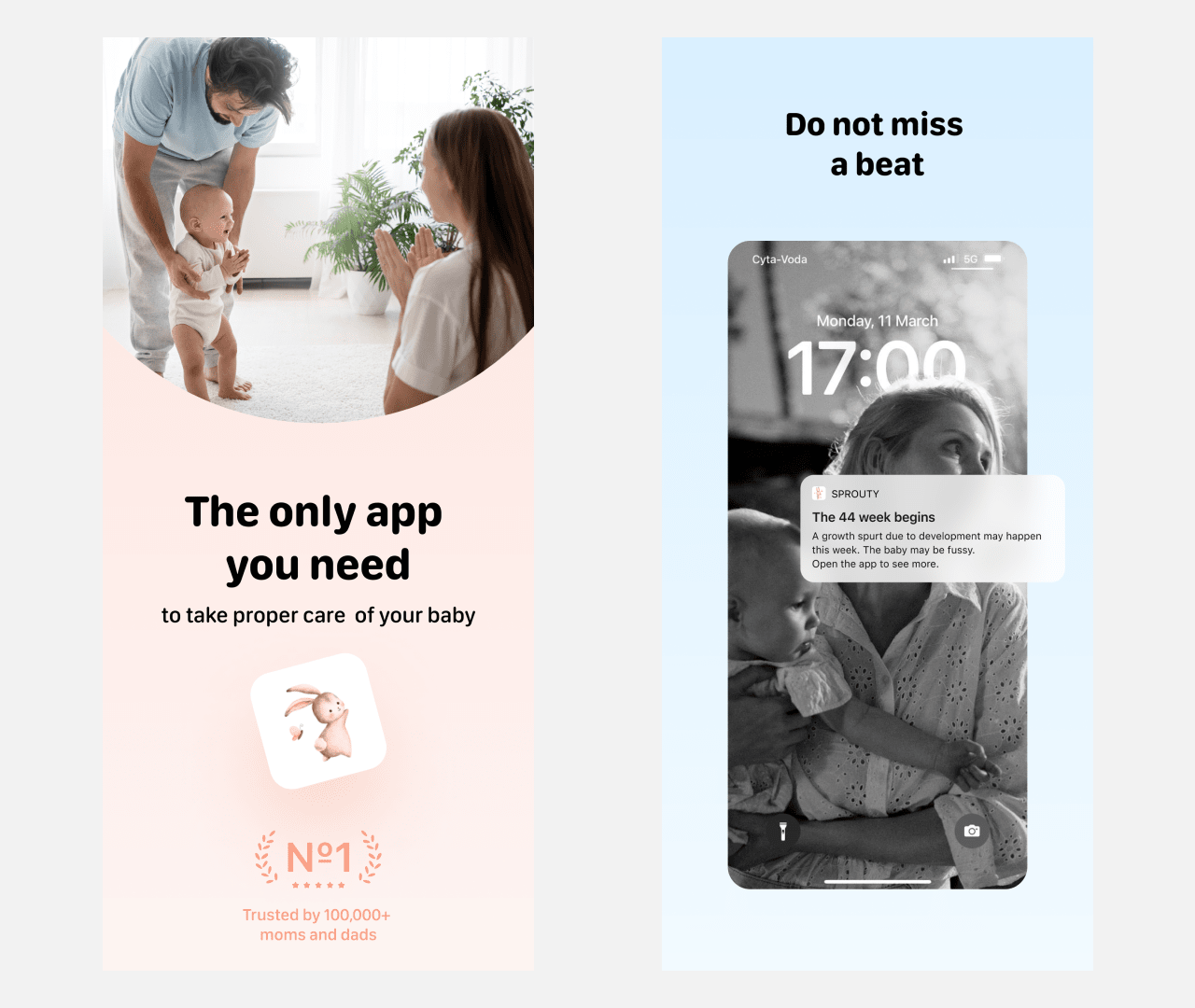
At a deeper level, Sprouty combines routine planning tools and a baby journal. Based on the data parents log, we personalise content and informational guidance so that, during an emotionally intense period, parents receive only the information they actually need. This helps them feel more confident, in control, and supported, without being overwhelmed.
5. Who is the main target audience of the app?
We don’t limit the app to first-time parents. Early on, we assumed Sprouty would be most relevant for new parents, but extensive user interviews changed that view.
Today, a large share of our users are parents of their second, third, or even fourth child. Early childhood develops so intensely that, over time, you simply forget many details from previous experiences. Even with experience and intuition, parents still need structured guidance during those first months.
So Sprouty is built for parents of babies regardless of whether it’s their first child or not, offering clarity and support during a uniquely demanding stage.
6. You combine AI with evidence-based guidance and daily micro-exercises designed by paediatricians. How do you make sure Sprouty stays medically credible, and what role do humans play in reviewing and shaping what the AI delivers?
We are very deliberate about how we use AI. Broadly speaking, AI does not write medical content for Sprouty, nor does it invent recommendations for parents. We tested that internally in the early stages and quickly realised that hallucinations remain a real risk. When it comes to babies’ health, that’s simply unacceptable.
Instead, we have built and maintain our own structured knowledge library. All content is created in collaboration with paediatricians who practice evidence-based medicine. Every article and recommendation is grounded either in public-domain medical sources or in licensed materials supported by peer-reviewed research.
AI in Sprouty operates strictly within this framework, working only with user-provided data and our verified internal knowledge base. Human experts — paediatricians, psychologists, and our internal team — play a central role in reviewing, shaping, and continuously updating what the product delivers.
7. From your perspective, what truly differentiates Sprouty from other baby trackers and parenting apps that parents may already be familiar with?
Most baby trackers focus on collecting data and visualising it, leaving parents to interpret what it all means on their own. Sprouty takes a different approach.
We use the data parents log to build a clear, contextual understanding of what is happening right now and deliver only the information that is actually relevant at that moment. This connects tools, content, and informational guidance that are usually fragmented across multiple apps and services.
Instead of offering isolated features, we give parents a coherent, holistic picture of their current parenting phase, helping them understand not just what’s happening, but why.
8. You’re already used by around 1.7 million families across Europe, North America, Australia, and Latin America. What have you learned from scaling in such different markets, and where do you see the strongest demand right now?
I wouldn’t single out any market based on the underlying problems. What we’ve learned is that early parenthood looks emotionally very similar everywhere. Becoming a parent is intense and often frightening, regardless of geography.
Right now, the United States and the EU are our most active markets. But that’s less about parenting being more stressful there, and more about behaviour: the US has historically been more open to using mobile apps to solve personal and family challenges. The core needs, however, are remarkably consistent across regions.
9. Sprouty is founded in Europe, with a core team in the UK and Cyprus. Why did you choose Cyprus as part of your base, and what role does the Cyprus team play in product and growth?
It wasn’t a single strategic decision, but a sequence of practical ones.
When we relocated in 2022, Cyprus was already familiar. I had spent time here earlier while working on another startup, and at that moment, we were looking for something calm and stable.
Over time, we discovered that Cyprus offers much more than many realise. It has a strong infrastructure for innovative companies, a growing founder and investor community, and a dense concentration of product teams that help us move faster and avoid common mistakes.

Dmitry Rumbeshta, CEO, and Nikolay Ashanin, CTO
My co-founder studied in the UK and holds a Global Talent visa, which is why part of our core team is based there. Together, Cyprus and the UK give us a setup that supports both speed and access to strong technology ecosystems.
10. You’re asking parents to log very intimate details about their baby’s routines and development. How do you approach data protection, privacy, and long-term trust in that context?
We treat privacy and trust as foundational, not optional.
By default, if a parent doesn’t use cloud-based features, their data stays entirely on their device. When users opt into features like family sharing, data is stored securely in cloud services that comply with regional legal and regulatory requirements.
We also deliberately minimise what we collect. We don’t rely on personal identifiers, and any data used for product improvement or machine learning is anonymised. Long-term trust comes from transparency and from ensuring parents always remain in control of their data.
11. Do you have any specific stories or feedback from users that, for you, capture how Sprouty has changed a parent’s day-to-day life or reduced their mental load?
This kind of feedback has always been our strongest motivator, especially in the early days, when we were building the product for free.
We don’t collect or showcase individual stories for privacy reasons, but we constantly share user messages internally. These include notes of gratitude, relief, or simply saying the app helped them get through a difficult day. That feedback is incredibly energising.
It’s also the first product I’ve worked on that receives such emotionally open responses. Even negative feedback often comes from people under immense stress who simply need to be heard. The fact that parents come to us in difficult moments is, to me, a sign of trust.
12. You’ve just raised a $550K seed round led by AltaIR Capital to grow Sprouty’s evidence-based, AI-powered parenting support. What are your main priorities for this capital over the next 12–18 months?
We intentionally raised a relatively small round to minimize dilution. Before that, the company had grown largely bootstrapped, backed by a sustainable, revenue-generating model.
This capital is not about survival. It’s about acceleration. Our priorities are product development and user growth: strengthening the core experience, expanding evidence-based content, and scaling distribution.
We also don’t see this as a long runway. This round is meant to help us move faster, and we plan to begin preparing for the next funding round as early as Q1.
13. Before this round, Sprouty had already reached around 1.7 million families, with growth described as largely organic. How did you approach this seed raise, and what did growth and financing look like up to that point?
Our growth was not purely organic. We used a mix of organic and paid channels, but with strict discipline. Paid acquisition was structured to pay back within the first month, allowing us to reinvest revenue without creating cash gaps.
We had no external funding before this round, used no loans, and relied only minimally on founders’ personal capital at the very beginning. From that point on, growth was largely self-financed.
We approached the seed raise from a position of control rather than necessity — with a working product, meaningful scale, and clear unit economics.
14. What would you say to other healthtech or parenting-tech founders building from “non-obvious” hubs such as Cyprus or smaller European ecosystems who want to reach a global market?
COVID fundamentally changed how we think about where global products can be built. The world has become far more distributed. What matters most is not where you are based, but how well you understand the markets you’re building for. And how consistently you stay in direct conversation with your users.
The second important point is access to motivation and expertise. In the past, much of that was concentrated in a few places, most notably Silicon Valley. Today, speed, knowledge, and high-quality thinking are far more accessible. You don’t need to live in a single hub to absorb its dynamics.
There are now multiple ecosystems with strong expertise, and much of that knowledge is reachable digitally. We stay in constant contact with fast-growing, creative teams around the world, exchanging experience and learning from each other. That kind of network can be built from almost anywhere, including smaller or less obvious hubs.