
“Option A: Spend 2 years navigating EU bureaucracy. Option B: Move to the US and start building tomorrow,” reads one viral post on X. “The choice is obvious. That’s why European founders are fleeing.”
It’s a tidy narrative. If you want to grow, go where the money moves faster. Two roads; only one leads to the “treasure.” Europe builds, but America scales. The data, however, tells a more complicated story that doesn’t quite fit a 280-character post.
Follow THE FUTURE on LinkedIn, Facebook, Instagram, X and Telegram
The European Commissioner’s competitiveness agenda shows the EU attracts just 5% of global venture capital, compared with 52% in the US and 40% in China. Recent analysis by the European Investment Bank highlights how “no reliable tools exist” to systematically track startup relocation but still estimates that around 10% of EU scaleups relocate, and about 85% of those moves are to the United States.
For women founders, attracting VC funding is an even bigger struggle. European startups founded or co-founded by women raised €10.9 billion in 2025, just 17.8% of total deal value, down from 18.5% a year earlier. When it comes to building in the AI space, women appeared in 17.1% of deals by count and 12.9% by value.
In the US, the percentage isn’t much better. Women-founded companies captured 19.6% of total VC deal value in 2024, down from 20.8% in 2023. But that 19.6% amounted to over $38 billion. The gap exists on both sides of the Atlantic. The difference is the size of the pie.
Even the best numbers, however, come with an asterisk. “Moving to the US” rarely means abandoning Europe. It often means splitting the company operations, keeping talent and R&D close to home while chasing capital abroad. That is where the complications enter the plot line: logistics. Incorporation structures, bank accounts, tax residency, time zones, and immigration status turn the “obvious choice” into a slow, expensive sequence of bureaucratic hurdles. Even the coveted H-1B remains lottery-bound, with recent selection odds reportedly around 1 in 3 to 1 in 4.
For young founders, especially migrants, especially women, the question isn’t just where the money is, but what the move costs in logistics, identity, and community.
For the Cyprus-born team behind Algebras AI, the Valley wasn’t so much a dream, but a necessity. In her first week, co-founder Diana Safina sat in a café surrounded by founders discussing valuations “as if it were small talk.” Someone asked, “So, what are you building?” before asking her name.
She describes having to unlearn a “quieter, more deferential default” because “in rooms full of confident men, silence makes you invisible, not mysterious.” She had to recalibrate to a place where a 24-hour email response “feels normal back home, but here, four hours feels slow.”
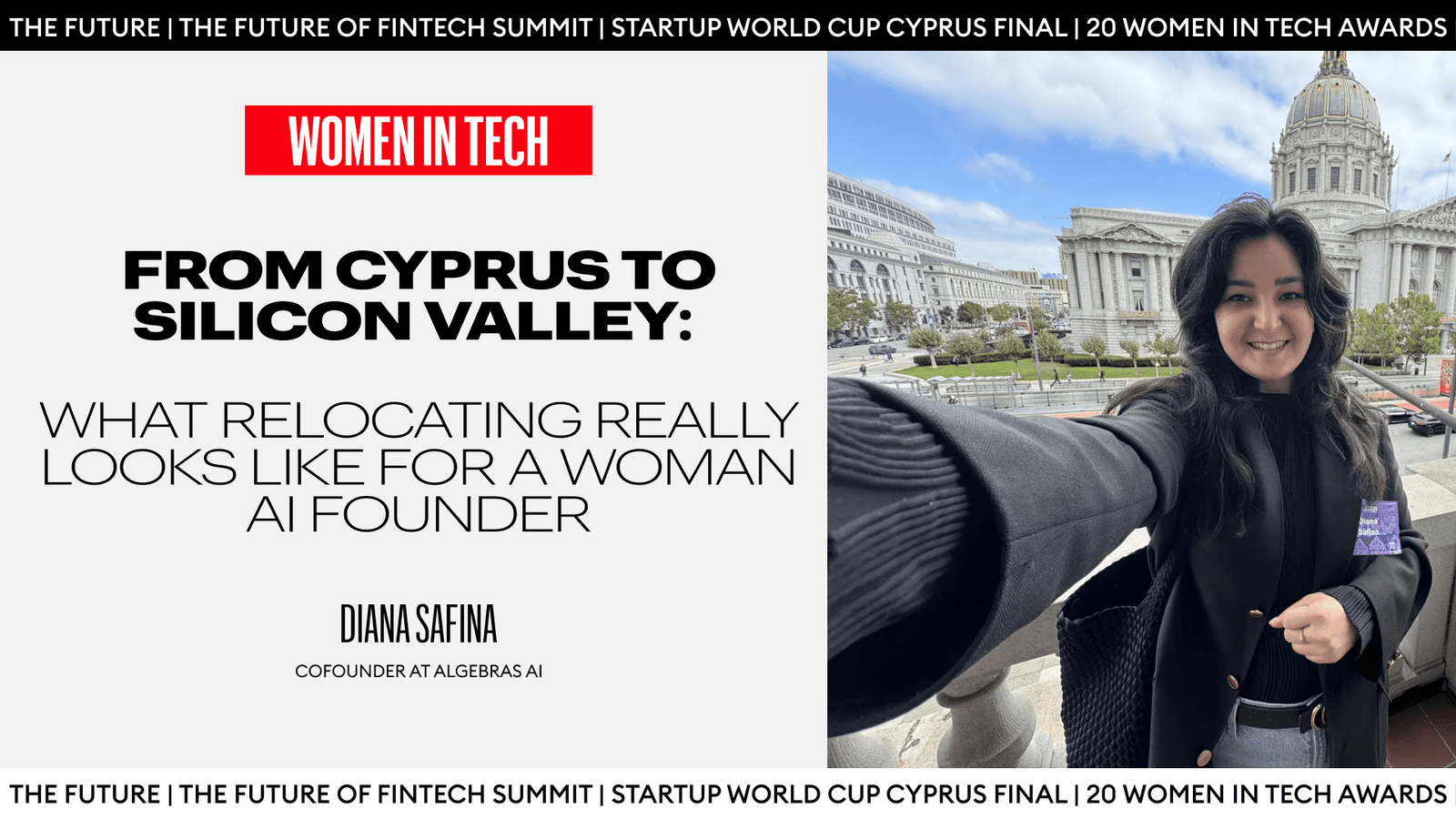
In this Future Media conversation, Diana Safina breaks down what that leap from a small ecosystem to the heart of Venture Capital looks like, from navigating funding, migration to learning to keep pace with Silicon Valley’s unforgiving definition of speed.
1. Can you recall the moment in the US/Silicon Valley when the thought “I’m not in Cyprus anymore?” hit you?
It hit me during my first week in Silicon Valley, sitting in a café surrounded by founders casually discussing valuations and product launches as if it were small talk. In Cyprus, ambition feels intimate and carefully shared. Here, it’s public, loud, and fast. That’s when I realized I wasn’t in my comfort zone anymore, and that was exactly the point.
Also, I was often asked, “So, what are you building?” before anyone asked my name. That was my true “Welcome to Silicon Valley” moment.
The sheer density of networking is also a shock. In Cyprus, events are occasional. Here, they happen daily, and in massive numbers. At first, it feels overwhelming, but you quickly understand that being present at events is the fastest way to meet the right people, test your pitching, and learn how the ecosystem really works. Even the format is the opposite of what I was used to. There’s no taking time with niceties and prolonged warm-ups; it’s direct, fast, and purpose-driven.
2. What did you underestimate about the culture jump, and what was a pleasant surprise?
I underestimated how unacceptable it is to stay quiet here. I was raised to listen first, not take up space. In Silicon Valley, that mindset simply doesn’t work. You’re expected to speak, challenge, and lead.
The biggest surprise was the power of female support. It’s real, it’s generous, and it’s energizing. Women here build companies with deep attention to culture and people, not just metrics. That solidarity changed how I see leadership.
3. As a woman founder from a smaller ecosystem, what did you feel you had to “relearn” fastest?
I had to unlearn the idea that being quiet makes you interesting. In rooms full of confident men, silence makes you invisible, not mysterious.
I also had to adapt to speed. In Europe, a 24-hour reply feels normal. Here, four hours feels slow. “Move fast” isn’t a slogan. It’s the operating system.
What surprised me most is how willing people are to help, even when you’re unknown. With a warm introduction, you can get real feedback, real time, real guidance. The culture of giving first is incredibly powerful.
4. How did your pitching style change after you arrived?
Our pitching changed completely. We used to start with the problem and solution. Here, we learned to start with the story. Story creates attention; product details come second because not every investor is technical or even aware of the problem yet.
We also learned to be radically prepared: one-minute pitch, two-minute, ten-minute. You’re always “on.”
And finally, words matter. The Valley is built by immigrants. Sounding smart is less important than being clear. Simple, sharp language travels further.
5. What does “speed” mean there?
Speed here means that time is the most expensive currency. Decisions are made fast. Feedback is instant. You can meet someone today, send a deck in the evening, and get a reply the same night.
But it’s not just about moving fast. It’s about not slowing others down. That’s an important distinction. If you hesitate too long, the system just moves forward without you. It’s intense, but it’s also incredibly freeing.
6. Did you ever feel your ambition was being “read” differently because of where you’re from?
I do feel I’m being read differently here, but in a good way.
I have Asian heritage, Tatar, Kazakh, and Bashkir, and I used to be shy about that. I worried it might be seen as something “other.”
But in Silicon Valley, most people are immigrants. Your background isn’t a limitation. It’s a story, a strength, a conversation starter.

My co-founder, Aira Mongush, is from Siberia, and together our identities might look exotic. But here, that actually makes people more curious. I truly feel that people who carry and respect their own culture tend to understand and respect others better.
7. What’s one myth about Silicon Valley, or women in SV, that the media gets wrong?
One of the biggest myths is that women in Silicon Valley are aggressive, cold, hyper-competitive, and only driven by money.
My experience has been the opposite. I’ve met women who are mothers, engineers, founders, wives, deeply grounded in who they are. They can be soft and generous, and at the same time incredibly strong with clear boundaries. I’ve received more support than criticism from women here.
8. Which relationships or communities genuinely changed your outcomes?
500 Global was the first fund that truly believed in us. It gave us our first real momentum and access to the Valley’s mindset and network. Being part of a community led by Christine Tsai was transformative.
Silkroad Innovation Hub brought us to the U.S. and helped shape our U.S. market strategy. Through their partnership with Alchemist, we gained access to top-tier mentorship.
Women in Tech and several female founder circles also became emotional and strategic anchors for me.
On a deeply personal level, my aunt Alia. She moved to California over 30 years ago after graduating from university and built her life and business from the ground up in logistics. What’s extraordinary is how she built trust with people at every level through consistency, honesty, and real care. She never treated people as “clients.” They were always people first.
Watching a woman without privilege or shortcuts earn the trust and loyalty of people at every level shaped how I build long-term relationships in business today.
9. How do you go about introducing yourself when pitching to potential investors? How do you build credibility and trust with investors when sharing your smaller-ecosystem roots?
My experience in Cyprus taught me a lot. I don’t try to “hide” where I come from anymore. Instead, I lead with it. At Algebras AI, we cherish diverse cultures, backgrounds, and contexts, and I’ve seen how that resonates with investors. Coming from a smaller ecosystem often means you’re scrappier, more resilient, and deeply resourceful. I’ve learned that when you own that story with confidence, investors respect it, and it often becomes a unique advantage.
10. Share any story that reflects your experience as a woman building out of a smaller ecosystem.
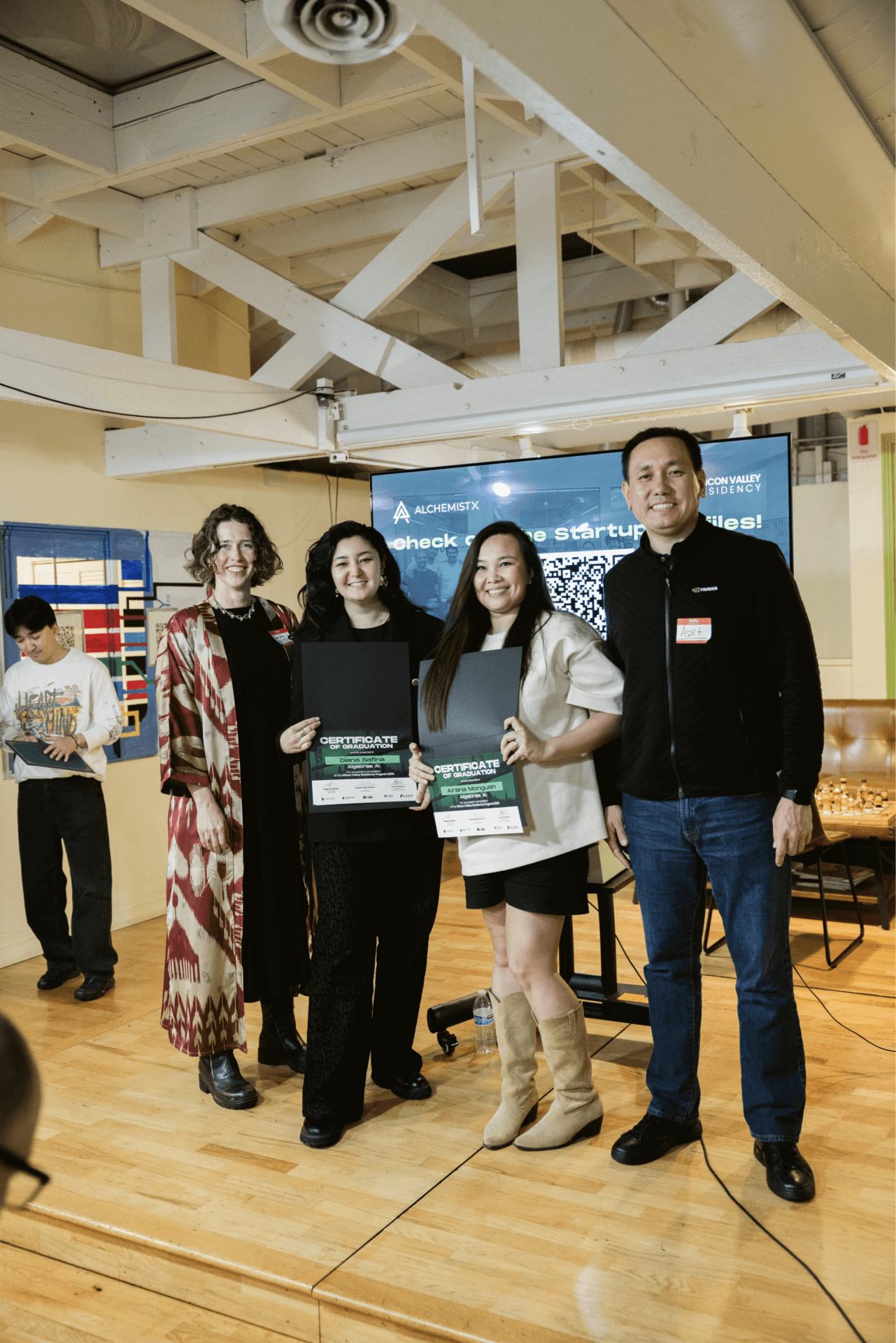
Starting in a smaller ecosystem teaches lessons you don’t get anywhere else: reputation travels fast, resources are limited, and you learn to be resourceful and resilient from day one. I was incredibly fortunate to be invited into my first startup journey by another female founder, Aira Mongush, and together we built three startups. That experience shaped how I see leadership: very differently from corporate life or male-dominated teams.
I learned that women can communicate their vision with clarity and assertiveness, adapt quickly, and lead with empathy while building strong, cohesive teams. Later, we brought in a male CTO, Dima Pukhov, who added balance and strengthened our dynamic even further.
For any woman founder coming from a smaller ecosystem, my advice is simple: trust your experience, assert your vision, and lean on your network.
The skills and resilience you develop early on are your greatest assets, and they can take you anywhere, even into the most competitive markets like Silicon Valley.