

How many times have you thrown away a bag of unopened, sad-looking spinach this month? Now multiply that by the year? Take your neighbours’ spinach into account. What about your city?
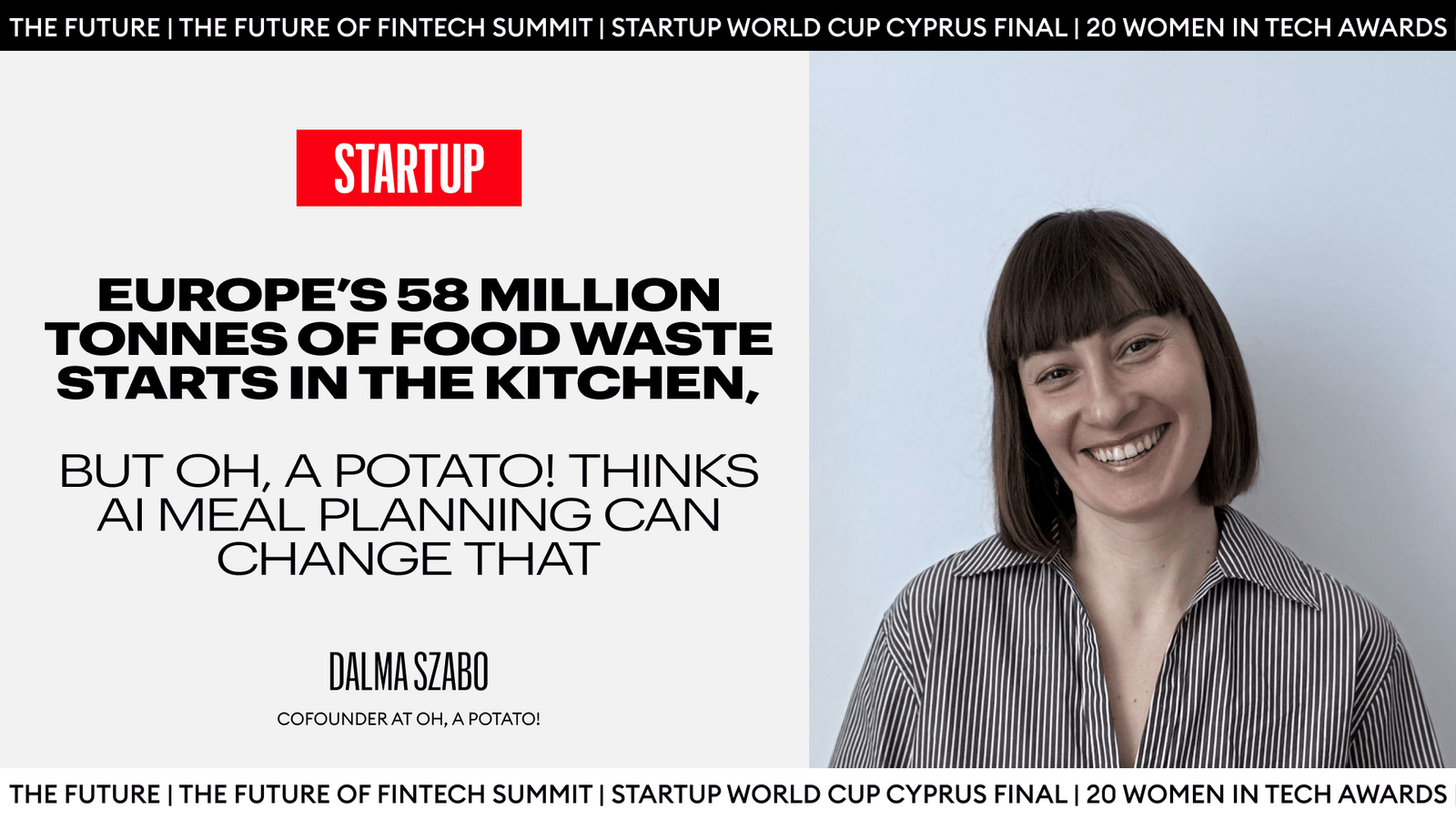
Europe’s households collectivly generated 58.2 million tonnes of food waste in 2023, about 130 kg per person. Households accounted for 53% of the total, the equivalent of 69 kg per inhabitant.
Follow THE FUTURE on LinkedIn, Facebook, Instagram, X and Telegram
Cyprus is in a particularly vulnerable position. Eurostat’s 2023 data places Cyprus at 286 kg of food waste per person across all sectors, more than double the EU average. Household food waste alone is estimated at 74 kg per person, above the EU household level. It is not only the food waste problem that is of great concern. The current waste management infrastructure adds an additional pressure. The EEA reports that 59% of municipal waste was still landfilled in 2022, and that bio-waste makes up about 42% of mixed municipal waste, while separate collection and treatment capacity remains insufficient.
The European Commission’s revised Waste Framework Directive introduced binding food-waste reduction targets by 2030, requiring Member States to cut food waste by 10% in processing and manufacturing and by 30% per capita across retail and consumption, including households and food services, measured against the 2021–2023 average.
In the last couple of decades, local governments have attempted to run various campaigns to counter what has now become one of Europe’s most persistent economic, environmental and social problems with low degrees of success. For the most part, these campaigns fail to reach the core of the problem: the kitchen of the consumer. Or, more like, the consumer’s habits inside the kitchen.
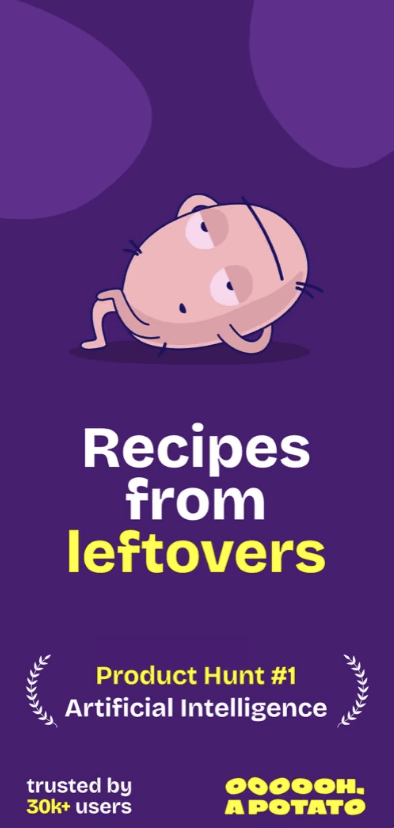
A new generation of consumer tools is attempting to turn waste reduction from a conscious effort into a default behaviour. OH, a potato! is an AI-native meal planning app built to cut household food waste. Co-founder Dalma Szabo says the project, which began as a side experiment, has already reached 30,000 households organically, has been featured by Apple, and won Product of the Week on Product Hunt.
In this interview with The Future Media, Szabo explains why household waste persists even when people care, how AI-native meal planning works in real kitchens, and why OH, a potato! is designed to reduce waste without asking households to become idealised planners.
1. To begin, how would you introduce yourself and what you do today?
Iʼm Dalma Szabo, the co-founder of The Zero-Waste Company. Weʼre building OH, a potato!, an AI-native meal planning app designed to reduce household food waste. I spent over a decade in corporate product and growth roles before starting this project with my husband. It was only a side project at the beginning, but what began as a small experiment has reached 30,000 households organically, been featured by Apple, and won Product of the Week on Product Hunt. We are now building toward something much bigger: making waste reduction the default, not the effort.
2. How do you describe the mission of OH, a potato!?
Waste levels haven’t changed in 5 years. Households generate 60% of all food waste in the EU. That’s not because people don’t care or aren’t aware of the problem. They do care, and they feel guilty for throwing away food. 72% of Europeans say they are food-waste conscious, but only 37% consistently follow meal plans. But the systems around them don’t support a more active approach to reducing their waste.
The tools currently available on the market don’t match people’s lifestyles. Most apps are built for an idealised version of you, someone who plans perfectly, shops exactly right, and never has a week that goes sideways. People don’t (and often can’t) change their lives for an app. We are closing the gap between intention and action by building a tool that adapts to each real household, not an ideal one.
Our mission is to make waste reduction effortless and rewarding enough that it becomes a habit, not a chore.
3. Before OH, a potato!, how did you see yourself in relation to entrepreneurship?
I went to business school, but never saw a future for myself as an entrepreneur. It felt like something other people did, people who were bolder or more sure of themselves than I thought I was.
In 2017, however, I joined a startup as a consumer marketing co-founder. I was naive, under-skilled, and constantly doubting myself. The learning curve was brutal. By 2021, I left to go back to the corporate world. I was exhausted, but something in my mindset had definitely changed.
A corporate felt safer, but I got a taste of what it felt like to build, to move fast, to have real ownership. The feeling of a decision actually having an impact. Sitting in meetings where everything moved slowly and nothing felt like mine, didnʼt satisfy me any longer. The comfort started to feel like a cage.
So, I started a side project with my husband, taught myself design, and learned app growth by doing. That’s how OH, a potato! began.
4. There are lots of recipes and meal-planning apps already. What makes OH, a potato! different from another “what should I cook?ˮ app?
Most apps are built for dieting, nutrition, recipe collecting, or grocery list creation. They serve the same plan to anyone with similar filters. They don’t know what’s in your fridge, they don’t learn from how you cook, and they fall apart the moment life doesn’t go to plan. Static intelligence for a dynamic problem.
OH, a potato! works the other way around. It starts with what you already have, with features that allow you to scan your fridge, grocery receipts, expiry dates, and builds from there. Unlike a recipe app, the tool tracks real impact. So, every meal cooked shows you exactly how much money and CO2 you have saved. Not in general, but in specific terms. So, for instance, you cook lunch from the few ingredients in your fridge. The app will then calculate the impact and share the data with you: “You’ve saved 42 euros and 12 kg of CO2 this week.”
The deeper layer is that it learns. Our AI system adapts to your household over time, your rhythms, your habits, and what actually gets cooked versus what gets ignored. It gets more useful the more you use it. No other meal planning app does that.
5. For someone who has never opened the app, can you walk us through a typical use case?
It’s Sunday. You open up the app and scan your fridge and pantry. The app identifies what you have: minced beef, mushrooms, broccoli, and half a bag of penne. It then flags what is nearing expiry.
It suggests a beef-and-mushroom ragu for tonight, uses up the at-risk ingredients first, then lines up a second recipe later in the week to use the rest. Missing items get added to your grocery list automatically.
On Wednesday, you get a dinner invitation. Your plans change, and you won’t be eating at home that evening. The app notices, adjusts, suggests a quick spinach-ricotta toastie with what’s now at risk for lunch the next day, and prompts you to freeze the rest. By Friday, your dashboard reads: 32.70 euros saved, 12 kg CO2 avoided.
Another cool feature is that you can also save recipes from social media, blogs, or cookbooks directly into the app, and it instantly shows you what you can already make. One place for everything you actually want to cook, matched to what’s already in your kitchen.
And because play and games help with motivation and habit formation, your helping hand on the app is a pet potato, a streak mechanic that nudges you to keep planning, cooking, and following through. Think Duolingo, but for cooking. It’s simple, but it works.
6. Youʼve chosen to make this an AI-native product from the start. What led to this decision, and what did this unlock for you?
The problem we are solving is both global and very personal. And also, it is steeped in context, and it’s constantly changing. Static logic can’t handle that. Food is deeply individual. Romanian households cook too much, UK households buy too much, German households plate too much. No two kitchens are the same.
For a long time, real personalisation at this level wasn’t possible with the technology we had access to. AI changes that. It learns actual patterns over time, not what people say they’ll do, but what they actually do, and adapts to their schedule, tastes, culture, and constraints.
What it has unlocked is a product with no ceiling. The longer you use it, the better it knows you. That’s something a static app can never offer.
7. What have you learned about peopleʼs actual behaviour in the kitchen that you didnʼt fully appreciate when you started?
I came to learn that the problem isn’t laziness or not caring. It’s disconnection.
We as a society have made food disposable. When you can buy strawberries in January and pumpkins in June, when everything is stocked year-round at the lowest price in history, food stops feeling special. It becomes just another product, something to buy, forget about, and replace. The discomfort of wasting it is lower than the discomfort of managing it. Our system is designed in this way.
What I didn’t appreciate when we started was how much that disconnection drives behaviour at the household level. People aren’t ignoring their fridge because they don’t care. They’ve just lost the habit of attention. In most cases, they can’t even recall what’s in there, what’s about to expire, or if they already have an ingredient they need for a recipe. That connection between buying, eating and noticing has deteriorated for most of us.
And what I learned from our users is that meal planning is what rebuilds it because it requires a moment of attention. What do I have? What do I actually need? That small pause changes behaviour more than any amount of awareness content.
You don’t need to grow your own food to get that back. You just need a small nudge to notice what you already have.
8. Youʼre building a climate-minded app that still has to be a business. How do you think about revenue, pricing and growth while staying true to the zero-waste mission?
I don’t see them in contention. If the product doesn’t deliver real value, people won’t pay for it. If they don’t pay for it, we can’t fund the work. The mission and the business model have to be aligned.
Our paid subscription starts at 7 euros a month. Most users save more than that in their first week of groceries. By the time they hit the free tier cap, often after recovering 30 euros or more from their grocery bill, the annual subscription feels less like a cost and more like a reinvestment. The ROI is immediate and visible.
What we have deliberately avoided is optimising for short-term revenue over reach. The lower the price, the more households we can reach, and the more households means more impact.
Growth and mission point in the same direction. And that is the only model worth building.
9. You built the app alongside a full-time job before going all-in. What did those early months look like in real life, and what made you decide the moment had come to leave your day job?
Evenings, weekends, holidays. My husband and I would test features on ourselves first, ship fast, and ruthlessly cut anything that wasn’t essential, because we had almost no time and even less money. The question we asked constantly was: What is the single most important thing to do right now?
The clarity came unexpectedly. I was in the middle of interviewing for a new corporate role when the hiring manager stopped me and said, “You come to life much more when you talk about your side hustle than your current job.”
They were right.
I had spent over a decade building products for other people’s companies. I was good at it. But the app was mine, and it lit me up in a way a job description never had. By then, we had thousands of real users, organic growth, and no ads. The traction wasn’t huge, but it was tangible. The combination of clarity around what we wanted and the proof that other people actually wanted what we had built made the decision easy.
10. As a woman founder in AI and consumer tech, what challenges have you experienced in this space?
Consumer startups are underfunded. Female-led startups are even more so. Only about 20% of first financings in Europe go to women-led teams. Most often, that means entering fundraising conversations where the bar is higher. Where questions focus more on risk than opportunity. Where you sometimes sense the product is being evaluated through a lens that doesn’t quite fit it.
We made the decision to sidestep that dynamic early on and instead bootstrap to gather proof for investment later down the line. Evidence of traction is a much stronger selling point, and for us, that’s 30,000 households (and growing), featuring Apple products, and all of this from organic growth.
11. You also mentor other women making the leap from employee to founder. What patterns do you see in the questions they bring to you, and what do you wish more women were told early in their journeys?
I get asked a lot of questions around readiness. “Am I experienced enough?ˮ “Is this good enough?ˮ
What I wish more women were told is that readiness doesnʼt come from thinking. It comes from doing. You donʼt need perfect confidence to start. You need motion.
The other pattern is the comparison trap. So, watching other founders raise big rounds or go viral and measuring themselves against that. I spent a long time obsessing over building fast, going viral, and thinking that would fix everything. Now I’m more focused on durability.
Slow growth is still growth.
The business won’t outgrow you until you outgrow yourself. Half of building a company is rebuilding the person leading it. Working on your mindset doesn’t mean getting soft; it’s the most direct and strong lever you have.
I encourage more women to talk about your journey. The people who resonate with what you’re building will find you. That is where collaborations and opportunities will come your way. I wish I had started doing that sooner.