Breaking news

Cyprus Parliament Endorses 2026 State Budget With Strategic Reforms

Parliamentary Approval And Key Statistics

After an intensive three‐day debate at the OLOMELEIA, the Cyprus Parliament has ratified the state budget for 2026 along with significant amendments proposed by various political factions. The measure passed with 37 votes in favor and 19 against, mirroring the diverse political landscape. Notable supporters include DI.SY, DI.KO, EDEK, ELAM, DIPA, and independent legislators such as Michalis Giakoumi, Andreas Apostolou, and Andreas Themistocleous, while opposition came from AKEL, the Movement of Ecologists, Alexandra Attalidi, and Kostis Efstathious.

Fiscal Projections And Strategic Investments

The 2026 budget earmarks primary expenditures of €10.7 billion, representing an increase of approximately €508 million (5.0%) compared to the previous year. In addition, developmental spending is projected to rise by 4.7% and social benefits—which encompass education, healthcare, and welfare—by 6.7%. Notably, this budget stands as the final financial framework under the current parliamentary term ahead of the May elections.

Key Amendments And Infrastructure Commitments

Among the 92 submitted amendments, several pivotal changes received approval. These include safeguards against reductions in state spending related to the privatization of public sector entities, with exceptions for leading infrastructural projects such as the development of the Troodos region, enhancements at the Cyprus Stock Exchange, and the expansion of Larnaca Marina. Further allocations include funding for the master plan in the Vasiliko area, the inaugural phase of Macedonia Avenue, and investments aimed at upgrading primary road networks in municipalities, along with social housing and welfare initiatives.

Closing Insights

This decisive budget approval marks a critical juncture in Cyprus’s fiscal policy, underscoring a commitment to balanced economic growth and infrastructural modernization. As the nation prepares for upcoming parliamentary elections, the 2026 budget reflects both continuity in current policy directions and an ambitious roadmap for future development.
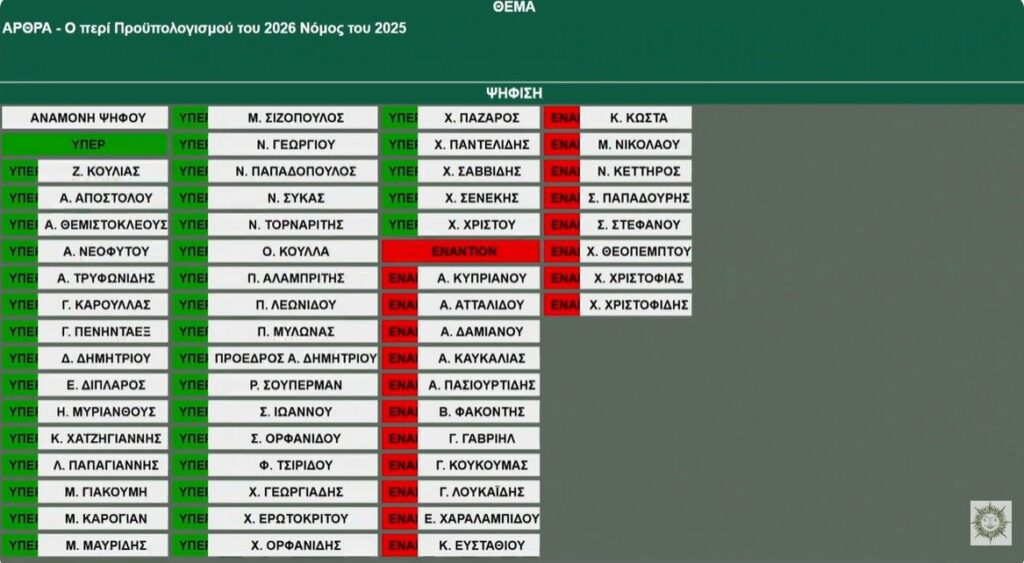
2026 State Budget Visual Representation

For additional details on the extensive parliamentary debates and the amendment process, please refer to the in-depth coverage of the budget deliberations.


India Revamps Deep Tech Startup Framework With New Capital Support

India is making a bold strategic shift in its deep tech landscape by adjusting startup regulations and directing public capital towards sectors that demand sustained development, including space, semiconductors, and biotech.

Extended Timeline For Deep Tech Maturation

The Indian government has recently updated its startup framework, as announced by the Press Information Bureau. The period during which deep tech companies enjoy starter benefits has been doubled to 20 years, and the revenue threshold for specialized tax breaks, grants, and regulatory benefits has increased from ₹1 billion to ₹3 billion (approximately $33.12 million). This recalibration is designed to align policy parameters with the long gestation periods inherent in science- and engineering-driven enterprises.

Public Capital And the RDI Fund

Alongside regulatory reforms, New Delhi is expanding public investment in research and innovation. The ₹1 trillion Research, Development and Innovation Fund is intended to provide long-term financing for technology-intensive companies. The initiative is supported by the creation of the India Deep Tech Alliance, a network of U.S. and Indian venture capital firms including Accel, Blume Ventures and Kalaari Capital, with advisory input from Nvidia. The goal is to ease fundraising pressures and improve access to follow-on capital.

Addressing The False Failure Signal

The extension of regulatory benefits addresses a long-standing issue in the deep tech sector. As Vishesh Rajaram, founding partner at Speciale Invest, explained, the previous framework risked penalizing pre-commercial companies by forcing them to exit startup status prematurely. The new reforms recognize the unique developmental timelines of deep tech firms, thus reducing friction in fundraising negotiations and state engagement.

Investor Perspectives And The Funding Landscape

While regulatory clarity enhances investor confidence, funding beyond early stages remains a significant hurdle. Arun Kumar, managing partner at Celesta Capital, emphasized that the RDI Fund’s role is to deepen support for capital-intensive ventures without compromising the commercial metrics that guide private investments. Siddarth Pai of 3one4 Capital noted that the revised framework also avoids the traditional “graduation cliff” that once isolated companies at critical growth junctures, potentially deterring them from scaling domestically.

Deep Tech Funding Trends And Global Comparisons

India’s deep tech sector remains smaller than those of the United States and China, but recent data shows renewed momentum. According to Tracxn, Indian deep tech startups raised about $1.65 billion in 2025, up from roughly $1.1 billion in previous years. The increase aligns with national priorities in advanced manufacturing, defense technology, climate solutions and semiconductor production.

Long-Term Implications And Global Competitiveness

For international investors, the reforms signal a longer-term policy commitment. Extending the startup lifecycle reduces regulatory uncertainty and supports investment strategies that depend on extended research and product development phases. Analysts suggest the changes bring India closer to funding models commonly seen in the U.S. and Europe.

Ultimately, the effectiveness of the reforms will depend on whether they lead to a critical mass of globally competitive Indian deep tech companies. A more mature ecosystem could encourage domestic listings and reduce the need for startups to relocate abroad.

India’s regulatory and financial adjustments aim not only to solve immediate operational challenges for founders but also to build a stronger foundation for long-term technological competitiveness.

Aretilaw firm
The Future Forbes Realty Global Properties
eCredo
Uol

Become a Speaker

Become a Speaker

Become a Partner

Subscribe for our weekly newsletter