Breaking news

Cyprus Parliament Endorses 2026 State Budget With Strategic Reforms

Parliamentary Approval And Key Statistics

After an intensive three‐day debate at the OLOMELEIA, the Cyprus Parliament has ratified the state budget for 2026 along with significant amendments proposed by various political factions. The measure passed with 37 votes in favor and 19 against, mirroring the diverse political landscape. Notable supporters include DI.SY, DI.KO, EDEK, ELAM, DIPA, and independent legislators such as Michalis Giakoumi, Andreas Apostolou, and Andreas Themistocleous, while opposition came from AKEL, the Movement of Ecologists, Alexandra Attalidi, and Kostis Efstathious.

Fiscal Projections And Strategic Investments

The 2026 budget earmarks primary expenditures of €10.7 billion, representing an increase of approximately €508 million (5.0%) compared to the previous year. In addition, developmental spending is projected to rise by 4.7% and social benefits—which encompass education, healthcare, and welfare—by 6.7%. Notably, this budget stands as the final financial framework under the current parliamentary term ahead of the May elections.

Key Amendments And Infrastructure Commitments

Among the 92 submitted amendments, several pivotal changes received approval. These include safeguards against reductions in state spending related to the privatization of public sector entities, with exceptions for leading infrastructural projects such as the development of the Troodos region, enhancements at the Cyprus Stock Exchange, and the expansion of Larnaca Marina. Further allocations include funding for the master plan in the Vasiliko area, the inaugural phase of Macedonia Avenue, and investments aimed at upgrading primary road networks in municipalities, along with social housing and welfare initiatives.

Closing Insights

This decisive budget approval marks a critical juncture in Cyprus’s fiscal policy, underscoring a commitment to balanced economic growth and infrastructural modernization. As the nation prepares for upcoming parliamentary elections, the 2026 budget reflects both continuity in current policy directions and an ambitious roadmap for future development.
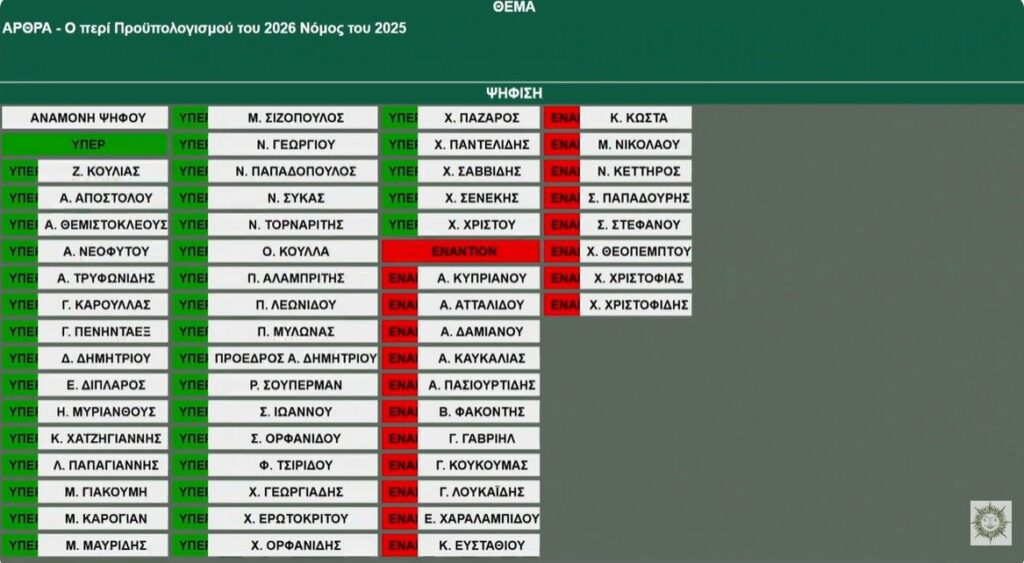
2026 State Budget Visual Representation

For additional details on the extensive parliamentary debates and the amendment process, please refer to the in-depth coverage of the budget deliberations.

ECB Launches Geopolitical Stress Tests For 110 Eurozone Banks

The European Central Bank is preparing a new round of geopolitical stress tests aimed at assessing potential risks to major financial institutions across the euro area. Up to 110 systemic banks, including institutions in Greece and the Bank of Cyprus, will take part in the exercise, which examines how geopolitical events could affect financial stability.

Timeline And Testing Process

Banks are expected to submit initial data on March 16, 2026. Supervisors will review the information in April, while the final results are scheduled to be published in July 2026. The process forms part of the ECB’s broader supervisory work to evaluate financial system resilience under different risk scenarios.

Geopolitical Shock As The Primary Concern

The stress tests place particular emphasis on geopolitical risks. These may include armed conflicts, economic sanctions, cyberattacks and energy supply disruptions. Such events can affect banks through changes in market conditions, borrower solvency and sector exposure. Lending portfolios linked to regions or industries affected by geopolitical developments may face higher risk levels.

Reverse Stress Testing: A Tailored Approach

Unlike traditional stress tests that apply the same scenario to all institutions, the reverse stress test requires each bank to define a scenario that could significantly affect its capital position. Banks must identify a geopolitical shock that could reduce their Common Equity Tier 1 (CET1) ratio by at least 300 basis points. Institutions are also expected to assess potential effects on liquidity, funding conditions and broader economic indicators such as GDP and unemployment.

Customized Risk Assessments And Supervisor Collaboration

This methodology allows banks to submit risk assessments based on their own exposures and operational structures. The approach is intended to help supervisors understand how geopolitical events could affect institutions differently and to support discussions between banks and regulators on risk management and contingency planning.

Differentiated Vulnerabilities Across Countries

A joint report by the ECB and the European Systemic Risk Board indicates that countries respond differently to geopolitical shocks. The Russian invasion of Ukraine led to higher energy prices and inflation across Europe, prompting central banks to raise interest rates. Belgium, Italy, the Netherlands, Greece and Austria experienced increases in borrowing costs and lower investor confidence. Germany, France and Portugal recorded more moderate changes, while Spain, Malta, Latvia and Finland showed intermediate levels of exposure.

Conclusion

The geopolitical stress tests will not immediately lead to additional capital requirements for banks. Their results will feed into the Supervisory Review and Evaluation Process (SREP). ECB supervisors may use the findings when assessing capital adequacy, risk management practices and operational resilience at individual institutions.

Uol
The Future Forbes Realty Global Properties
eCredo
Aretilaw firm

Become a Speaker

Become a Speaker

Become a Partner

Subscribe for our weekly newsletter
