Breaking news

Cyprus Increases Social Spending Amid Robust Economic Growth

The President of the Republic, Nikos Christodoulidis, recently underscored the critical link between positive economic indicators and elevated social expenditures during a high-level meeting at the Presidential Palace. Attended by representatives from the Cyprus Federation of Organizations of People with Disabilities (ΚΥΣΟΑ), the Cyprus Federation of Associations of Patients (ΟΣΑΚ), and the Third Age Observatory, the discussions highlighted how a thriving economy can foster comprehensive social support programs.

Economic Resilience Fuels Public Investments

According to government plans, social expenditure is expected to increase in 2024 and 2025, with a larger expansion projected for 2026. Officials said the fiscal framework includes a planned 6% rise in social spending as part of broader budget priorities. The government says the increase is supported by improved economic indicators and aims to reinforce public support systems.

Collaborative Governance With Social Partners

President Christodoulidis emphasized that the government treats social organizations as strategic partners. The administration’s policies and initiatives are built on an ongoing dialogue with these community stakeholders, ensuring that every measure is aligned with the pressing needs and priorities of the citizens. This collaborative approach underscores the state’s commitment to societal well‐being and its determination to address the minimum obligations owed to its populace.
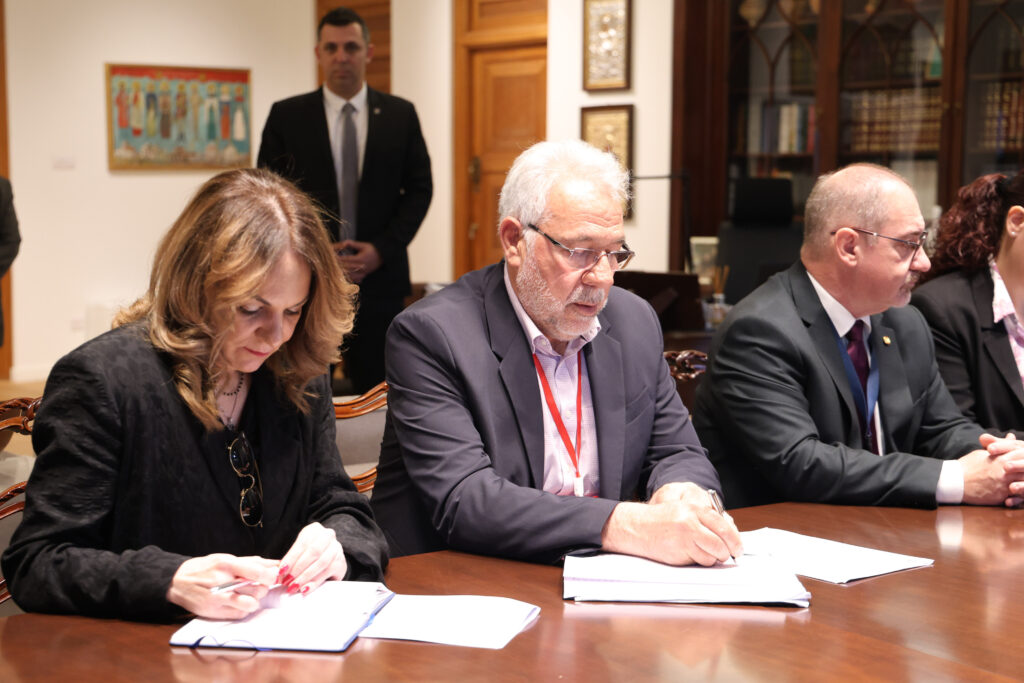
President Nikos Christodoulidis meeting with social representatives
President Christodoulidis meets with representatives from ΚΥΣΟΑ, ΟΣΑΚ, and the Third Age Observatory at the Presidential Palace in Nicosia, Cyprus.

Strategic Measures for Social Cohesion

Beyond planned budget increases, the government said it is evaluating additional targeted measures aimed at strengthening social cohesion and improving support for vulnerable populations. Officials argue that combining fiscal stability with social investment remains central to Cyprus’ broader economic and social policy strategy.

Copyright Law Struggles To Keep Up With AI Training

Courts Are Still Applying Old Copyright Rules To AI

AI companies train models on enormous amounts of published material, including books, articles and academic research. Whether using that content without authors’ permission violates copyright law remains unresolved.

Much of the debate centres on fair use, which allows copyrighted material to be used without permission in certain circumstances. Courts consider factors such as the purpose of the use, how much material was involved and its impact on the original market.

Anthropic Case Sets An Important Precedent

A major case involving Anthropic and a group of authors provided one of the clearest rulings so far. Judge William Alsup found that using copyrighted books to train AI models was lawful, comparing the process to people reading and studying literature before creating something new.

Anthropic was nevertheless ordered to pay $1.5 billion in a settlement. The penalty concerned books the company had obtained from illegal online libraries rather than the AI training itself.

For AI companies, that distinction could prove significant because it separates studying copyrighted material from directly copying it.

Competition Could Be The Key Issue

A case involving Thomson Reuters and Ross Intelligence offers a different perspective. A court ruled that Ross could not claim fair use after using Reuters’ copyrighted material to develop a competing AI-powered legal research platform.

The decision suggests courts may be less willing to consider AI training fair use when copyrighted content is used to build a product that directly competes with the original.

For authors, an unresolved question is whether AI-generated content should be considered competition for the works used to train these models.

The Law Has Yet To Catch Up

US copyright law predates generative AI by decades, leaving courts to apply old principles to new technology. Questions also remain over copyright protection for AI-generated works. In Thaler v. Perlmutter, a court ruled that material created entirely by AI cannot receive copyright protection.

Major AI companies remain involved in copyright litigation, and different courts could reach different conclusions. For now, there is no universal rule: the legality of AI training will depend on the circumstances of each case and how courts ultimately interpret copyright and fair use.

eCredo
The Future Forbes Realty Global Properties
Aretilaw firm
Uol

Become a Speaker

Become a Speaker

Become a Partner

Subscribe for our weekly newsletter
