The Minister of Labour and Social Insurance, Yannis Panayiotou, has unveiled an ambitious plan to bring Cyprus’s unemployment rate below 5%. Speaking on Friday at the presentation of the Ministry’s 2025 budget to the Finance Parliamentary Committee, the Minister outlined key strategies and increased funding to meet this objective.
Boosted Budget for Economic Growth
To support this target, the Ministry’s 2025 budget will increase by €84 million compared to 2024, reaching a total of €884 million. Minister Panayiotou attributed the rise in the Ministry’s revenues to the expanding Cypriot economy, which has led to higher contributions to the Social Insurance Fund thanks to an increasing workforce.
“The creation of full employment conditions for the domestic workforce is a challenging goal, but one we believe is achievable,” the Minister remarked.
Exceeding Expectations
The Labour Minister highlighted that the unemployment rate for 2024 is projected to fall below 5.5%, surpassing the initial target of 5.8%. These positive trends underscore the effectiveness of current strategies and provide a strong foundation for achieving even lower unemployment rates in the years ahead.
Focus on Key Demographics
Minister Panayiotou noted that unemployment primarily affects two groups: young people under 30 and adults over 55. To address this, the Ministry is developing targeted programs aimed at integrating these demographics into the workforce.
He also emphasised the long-term benefits of early workforce entry, pointing out that earlier participation strengthens the Social Insurance Fund and secures better pensions for workers.
Looking Ahead
As Cyprus continues to experience economic growth, the Ministry’s renewed focus on reducing unemployment and supporting vulnerable groups is expected to yield significant results. With a clear strategy and increased resources, the government is committed to fostering a robust and inclusive labour market for all.
Microsoft Faces US Antitrust Investigation Amid Concerns Over Cloud And AI Practices
Microsoft is under scrutiny as the US Federal Trade Commission (FTC) launches a comprehensive antitrust investigation into the tech giant’s business practices. The probe will assess operations across multiple sectors, including cloud computing, software licensing, cybersecurity services, and artificial intelligence.
Key Developments
The FTC has reportedly requested extensive information from Microsoft as part of its investigation, following a year-long preliminary inquiry involving interviews with competitors and business partners.
The investigation, backed by FTC Chair Lina Khan, could face uncertainty if she steps down in January, as anticipated under a new administration. A Republican successor is expected to adopt a more lenient stance toward tech firms.
Microsoft has not issued a statement in response to the ongoing inquiry.
This is not Microsoft’s first encounter with antitrust scrutiny. Competitors have accused the company of restrictive practices, including allegedly locking customers into its Azure cloud services and using licensing policies that critics argue disadvantage rival platforms.
In a related development, Google recently filed a complaint with the European Commission, alleging that Microsoft imposed a 400% premium on customers seeking to use Windows Server with competing cloud providers. Google also claimed Microsoft restricted access to critical security updates for those customers.
Ongoing Tech Sector Probes
Microsoft’s investigation comes amid broader antitrust actions targeting major US tech companies.
Meta (Facebook’s parent), Apple, and Amazon have faced accusations of monopolistic practices.
Google is defending itself in two high-profile lawsuits, including one concerning competition violations in online search.
In the coming days, FTC lawyers are expected to meet with Microsoft’s competitors to gather further evidence on its business practices. This investigation could have significant implications for the company and the broader tech industry, as authorities worldwide continue to challenge the dominance of tech giants.
Microsoft’s future may hinge on how it addresses these mounting regulatory pressures, particularly as the focus sharpens on its role in cloud computing and AI innovation.
India Adjusts EV Manufacturing Incentives After Tesla’s Exit
India is revamping its electric vehicle (EV) incentive policy to attract broader automaker participation after Tesla abandoned its plans for local manufacturing earlier this year. The revised scheme will now extend benefits to automakers producing EVs at existing factories, in addition to those building new plants, aiming to accelerate domestic EV production.
The original policy, launched in March, offers a significant tax reduction for automakers investing $500 million or more in EV production. Import taxes, which can reach up to 100%, are slashed to 15% for up to 8,000 EVs annually, provided that at least 50% of components are sourced locally.
The updated policy allows automakers to count investments in EV production lines within existing facilities toward the $500 million threshold, as long as they meet local sourcing criteria. New factories can include machinery costs for EV production even if the equipment is used for other vehicles. Automakers must also meet minimum revenue targets from EV sales to qualify for these benefits.
Toyota, Hyundai, and Volkswagen have expressed interest in the revised policy but have sought clarifications. Toyota asked if investments in separate assembly lines within multi-powertrain plants would qualify, while Hyundai queried whether R&D expenses could be included in the investment total. The government clarified that R&D costs will not count, but investments in charging infrastructure remain under discussion.
India plans to finalise the policy by March 2025, reflecting its aim to establish the country as a major hub for global EV manufacturing while addressing automaker concerns and ensuring fair participation.
Cyprus Sees Decline In Loans And Rise In Deposits In October 2024
Cyprus experienced contrasting financial trends in October 2024, with total loans decreasing by €213 million while deposits increased by €377.6 million, according to data released by the Central Bank of Cyprus.
Deposits on the Rise
Total deposits reached €54.6 billion in October, recording a net increase of €377.6 million compared to a €485.7 million rise in September. The annual growth rate of deposits climbed to 5.4%, up from 4.5% the previous month.
Deposits by Cypriot residents contributed significantly, with an increase of €230.2 million. Within this category:
Household deposits rose by €64.9 million.
Deposits from non-financial corporations increased by €115.8 million.
Other domestic sectors added €49.4 million to the total.
Loans Continue to Decline
The total loan portfolio shrank to €24.8 billion in October, following a €213 million net decrease, in contrast to a €107.3 million increase in September. The annual growth rate of loans remained steady at 2%.
Loans to Cypriot residents dropped by €130.4 million, with mixed performance across sectors:
Household loans saw a modest increase of €9.4 million.
Loans to non-financial corporations declined sharply by €132.2 million.
Other domestic sectors recorded a €7.6 million reduction in loans.
Key Insights
The data suggests a cautious approach by borrowers amid economic conditions, alongside growing confidence in savings, as reflected by the increase in deposits. This trend highlights a shift in financial behaviour within Cyprus, with implications for lending strategies and deposit incentives in the coming months.
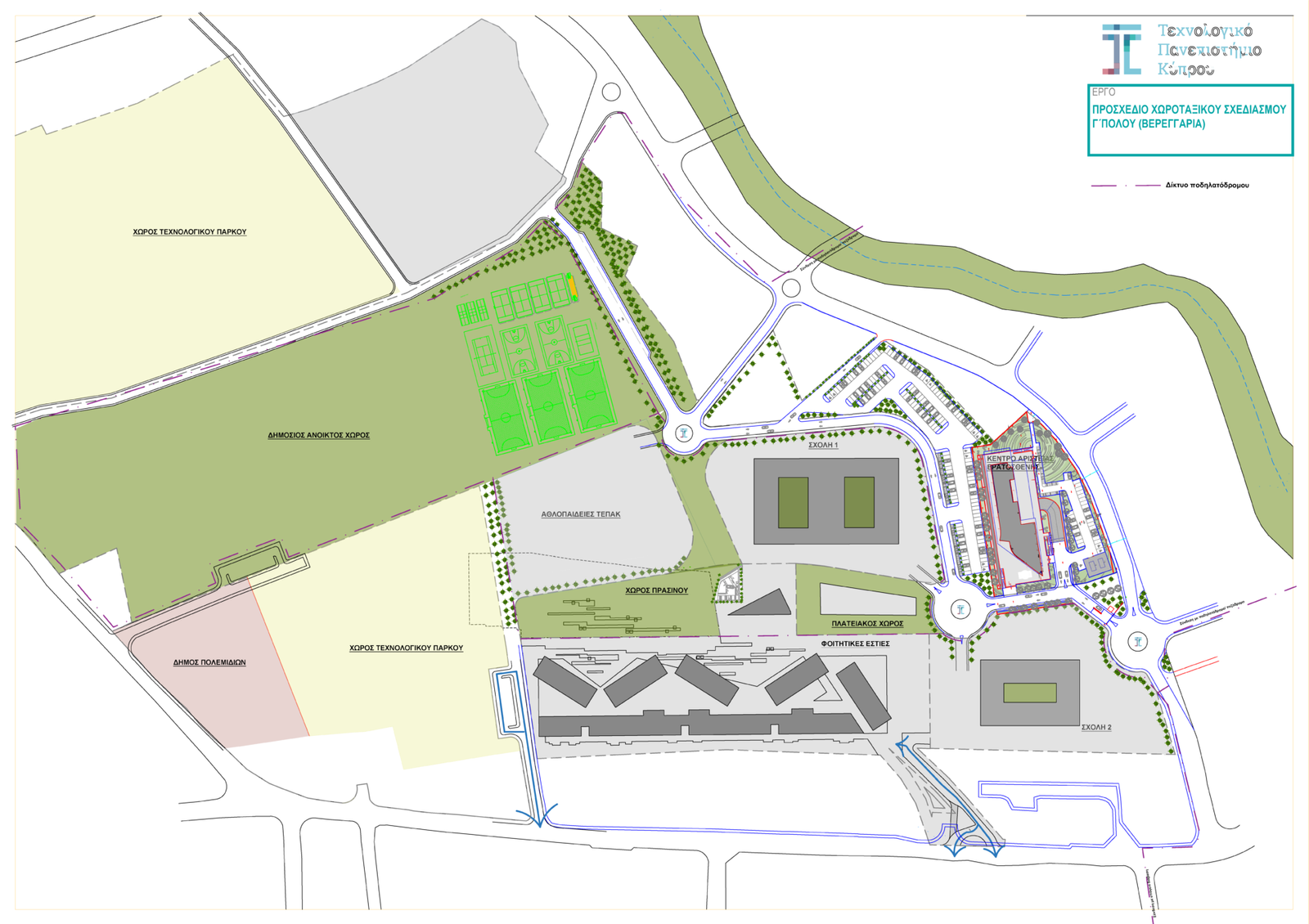
MOU Signing Between CUT And CARIE For The Creation Of A Technology Park In “Vereggaria”
The protocol was signed by the Rector of CUT, Professor Panagiotis Zaphiris, and the President of the Association, Dr. Tasos Kounoudes, during a special ceremony held at the Rectorate building. The President of the University’s Council, Mr. Costas Galatariotis, also attended the event.
The collaboration between CUT and CARIE aims to create a favorable environment for linking the university with Cyprus’ high-tech industry. The focus is on producing innovative Cypriot products with an export orientation. As part of this effort, the development of a Technology Park is expected to act as a catalyst for enhancing research and innovation while creating an ecosystem that offers significant benefits for the university, innovative Cypriot businesses, and the local and broader community.
The partnership also includes participation in cutting-edge research programs, such as artificial intelligence, biotechnology, and microelectronics. It provides opportunities for student internships and the potential employment of university graduates by association members. Moreover, it ensures access to advanced research and development infrastructure, while promoting the creation of a conducive environment for developing start-ups and spin-offs connected to the university. These initiatives aim to strengthen innovation and link academia with the job market.
The collaboration is expected to contribute to the creation of new jobs, attract investment to the area, and boost business activity, establishing the region as a center of excellence in high technology. It will also enhance the quality of life by fostering a dynamic innovation ecosystem and promoting lifelong learning through education and cooperation initiatives. To effectively achieve the protocol’s objectives, the formation of joint working groups and committees is planned.
Speaking at the event, the Rector of CUT, Professor Panagiotis Zaphiris, stated, “Today is an important day for CUT, as our longstanding collaboration with CARIE and its member companies is being elevated through this MOU signing.”
While the protocol primarily focuses on the creation of the Technology Park in “Vereggaria,” he added, it also includes many other initiatives, “forming a comprehensive framework that will bring us even closer. The creation of a Technology Park, which has been in the works for some time, will boost the research sector, creating a space where academic entities, start-ups, laboratories, and companies can coexist, offering opportunities for synergies and innovation,” he concluded.
On his part, the President of CARIE, Dr. Tasos Kounoudes, highlighted the long-standing and excellent cooperation between the Association and CUT. He emphasized the importance of enhancing this partnership through the signing of the MOU for the establishment of the Technology Park.
“Our Association, comprising 40 companies employing over 1,000 researchers and contributing €1.5 billion to the Cypriot economy, possesses a unique applied research infrastructure already collaborating with the University. With this new collaboration, students will gain more opportunities for internships and employment, while the benefits for innovation and the industrialization of research results are expected to increase significantly,” he noted.
In his address, the President of CUT’s Council, Mr. Costas Galatariotis, mentioned that “the collaboration with CARIE aims to maximize synergies between the academic community, the real economy, and industry—a model proven highly effective in advanced countries.”
He noted that the Technology Park would combine research, technology, and education, forming a comprehensive academic ecosystem. “We hope the Council of Ministers will officially approve the site allocation before Christmas,” he said, expressing CUT’s gratitude to the Municipality of Polemidia for its cooperation and support.
Cyprus Nears US Visa Waiver Program As Refusal Rate Drops Below 3%
Cyprus has achieved a significant milestone in its efforts to join the US Visa Waiver Program, with the 2024 visa refusal rate for Cypriot citizens reported at just 2.16%. This figure, announced by the US Department of State, is well below the program’s required threshold of 3%, marking a crucial step toward visa-free travel for Cypriots.
Progress Towards Inclusion
Deputy Minister to the President, Irene Piki, highlighted the importance of this development, stating that Cyprus has met a “key prerequisite” for its inclusion in the program. She credited the progress to successful technical consultations between Cyprus and the United States over the past year.
Piki reaffirmed the government’s commitment to securing Cyprus’ inclusion in the program by 2025, allowing Cypriots to travel to the US for tourism and business without the need for a visa.
Support from US Officials
US Ambassador to Cyprus, Julie Fisher, also acknowledged the milestone, describing it as a significant step forward. She expressed optimism that Cypriots would soon enjoy the benefits of visa-free travel to the US.
What’s Next?
The Cypriot government plans to continue its focused efforts to meet all remaining requirements, ensuring the process stays on track. This achievement underscores the growing cooperation between Cyprus and the US, paving the way for stronger ties and easier travel.
As Cyprus moves closer to this goal, the prospect of visa-free access to the US represents an important development for both business and leisure travellers.
European Parliament Approves Nearly €200 Billion Budget For 2025
The European Parliament has officially approved the European Union’s 2025 budget, amounting to an impressive €199.4 billion. The budget reflects a 6% increase compared to 2024, showcasing the EU’s commitment to addressing key challenges and investing in its future.
Focused Investments
The budget prioritises programmes designed to enhance citizens’ quality of life, foster competitiveness, and address pressing challenges. Over €230 million has been added to key initiatives, including:
“Erasmus+” Programme: An additional €422 million will support education, training, youth, and sports across the EU.
“Horizon Europe” Programme: A €20 million boost for scientific research and innovation.
Support for Strategic Goals and Crisis Management
Funding is allocated to Ukraine aid and critical technology investments through the Strategic Technology Platform for Europe (STEP).
Financial provisions for Next Generation EU interest payments are included.
Additional resources are set aside for natural disaster emergency aid and humanitarian crises, both within and beyond EU borders.
This ambitious budget underscores the EU’s strategic focus on fostering innovation, supporting education, and responding to global and regional challenges. By securing substantial funding increases across critical programmes, the EU aims to ensure sustainable growth and resilience in the face of uncertainty.
Asian Stocks Dip As Dollar Wavers Before Thanksgiving
Asian markets saw subdued activity on Thursday, with investors exercising caution amid mixed economic signals and the upcoming US Thanksgiving holiday, which is expected to thin trading volumes. The MSCI Asia-Pacific Index edged down 0.07%, while Japan’s Nikkei rose modestly by 0.46%.
The cautious tone in markets reflects uncertainty over the Federal Reserve’s policy path. US data showed that while consumer spending in October outpaced expectations, progress in reducing inflation toward the Fed’s 2% target has stalled. This, combined with the potential for renewed trade tariffs under the Trump administration, raises questions about the Fed’s flexibility to continue rate cuts in 2024.
While a 25-basis-point rate cut in December is still widely expected, divisions among Federal Open Market Committee members signal uncertainty about future policy moves. Traders currently assign a 65% probability to a December cut, with further easing anticipated through 2025.
In South Korea, the central bank surprised markets by lowering its benchmark interest rate for a second straight meeting, aiming to support an economy hindered by weak growth and slowing inflation. The South Korean won depreciated following the decision.
The yen fell 0.3% to 151.615 per dollar but remained near a recent one-month high as expectations for a Bank of Japan rate hike next month boosted the currency’s outlook. Meanwhile, the euro held steady after gaining 0.7% in the previous session, supported by cautious comments from European Central Bank officials advocating a measured approach to rate adjustments.
In commodity markets, oil prices remained steady after a ceasefire agreement between Israel and Hezbollah alleviated supply concerns. Brent crude hovered at $72.80 per barrel, and US West Texas Intermediate stayed at $68.70. Gold prices softened slightly to $2,626 per ounce.
With inflation concerns, policy uncertainties, and global events shaping sentiment, traders remain hesitant to take bold positions, preferring to wait for clearer signals in the weeks ahead.
South Korea Leads the Way: 10% Of Workforce Replaced By Robots
South Korea has made history as the first country to have robots account for over 10% of its industrial workforce, marking a milestone in automation and technological advancement. This achievement highlights the nation’s proactive approach to addressing a declining working-age population due to persistently low birth rates.
Key Facts and Figures
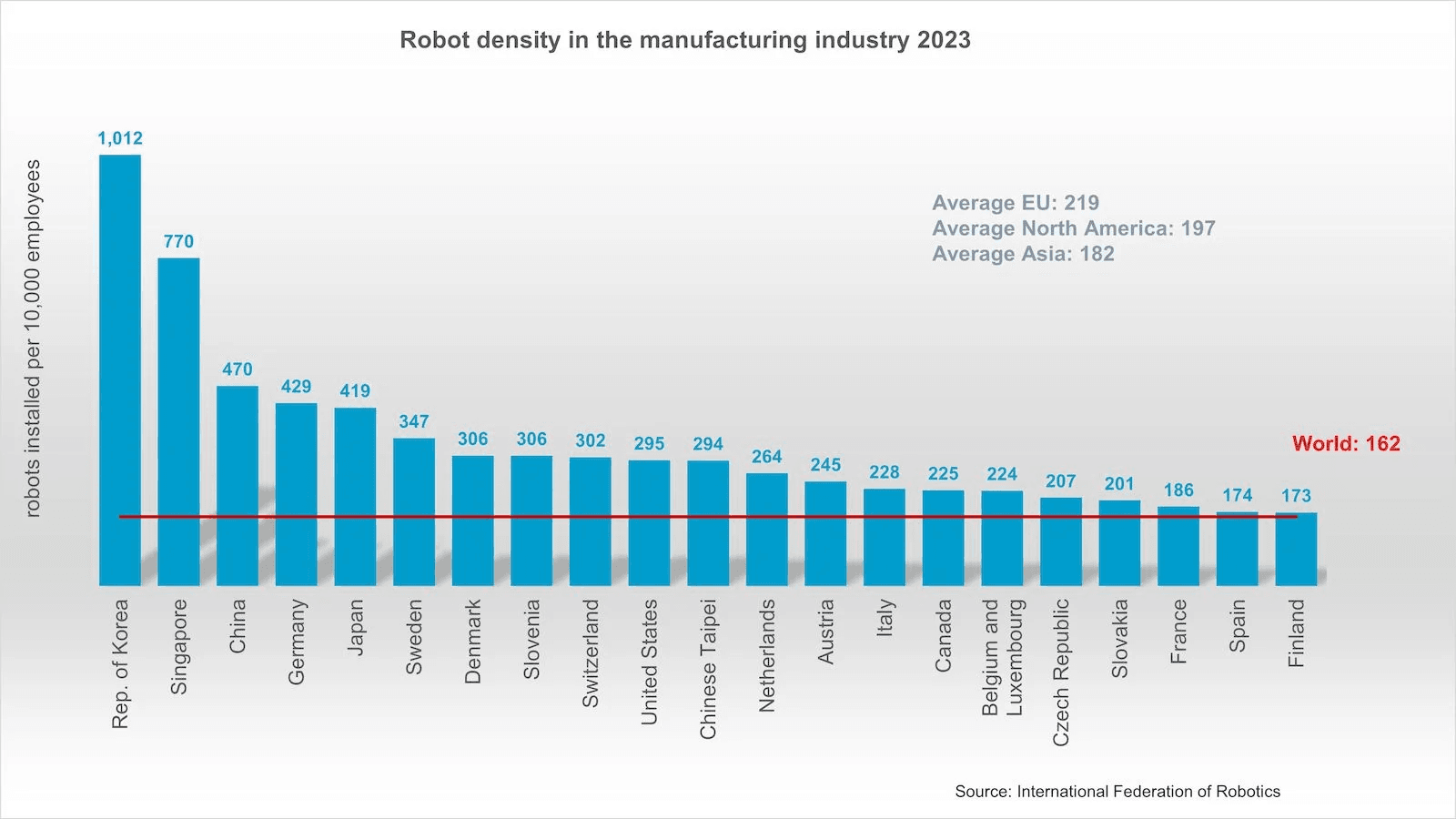
According to the World Robotics 2024 report, South Korea now boasts a staggering 1,102 robots per 10,000 employees—the highest robot density globally. This figure is more than double that of every other country in the ranking, except Singapore, which follows with 770 robots per 10,000 workers.
Since 2018, robot density in South Korea has grown by an average of 5% annually. The nation’s electronics and automotive industries, two major pillars of its economy, are among the largest consumers of industrial robots. Globally, robot density has also seen significant growth, doubling over the past seven years from 74 to 162 units per 10,000 employees.
Expanding Beyond Factories
South Korea’s use of robots extends far beyond manufacturing. Robots now operate in diverse fields, including healthcare, hospitality, agriculture, and even defense. Hospitals employ robots to assist with surgeries, while restaurants use them for food preparation and delivery.
Government’s Vision and Investment
This progress has been fueled by substantial investment from the South Korean government, which views robotics as a solution to its workforce challenges. Earlier this year, the Ministry of Trade, Industry, and Energy introduced the Fourth Intelligent Robot Basic Plan, committing $2.4 billion to the development of the robotics sector by 2030.
The plan outlines a strategic approach to integrating robots into critical industries, such as logistics, healthcare, and social safety. It also sets an ambitious target to increase the local production of core robot components from 44% to 80% by 2030, ensuring a self-reliant and competitive robotics industry.
A Model for the Future
South Korea’s advancements in robotics illustrate how technology can address societal challenges like population decline while driving economic innovation. With its continued investment and adoption of robots across various industries, the country is setting a benchmark for others to follow in the age of automation.
The cryptocurrency market faced a significant downturn as Bitcoin retreated further from the highly anticipated $100,000 milestone. Investor profit-taking following a post-election rally triggered a sharp drop, erasing $182 billion from the market’s capitalization, which now stands at $3.35 trillion.
Key Developments
Bitcoin Drops: The price of Bitcoin declined 3.6% in the last 24 hours to just above $92,311, marking a 6.2% loss for the week.
Election Rally Reversed: The drop follows a rally spurred by the election of Republican Donald Trump, whose administration promised crypto-friendly policies. The optimism pushed Bitcoin close to $100,000, peaking at $99,000.
Altcoins Follow Suit: Other major cryptocurrencies also saw declines. Ether, the second-largest token, fell 4.2% to $3,346, while Solana’s Sol token dropped 8.9% to $231.88.
Broader Context
Bitcoin has surged 122% year-to-date, buoyed by favourable macroeconomic factors. The SEC’s approval of spot Bitcoin ETFs in January and the cryptocurrency’s halving event in April have been major catalysts. Central banks’ interest rate cuts and increased market liquidity have also provided a supportive backdrop for digital assets.
Despite the current slump, market analysts remain optimistic about Bitcoin’s long-term potential. Many believe the cryptocurrency still has room to rise, with the $100,000 benchmark viewed as an achievable milestone.
As the crypto market adjusts, investor sentiment will likely hinge on regulatory developments and macroeconomic trends in the coming months.
Manage Cookie Consent
We use cookies to enhance your browsing experience. By clicking "Accept All", you consent to our use of cookies. Privacy Policy
Functional
Always active
The technical storage or access is strictly necessary for the legitimate purpose of enabling the use of a specific service explicitly requested by the subscriber or user, or for the sole purpose of carrying out the transmission of a communication over an electronic communications network.
Preferences
The technical storage or access is necessary for the legitimate purpose of storing preferences that are not requested by the subscriber or user.
Statistics
The technical storage or access that is used exclusively for statistical purposes.The technical storage or access that is used exclusively for anonymous statistical purposes. Without a subpoena, voluntary compliance on the part of your Internet Service Provider, or additional records from a third party, information stored or retrieved for this purpose alone cannot usually be used to identify you.
Marketing
The technical storage or access is required to create user profiles to send advertising, or to track the user on a website or across several websites for similar marketing purposes.