Breaking news

Prada Eyeing Versace Acquisition Amid Capri Holdings’ Strategic Sale

Iconic Italian fashion house Prada is reportedly among the potential suitors interested in acquiring Versace, according to a report from Il Sole 24 Ore. The potential sale comes as Capri Holdings explores strategic options for its brands, including Versace and Jimmy Choo, following the collapse of an $8.5 billion deal with Tapestry in November 2024.

Prada’s Potential Move

Prada, known for its minimalist and intellectual designs under the creative leadership of Miuccia Prada, is said to be examining the opportunity alongside Citi, with whom it has collaborated in the past. However, neither Prada nor Citi has commented on the matter.

Capri’s Challenges And Strategic Options

Capri Holdings, which owns Versace, Jimmy Choo, and Michael Kors, has faced challenges due to execution missteps and a global slowdown in luxury demand. The group’s revenue for the fiscal year ending March 30, 2024, totaled $5.2 billion, with Versace contributing $1 billion, roughly 20% of the total.

After the failed merger with Coach-owner Tapestry, Capri has engaged Barclays to assess strategic alternatives, including the potential sale of individual brands or the entire group.

Versace’s Legacy And Market Appeal

Founded in 1978 by Gianni Versace, the Milan-based brand is synonymous with bold, opulent designs and its iconic Medusa motif. Under Donatella Versace’s creative direction, the brand remains a symbol of luxury and glamour, making it an attractive acquisition target.

Prada’s Strength Amid Industry Challenges

Despite a global downturn in luxury goods, Prada has shown resilience, reporting an 18% sales growth at constant currencies in the third quarter of 2024. An acquisition of Versace could complement Prada’s portfolio, combining the former’s bold aesthetic with Prada’s intellectual design ethos.

The Road Ahead

While the potential acquisition of Versace by Prada remains speculative, the move highlights a broader consolidation trend in the luxury industry. As Capri Holdings navigates its strategic review, the sale of Versace could significantly reshape the competitive landscape of high fashion.

La Niña Climate Phenomenon: What You Need To Know

Meteorologists have confirmed that La Niña, a natural climate phenomenon, has officially set in, bringing its characteristic weather patterns. Cooler-than-average sea surface temperatures in the Pacific Ocean are influencing global weather, with significant implications for precipitation, temperatures, and extreme weather events.

Key Facts About La Niña 2025

  • Emergence and Duration: La Niña conditions began in December 2024 and are expected to persist until April 2025. This event is forecasted to be weaker than previous occurrences, with a reduced impact on global precipitation and temperatures.
  • Core Characteristics: La Niña is marked by cooler-than-average sea surface temperatures in parts of the Pacific, in contrast to El Niño, which brings warmer-than-average temperatures.
  • Jet Stream Impact: The cooler sea temperatures shift the jet stream northward, decreasing precipitation in the southern U.S. while increasing flood risks in the Pacific Northwest and Canada, as per the National Oceanic and Atmospheric Administration (NOAA).

Understanding La Niña And Its Global Influence

La Niña and El Niño are opposing phases of the El Niño-Southern Oscillation (ENSO), a periodic climate cycle driven by interactions between the ocean and atmosphere in the Pacific. These phenomena occur every three to five years on average, with La Niña typically lasting about 15.4 months, compared to El Niño’s 9.5 months.

Key insights include:

  • Historical Context: The longest La Niña on record lasted 37 months (1973–1976).
  • Climate Change Implications: Research suggests climate change could amplify the intensity and frequency of extreme weather events linked to ENSO, such as heavy rainfall, severe droughts, and temperature anomalies.

What This Means For 2025

While this La Niña event is expected to have a milder impact, it highlights critical aspects of Earth’s climate system and its vulnerabilities. NOAA has already noted potential temperature records and variable weather patterns, underscoring the need for global preparedness.

A Window Into Climate Dynamics

La Niña is more than just a weather event; it’s a reflection of the intricate dance between the Earth’s ocean and atmosphere. As we navigate its challenges, it offers valuable insights into our planet’s climate systems, helping us adapt to a changing world.

The Top 10 Most Exciting Gadgets Unveiled At CES 2025

The tech world is buzzing with the latest innovations showcased at CES 2025 in Las Vegas. Packed with cutting-edge gadgets and powered by artificial intelligence, this year’s event has set a new benchmark for the future of consumer tech. Here are ten standout products from the show so far:

1. Nvidia GeForce RTX 50-Series: Redefining PC Graphics

Nvidia captured headlines with the unveiling of its RTX 50-series GPUs, featuring groundbreaking capabilities. With 92 billion transistors and an incredible 3,352 trillion AI operations per second (TOPS), these processors promise an 8x performance boost using DLSS 4, offering gamers unparalleled realism and performance.

2. Samsung Frame Pro: AI Meets Aesthetics

Samsung introduced the Frame Pro, a revolutionary smart TV featuring a NeoQLED display and a wireless One Connect Box for clutter-free design. The game-changer? Samsung Vision AI, which adapts the display to the viewer’s preferences and environment, makes every interaction seamless.

3. LG G5: The Ultimate OLED TV

LG’s G5 OLED TV sets a new standard for gaming and entertainment. It’s the first TV certified for AMD FreeSync and Nvidia G-Sync with a 165Hz refresh rate. Equipped with Brightness Booster Ultimate, it’s three times brighter than previous models, solidifying LG’s position as a leader in display technology.

4. Hisense TriChroma Mini-LED: TV Innovation At Its Best

Hisense’s 116-inch TriChroma Mini-LED dazzled with RGB local dimming technology, delivering unparalleled brightness and colour accuracy. It’s a masterpiece of engineering that redefines LED TV performance.

5. BMW Panoramic iDrive: Futuristic Driving Experience

BMW showcased its panoramic iDrive system, complete with a 3D head-up display and advanced AI assistant. The system offers real-time, augmented navigation and unprecedented personalization, slated for rollout across all BMW models by late 2025.

6. Asus Zenbook A14: The Pinnacle Of Sleek Computing

Asus raised the bar with the Zenbook A14, crafted from a revolutionary ceramic-metal hybrid. Lightweight, durable, and featuring the latest Snapdragon® X processor, it combines power and portability for professionals on the move.

7. Lenovo ThinkBook Plus Gen 6 Rollable: Expandable Innovation

Lenovo’s retractable OLED laptop screen stole the show. The ThinkBook Plus Gen 6 Rollable transforms from 14 to 16.7 inches at the press of a button, making it a multitasking powerhouse. AI integration and Wi-Fi 7 further enhance its capabilities.

8. Razer Blade 16: Compact Gaming Powerhouse

Razer’s Blade 16 is the thinnest gaming laptop yet, boasting up to an AMD Ryzen AI 9 HX 370 processor and an Nvidia RTX 5090 GPU. Its sleek design and stellar performance redefine portable gaming.

9. Google Gemini AI TVs: Smarter Home Entertainment

Google’s integration of Gemini AI into its TV platform revolutionizes home assistants. With TCL and Hisense adopting this technology, the TVs offer intuitive features like automatic activation and seamless control, making them central to smart homes.

10. Roborock Saros Z70: The Smartest Vacuum Yet

The Roborock Saros Z70 is more than a vacuum—it’s a robotic helper. With a robotic arm capable of picking up objects like socks, and a docking station for automatic cleaning, it’s a glimpse into the future of household automation.

CES 2025 has reaffirmed its reputation as the ultimate tech showcase, unveiling innovations that blur the lines between imagination and reality. These gadgets aren’t just about convenience—they’re about reshaping how we live and interact with technology.

Cyprus Airports Set Record Passenger Traffic In 2024

Passenger traffic at Cyprus’ Larnaca and Paphos airports reached an all-time high in 2024, according to the Ministry of Transport, Communications, and Works. The record-breaking year marked a milestone in the island’s aviation history, highlighting Cyprus as a robust hub for tourism and business travel.

Key markets driving this achievement included the United Kingdom, Greece, Israel, Poland, and Germany, collectively accounting for 64% of the 7.8 million passengers who travelled through the airports. Among the top destinations were London and Athens, each attracting around 1.4 million passengers, followed by Tel Aviv with approximately 1 million travelers, and Thessaloniki, Manchester, and Vienna.

In a press release, the Ministry highlighted that passenger traffic for January through December 2024 surpassed all previous records, with a 5.6% growth compared to 2023 and a 9.1% increase over pre-pandemic levels in 2019. These figures underscore the sector’s remarkable recovery and Cyprus’ rising appeal as a destination.

“Despite economic pressures and geopolitical uncertainties, Cyprus has demonstrated resilience in tourism,” the Ministry stated. Travel patterns showed an encouraging trend, with demand extending beyond the traditional summer months. Passenger numbers for January to March and September to December rose by over 7% compared to the previous year.

The busiest travel months, May to October, accounted for 67% of total traffic, with 8.2 million passengers passing through the airports. August set the record as the busiest month, with Larnaca Airport seeing its peak daily traffic—21,189 passengers—on August 26. March stood out as the fastest-growing month, with a 12% year-on-year increase in passenger numbers.

December also closed the year on a high note, with 654,760 passengers passing through Larnaca and Paphos airports—a 10.5% rise compared to December 2023. While Larnaca saw a 15.06% increase, Paphos experienced a slight decline of 0.74%. Christmas Day marked the quietest moment of the year, with just 341 passengers at Paphos Airport.

Aircraft traffic mirrored the growth trend, with 5,732 flights recorded in December—a 4.12% increase over 2023.

The Ministry credited its success to incentive schemes introduced in 2012 in partnership with Hermes Airports. Backed by €240 million in targeted investments, these initiatives have opened new markets, boosted connectivity, and enhanced Cyprus’ competitive edge in the civil aviation sector.

Transport Minister Alexis Vafeades reaffirmed the government’s commitment to further strengthening the industry. “We will continue promoting initiatives that enhance resilience and improve connectivity, ensuring Cyprus remains a top choice for travelers worldwide,” he said.

This record-breaking year for Cyprus’ airports underscores the island’s enduring appeal and the effectiveness of long-term strategic investments in aviation and tourism.

Overworked: Cyprus Among The EU’s Heaviest Hit With Long Working Hours

In the European Union, working long hours is a reality for millions. While the EU average workweek stands at 36 hours, the figures vary significantly from country to country.

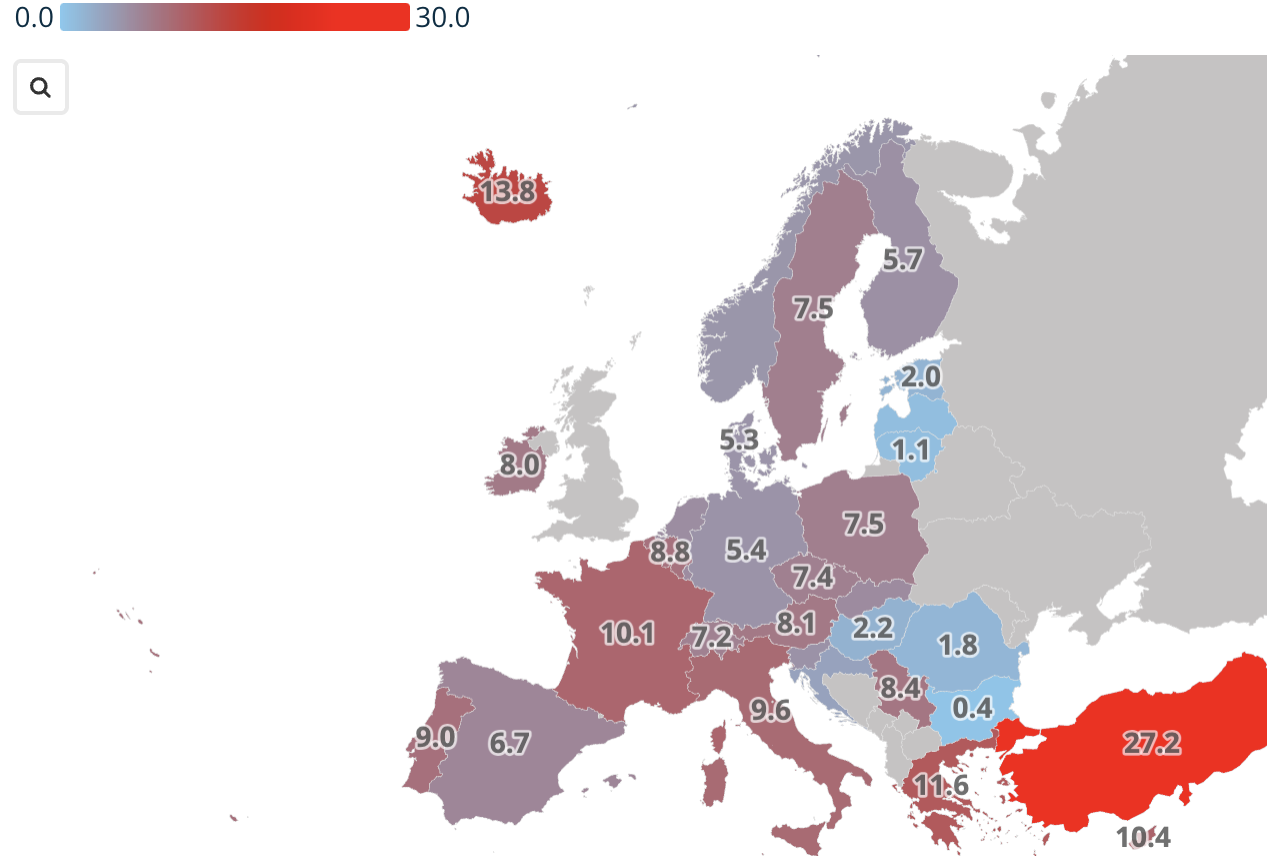
Eurostat defines “long hours” as 49 or more per week, a category that applies to 7.1% of the EU workforce. Among the EU countries, the highest rates of long working hours are seen in Greece (11.6%), Cyprus (10.4%), and France (10.1%).

The figures show a sharp contrast between self-employed individuals and employees, with 29.3% of the self-employed working long hours compared to just 3.6% of employees. Outside the EU, Turkey has the highest rate, with 27.2%, followed by Iceland with 13.8%.

Percentage of people working at least 49 hours a week

AD 4nXdTDGa118WfzuznOR7gXQiQmUu6fo5O07C7n6u5yErmNkKVj5XYDqa0y01WPj6d7OQKXodv9Sj6YOFAsAmlOBPKspNueRgEDLpuBZcIOVvTmhGph

Which Countries Have The Longest Working Week?

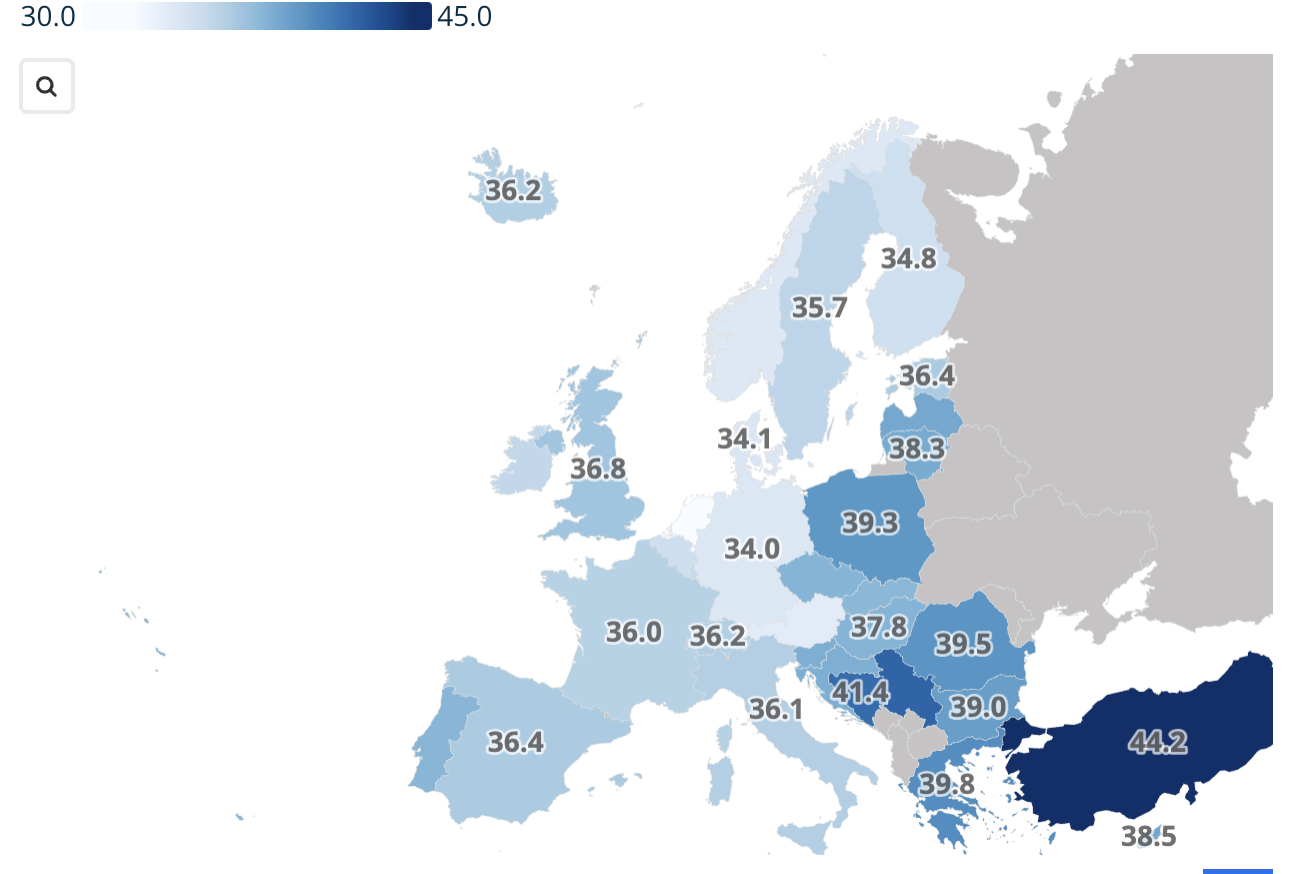
Turkey has the longest average working week at 44.2 hours, followed by Serbia (41.7 hours), Bosnia and Herzegovina (41.4 hours), and Greece (39.8 hours). The EU average, meanwhile, is 36.1 hours.

The sectors with the longest working hours are predominantly manual, with agriculture, forestry, and fishing leading the charge with an average of 41.5 hours per week, followed by mining and quarrying (39.1 hours), and construction (38.9 hours). Conversely, the shortest workweeks are found in the Netherlands (32.2 hours), Austria (33.6), and Germany (34.0).

Average working hours per week

AD 4nXdUzkLrSNLCi5RuYzC oBY UAvENUc8hWWZvvI8U14 43 6gTTvIWWkqFc9Ic6JJdVU3hsGOA5QoyYZ5B54LSi5P3u99MK8Ff2RiOM91Xn69uS89IRqONduumRh mBlWUIMBGU ?key=ok8ggknA6kdikbKmzad zRy3

What’s The Situation In Cyprus?

In Cyprus, the working hours reflect a balance between the Mediterranean work culture and the global demand for productivity. With 10.4% of the workforce engaged in long hours (49 or more per week), Cyprus is among the countries with the highest rates in the EU. However, the overall average working week in Cyprus is relatively close to the EU average, standing at around 38.5 hours.

Similar to other EU countries, self-employed Cypriots are more likely to work longer hours compared to employees. Professions in sectors like agriculture, construction, and retail drive much of this statistic, as these industries often require extended working hours to meet demand.

Despite this, Cyprus has made strides in improving work-life balance, particularly in sectors outside of manual labor, where shorter working weeks are becoming more common. However, the island’s economic structure, heavily influenced by tourism and service industries, continues to push for longer working hours in certain areas, especially during peak seasons.

In conclusion, while Cyprus ranks high in terms of long working hours within the EU, ongoing efforts to modernize work practices and improve labor rights are expected to gradually alter the dynamics of work-life balance on the island in the coming years.

CIFA: A Year Of Strategic Growth And Opportunity For Investment Funds In 2025

The Cyprus Investment Funds Association (CIFA) is stepping into 2025 with renewed confidence, building on the significant achievements of the past years. Despite the global uncertainties that continue to unfold, Cyprus’ Investment Funds sector has firmly established itself as a vital contributor to the nation’s economic and social prosperity.

In 2024, Cyprus reached a major milestone, surpassing €9.3 billion in assets under management. This remarkable achievement highlights the sector’s impressive growth and resilience. The year also marked an expansion of Cyprus’ global presence, attracting new fund managers and investment opportunities, further cementing its status as a leading European hub for Investment Funds. This success was driven by strategic collaborations and the dedicated efforts of professionals within the sector, fostering the creation of specialized job roles and reinforcing Cyprus’ position as a robust financial centre.

Looking ahead to 2025, CIFA remains fully committed to promoting Cyprus as the premier destination for global investment funds. By working alongside key stakeholders, including the Ministry of Finance, the Cyprus Securities and Exchange Commission, and Invest Cyprus, CIFA aims to enhance the regulatory framework and drive innovative solutions for the industry. The timely approval of pending legislation that modernizes regulatory processes and introduces new investment structures is crucial for unlocking the full potential of the sector. These updates will provide the industry with the necessary tools to stay competitive and aligned with international best practices. CIFA urges all stakeholders to prioritize this agenda to ensure Cyprus continues to attract high-quality investments and talent.

In addition, CIFA recognises the importance of equipping individuals and businesses with essential financial knowledge. In 2025, the association plans to roll out initiatives designed to boost financial literacy across Cyprus. These will include workshops, partnerships, and digital campaigns aimed at enhancing understanding of investment funds and financial planning. By empowering citizens and professionals with the knowledge to make informed financial decisions, CIFA is contributing to the long-term economic resilience of Cyprus.

Maria Panayiotou, President of CIFA, shares her outlook for the year: “The success of the Investment Funds sector is a reflection of our adaptability, innovation, and ability to thrive in a competitive global market. In 2025, our focus will be on sustainability, technology-driven solutions, and strengthening our partnerships across markets. Our goal is to drive economic growth while delivering lasting value for society. With the combined expertise and dedication of our sector, I am confident that we will continue to play a transformative role in Cyprus’ economy, fostering resilience and creating opportunities for all.”

As Cyprus embarks on a year of revitalisation and resilience, CIFA remains steadfast in advocating for the interests of its members, elevating Cyprus on the international stage, and supporting initiatives that promote sustainable development within the financial sector. The association calls on all stakeholders to collaborate in advancing the innovation, sustainability, and resilience that will define Cyprus’ financial future.

Henley Passport Index 2025: Singapore Reclaims Top Spot, India Slips, Cyprus Drops In Rankings

In the 2025 Henley Passport Index, Singapore has reclaimed its position as the world’s most powerful passport, offering visa-free access to 195 destinations. Japan follows closely behind in second place, with visa-free access to 193 countries. However, the US has experienced a decline, dropping to ninth with access to 186 destinations, while India faces a significant setback, falling to 85th place in the global rankings.

European countries, particularly those within the EU, continue to hold strong positions. France, Germany, Italy, and Spain—who shared the top spot in 2024—have dropped to third place, now joined by Finland and South Korea, all offering visa-free access to 192 destinations. In the fourth spot, seven EU countries—Austria, Denmark, Ireland, Luxembourg, the Netherlands, Norway, and Sweden—offer visa-free travel to 191 destinations. The top five include Belgium, Portugal, Switzerland, the UK, and New Zealand, which all allow visa-free access to 190 destinations.

The UK, once at the forefront of the index, continues its decline, a reflection of its diminished passport strength in recent years.

Cyprus’ Decline in Rankings

Cyprus has seen a decline in the 2025 rankings, slipping two positions to 14th place, down from 12th in 2024. The Cypriot passport now grants visa-free access to 179 destinations but still requires visas for 47 locations. While the passport has experienced fluctuations over the years, this drop marks a shift in its steady climb since the 2013 recovery from the financial crisis, where it jumped from 20th to 15th place.

Despite this setback, Cyprus maintains its position in the upper tier of global rankings, reflecting the nation’s ongoing diplomatic efforts and the importance of its passport within the EU.

Global Trends and Future Outlook

The Henley Passport Index reveals that while global travel freedom remains highly fluid, some countries, particularly those in Asia and Europe, continue to dominate. Meanwhile, regions like Afghanistan and Syria face considerable challenges in their passport power, with both countries’ passports granting access to only 26 destinations.

As global political and diplomatic relations evolve, it will be interesting to see how Cyprus and other nations adapt and work toward improving their passport rankings in the years to come.

Cyprus Achieves Record-Breaking Fiscal Surplus: A Look At The Numbers

Cyprus is closing the year on a high note with impressive fiscal results, according to preliminary data released by the Statistical Service of Cyprus (CYSTAT). From January to November 2024, the country recorded a fiscal surplus of €1,420.8 million, equivalent to 4.2% of GDP. This marks a significant leap from the €709.9 million surplus (2.3% of GDP) achieved during the same period in 2023.

Revenue Growth Fuels Surplus

The fiscal surplus was largely driven by robust revenue growth, which surged by €809.8 million (6.7%), reaching €12,844.8 million in 2024 compared to €12,035 million in 2023.

Breaking down the figures:

  • Taxes on production and imports rose by €255 million (6.2%) to €4,349.6 million, with net VAT revenue climbing €217.2 million (7.8%) to €2,984.6 million.
  • Taxes on income and wealth saw an impressive increase of €425.7 million (16%), totalling €3,082.3 million.
  • Property income jumped by €42 million (45.4%) to €134.6 million.
  • Revenue from goods and services grew by €163.7 million (21.6%) to €920.3 million.
  • Social contributions edged up by €95 million (2.4%) to €3,980.7 million.

On the flip side, current transfers dropped by €122.7 million (29.1%) to €299.1 million, and capital transfers fell by €48.9 million (38.5%) to €78.2 million.

Modest Rise in Expenditures

Government spending increased by a modest €98.9 million (0.9%), totalling €11,424 million in 2024 compared to €11,325.1 million in 2023.

Highlights include:

  • Intermediate consumption grew by €119 million (10.8%) to €1,223.4 million.
  • Compensation of employees rose by €236.3 million (7.7%) to €3,292.4 million.
  • Social benefits climbed €417 million (9.8%) to €4,679.3 million.
  • Interest payments increased by €23.4 million (6.1%) to €407.4 million.

However, certain expenditures saw declines:

  • Subsidies dropped by €8.5 million (5.9%) to €134.5 million.
  • Current transfers fell by €314.4 million (29.6%) to €747.6 million.
  • The capital account decreased by €373.8 million (28.5%) to €939.4 million, with notable reductions in other capital expenditures by €400 million (71.7%).

A Step Forward for Cyprus

These results highlight Cyprus’s continued fiscal discipline and its ability to generate significant revenues amidst global economic challenges. As the government balances spending with revenue growth, the country solidifies its position as a model of economic resilience in the region.

The Poorest US States Are Wealthier Than Major European Economies

Some of the least affluent states in the United States are outpacing major European economies in terms of GDP per capita, with Mississippi leading the charge. But will this hold true in 2025?

Key Facts

As of the third quarter of 2024, Mississippi’s GDP per capita was €49,780, nearly matching Germany’s €51,304. The US state sits comfortably above several major European nations, including Spain, Italy, and France.

Following Mississippi in the rankings are West Virginia, Arkansas, Alabama, and South Carolina, all of which have higher GDP per capita than economies like Spain and Italy.

On the flip side, the wealthiest areas in the US—New York and the District of Columbia—boast significant GDPs, with New York’s reaching €107,485 and the District of Columbia’s soaring to €246,523.

When compared to European economies, the GDP per capita ranges from €15,773 in Bulgaria to €125,043 in Luxembourg. The EU’s average is €40,060, while the US surpasses that with an average of €80,023. Among Europe’s largest economies, Germany leads with €51,304, followed by the UK at €48,441, France at €44,365, Italy at €37,227, and Spain at €33,070.

What To Watch For?

The gap in economic output narrows when considering purchasing power parity (PPP), which adjusts for cost-of-living differences. Nevertheless, the US continues to outpace the EU and the UK, with the exceptions of Luxembourg and Ireland—both of which benefit from unique economic factors like Luxembourg’s foreign employer-driven growth and Ireland’s tax strategies aimed at attracting multinational companies.

While GDP captures total economic output, PPP provides a more accurate reflection of living standards, adjusting for the varying costs of goods and services across countries.

Germany’s Economic Struggles

Germany, Europe’s largest economy, faces its own set of challenges. The EU’s latest economic forecast predicts a further decline of 0.1% in 2024, after a 0.2% dip in the first half of the year. This follows a 0.3% contraction in 2023, marking the second consecutive year of negative growth. However, a recovery is on the horizon, with GDP expected to rise by 0.7% in 2025 and 1.3% in 2026. Despite this optimistic outlook, the ongoing uncertainty has led to decreased investment, lower consumption, and an increase in the unemployment rate, which climbed 0.5% to 3.5% between September 2023 and September 2024.

This situation places pressure on European economies, while some of the poorest US states continue to outperform their continental counterparts. As we look ahead, it will be fascinating to see whether the trend persists into 2025 and beyond.

Meta Suspends Fact-Checking Program In The US

Meta Platforms has announced a major shift in its approach to content moderation in the United States, suspending its fact-checking program. The parent company of Facebook, Instagram, and Threads, which collectively boast over 3 billion users, will relax restrictions on controversial subjects such as immigration, sports, and gender identity. This move comes just as President-elect Donald Trump is poised to take office.

Key Changes

Rather than relying on an official fact-checking program to address questionable claims across its platforms, Meta plans to implement a community-based system similar to the one on Elon Musk’s X (formerly Twitter). This new approach, known as “community notes,” will enable users to provide context and flag misinformation, shifting responsibility from the company to the community. Additionally, Meta will no longer proactively monitor hate speech or other policy violations. Instead, posts will only be reviewed if flagged by users.

Meta will also relocate the teams responsible for content moderation from California, where most of the company’s US operations are based, to Texas and other locations in the country.

A Shift In Policy

This overhaul represents the most significant shift in Meta’s content moderation strategy, signaling a potential shift in its alignment with the incoming presidential administration. CEO Mark Zuckerberg seems to be signaling a return to a more lenient stance on freedom of expression.

In a video statement, Zuckerberg stated, “We’ve reached a point where there’s just too much wrongdoing and too much censorship. It’s time to get back to our roots around freedom of expression.”

A Strategic Move

Meta’s decision follows its recent hiring of conservative figures to its board, including Joel Kaplan, a former Republican Party political strategist, who was appointed head of global affairs. Dana White, the CEO of the UFC and a close ally of Trump, was also named to the board. Zuckerberg has publicly expressed regret over some of Meta’s previous content moderation decisions, especially in relation to COVID-19. Additionally, Meta made a notable donation of $1 million to Trump’s inauguration fund, diverging from its past practices.

A Backlash

The decision to end the fact-checking program, which began in 2016, was met with strong opposition from partner organizations. Angie Drobnick Holan, head of the International Fact-Checking Network, called it “a serious blow to the community,” emphasizing that fact-checkers did not censor posts but provided additional context and debunked false claims and conspiracies.

What’s Next?

Currently, Meta plans to implement these changes exclusively in the US market. It remains unclear whether similar changes will be made in the European Union, which has adopted stricter regulations through the Digital Services Act. This law, which came into force in 2023, mandates large online platforms like Facebook and X to address illegal content and potential public safety risks. X’s “Community Notes” feature is already under scrutiny by the European Commission, which launched an investigation in December 2023.

If Meta or any other company violates EU regulations, they could face fines of up to 6% of their global revenue.

eCredo
Aretilaw firm
Uol
The Future Forbes Realty Global Properties

Become a Speaker

Become a Speaker

Become a Partner

Subscribe for our weekly newsletter