Opens in a new tab

Breaking news

ChatGPT Accelerates to $3 Billion in Mobile Consumer Spending, Outpacing Industry Contenders

Record Mobile Consumer Spending

In a clear demonstration of market dominance, ChatGPT has reached a significant milestone, amassing $3 billion in global consumer spending on mobile devices since its debut. According to data from Appfigures, the platform has experienced a meteoric rise, attracting unprecedented user investment from its initial release on iOS in May 2023 to its broader launch across both iOS and Android devices.

Rapid Adoption Compared To Industry Peers

The impressive surge in consumer spending is underscored by a staggering year-over-year growth. In 2025, users spent approximately $2.48 billion on ChatGPT, a 408% increase from $487 million in 2024. This explosive growth eclipsed its inaugural year figures of $42.9 million in 2023, representing an over 1,000% increase in 2024. Notably, ChatGPT achieved the $3 billion benchmark in just 31 months, outperforming TikTok’s timeline of 58 months and even outpacing streaming giants like Disney+ and HBO Max, which reached the milestone in 42 and 46 months respectively.

Diversified Revenue Streams and Strategic Monetization

ChatGPT’s robust mobile user base is primarily monetized through subscriptions such as ChatGPT Plus at $20 per month and ChatGPT Pro at $200 per month for advanced usage. While these subscription models drive a significant portion of revenue, the broader potential for monetization includes developer integrations and the prospect of advertising. Recent initiatives include the launch of a dedicated app store, which suggests future monetization strategies that may further diversify revenue streams.

Competitive Landscape and Future Outlook

Meanwhile, competitors are reorienting their business models in the wake of AI-driven disruptions. For example, Google is leveraging its search ad business by integrating advertisements across AI-powered services such as AI Mode, AI Overviews, and an evolved Discover page. Additionally, companies like Anthropic are setting ambitious revenue targets in the business segment, with forecasts aiming toward $70 billion by 2028. Emerging rivals, such as xAI’s Grok, are rapidly mimicking ChatGPT’s revenue trajectory, further intensifying the competitive dynamics in the AI application space.

The U.S. House Passes Speed Act To Accelerate AI Infrastructure Development

The U.S. House of Representatives has approved the SPEED Act, a pivotal legislative measure designed to streamline federal permitting for the development of critical data centers powering artificial intelligence projects. The bill, which emerged from a nearly contentious vote of 221-196, seeks to reengineer outdated regulatory frameworks to better position American technology firms in the global race for AI supremacy.

Modernizing Permitting Processes

The SPEED Act proposes significant reforms to the 1969 National Environmental Policy Act (NEPA) by drastically reducing the review and litigation periods. Provisions include shrinking the statute of limitations for NEPA-related litigation to 150 days—drastically shorter than the existing six-year window—and tightening review timelines. Such measures aim to expedite the federal approval process for new AI data centers and clean energy projects alike, offering a critical boost to sectors reliant on swift infrastructure deployment.

Strengthening U.S. Competitiveness In AI

Backed by major technology players including OpenAI, Micron, and Microsoft, the bill is seen as an essential tool in helping the United States maintain its competitive edge against global rivals, notably China. Proponents argue that enhanced permitting efficiency is not just a bureaucratic improvement, but a strategic move to ensure that sufficient electricity and modern infrastructure are available to support both civilian and military AI computing demands. As Rep. Bruce Westerman (R-Arkansas), the bill’s sponsor and chair of the House Natural Resources Committee, noted, “The electricity we will need to power AI computing for civilian and military use is a national imperative.”

Bipartisan Debate And The Renewable Energy Dilemma

While the bill garnered support from several influential legislators, it also sparked significant bipartisan debate. Democratic cosponsor Rep. Jared Golden of Maine characterized the measure as a necessary step to ensure the nation remains agile enough to undertake essential infrastructure projects. However, many Democrats have expressed concerns that the legislation—as amended by GOP leadership to exempt certain executive actions on renewable projects—could undermine efforts to promote clean energy. Critics such as Rep. Scott Peters (D-California) have stressed the need for a balanced approach that reforms the permitting system without retroactively validating controversial policies from the previous administration.

The Road Ahead

With the bill now moving to the Senate, both sides are expected to engage in further negotiations that could result in a more bipartisan framework for permitting reform. This debate is set against the backdrop of intensifying pressures on the nation’s power grid and the burgeoning demands of a rapidly evolving tech sector. Should the Senate endorse a compatible version of the legislation, the reform could serve as a fundamental component in the United States’ broader strategy to lead the global wave of AI innovation while concurrently facilitating the energy transition.

Apple’s Revised Developer Agreement Grants Authority For Recouping Unpaid Commissions And Fees

Enforceable Fee Recoupment Strategy

Apple has announced a revised developer license agreement that significantly alters the financial framework governing its digital ecosystem. The updated terms grant the tech titan the explicit right to recoup unpaid funds—ranging from commissions to varying fees—by deducting them from in-app purchases processed on behalf of developers. This move underscores Apple’s renewed focus on ensuring that its platform-generated revenues accurately reflect the payments owed by application providers.

Geographic And Regulatory Implications

The new provisions are set to impact developers operating in jurisdictions where local laws permit linking to external payment systems. In these markets, developers are required to report external payments to Apple, thereby facilitating the collection of statutory commissions or fees. Prominent markets such as the European Union, the United States, and Japan stand to be directly affected. For instance, while a recent U.S. federal appeals court decision has left some uncertainty around the full extent of Apple’s commission rights, regional specifics—such as those imposed under Japanese regulatory frameworks—hint at a broader, more nuanced global application.

Complex Fee Structures For Global Markets

The updated agreement lays out the mechanisms for fee recovery, including deductions from digital goods, services subscriptions, and even one-time fees for paid applications. Notably, adjustments to the Core Technology Fee (CTF) in the EU signal a transition to a more intricate, percentage-based structure known as the Core Technology Commission (CTC), set to be implemented in January 2026. Such changes reflect an increasing complexity in how app earnings are monitored and monetized globally.

Enhanced Liability Through Affiliate And Parent Company Clauses

In a further tightening of the terms, Apple now reserves the right to collect unpaid amounts from any related entities, including affiliates, parent companies, or subsidiaries. This provision effectively broadens Apple’s financial recourse to encompass earnings across a developer’s entire network of applications, establishing a more comprehensive liability framework.

Additional Changes And Implications For Voice-Based Applications

Beyond fee recoupment, the revised agreement introduces new sections addressing age assurance technologies, updated guidelines for iOS applications in Japan, and specific requirements for voice-based assistants. Developers of AI chatbots activated via the side button on the iPhone must now adhere to stringent rules designed to prohibit recordings made without user awareness. While this is not an outright ban on functional recordings—used, for example, in troubleshooting or quality assurance—the ambiguity in enforcement may lead to varied interpretations in future compliance evaluations.

Apple has yet to comment further on these critical policy revisions, leaving developers and industry experts to closely scrutinize the evolving regulatory landscape.

TikTok’s U.S. Strategic Overhaul: Leading Investors Assume Command

TikTok’s U.S. Strategic Overhaul

In a decisive shift reflective of enduring national security concerns, TikTok has finalized an agreement to transfer a significant share of its U.S. operations to a consortium of prominent American investors. This development concludes a protracted dispute in which the federal government sought to sever the app’s U.S. business from its Chinese parent, ByteDance.

New Joint Venture Formation

An internal memorandum, as disclosed by ByteDance CEO Shou Chew and reviewed by TechCrunch, announced the establishment of the “TikTok USDS Joint Venture LLC.” Under the terms of the deal, the new entity will see American investors assume a 45% stake in the U.S. operation. Notable among these investors are Oracle, the private equity titan Silver Lake, and Abu Dhabi-based investment firm MGX, while ByteDance retains nearly a 20% share.

Enhanced Oversight and Security Measures

The joint venture will assume full responsibility for critical aspects of the TikTok platform, including data protection, algorithm security, content moderation, and software assurance. A designated trusted security partner, Oracle, is set to audit and validate compliance with the agreed national security terms, mirroring the regulatory framework articulated in a former presidential executive order. This structure is designed to alleviate long-standing governmental concerns while ensuring continued accessibility for U.S. users.

Regulatory Implications and Future Direction

The deal, slated for closure on January 22, 2026, represents a significant inflection point in the ongoing efforts to align TikTok’s operations with U.S. legal and regulatory expectations. As global technology companies increasingly confront the dual imperatives of innovation and security, this transaction underscores the critical role of strategic partnerships in navigating these complex challenges.

Conclusion

This transformative realignment of TikTok’s U.S. operations illustrates the evolving dynamics of international tech governance. With American investors now poised to drive its oversight and security measures, TikTok is positioning itself at the intersection of growth and regulatory prudence, setting a compelling precedent for the future of global technology operations.

OpenAI Broadens Developer Horizons With ChatGPT App Integration

OpenAI is taking a decisive step to reinvent user engagement by inviting app developers to submit their creations for review and potential integration within ChatGPT. This initiative, underscored by a newly unveiled app directory—colloquially termed an “app store”—reflects the company’s commitment to enhancing the chatbot’s capabilities.

Empowering Developers Through Strategic Integration

Last October, OpenAI introduced the integration of apps into ChatGPT, facilitating partnerships with major platforms such as Expedia, Spotify, Zillow, and Canva. By opening the ecosystem to a broader range of developers, OpenAI is not only diversifying its service offerings but also empowering innovators to contribute to an increasingly robust technology landscape.

Transforming User Interaction With Contextual Services

According to OpenAI, these apps are designed to extend the conversational abilities of ChatGPT by introducing new contexts and actionable tasks. Users will be able to accomplish activities such as ordering groceries, transforming an outline into a polished slide deck, or even searching for an apartment directly within the chat interface. This layered functionality mirrors the operational flexibility found in leading digital platforms.

Streamlined Integration Through The Apps SDK

Fueling this transformative phase is OpenAI’s Apps SDK, currently in beta, which provides a robust toolkit for developers intent on innovating within the ChatGPT ecosystem. Upon finalizing their applications, developers can submit them via the OpenAI Developer Platform, thereby gaining oversight of the approval process. Multiple applications are set to debut over the coming year, marking a dynamic evolution of the product’s functionality.

Driving User Engagement and Market Expansion

This strategic expansion reaffirms OpenAI’s commitment to creating a versatile and engaging user experience. By integrating a myriad of services directly into ChatGPT, the platform is poised to not only increase its stickiness among existing users but also attract a technologically sophisticated clientele seeking comprehensive, on-demand solutions.

Cyprus Parliament Endorses 2026 State Budget With Strategic Reforms

Parliamentary Approval And Key Statistics

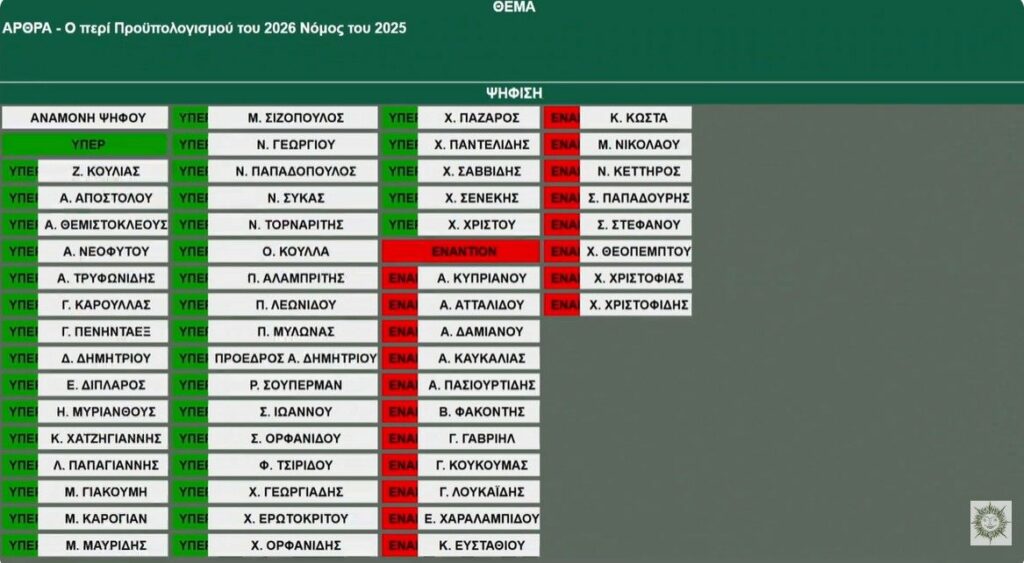
After an intensive three‐day debate at the OLOMELEIA, the Cyprus Parliament has ratified the state budget for 2026 along with significant amendments proposed by various political factions. The measure passed with 37 votes in favor and 19 against, mirroring the diverse political landscape. Notable supporters include DI.SY, DI.KO, EDEK, ELAM, DIPA, and independent legislators such as Michalis Giakoumi, Andreas Apostolou, and Andreas Themistocleous, while opposition came from AKEL, the Movement of Ecologists, Alexandra Attalidi, and Kostis Efstathious.

Fiscal Projections And Strategic Investments

The 2026 budget earmarks primary expenditures of €10.7 billion, representing an increase of approximately €508 million (5.0%) compared to the previous year. In addition, developmental spending is projected to rise by 4.7% and social benefits—which encompass education, healthcare, and welfare—by 6.7%. Notably, this budget stands as the final financial framework under the current parliamentary term ahead of the May elections.

Key Amendments And Infrastructure Commitments

Among the 92 submitted amendments, several pivotal changes received approval. These include safeguards against reductions in state spending related to the privatization of public sector entities, with exceptions for leading infrastructural projects such as the development of the Troodos region, enhancements at the Cyprus Stock Exchange, and the expansion of Larnaca Marina. Further allocations include funding for the master plan in the Vasiliko area, the inaugural phase of Macedonia Avenue, and investments aimed at upgrading primary road networks in municipalities, along with social housing and welfare initiatives.

Closing Insights

This decisive budget approval marks a critical juncture in Cyprus’s fiscal policy, underscoring a commitment to balanced economic growth and infrastructural modernization. As the nation prepares for upcoming parliamentary elections, the 2026 budget reflects both continuity in current policy directions and an ambitious roadmap for future development.

2026 State Budget Visual Representation

For additional details on the extensive parliamentary debates and the amendment process, please refer to the in-depth coverage of the budget deliberations.

Greek Parliament Rejects Amendment Freezing Ministry Of Finance Funds For Electric Interconnection

The Greek Parliament recently convened to deliberate an amendment that would have frozen approximately €54 million in funds earmarked for the country’s electric interconnection project. The proposed measure targeted disbursements intended for 2025 and 2026, allocated as two installments of €25 million each to the implementation body, ADME.

Amendment Details And Fiscal Implications

The amendment specifically aimed to suspend the disbursement of funds from the Ministry of Finance. By freezing these funds, the government would have effectively delayed financial commitments related to vital energy infrastructure. However, the motion was narrowly rejected, with a vote tally of 27 in favor and 28 against, highlighting the contentious nature of the decision.

Voting Dynamics And Political Rift

The split in the parliamentary vote underscored political divisions. Members of AKEL, EDEK, DIKA, and the Green Party emerged as staunch supporters of the fund commitment. Additionally, notable votes in favor came from DISY MP Kyriakos Chatziyanis, DIKO MPs Zacharias Koulias and Christos Orfanidis, as well as independent MP Alexandra Attalidou. In contrast, members from DISY, DIKO, and independents such as Andreas Apostolou and Michalis Giakoumi opposed the amendment.

Looking Ahead: Financial Flexibility For Infrastructure Projects

With the rejection of the amendment, the Ministry of Finance retains the authority to release the designated funds at its discretion—free from further parliamentary oversight. This development places the onus on the Ministry to manage the financial aspects of the electric interconnection project, ensuring that strategic decisions regarding fiscal resources can be made swiftly in response to evolving market or infrastructural conditions.

Micron Technology Soars Amid Robust Q1 Results and AI-Driven Memory Demand

Micron Technology Surpasses Earnings Expectations

Micron Technology’s stock surged by 10% in the first fiscal quarter after the company signaled robust demand for its memory chips, outpacing Wall Street forecasts. The semiconductor giant, known for its advanced memory storage solutions critical to computers and artificial intelligence servers, demonstrated formidable performance by exceeding its fiscal first-quarter estimates.

Record Financial Performance in a Competitive Landscape

Reporting adjusted earnings of $4.78 per share on $13.64 billion in revenue, Micron outperformed analyst expectations, and the outlook remains optimistic. The company anticipates current quarter revenues to reach approximately $18.70 billion, far surpassing the $14.20 billion predicted by LSEG estimates, with adjusted earnings forecast to hit $8.42 per share. This strong performance has prompted JPMorgan to raise its price target and led Bank of America to upgrade its rating to buy. Morgan Stanley even remarked that these results represent the best revenue and net income upside in the history of the U.S. semiconductors industry—outside of Nvidia.

Strategic Investment and Market Expansion

During an earnings call, Micron’s leadership articulated a clear vision for growth, noting that the total addressable market for high-bandwidth memory is projected to hit $100 billion by 2028, with a 40% compounded annual growth rate. In response to heightened demand, management increased its capital expenditure guidance to $20 billion from $18 billion. “We are more than sold out,” stated business chief Sumit Sadana, emphasizing the substantial unmet demand and a supply environment primed for continued growth.

Boosting the AI Ecosystem

As the role of artificial intelligence expands across industries, Micron’s strategic positioning in providing memory solutions for AI servers is becoming increasingly significant. The company believes that as AI technologies continue to evolve, the benefits will extend well beyond just processor manufacturers, making memory a crucial beneficiary in the broader AI race.

Amazon Expands Alexa+ Capabilities With Intelligent Ring Doorbell Conversations

Overview

Amazon is set to redefine the smart home experience by introducing a cutting‐edge conversational AI feature to its Alexa+ platform. Now integrated with Ring doorbells, the new tool, Greetings, empowers users to manage deliveries, deter unwanted sales approaches, and facilitate personalized greetings when friends and family visit—all while users are away.

How Greeting Works

Greetings leverages advanced video analysis to assess the visitor’s appearance, attire, and actions. For example, if the system recognizes a delivery person in uniform dropping off a package, it will automatically follow preconfigured user instructions, such as where to leave the package or offering refreshments if available. In scenarios requiring a signature, Alexa can even inquire about a convenient return time and relay the message to the homeowner.

Customization and Enhanced Security

The feature also extends its capabilities to filter out unwanted interactions. Users can pre-set responses to service vendors or persistent sales representatives, ensuring a courteous yet unequivocal refusal. In addition, when homeowners are busy or not available, Alexa is programmed to greet visitors and capture their messages seamlessly.

Potential Risks and Considerations

Despite its innovative design, the technology is not without potential risks. There is a possibility of misidentification, which could lead to unintended responses. For instance, if a friend working in logistics approaches in a delivery uniform, the system may mistakenly direct them to leave a package rather than allowing them to deliver a personal message.

Integration With Existing Features

This latest advancement follows the controversial introduction of the “Familiar Faces” feature. The facial recognition tool enables users to catalog up to 50 frequent visitors by assigning names based on video captures, thereby enhancing the timeline and notifications within the Ring app. For more details on that feature, please refer to the original overview on TechCrunch.

Availability and Compatibility

Amazon has specified that Greetings utilizes Ring’s video descriptions to determine the primary subject present, without actually identifying the individual. The feature is currently available for Ring Wired Doorbell Pro (3rd Gen) and Ring Wired Doorbell Plus (2nd Gen) users on the Ring Premium Plan who have activated video descriptions. Early access is being rolled out to Alexa+ customers in the United States and Canada.

Conclusion

By merging conversational AI with smart home security, Amazon and Ring are setting a new benchmark for home automation. Although challenges remain in ensuring perfect visitor identification, the potential for increased convenience and security is significant in the evolving landscape of smart home technology.

Luma AI Unveils Ray3 Modify: Redefining Video Transformation

Innovative AI Model Transforms Video Editing

Luma AI, the a16z-backed leader in AI video and 3D modeling technology, has introduced its latest innovation, Ray3 Modify. This groundbreaking model allows creators to modify existing footage by using character reference images that faithfully preserve the original performance. By specifying start and end frames, users can seamlessly generate transitional footage, elevating the creative process.

Preserving Authentic Performance

Ray3 Modify addresses a critical challenge in visual production: maintaining the integrity of human performance amidst digital transformation. According to Luma AI, the model ensures that key elements—such as motion, timing, eye line, and emotional delivery—are retained, enabling creative studios to incorporate human actors within AI-modified scenarios. This capability is essential for studios aiming to produce consistent and high-quality brand or creative content.

Expanding Creative Possibilities

Beyond preserving performance, Ray3 Modify empowers creators by facilitating detailed character transformations. Users may provide a reference image to transform an actor’s appearance, retaining crucial details like costumes, likeness, and identity across the shoot. Additionally, by offering start and end frames, directors can meticulously control transitions and character behavior, ensuring smooth continuity between scenes.

Strategic Industry Implications and Funding Momentum

In a statement, Amit Jain, co-founder and CEO of Luma AI, emphasized that the development of generative video models has historically been challenged by issues of control. “Generative video models are incredibly expressive but also hard to control. Today, we are excited to introduce Ray3 Modify that blends the real-world with the expressivity of AI while giving full control to creatives,” Jain explained. The model is now available via the company’s Dream Machine platform.

This release follows significant market developments, including Luma AI’s recent funding surge. A fresh $900 million funding round, led by Saudi Arabia’s Humain and witnessed by investors such as a16z, Amplify Partners, and Matrix Partners, underscores the high stakes in the AI-driven visual content arena. Furthermore, Luma AI’s strategic plans include building a 2GW AI cluster in Saudi Arabia, reinforcing its commitment to expanding technological capabilities and market reach.

Conclusion

With Ray3 Modify, Luma AI is setting a new benchmark in the integration of AI with video production. By offering unprecedented control over digital transformations without compromising on performance authenticity, the new model positions the company at the forefront of an industry undergoing rapid evolution.

The Future Forbes Realty Global Properties
eCredo
Uol
Aretilaw firm

Become a Speaker

Become a Speaker

Become a Partner

Subscribe for our weekly newsletter