


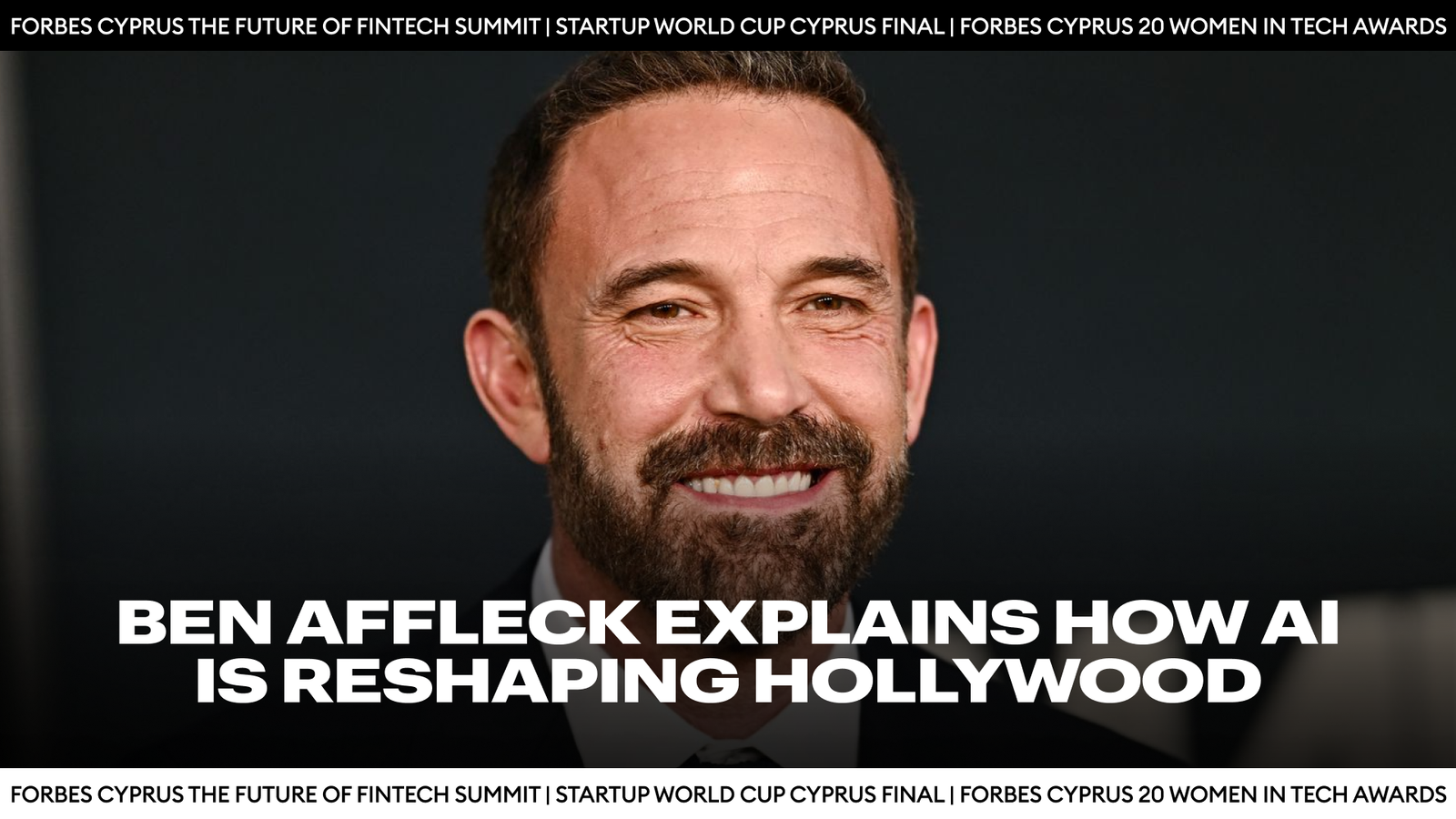
Ben Affleck has surprised audiences with his technical knowledge of artificial intelligence, explaining how machine learning is used in filmmaking and visual effects.
In a widely shared interview with GQ’s Zach Baron, the actor discussed convolutional neural networks, tensors and image data, even joking that he can write “pretty shitty Python scripts.” His explanation demonstrated a practical understanding of the technology behind modern film production.
Follow THE FUTURE on LinkedIn, Facebook, Instagram, X and Telegram
From Film Production To Machine Learning
Affleck’s interest grew as filmmaking shifted from traditional film to digital production. He became increasingly involved in understanding post-production systems, where AI tools are now playing a larger role.
He explained how neural networks can recognise patterns, detect edges and isolate image elements, including separating green screens from backgrounds. These processes help visual effects teams handle tasks that once required extensive manual work.
From AI Research To A Startup Exit
Affleck has said that his Hollywood connections gave him access to emerging AI companies and research labs, including OpenAI, helping him explore opportunities in the sector.
He later founded InterPositive, an AI filmmaking startup that Netflix acquired in a deal reported at $587 million. Affleck has disputed that figure as a full reflection of his own stake, noting that he did not own the entire company.
His approach centred on developing AI tools that could support artists rather than replace them. Affleck said his team created a proprietary dataset by filming material over several months and using it to train models for specific production tasks.
Fine-Tuning AI For Filmmaking
At Bloomberg’s Screentime 2026 conference, Affleck discussed how open-source models can be adapted for cinematic use while protecting a production’s proprietary material.
The goal is not simply to automate creative work, but to make it faster and more efficient while maintaining production standards and creative control. Affleck confirmed that he used AI in post-production on his film Animals, although he declined to disclose precisely where the technology was applied.
Practical Concerns Over Existential Risks
Affleck has offered a measured view of AI’s potential dangers, focusing less on science-fiction scenarios and more on its immediate effects on society.
“When I worry about AI, I worry about my kids in school. I worry about the 30% rise in the number of A’s given out at colleges over the last three years. I worry about learned helplessness. I worry about responsible use. I don’t worry about Skynet,” he said.
His concerns centre on responsible use, education and the risk of people becoming overly dependent on AI. Rather than treating the technology solely as an existential threat, Affleck sees it as a tool that can expand capabilities and improve creative workflows, provided people remain in control.
His perspective reflects a growing debate across entertainment and technology: AI may not replace entire creative industries, but it is likely to change how their work gets done, making both the tools and the people using them increasingly important.