


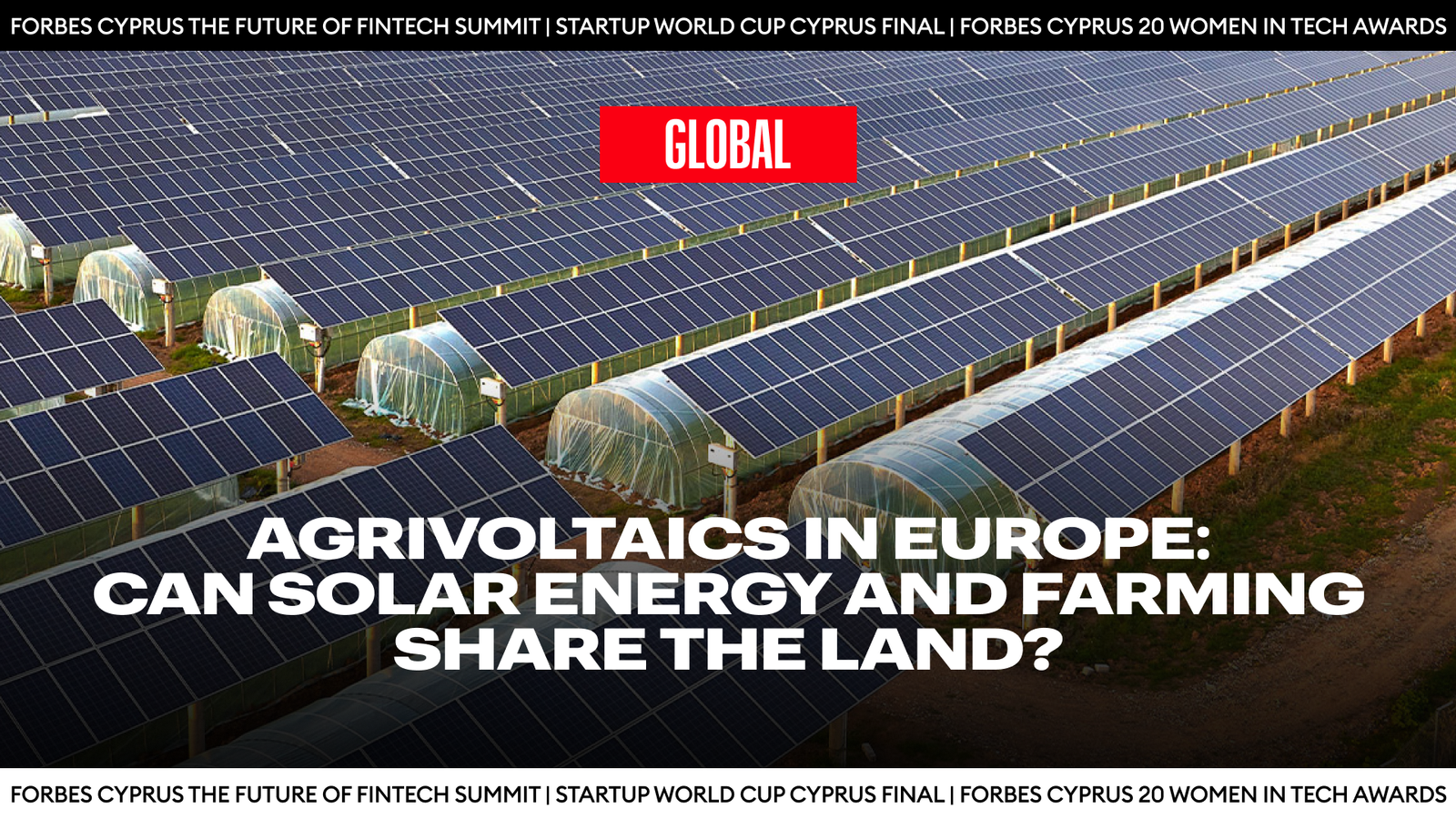
Agrivoltaics, which combines solar energy production with agriculture, is expanding across southern Europe, attracting major companies and public investment. However, its growth raises questions about farmland protection and whether local farmers will share in the economic benefits.
Elon Musk has suggested that sparsely populated areas of Spain and Sicily could theoretically generate enough solar power for all of Europe. In southern Italy, Amazon and Apple have agreed to buy electricity from agrivoltaic projects with a combined capacity exceeding 150 megawatts, enough to supply around 100,000 Italian households annually.
Follow THE FUTURE on LinkedIn, Facebook, Instagram, X and Telegram
The EU-backed AGRISOL project plans to invest €1.9 million in Italy and Spain, while Italy has secured a separate €1.7 billion state aid package for the sector.
Angelo Gentili, national secretary of environmental organisation Legambiente, believes agrivoltaics could make a greater contribution to decarbonisation as adoption grows.
Regulations Seek To Protect Agricultural Land
European countries are introducing safeguards to ensure solar installations do not displace farming. France requires projects to maintain at least 90% of crop production against local reference yields, while Italy requires at least 70% of project land to remain dedicated to agriculture.
Pilar Flores, an agrivoltaics researcher at Spain’s Murcian Institute for Agricultural and Environmental Research and Development (IMIDA), says the priority is minimising the loss of productive land. Unused land is not always suitable because projects need access to the grid, appropriate terrain and consideration of ecological value.
Potential Benefits For Farmers
Solar panels can provide shade, reduce water evaporation and protect crops from extreme weather. Farmers can also use the electricity generated or sell surplus power.
Gentili argues that the technology could help farmers cope with climate-related damage and prevent farmland abandonment. However, results depend on local conditions. Research by Flores’ team in Murcia found that water-stressed pepper plants performed better under solar panels than adequately watered plants.
Who Captures The Economic Value?
Not all farming representatives support the expansion. Fabrizio Garbarino, president of the Italian farmers’ union Associazione Rurale Italiana, argues that agrivoltaics risks exploiting the agricultural sector’s difficulties instead of addressing the causes of farmland abandonment.
A 2025 study based on expert interviews across four European regions found that benefits can concentrate among large farmers, landowners and investors, leaving smaller producers and local communities behind.
Funding patterns have also raised concerns. Italian newspaper Today.it reported in 2025 that around 86% of approximately €775 million in government funding for agrivoltaics went to large-scale projects, including some owned by foreign multinationals. A project financed by an Israeli company in Tuscany also triggered public backlash in September.
Local Involvement Will Shape The Sector’s Future
Experts say communities need a meaningful role in project decisions, while funding and grid access should be structured to support farmers. Rental income could also help finance more sustainable agricultural practices.
Agrivoltaics can strengthen climate resilience while generating renewable electricity, but it can also shift control of agricultural land towards large investors. Its long-term success will depend on project design, ownership, effective regulation and whether the benefits reach the people who work the land.