



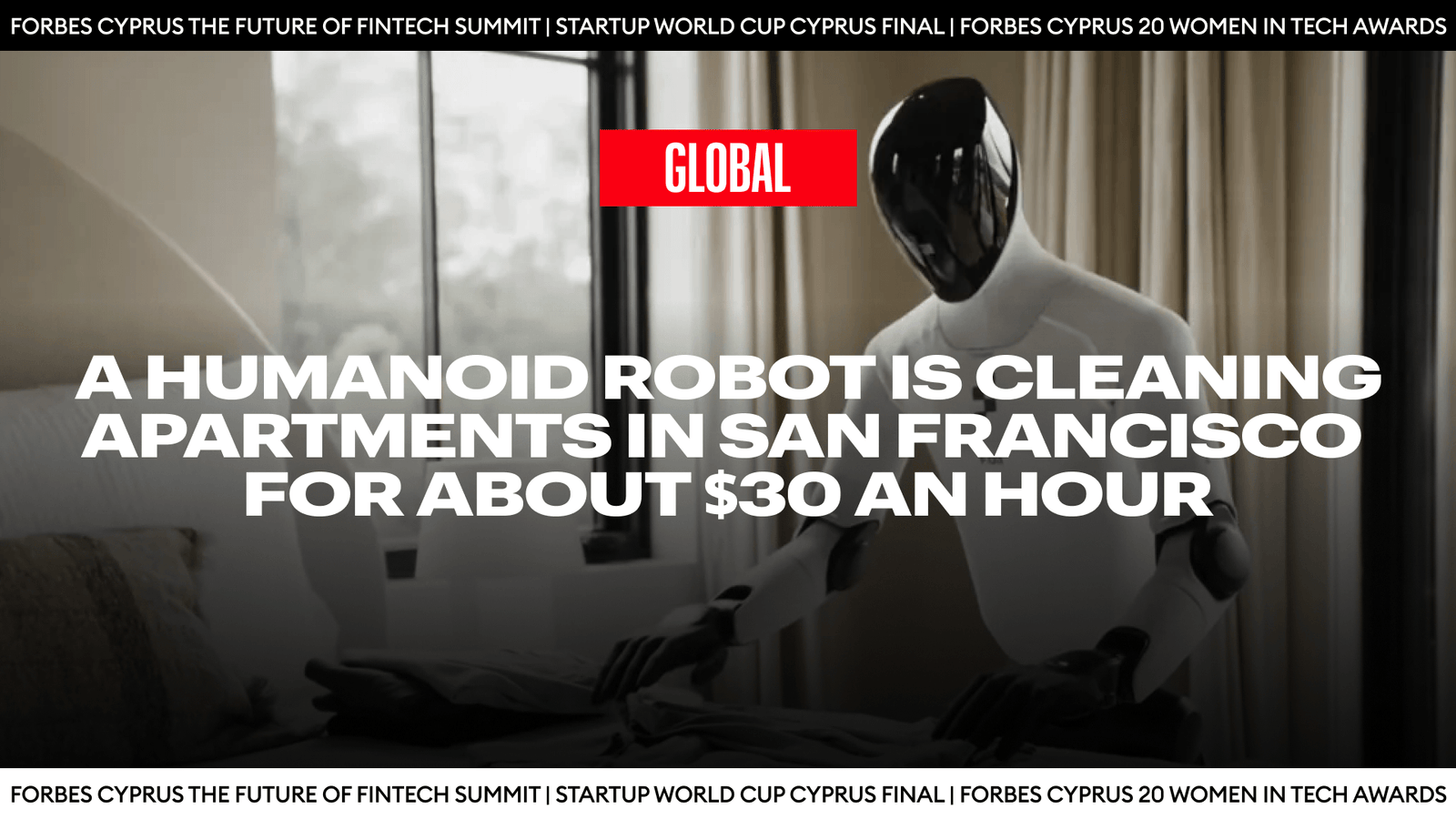
A humanoid robot that can vacuum floors, scrub toilets and wipe kitchen counters is now working in real homes in San Francisco. US startup Tau Robotics has operated its cleaning service for about a month, completing jobs in more than 50 homes. Demand has grown quickly enough that prospective customers are now being placed on a waiting list.
From Robot Demonstration To Paid Service
For early customers, the appeal is less about perfect performance than avoiding routine household chores. Tammie Siew, who recently had a Tau robot clean her apartment, said its occasional mistakes made the experience feel more approachable.
Follow THE FUTURE on LinkedIn, Facebook, Instagram, X and Telegram
“The fact that it stumbles a little bit almost makes it endearing. A little bit like watching a child,” she said. “It’s not about expecting it to be completely perfect.”
Tau charges $30 for a one-hour session with one robot and $60 for two robots. The company plans to offer longer sessions as the service develops.
How Tau’s Robots Clean Homes
Tau says its humanoid robots use cameras and depth sensors to navigate ordinary homes and perform tasks including vacuuming, picking up clutter, removing rubbish and wiping surfaces. The machines can also move household items such as chairs, laundry baskets and small tables to clean around them. For now, however, each robot operates for only one hour at a time.
Humans Still Control The Robots
Humanoid robots have struggled to move from demonstrations into useful everyday work because of limitations in speed, dexterity and reliability. Tau says its machines can already handle a range of household tasks, although they remain slower and less capable than human cleaners.
They are also not fully autonomous. A trained human operator remotely controls each robot while monitoring the home through its cameras.
Privacy Could Limit Home Robotics
Remote operation requires cameras and sensors to continuously capture information from private homes, raising privacy concerns as robotics companies collect real-world data to improve their systems.
Tau’s privacy policy says cleaning sessions are continuously recorded by cameras on the robot’s head and wrists, while depth data maps rooms and objects. The company says it uses footage and other robot data to train its AI models and retains the information indefinitely unless customers request deletion.
Microphones are disabled and no audio is recorded. Tau also says it does not sell customer data or use footage for behavioral advertising.
Cleaning Is Only The Starting Point
Tau aims to use data from real-world jobs to make its robots progressively more autonomous. The company plans to expand beyond cleaning into home repair and maintenance, and eventually elderly care.
For now, its service offers a limited but commercial test of whether consumers will pay $30 for a humanoid robot to handle household chores.