Breaking news

MOU Signing Between CUT And CARIE For The Creation Of A Technology Park In “Vereggaria”

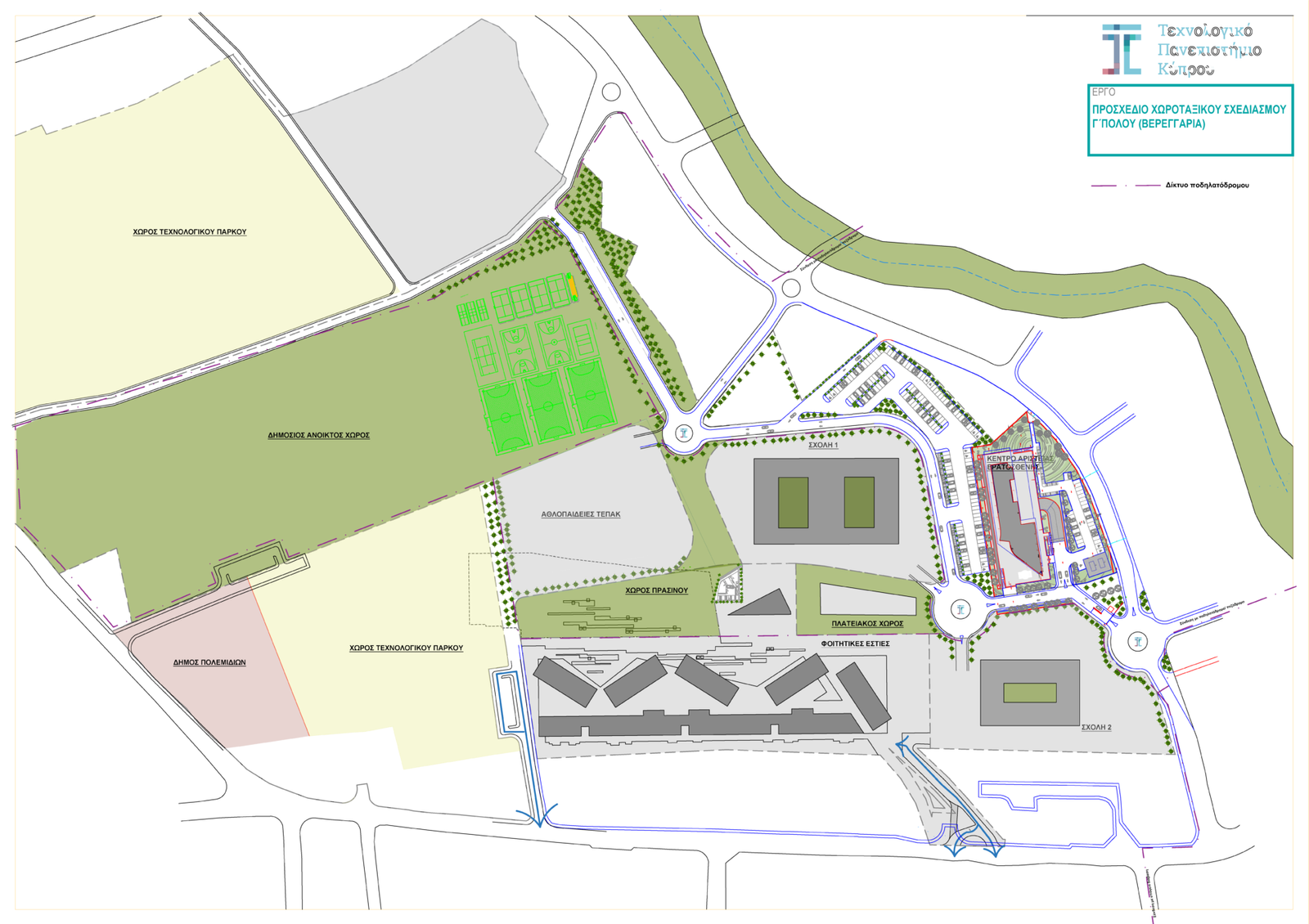
The establishment and development of a Technology Park near the facilities of the Cyprus University of Technology (CUT) in the “Vereggaria” area is among the key initiatives outlined in the Cooperation Protocol signed today, Thursday, November 28, by the Cyprus University of Technology (CUT) and the Cyprus Association of Research and Innovation Enterprises (CARIE).

The protocol was signed by the Rector of CUT, Professor Panagiotis Zaphiris, and the President of the Association, Dr. Tasos Kounoudes, during a special ceremony held at the Rectorate building. The President of the University’s Council, Mr. Costas Galatariotis, also attended the event.

The collaboration between CUT and CARIE aims to create a favorable environment for linking the university with Cyprus’ high-tech industry. The focus is on producing innovative Cypriot products with an export orientation. As part of this effort, the development of a Technology Park is expected to act as a catalyst for enhancing research and innovation while creating an ecosystem that offers significant benefits for the university, innovative Cypriot businesses, and the local and broader community.

1

The partnership also includes participation in cutting-edge research programs, such as artificial intelligence, biotechnology, and microelectronics. It provides opportunities for student internships and the potential employment of university graduates by association members. Moreover, it ensures access to advanced research and development infrastructure, while promoting the creation of a conducive environment for developing start-ups and spin-offs connected to the university. These initiatives aim to strengthen innovation and link academia with the job market.

The collaboration is expected to contribute to the creation of new jobs, attract investment to the area, and boost business activity, establishing the region as a center of excellence in high technology. It will also enhance the quality of life by fostering a dynamic innovation ecosystem and promoting lifelong learning through education and cooperation initiatives. To effectively achieve the protocol’s objectives, the formation of joint working groups and committees is planned.

Speaking at the event, the Rector of CUT, Professor Panagiotis Zaphiris, stated, “Today is an important day for CUT, as our longstanding collaboration with CARIE and its member companies is being elevated through this MOU signing.”

While the protocol primarily focuses on the creation of the Technology Park in “Vereggaria,” he added, it also includes many other initiatives, “forming a comprehensive framework that will bring us even closer. The creation of a Technology Park, which has been in the works for some time, will boost the research sector, creating a space where academic entities, start-ups, laboratories, and companies can coexist, offering opportunities for synergies and innovation,” he concluded.

On his part, the President of CARIE, Dr. Tasos Kounoudes, highlighted the long-standing and excellent cooperation between the Association and CUT. He emphasized the importance of enhancing this partnership through the signing of the MOU for the establishment of the Technology Park.

“Our Association, comprising 40 companies employing over 1,000 researchers and contributing €1.5 billion to the Cypriot economy, possesses a unique applied research infrastructure already collaborating with the University. With this new collaboration, students will gain more opportunities for internships and employment, while the benefits for innovation and the industrialization of research results are expected to increase significantly,” he noted.
ΣΧΕΔΙΟ

In his address, the President of CUT’s Council, Mr. Costas Galatariotis, mentioned that “the collaboration with CARIE aims to maximize synergies between the academic community, the real economy, and industry—a model proven highly effective in advanced countries.”

He noted that the Technology Park would combine research, technology, and education, forming a comprehensive academic ecosystem. “We hope the Council of Ministers will officially approve the site allocation before Christmas,” he said, expressing CUT’s gratitude to the Municipality of Polemidia for its cooperation and support.

Cyprus Holds Its Appeal For Investors Despite Energy And Financing Headwinds

Cyprus continues to stand out as one of Europe’s more resilient investment destinations. According to the latest EY Cyprus Attractiveness Survey 2026, 83 per cent of international investors still regard the island as attractive for foreign direct investment, even as concerns over energy costs, access to finance and bureaucracy persist.

Presented by Stelios Demetriou, EY Cyprus Head of Strategy and Transactions and M&A Leader for Central, Eastern and Southeastern Europe & Central Asia, the report estimates Cyprus’ FDI stock at roughly €82 billion in 2025. Investment remains concentrated in financial services, real estate and information and communications technology.

Investor Confidence Remains Broadly Intact

The survey shows a market that continues to command credibility among global capital allocators. Of the respondents, 56 per cent described Cyprus as definitely attractive and another 27 per cent as fairly attractive. A further 13 per cent were neutral, while only 4 per cent considered the island unattractive.

The findings are based on responses from 80 foreign investors across 23 countries and 11 sectors. Senior executives and investment decision-makers took part, and around 92 per cent of respondents already have business operations in Cyprus.

That established presence is translating into stronger intent. Sixty-seven per cent of respondents said they plan either to enter the Cypriot market or expand existing operations, up from 57 per cent in 2024 and just 29 per cent in 2022.

Among companies already operating on the island, 62 per cent expect to expand over the next 12 months, while 29 per cent intend to maintain current activity levels. Half of those without an existing footprint said they are considering entry into the market.

Tax Still Anchors The Investment Proposition

Tax remains Cyprus’ most powerful competitive advantage. Ninety per cent of respondents rated the country’s corporate tax regime and broader tax framework as attractive. Quality of life followed at 82 per cent, while political and social stability scored 65 per cent.

Investor confidence in the local workforce was also notable, with 58 per cent citing skills as a strength. Nearly half, 49 per cent, pointed to the country’s growth prospects.

The emphasis on taxation carries added significance after Cyprus raised its corporate income tax rate from 12.5 per cent to 15 per cent at the start of 2026 as part of wider tax reform. The European Commission has noted that corporate income tax still plays an unusually large role in Cyprus’ public finances, accounting for about 20 per cent of tax revenues, more than twice the EU average.

Energy, Finance And Red Tape Remain The Pressure Points

For all the optimism, investors were clear about where Cyprus must improve to sustain momentum.

Energy costs were the most frequently cited weakness, mentioned by 50 per cent of respondents. Access to finance and capital followed at 38 per cent, while the bureaucratic and administrative environment was flagged by 35 per cent. Transport and logistics infrastructure was cited by 33 per cent, and the availability of investment opportunities by 31 per cent.

These concerns extend beyond the EY survey. The European Commission has also identified access to finance and the business environment as areas requiring further reform, while calling for faster progress on renewables, electricity grids and storage to ease energy costs.

Energy has become an even more important issue in 2026. The Commission expects Cyprus inflation to rise to 3.6 per cent next year, largely because of higher energy prices linked to the Middle East conflict, even as it forecasts economic growth of 2.3 per cent this year and 2.7 per cent in 2027.

Geopolitics Is Rising On The Risk Agenda

Geopolitical uncertainty is now firmly in investors’ line of sight. Seventy-four per cent of respondents identified geopolitical tensions and conflicts as a potential threat to Cyprus’ attractiveness over the next three years.

That concern ranked well ahead of low connectivity, adverse reputation and a heavier regulatory burden, each cited by 29 per cent. Tight labour market conditions followed at 27 per cent, while volatile energy prices and supply problems were noted by 26 per cent.

Beyond The Core Economy, New Growth Areas Are Emerging

Despite the risks, investors are looking beyond Cyprus’ traditional strengths. While 48 per cent said future investment would focus on the sale of products and services, 21 per cent identified research and development, and 19 per cent pointed to business support services. Continued interest in regional headquartering also signals the island’s evolving role as a corporate base for wider markets.

Looking ahead, 60 per cent of respondents expect Cyprus to become more attractive for FDI over the next three years, including 9 per cent who anticipate a significant improvement. Another 24 per cent expect little change, while 6 per cent foresee deterioration.

Real estate, infrastructure and construction were seen as the sectors most likely to drive longer-term growth, cited by 23 per cent of investors. Tourism and leisure, as well as ICT and telecommunications, followed at 14 per cent each, with payments and fintech at 11 per cent.

A Stronger Outlook Than The Wider European Market

Cyprus’ relative resilience comes at a time when Europe’s broader investment environment remains under pressure. EY recorded 5,026 foreign investment projects across Europe in 2025, down 7 per cent from the previous year. Even so, 60 per cent of businesses surveyed across Europe still expect the region’s attractiveness to improve over the next three years.

For Cyprus, the message is clear: the island retains powerful structural advantages, but preserving investor confidence will depend on reducing costs, improving financing conditions and cutting the friction that still slows business activity.

Uol
Aretilaw firm
The Future Forbes Realty Global Properties
eCredo

Become a Speaker

Become a Speaker

Become a Partner

Subscribe for our weekly newsletter
