Cypriot MP Christiana Erotokritou stressed the importance of public investments for Cyprus due to the disproportionate immigration and demographic pressures the country is facing and the adverse effects of climate change.
Erotokritou who is the President of the Cyprus House Finance and Budget Committee, intervened in Budapest during a meeting of the Inter-Parliamentary Conference on Stability, Economic Coordination and Governance in the European Union.
In her intervention regarding Cyprus, she noted that the country is on a steady path of public debt reduction, maintaining healthy fiscal surpluses, however, it presents a large current account deficit.
She pointed out that the country-specific recommendations of the European Commission for Cyprus highlight the imperative need for full and timely implementation of the Recovery and Resilience Plan to reduce the country’s excessive dependence on oil and accelerate the completion of the necessary reforms and investments.
In this context, Erotokritou said it is important to have public investment for Cyprus due to the disproportionate immigration and demographic pressures the country is facing and the adverse effects of climate change.
Erotokritou stressed that the key challenge is to balance fiscal discipline and sustainable development, ensuring that fiscal responsibility, sustainable development and social cohesion go hand in hand and that the economic governance framework contributes to addressing current and emerging challenges of the EU and shaping a more hopeful future for all European citizens.
At WN Cyprus, 84% Of Showcased Game Teams Were Looking For Backing
While policymakers and business leaders discussed how the island could support more studios, 84% of the teams participating in the Developer Showcase were looking for an investor, a publisher, or both, according to organisers.
More than 20 teams presented projects at WN Conference Cyprus’26, held at Parklane in Limassol on 17 and 18 September. According to WN’s post-event figures, the conference drew 503 attendees from 251 companies, with 52% of participants holding C-level roles. The two-day event brought together developers, publishers, investors and technology companies for meetings, discussions and game demonstrations. It was WN’s fifth consecutive annual conference in Cyprus, where the organiser has held games industry events since 2018.
The funding needs revealed by the showcase gave added weight to one of the programme’s central questions: can Cyprus develop from a location for international company headquarters into a country where studios can also find talent, investment and support for new projects?
Dr Nicodemos Damianou, Deputy Minister of Research, Innovation and Digital Policy, discussed that question with Tanya Romanyukha, General Manager of TechIsland. Their conversation covered access to talent and finance, as well as the conditions needed for more studios to build and grow from Cyprus.
Investment decisions under pressure
The rest of the programme also reflected the difficult commercial environment facing game developers. Discussions raised the topics of cautious investment, layoffs, changing player behaviour and the effect of artificial intelligence on production and distribution.
In To Scale or Not to Scale: That Is the Question, Pavel Istomin, Publishing Game Producer at Hypercell Games, and Nikolay Shapovalov, Chief Publishing Officer at playducky.com, considered how studios decide whether to commit more money to a game or stop development. Phillip Black, co-host and co-author of Deconstructor of Fun, moderated the discussion, which focused on the market data and early performance indicators used in publishing decisions.
A separate session examined how games can attract an audience before release. FLEXUS founder Semyon Kozyura joined Julia Lebedeva, COO and Partner at WN Media Group, to discuss Dear Passengers, which organisers said had accumulated three million Steam wishlists before launch.
Four teams also presented their projects to an industry jury during the Indie Pitch:
Through Your Eyes by Omeelia GmbH
Anicards by Dragocat
World of Sea Battle by THERA INTERACTIVE
Synvector by North Souls Games
The AWS Developer Showcase Awards distributed $7,500 in AWS credits. Mirrorbane, presented by Pavel Moskvin, received $5,000, while Midnight Watcher: Village, presented by Kirill Reznichenko, received $2,500.
Six Cyprus Games Industry Awards announced
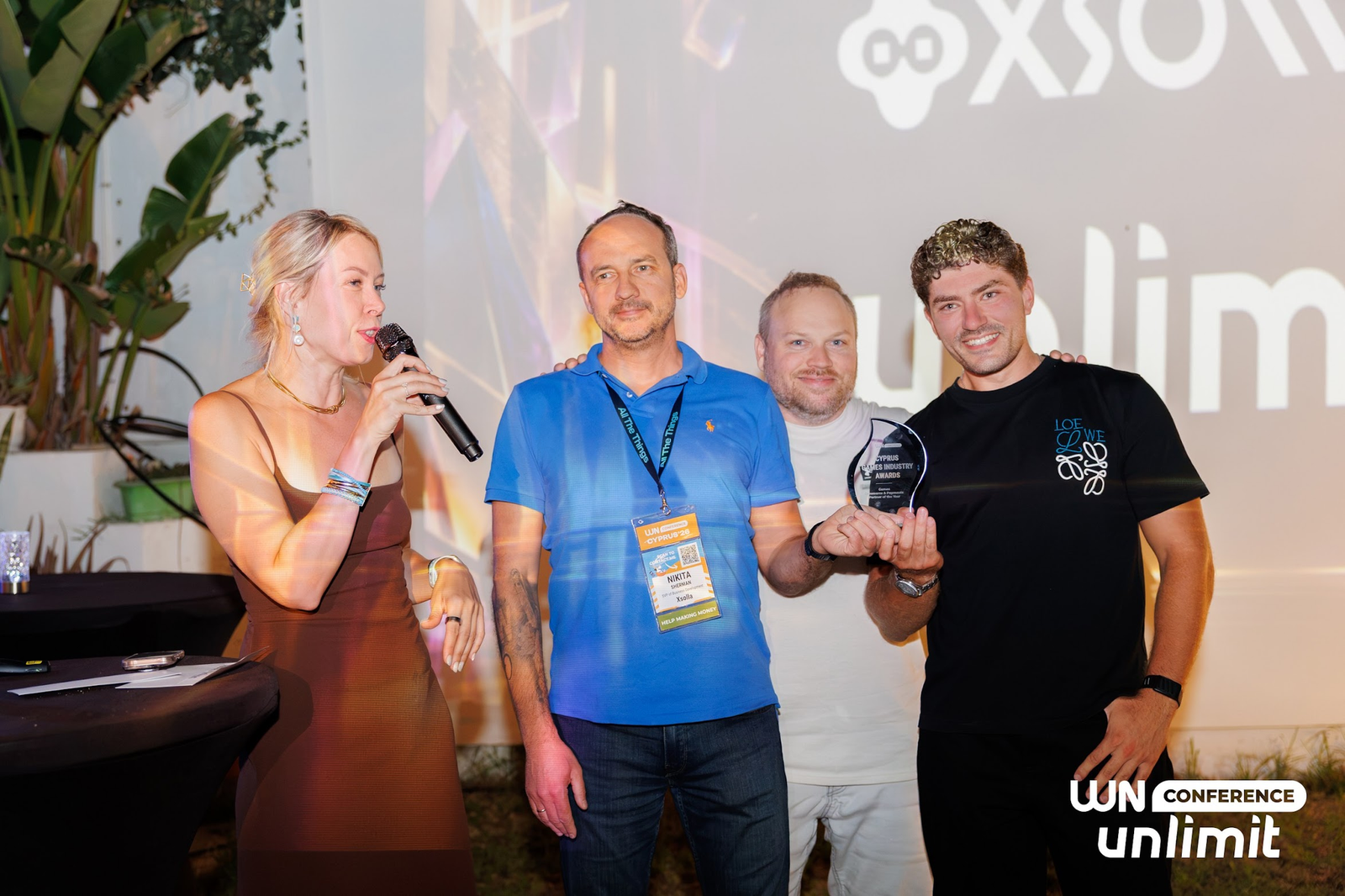
The Cyprus Games Industry Awards were presented during the WN Networking Party on 17 September. A public vote determined the shortlists before a jury selected the winners in six categories. Companies did not have to be founded or headquartered in Cyprus to qualify, but were required to have a presence on the island and contribute to its games industry.
The 2026 winners were:
Growth and Marketing Partner: OHM Agency
Publisher of the Year: AppQuantum
PC Games Achievement:Heroes of Might and Magic: Olden Era by Unfrozen
Mobile Games Achievement:Standoff 2 by AXLEBOLT
People and Workplace Award: MY.GAMES
Game Commerce and Payments Partner: Xsolla and Unlimit
The awards covered game development, publishing and the companies providing marketing, employment and payment services to the sector.
WN has provisionally scheduled its next Cyprus conference for 4 and 5 November 2027.
For many of the teams showing their work in Limassol, however, the next milestone remained commercial. The application data indicated that more than four in five were still seeking the investment or publishing relationship needed to take their games further.
Manage Cookie Consent
We use cookies to enhance your browsing experience. By clicking "Accept All", you consent to our use of cookies. Privacy Policy
Functional
Always active
The technical storage or access is strictly necessary for the legitimate purpose of enabling the use of a specific service explicitly requested by the subscriber or user, or for the sole purpose of carrying out the transmission of a communication over an electronic communications network.
Preferences
The technical storage or access is necessary for the legitimate purpose of storing preferences that are not requested by the subscriber or user.
Statistics
The technical storage or access that is used exclusively for statistical purposes.The technical storage or access that is used exclusively for anonymous statistical purposes. Without a subpoena, voluntary compliance on the part of your Internet Service Provider, or additional records from a third party, information stored or retrieved for this purpose alone cannot usually be used to identify you.
Marketing
The technical storage or access is required to create user profiles to send advertising, or to track the user on a website or across several websites for similar marketing purposes.