


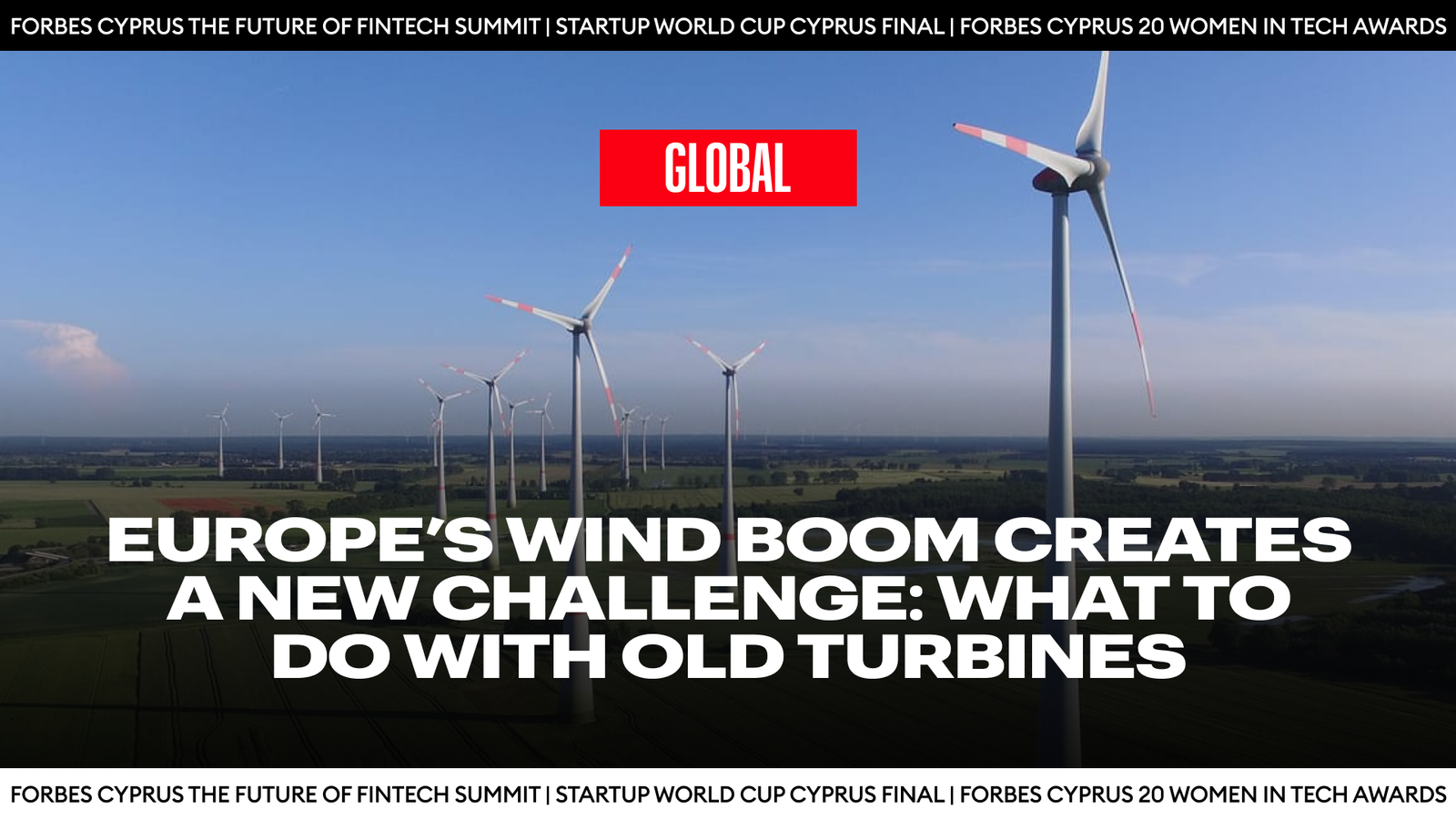
Europe added 8.8 gigawatts of new wind capacity in the first half of 2026, up 30% year on year, according to WindEurope. The growth is accelerating the energy transition while raising a new challenge: how to handle turbines at the end of their useful lives.
Wind Growth Creates A Recycling Challenge
Up to 90% of a turbine’s mass consists of steel, copper, aluminum and concrete, which can be recycled through established processes. Blades are harder to process because they contain layered composites of glass and carbon fiber, epoxy resin, wood, metals and fillers.
Follow THE FUTURE on LinkedIn, Facebook, Instagram, X and Telegram
“Separating the composite materials from the resin requires specialised processes, often involving high temperatures or other energy-intensive treatment methods,” said Eva Julius-Philipp, Director of Environment and Sustainability of Business Area Wind at Vattenfall.
Vattenfall banned landfill disposal of blades, nacelle covers and nose cones in 2021 and has since tested reuse and recycling options.
Retired Blades Find New Uses
A retired nacelle cover from an Austrian wind turbine was converted into a tiny house by Vattenfall and Dutch design studio Superuse. Other projects have turned 57 decommissioned blades from Denmark’s Nørre Økse Sø wind farm into a car park façade in Lund, Sweden, while blades have also been used for solar panel frames and skis.
“Projects such as the Tiny House, blade-based building projects and recycled skis are not yet a large-scale solution,” Julius-Philipp said. “However they are intended to help us gain experience, develop new applications and stimulate the market for circular solutions.”
Vattenfall aims to achieve 100% circularity for composite materials by 2030 through reuse, refurbishment, repurposing and recycling. Mechanical recycling can produce composite flakes and fillers, while pyrolysis can recover fibers and other materials.
Policy Will Shape The Market
Recycling capacity could face greater pressure as Europe’s first major generation of wind farms approaches retirement. Decommissioned blades also arrive unevenly, making it harder for recycling companies to build economically viable operations.
The EU has no bloc-wide landfill ban for old blades. Austria, Finland, Germany and the Netherlands have national bans, while WindEurope is calling for an EU-wide rule.
“What is needed now is a regulatory framework that enables circular value chains and secondary raw materials to scale,” Julius-Philipp said. The European Commission’s Circular Economy Act, expected later this year, could help establish that framework.
New Blades Designed For Recycling
Manufacturers are also developing blades with end-of-life recycling in mind. Siemens Gamesa’s RecyclableBlades, used at Vattenfall’s Hollandse Kust Zuid offshore wind farm, use a resin that dissolves in a low-temperature, mildly acidic solution.
That allows the resin to be separated from fiberglass, carbon fiber, plastic, wood and metal while preserving the recovered materials. Recyclable blades remain a niche technology, but lifecycle management is becoming a more important issue as Europe’s wind fleet expands.