Breaking news

Cypriot Silk Stories: A Fashion Presentation By Michalis Pantelidis

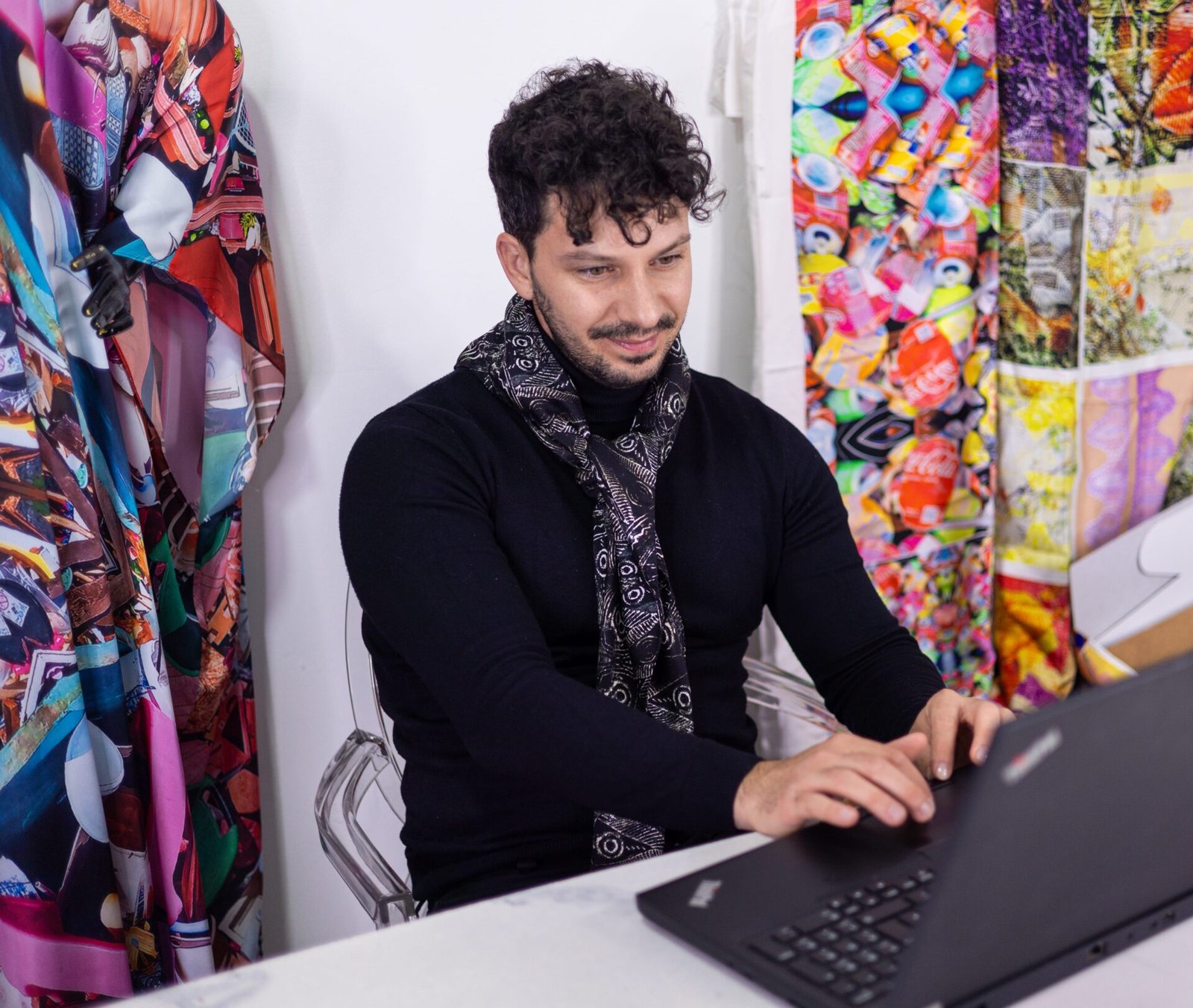
On 6 May 2026, during the exclusive VIP Cocktail Event and Opening Ceremony of the Cyprus Diaspora Forum 2026, held at the elegant Amara Hotel, Cypriot designer Michalis Pantelidis will present his fashion showcase, Cypriot Silk Stories.
MP 23

This evocative collection unfolds as a poetic tribute to Cyprus, expressed through silk. The presentation brings together key thematic explorations from his work—from the wastelands of Cyprus, where notions of value and beauty are redefined, to the underwater world of Larnaka, the Pierides Museum archives, collaborations with Nespresso Cyprus, and Tourkomahalas, a community-driven project developed with Larnaka 2030—forming a contemporary narrative of place. Each design captures a distinct fragment of Cyprus, reimagined through a modern lens.

The collection is presented through fluid silk scarves of varying dimensions alongside elegantly draped caftans, styled with understated Mediterranean sophistication. Designed to transition effortlessly—from business mornings to seaside afternoons, and from refined daytime gatherings to intimate evening occasions—the pieces embody versatility while maintaining a sense of quiet luxury.

Rooted in craftsmanship and emotion, Cypriot Silk Stories expresses a modern vision of timeless elegance—intentional, refined, and deeply connected to place. The presentation promises to be a defining moment of the evening, where heritage, artistry, and contemporary design come together in celebration of Cyprus and its global diaspora.

The show is realised with the valued support of Tsiakiris Silk House—where Pantelidis’ silk scarves are produced—alongside Larnaka Tourism Board, Larnaka 2030, Nespresso Cyprus, and Print Guru LTD, supporting the print installation of the presentation.

Creative direction is supported by leading industry collaborators: makeup by Valentino Nicolaou and his team at The Makeup Project by Valentino Nicolaou, hair by Christos Artemiou of Artemiou Hair Designs, and styling by Andronikos Orfanou. All garments are courtesy of ERA Department Store.

About Michalis Pantelidis

Michalis Pantelidis is a Cypriot textile designer working at the intersection of fashion, art, and cultural storytelling. His practice focuses on silk accessories that translate heritage, memory, and everyday observations into wearable pieces with emotional depth.

Founded in 2021, his studio began as a personal exploration of photography and textiles and has since evolved into a distinctive body of work rooted in craftsmanship, materiality, and narrative. Each creation is conceived as an object to be worn, cherished, and lived with.

Alongside his studio practice, he is a Fashion Design Lecturer at Alexander College, where he encourages students to explore identity, heritage, and contemporary making through design. In October 2025, he represented Cyprus at the European Parliament Sustainable Fashion Exhibition, showcasing Cypriot cultural narratives through contemporary textile design. His work has been presented through exhibitions and collaborations both in Cyprus and internationally.

Women Make Up A Majority Of The EU’s Science And Technology Workforce But The Real Gap Is Elsewhere

Women now make up the majority of the EU’s science and technology workforce. According to Eurostat, in 2025, more than 81.6 million people aged 15 to 74 were employed in science and technology occupations across the EU. Of those, 52.5% were women, equal to 42.8 million women. The number of women in these occupations rose by 27.9% compared with 2015, an increase of more than 9.3 million over a decade.

On the surface, the numbers resemble progress. However, Eurostat’s category requires context before that figure can be read accurately. The data refers to HRST, or Human Resources in Science and Technology, specifically people employed in science and technology occupations. These are roles where the main tasks require professional or technical knowledge in physical and life sciences, but also in social sciences and humanities. That definition is wider and broader than engineering, ICT, laboratory science, or high-tech research alone.

Zooming In

The gender picture changes once the data moves from a wider definition of the workforce to the narrower scientist-and-engineer (research and manufacturing) subgroup.

Scientists and engineers represented almost a quarter of all people employed in science and technology in the EU in 2025. Eurostat describes scientists and engineers as often being the innovators at the centre of technology-led development, making them an important subgroup to focus on separately.

Women accounted for only 40.8% of scientists and engineers in 2025, despite making up more than half of the wider category. That share has increased by a mere 0.5 percentage points over the past decade. The absolute number of women working as scientists and engineers rose from 5.3 million in 2015 to 8.2 million in 2025, despite the push from national and international organisations to increase the number of women in the field. Europe has expanded the number of women in science and technology occupations over ten years. However, that expansion has not extended equally into the scientist-and-engineer subgroup, where much of Europe’s research and innovation work is conducted.

In 2025, of the 39.4 million women aged 25 to 64 working in science and technology occupations in the EU, 35.5 million worked in service activities. Only 2.7 million worked in manufacturing. Women accounted for 57.5% of science and technology employment in services, but only 31.3% in manufacturing.

In 2025, the highest shares of women employed in science and technology occupations were recorded in Latvia at 62.4%, followed by Hungary’s Great Plain and North region at 61.1%, Estonia at 60.5%, Poland’s Central macroregion at 60.4%, and Lithuania at 60.3%. No EU country recorded a majority of women among science and technology workers in manufacturing.

Break-down

Eurostat’s figures measure employment in broad science and technology occupations. They do not show job security, pay levels, management roles, promotion rates, research leadership, or whether women are concentrated in junior or senior workplace positions.

The classification of “senior” also requires additional explanation. Eurostat reports that 45.9% of science and technology workers aged 25 to 64 in the EU were classified as “senior” HRST in 2025. In this dataset, “senior” refers to workers aged 45 to 64. It does not mean senior manager, senior researcher, team lead, or decision-maker.

A high female share in the wider Human Resource Science and Technology (HRST) category does not parallel equal representation across scientists, engineers, manufacturing roles, senior posts, pay, research funding, or decision-making. These figures also reflect the occupational mix inside each country or region, not only structural progress across all areas of science and technology.

The Case Of Cyprus

Eurostat data places Cyprus’s overall science and technology employment at 37.2% of the labour force in 2025, slightly above the EU-27 figure of 36.9%, and above Greece at 26.8%, Malta at 33.9%, and Turkey at 18.2%. This figure covers the total share of the labour force employed in science and technology across all genders.

Progress Or Work-in-Progress?

52.5% in the broad category. 40.8% among scientists and engineers. 31.3% in manufacturing. Europe’s gender gap in science and technology hasn’t closed yet, and there is still work to be done to encourage and support more women to enter the field, especially in research and manufacturing.

Let’s not wait another decade for another couple of percentage points of hope.

eCredo
Uol
Aretilaw firm
The Future Forbes Realty Global Properties

Become a Speaker

Become a Speaker

Become a Partner

Subscribe for our weekly newsletter
