Breaking news

Limassol-Based Stylino Launches Cyprus’s First Fashion Price Comparison Engine, Aggregating 385K+ Products From 65 Retailers

Stylino has launched as Cyprus’s first dedicated fashion price comparison platform, aggregating over 385,000 products from 65 online retailers across Cyprus, Greece and Europe. Built and operated by a single founder based in Limassol, the platform processes product feeds from dozens of retailers in real time, enabling consumers to compare prices on clothing, footwear and accessories across the entire market in one search.
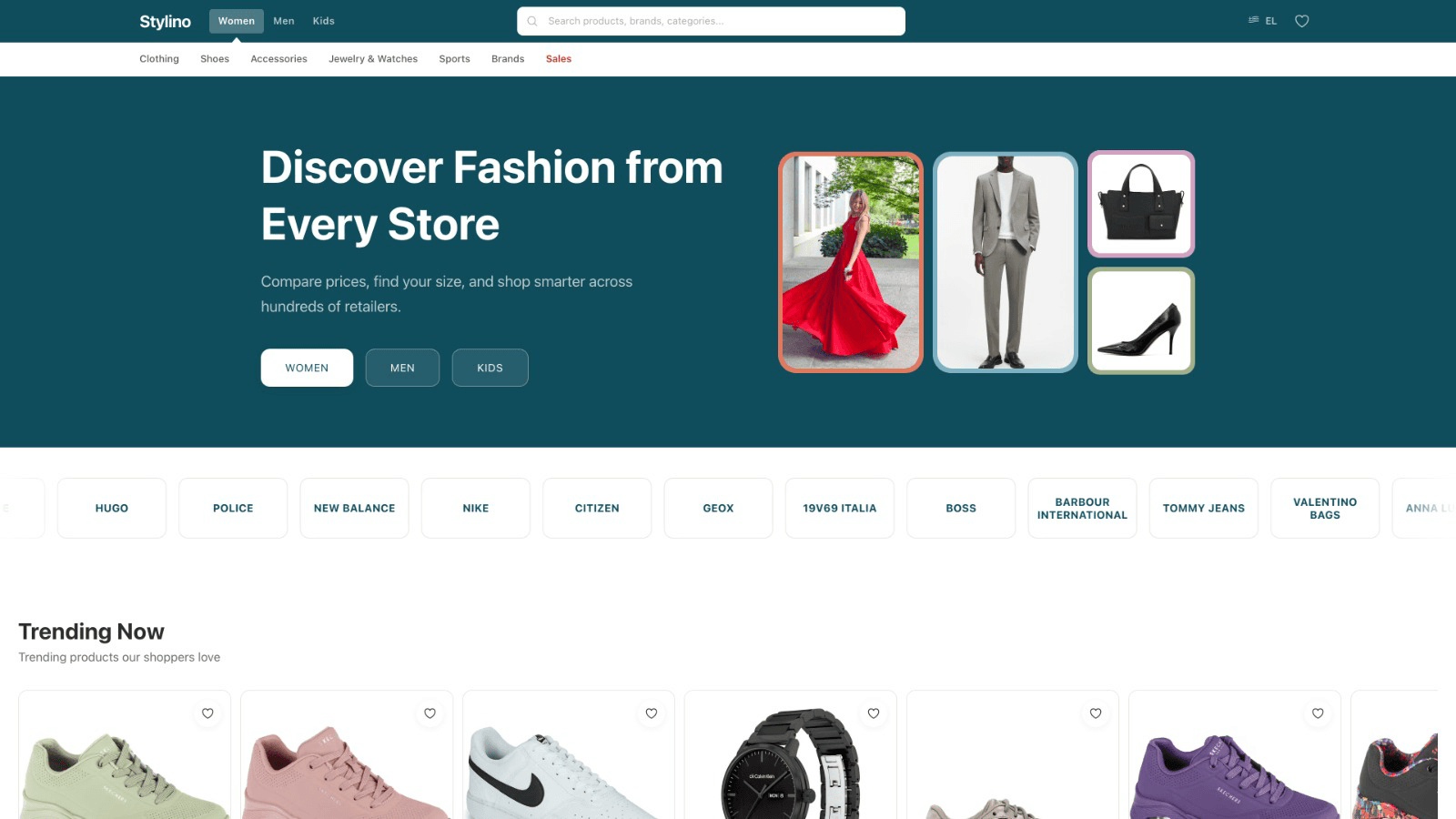
image 418

The Market Gap

While mature European markets have established comparison platforms — PriceRunner in Scandinavia, idealo in Germany, Kelkoo in France — Cyprus had no equivalent for fashion. The market is fragmented across dozens of online retailers, from large international chains to independent local e-commerce stores, each operating in isolation with no unified search or price comparison capability for consumers.

“The same product can have a 30% price difference across stores operating in Cyprus. That inefficiency is the opportunity. We built an automated pipeline that normalises product data from 65 different feed formats into a single searchable catalogue. Using advanced algorithms and artificial intelligence, we can accurately match and deduplicate products across different retailers,”

says Aris Ioannou, founder of Stylino.

How It Works

Stylino ingests product feeds from 65 retailers through a combination of network APIs and direct data partnerships. An automated processing pipeline normalises product attributes — titles, categories, sizes, colours, prices — across disparate feed formats, deduplicates entries, and indexes them into a searchable catalogue covering 3,350+ brands. The consumer-facing platform, built using state-of-the-art technologies and artificial intelligence, serves bilingual (English/Greek) results with sub-second response times.
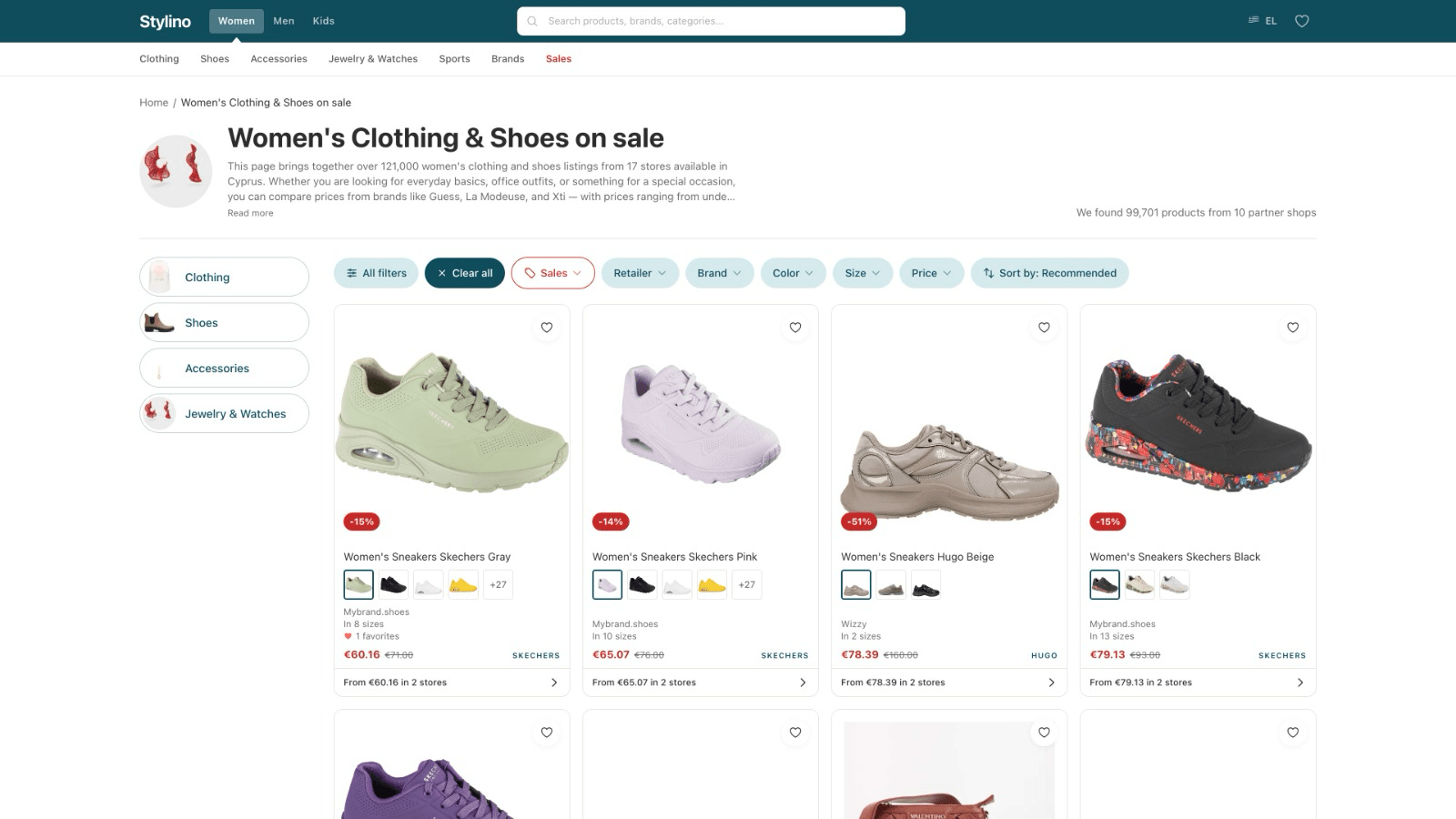
image 419

The platform covers categories including women’s, men’s and children’s clothing, footwear, bags and accessories, with dedicated sale tracking and brand-level browsing.

Traction and Roadmap

Since launch, Stylino has indexed over 385,000 products from 65 retailers and 3,350+ brands, with the catalogue growing weekly as new retailer integrations come online. The platform is already gaining traction among Cypriot consumers and establishing partnerships with major retailers across the region.

Near-term plans include price alert notifications, personalised recommendations based on browsing behaviour, and expansion of the retailer network. The underlying data infrastructure is designed to scale to additional verticals and geographies.

“Cyprus is a small market, but that’s what makes it a good proving ground. If you can build comprehensive coverage in a fragmented market with limited data standardisation, the same approach works anywhere”.

adds Aris.

European Banks Prepare For Growing Geopolitical And AI-Driven Cyber Risks

European banks are entering a more complex operating environment shaped by geopolitical tensions and evolving cybersecurity threats. François-Louis Michaud, newly appointed head of the European Banking Authority, stated that current shocks remain manageable due to strong capital and liquidity buffers. Looking ahead, however, risks linked to artificial intelligence and advanced cyberattacks are expected to intensify.

Geopolitical Stress Testing And Financial Oversight

Escalating global tensions have increased pressure on financial markets and regulatory frameworks. Recent warnings from the European Central Bank suggest that geopolitical risks may be underestimated, now ranking among the top concerns for policymakers.

Supervisory focus has shifted toward strengthening resilience through enhanced stress testing and tighter oversight. These measures are designed to ensure that banks remain stable even under more volatile geopolitical conditions.

Cybersecurity In The Age Of Artificial Intelligence

Advances in artificial intelligence are reshaping both opportunities and risks across the banking sector. New technologies have introduced more sophisticated threat vectors, raising concerns among regulators and financial institutions.

Development of advanced AI systems, including Anthropic’s Mythos model, has intensified discussions around cybersecurity preparedness. Authorities in the United States have already engaged with major banks to assess potential risks. Within Europe, these issues are increasingly central to board-level risk assessments, reflecting a shift toward more proactive defense strategies.

Assessing The Broader Financial Landscape

Attention is also turning to developments in the private credit market, where rapid expansion has raised questions about lending standards and long-term stability. Despite these concerns, Michaud noted that private credit does not currently represent a systemic risk to European banks. Focus remains on strengthening institutional capacity to respond to a broad spectrum of challenges, ranging from geopolitical disruption to digital vulnerabilities.

Outlook

Growing complexity in the global financial system is reshaping risk management priorities across the banking sector. Coordination between regulators and financial institutions will play a key role in maintaining stability, particularly as technological change accelerates. Future resilience will depend not only on strong capital positions but also on the ability to integrate emerging technologies while managing associated risks.

eCredo
Uol
Aretilaw firm
The Future Forbes Realty Global Properties

Become a Speaker

Become a Speaker

Become a Partner

Subscribe for our weekly newsletter
