


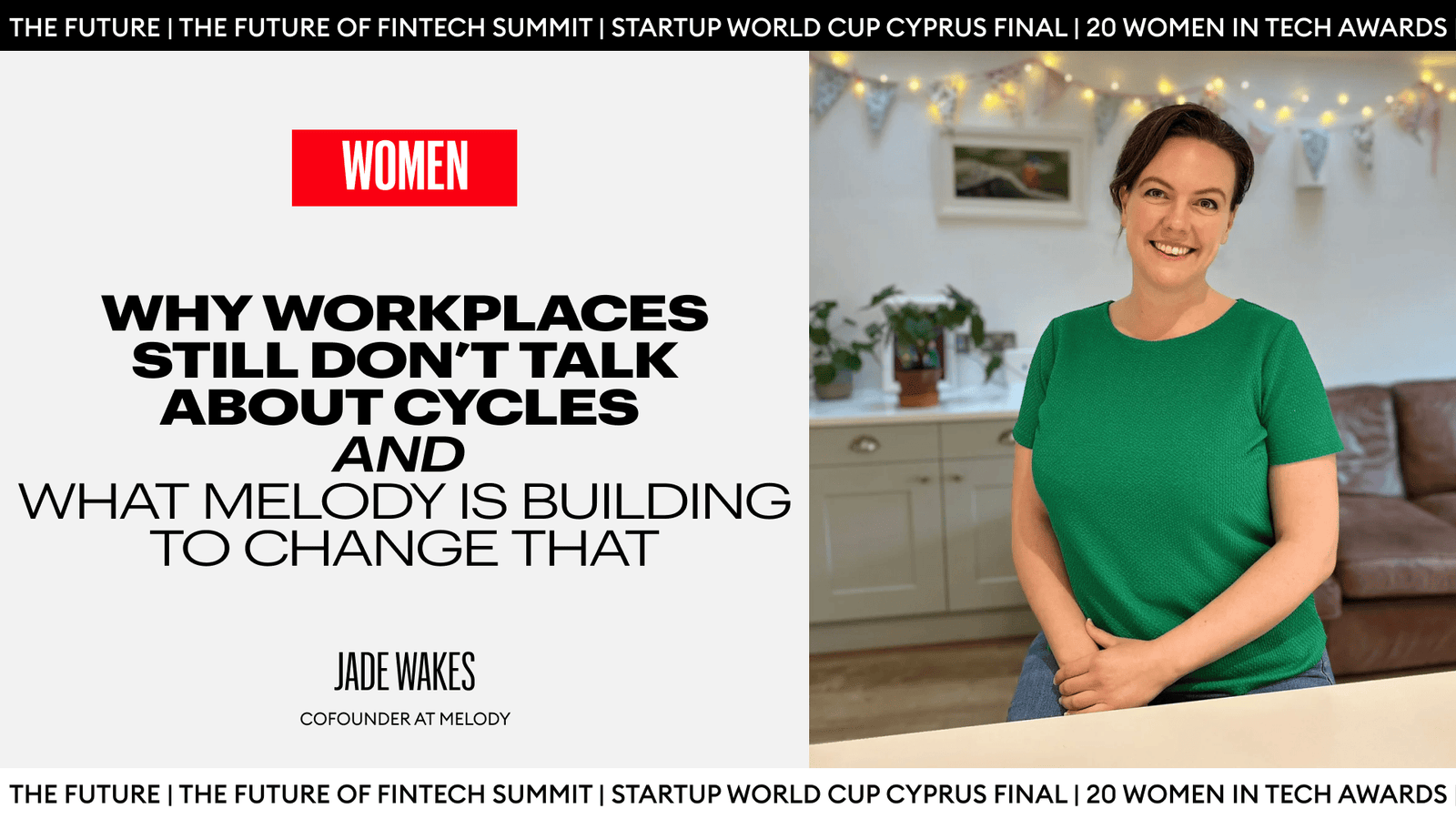
Jade Wakes was ten when she first got her period. The first conversation she had around what was happening with her body was not what those first few drops of blood meant, but how to best hide it. She, like many young women, was expected to grit her teeth through the fluctuations in mood, sleep, focus, and the cramping, rather than understand the experiences as part of a cycle. It was only years later, as she began reading about hormonal cycles, that the frustration she had felt with her body changed direction. It wasn’t her body that had failed her, she realised. It was the lack of education and language around it. “The problem wasn’t my body, it was that I had never been given the language or framework to understand it,” she says.
In England, schools are expected to cover puberty, including menstruation, and to do it before the onset. However, recent studies reveal how thin the education around cycles is. A 2026 analysis of 383,085 UK-based women found that 22.2% could not report their cycle length, rising to 33.4% among under-25s. Earlier, a UK parliamentary report argued that menstrual health problems are still routinely dismissed and that severe pain is too often normalised, calling for stronger training and accountability across the system.
Follow THE FUTURE on LinkedIn, Facebook, Instagram, X and Telegram
The lack of education is not a mere miss at trivia. When people don’t have the language to describe what they’re experiencing, symptoms are easier to dismiss, minimise, or normalise, and they do not reach out to necessary support. The Royal College of Obstetricians and Gynaecologists states that four in ten women experience PMS symptoms, and 5–8% experience severe PMS. A 2024 systematic review and meta-analysis estimates the point prevalence of premenstrual dysphoric disorder at 3.2% when diagnosis is confirmed, with higher rates reported in studies relying on provisional diagnosis. Many people are convinced that these patterns are a personal failure rather than biology, says Jade Wakes, because nobody has given them a usable way to interpret what is happening month to month.
When it comes to the workplace, the conversation is even scarcer, especially around employees experiencing perimenopause and menopause. A CIPD report found that 53% of respondents could recall a time they were unable to go into work because of menopause symptoms. The UK government’s menopause workplace literature review also puts the annual economic cost of menopause-related unemployment at £1.5 billion, alongside additional impacts linked to absenteeism and presenteeism.
There is a similar recurrence of gaps in cycle education and workplace support. Despite the European Commission’s Gender Equality Strategy 2026–2030, including commitments on menstrual and menopause poverty, WHO/Europe reports that, despite growing awareness, the availability of data on menstrual health conditions and barriers remains a challenge in the region. EU-OSHA has pointed to menstruation and menopause as topics that remain insufficiently recognised in occupational safety and health policy and practice. The European Parliament has also put menopause care on its agenda, explicitly framing stigma and misinformation as part of what policy needs to address, and yet action is still lacking.
Melody is built for the space between those lived experiences and the structures around them. Co-founder Jade Wakes describes it as a menstrual health journalling app that combines menstrual charting with smart journalling, with a mission to improve cycle awareness and cycle literacy by helping users recognise how hormonal shifts influence mood, energy, motivation, confidence, and focus.
In this interview for The Future Media, Melody co-founder Jade Wakes explains why she built the app in a crowded cycle-tracking market, how she translates hormone science into everyday language, and why she believes cycle literacy belongs in workplace leadership conversations as much as it does in personal health.
1. Let’s start with you. Can you tell us who you are and what you were doing before Melody?
I’m the co-founder of Melody, a menstrual health journalling app designed to help people understand, support, and work with their hormones.
Before Melody, I worked as a marketing consultant, helping small businesses, charities, and start-ups grow and communicate their ideas more effectively. Through that work, I collaborated with several app start-ups and also worked with an FND charity, experiences that taught me a great deal about digital products, health communities, and building solutions that genuinely support people.
Those experiences proved incredibly valuable when starting Melody.
2. You’ve written that you got your first period at ten and were basically told to “get on with it.” What did you live through in your teens and twenties that later made you realise the real problem wasn’t your body, but the lack of education and language around it?
I reached menarche, my first period, at ten. Like many girls, my introduction to menstruation was very practical but not very informative. I learned how to deal with it physically, but there was almost no conversation about what was actually happening biologically or how it might affect how I felt or functioned.
Through my teens and twenties, I experienced many of the patterns that a lot of women recognise: fluctuations in mood (hello “rage day”), energy, focus, and sleep, along with debilitating pain during menstruation and PMS symptoms after ovulation in the luteal phase.
The advice was always the same: take ibuprofen or paracetamol and just get on with it.
Comments like “moody” or “so hormonal” from peers, friends, and family only reinforced the stigma and shame around menstrual health. Those are vulnerable years, and it’s easy to internalise those messages and assume something is wrong with you.
For a long time, I thought pain and unpredictability were simply part of being a woman. It wasn’t until my thirties that I began reading about hormonal cycles and menstrual health more deeply.
That’s when everything clicked. The problem wasn’t my body − it was that I had never been given the language or framework to understand it. Once you learn how hormones influence the brain and body across the cycle, those patterns suddenly make sense. That moment of understanding is incredibly empowering, and it’s exactly what Melody aims to provide much earlier in life.
3. What is Melody and its main mission? Why the name “Melody”?
Melody is a menstrual journalling app that combines menstrual charting with smart journalling to help people understand, support, and work with their hormones.
Our mission is to improve menstrual cycle awareness and cycle literacy. At its core, that means helping people recognise how hormonal shifts influence mood, energy levels, motivation, confidence, and focus, and how they can work with those changes in both their personal and professional lives.
The name Melody reflects the idea of rhythm. The menstrual cycle isn’t random. It follows a repeating pattern. When you understand your own rhythm, you can anticipate changes rather than feeling caught off guard by them.
We loved the metaphor because it moves the conversation away from something purely clinical and toward something more human and intuitive.
4. You’re building in a market crowded with cycle apps. What were you seeing in existing tools that felt incomplete or even misleading?
Many existing cycle apps reduce the menstrual cycle to just a period or focus primarily on fertility tracking.
While those features can be useful, they treat the cycle as a calendar event rather than a biological process that affects how someone feels and functions throughout the entire month.
Another gap we saw was education. Most apps allow users to log symptoms but don’t help them understand what those patterns mean or what might be influencing them.
Melody takes a more holistic approach. Hormones are influenced by sleep, stress, nutrition, lifestyle, and life events, yet many tools ignore these broader factors.
We also wanted to move beyond simple tracking and towards empowerment. Melody helps users recognise patterns, anticipate changes in mood or energy, and learn how to work with their cycle in daily life rather than constantly pushing against it.
5. Why did you decide to become the people building this solution rather than waiting for a larger company or the healthcare system to address it?
Women have waited long enough for better solutions.
Having seen what already existed in the market, tools were often designed without a deep understanding of women’s lived experiences. It felt clear that there was space for something more thoughtful.
The healthcare system also tends to be reactive rather than preventative. It’s excellent at treating acute problems, but it doesn’t always help people understand patterns in their everyday health.
Menstrual health sits in a unique gap between healthcare, education, workplace culture and technology, which means progress can be slow.
When we started exploring the space, it became clear that millions of people were already tracking their cycles, but still didn’t feel they truly understood them. That suggested the issue wasn’t a lack of interest. It was a lack of better tools.
So, rather than waiting for someone else to build them, we decided to start.
6. Melody frames the cycle as “internal seasons.” Why did you choose this metaphor?
My own journey started after reading Period Power by Maisie Hill. That’s when I first encountered the concept of “internal seasons.”
What resonated with me was how the framework translated complex hormonal science into something intuitive. Most people understand the idea of four seasons, so it becomes a simple way to explain how hormone shifts affect mood, energy and cognition across the month.
The internal seasons are:
- Winter (menstruation) — rest and recovery
- Spring (mid follicular) — renewed energy and creativity
- Summer (ovulation) — confidence and sociability
- Autumn (luteal) — reflection and completion
The goal isn’t to oversimplify biology, but to give people a language that helps them recognise patterns in their own lives.
7. What does “personalised, proactive, preventative menstrual healthcare” look like inside the app?
For Melody, it means shifting from reactive logging to anticipatory insights.
Instead of only recording experiences and sensations after they occur, the app helps users recognise patterns that develop across cycles. For example, someone might notice that sleep disruption tends to precede headaches, or that energy dips consistently occur in a particular phase.
Melody surfaces those patterns so users can make small adjustments, whether that’s planning demanding work during higher-energy phases, prioritising rest, or noticing when something unusual might be worth discussing with a healthcare professional.
Importantly, Melody doesn’t provide diagnoses or medical advice. The goal is to help users become more informed observers of their own health.
8. What do you want employers and leaders to understand about cycle literacy?
The conversation around menstruation in the workplace is often framed around accommodation, but the deeper issue is biological variability.
Hormonal cycles can influence energy, concentration and communication styles across the month. Ignoring that reality doesn’t create equality. It simply means many people are expected to perform against their physiology.
Cycle-aware work doesn’t mean tracking employees’ cycles or introducing intrusive policies. It means designing workplaces with greater flexibility around how and when work happens.
At its core, cycle literacy is about recognising that human productivity isn’t perfectly linear.
9. Melody includes AI-powered prompts and predictive insights. How do you ensure AI improves trust rather than undermines it?
Language and transparency are critical. AI in Melody is used to identify patterns in user-reported data and translate them into personalised insights, reminders and suggestions. The value it brings is personalisation, which helps users see patterns that might otherwise take many months to recognise.
We are very careful about how those insights are presented. We avoid definitive claims and focus instead on possibilities and observations.
User data is never used to train external algorithms, and the AI features are optional. Users always remain in control of their data and how they interpret the insights.
10. How do you handle the line between empowerment and overconfidence?
I don’t believe there’s such a thing as “too much awareness” when it comes to understanding your own body.
The goal of Melody is to help women recognise patterns in their health and bring that understanding into conversations with healthcare professionals.
At the same time, we’re very clear that Melody is not a contraceptive, diagnostic tool or medical device. It’s designed to support awareness and education, not replace medical advice.
Empowerment comes from better information, but responsible health technology must also be transparent about its limits.
11. What has building Melody taught you about being a woman founder in tech and women’s health?
It’s incredibly hard. Building a company requires determination, resilience and a certain amount of optimism that borders on delusion. That’s probably true for most founders.
But in women’s health, there’s an additional challenge: the space has historically been underfunded and under-researched, despite affecting billions of people globally.
At the same time, the enthusiasm from users has been incredible. When people feel that a product genuinely understands their lived experience, the response can be very powerful.
That combination − huge need but limited funding − creates both the challenge and the opportunity.
12. Looking forward, what does success look like for Melody?
Success for Melody ultimately means changing how people understand their bodies.
If millions of users feel more informed about their hormonal rhythms, less confused by their experiences, and more able to support their health and wellbeing, that would already be meaningful progress.
Longer term, we hope Melody contributes to a broader cultural shift where menstrual health is understood not only as a reproductive issue but as a core part of overall wellbeing, productivity and quality of life.
And ideally, we would like to see workplaces evolve too. This begins with redesigning the way we think about work so people can work with their biological rhythms rather than constantly pushing against them.