

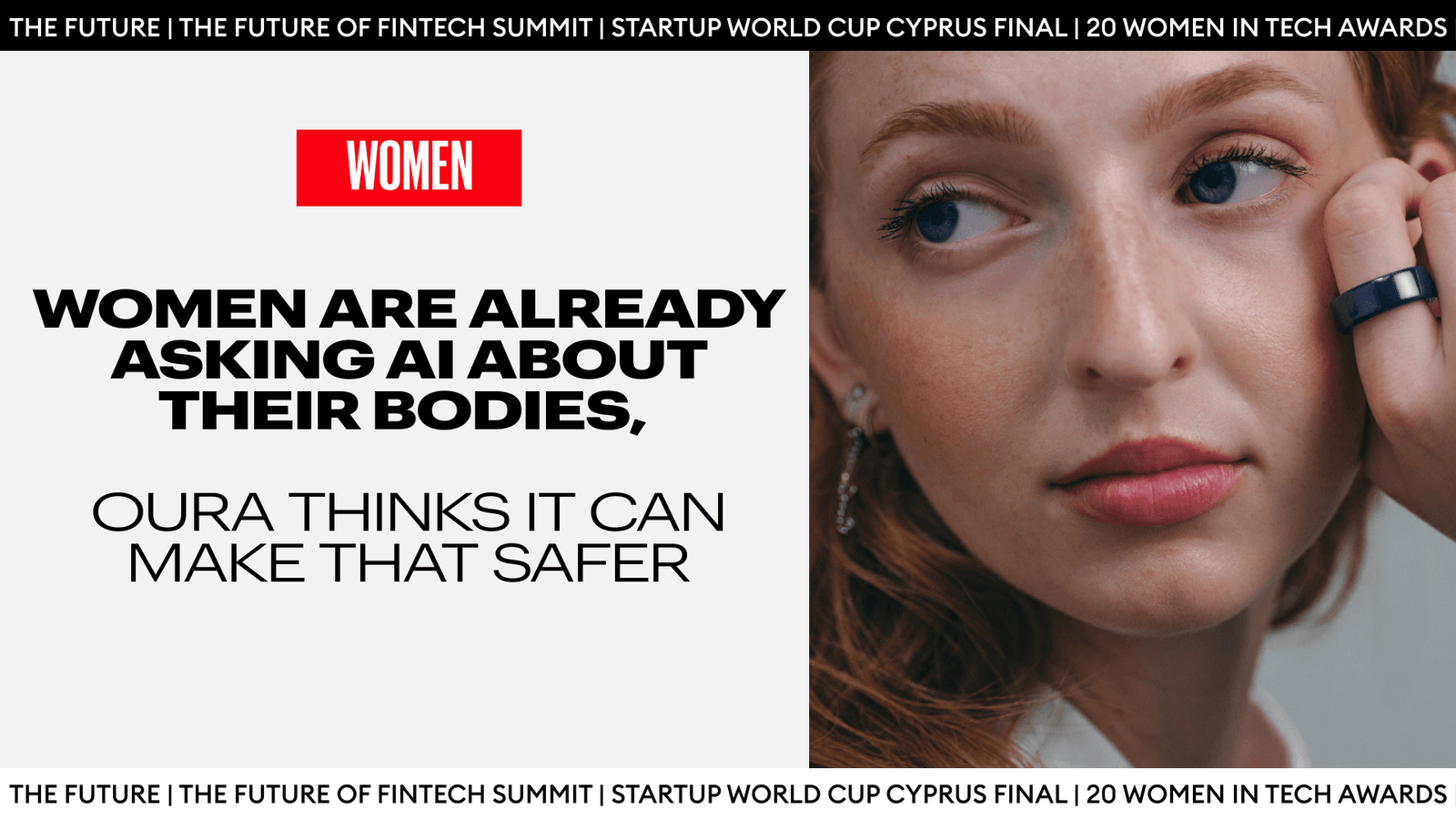
Oura is rolling out its first proprietary large language model built specifically for women’s health, now available for testing through Oura Labs. The company says the model will offer a more personalised version of Oura Advisor by combining clinical-quality medical knowledge with the data of the members themselves. The result will not be a diagnosis, however, but rather providing users with “educated and lifestyle” choices to take charge of their health in the capacity that is available to them.
Now is never a better time to launch the model. Even in well-resourced health systems, women have been turning to the internet for answers to their symptoms. Not so much as to replace their doctor, but as their only option to get through the long wait between appointments with something more useful than guesswork. Or worse, suffer silently.
Follow THE FUTURE on LinkedIn, Facebook, Instagram, X and Telegram
In England, DHSC’s Women’s Health – Let’s talk about it survey (2022) found that Google was a leading source of health information for respondents (71%).In France, the 2025 Baromètre Femmes de santé found 19% of women consult “Internet, AI or social media” first, with the number increasing to 29% among women aged 25–34.
In 2026, AI chatbots are increasingly being used for “What should I do?” health questions. The danger is that AI can be very reassuring but also very wrong. A 2024 analysis in The BMJ demonstrated how large language models could produce large volumes of health disinformation at scale. A preregistered randomised study in Nature Medicine found that when real users relied on LLM assistance, they identified the correct condition in fewer than 34.5% of cases and chose the correct course of action in fewer than 44.2%, no better than a control group using resources of their choice.
Women’s health is exactly where false reassurance does the most damage. The cost of confusion is time, and sometimes judgement. The wrong reassurance can delay care, or on the other side, can send people down the wrong path entirely, adding additional anxiety, worsening symptoms, or even additional health complications.
For instance, take endometriosis. The European Parliament’s research service cites an average diagnostic delay of more than seven years. Menopause and perimenopause are also significant blind spots in health care guidelines or diagnosis scenarios. Despite both being a natural life stage in most women’s lives, the World Health Organization says “both awareness and access to menopause-related information and services remain a significant challenge in most countries.”
The Cyprus Case
The available data for Cyprus seems to point to strong access indicators, which is not the case for many of the island’s European neighbours. The OECD/European Observatory’s Country Health Profile 2025 reports extremely low unmet needs for medical care in 2024, 0.1% overall (0.5% among those at risk of poverty) due to cost, distance, or waiting times. Under the national healthcare system, GESY, female beneficiaries aged 15+ can see a gynaecologist/obstetrician directly, without a referral and without paying the personal contribution fee.
The narrative may not be as clean-cut as it appears on paper, however. Visibility, especially in relation to women’s health, remains a challenge, despite the seemingly easy and low-barrier access to healthcare. Specialty-level waiting-time data isn’t published in a way that allows clean claims about how long it takes to see a specific specialist. What is documented is system-level sentiment. A five-year review of the General Health System reports that 32% of beneficiaries cite waiting times for doctor visits or surgery as the system’s most significant weakness. Though the study is not gender-specific nor proof of a women’s health bottleneck, it may help explain why many would seek out advice “between visits” when faced with symptoms that impact their day-to-day.
Fertility, and the various conditions and conversations related to the topic, add another layer of complexity. The European Atlas of Fertility Treatment Policies 2024 shows how uneven access remains across Europe, with eligibility rules, funding models, and availability varying widely by country. Some systems have waiting lists for publicly funded treatment. Others report no waiting time at all or operate under different funding structures entirely. Cyprus appears in the Atlas at 33.9%, not a verdict on the quality of care per se, but an indicator to suggest that even with specialist care available, there remain prevalent barriers for women to access the much-needed services.
Overall, the data does not support a claim that Cyprus is underserved because it is small. What the data does show is that even where direct access exists and unmet needs are low, people, especially women, still need support between visits that is carefully curated, evidence-led, and transparent about its limits. This is especially true when official specialty-level waiting metrics are not published, but delay perceptions remain a concern.
Oura’s Clinical Answer
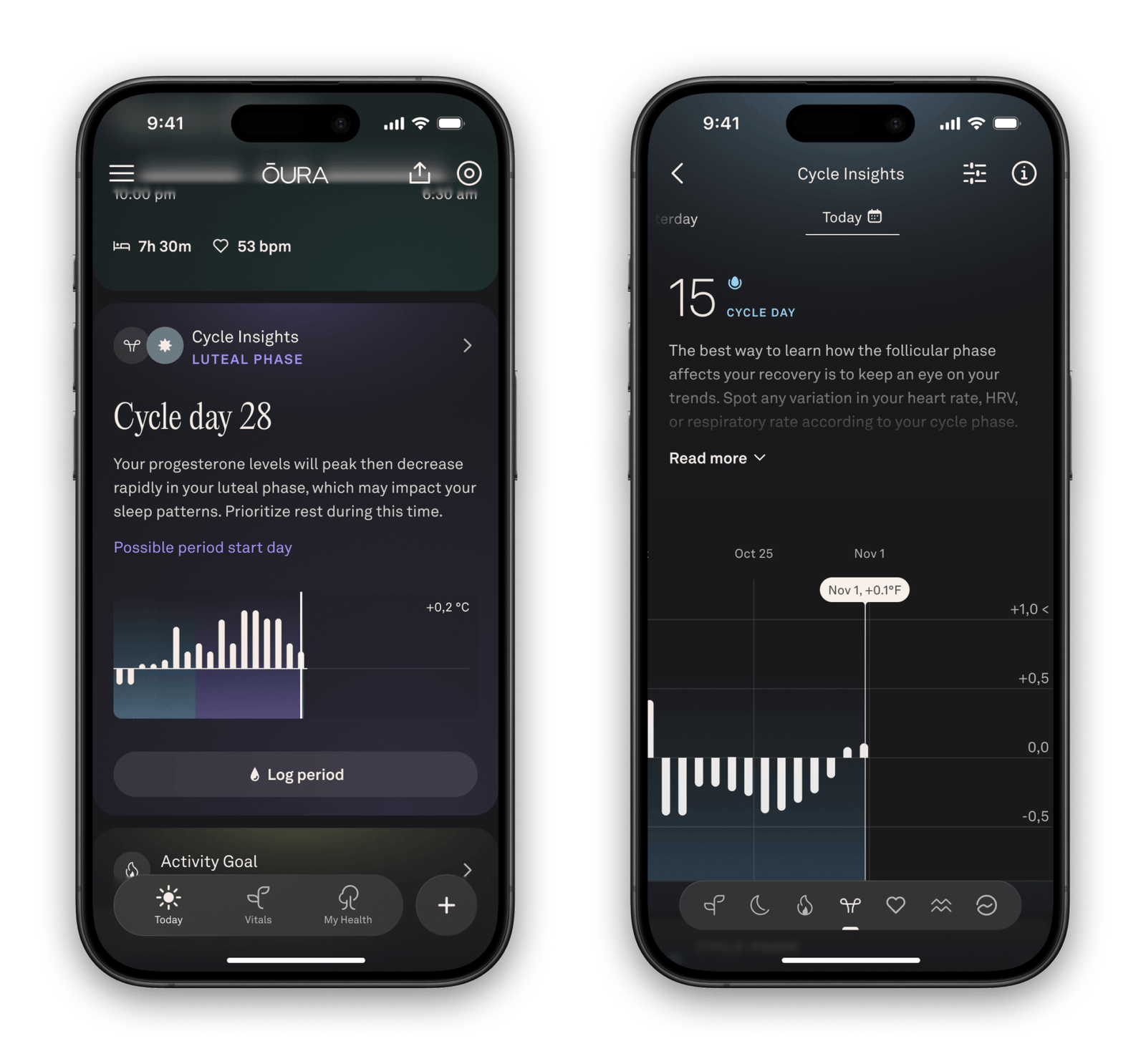
Oura announced earlier in March its first proprietary large language model designed specifically for women’s health, now available for testing through Oura Labs. The new model within the Oura Advisor experience draws from established medical standards, research, and knowledge sources reviewed by Oura’s in-house team of board-certified clinicians and women’s health experts. It also integrates biometric signals and long-term trends to deliver personalised, evidence-based guidance.
The model supports questions across the full reproductive health spectrum, from early menstrual cycles through menopause.
“Women’s health is too complex, and too often overlooked, to rely on one-size-fits-all systems,” said Ricky Bloomfield, MD, Oura’s chief medical officer. “By designing a model specifically for women and grounding it in trusted clinical science and real-world biometric data, we’re setting the standard for how responsible intelligence should be built and expanded across more areas of health.”
The model is currently available in English only, though expansion plans are under consideration where quality, safety, and data protection standards can be maintained.
Validation Built In
Tanvi Jayaraman, MD, Clinical Lead, Health AI at Oura, explained in an exclusive commentary for The Future Media that validation and safety were the starting point for this model, not afterthoughts.
“We began with a tightly curated medical foundation. Our in-house clinicians handpicked and vetted the knowledge sources that form the backbone of the model, using the same kinds of sources they would rely on to shape care,” Jayaraman said. “On top of that, we built a dedicated women’s health evaluation set and rubric covering questions across early cycles, trying to conceive, pregnancy, postpartum, perimenopause, and menopause. We compare the model’s answers to gold-standard expert responses, looking not just at factual accuracy but tone, clarity, and whether it avoids over-reassurance or minimisation.”
The model is deliberately scoped to provide educational and lifestyle-oriented guidance only. No diagnoses. No prescriptions. No emergency instructions. It is tuned to acknowledge uncertainty and steer users to a clinician when symptoms are concerning or the evidence is limited.
“Before launch, we tested the model with a focus on high-risk scenarios like fertility, pregnancy loss, and medication questions,” Jayaraman said. “Now that it’s in Oura Labs, we can continuously monitor member feedback and flagged responses. If we see problematic patterns, we can tighten routing, adjust prompts and guardrails, or pull back the feature while we fix the underlying issue. The goal is to make sure the model amplifies clinical judgment and body literacy, rather than trying to replace a doctor.”
The model is designed to meet women between appointments.
“It interprets patterns from their Oura data, connects them to evidence-based women’s health guidance curated and vetted by medical experts, and helps them translate ‘what I’m feeling’ into clearer questions and next steps for a clinician,” Jayaraman explained. “It’s not trying to diagnose or replace medical care. That kind of preparation can be especially helpful where access to specialist care is limited or slow.”
Known Gaps, Visible Limits
When asked about under-representation in the data and research behind the model, Jayaraman pointed to the life stages and conditions that women consistently say are underserved.
“The biggest gaps are still exactly where women tell us they feel most invisible: pivotal life stages and conditions that have been understudied for decades. Things like trying to conceive, pregnancy and postpartum, perimenopause and menopause, and complex conditions such as PCOS or endometriosis,” she said. “Those are also the moments when women are most likely to turn to AI or online communities out of frustration with the traditional system. We’re very conscious that any blind spot in the underlying science or data could translate into a blind spot in the model.”
Oura has designed the first version to surface and narrow those gaps over time, not hide them. The model acknowledges uncertainty and points women back to clinicians when the science is limited or their symptoms are concerning. Oura Labs allows the company to collect structured feedback, side-by-side voting, and surveys to see where answers fall short for specific cohorts. The company can then adjust prompts, guardrails, and training data accordingly.
What AI Cannot Do
From the beginning, Oura has drawn hard boundaries between what the model can do and what should always stay with a clinician. For instance, the model does not diagnose conditions, confirm pregnancy, prescribe or adjust medications, or give emergency or individualised treatment advice. Rather, it is there to explain patterns, outline what is typical, and help someone arrive at appointments with more specific, well-thought-out questions and context.
Triage behaviour for red-flag scenarios is also built in. If someone describes severe symptoms or combinations that could act as signals for urgent issues (very heavy bleeding, chest pain, worrisome neurological changes, or intense mood shifts with self-harm risk), the model is designed to take a step back, avoid “home fixes,” and recommend contacting a healthcare professional or emergency services.
“Whenever the science is weak, or a question crosses into diagnosis or treatment territory, the model is tuned to say what we know, where the limits are, and to point people back to a human clinician rather than pretending to have all the answers,”
Jayaraman said.
The Equity Problem
The company understands that access and costs are the two biggest challenges when it comes to equity in women’s health.
“We’re already doing that today through programs where Medicare Advantage members, employer populations, and people covered by fertility and women’s health benefits can receive Oura as part of their plan, not as a separate luxury purchase,” Jayaraman said. “As we expand women’s health features like this model, those same channels (payors, health systems, employers, and specialised partners) are exactly how we see tools like Oura reaching far more women over time, rather than becoming something only better-off women can benefit from.”
Privacy First, By Infrastructure
Oura says the model is hosted entirely on Oura-controlled infrastructure. Conversations are never sold, shared, or used to train public or third-party AI systems. Participation in Oura Labs is entirely optional, and members can choose not to join or to opt out at any time.
Women who opt in gain early access to the experimental model and the opportunity to help shape its development. By contributing feedback, members help transform individual experiences into collective intelligence, unlocking deeper insights across cycles, fertility, pregnancy, hormonal health, and more.
Answers That Can Be Trusted
“Women’s health questions are often deeply personal and high-stakes, and they deserve answers that can be trusted,” said Dr. Chris Curry, Oura’s clinical director of women’s health and board-certified OB/GYN. “With this model, we’re providing the kind of preparation and insight that I wish every one of my patients had before coming to their appointment.”
For women in Cyprus, where GESY provides direct gynecological access but system-level waiting time concerns persist, the model can be a potential “middle layer” between appointments. Not a replacement for specialist care, but a tool for preparation and pattern recognition between visits. Whether it succeeds will depend less on the sophistication of the AI and more on whether it can maintain clinical rigour while acknowledging the limits of what any algorithm can safely do in women’s health.