



Cyprus real-time bus tracking has a problem. And it’s not (just) the bus being late.
The tracking system sometimes shows vehicles “teleporting” into neighbouring countries (Lebanon, for instance), or disappearing altogether.
Follow THE FUTURE on LinkedIn, Facebook, Instagram, X and Telegram
On January 17, 2026, a one-day Transport Hackathon in Strovolos set out to fix that problem.
Hosted in the bustling Strovolos Municipality Town Hall, the event brought together 26 teams to build solutions for the local public transport and mobility problems, a first-of-its-kind for a Cyprus-based hackathon. The organisers were looking for the strongest ideas that could be taken forward for further development and potentially pilot implementation, depending on feasibility and partner support.
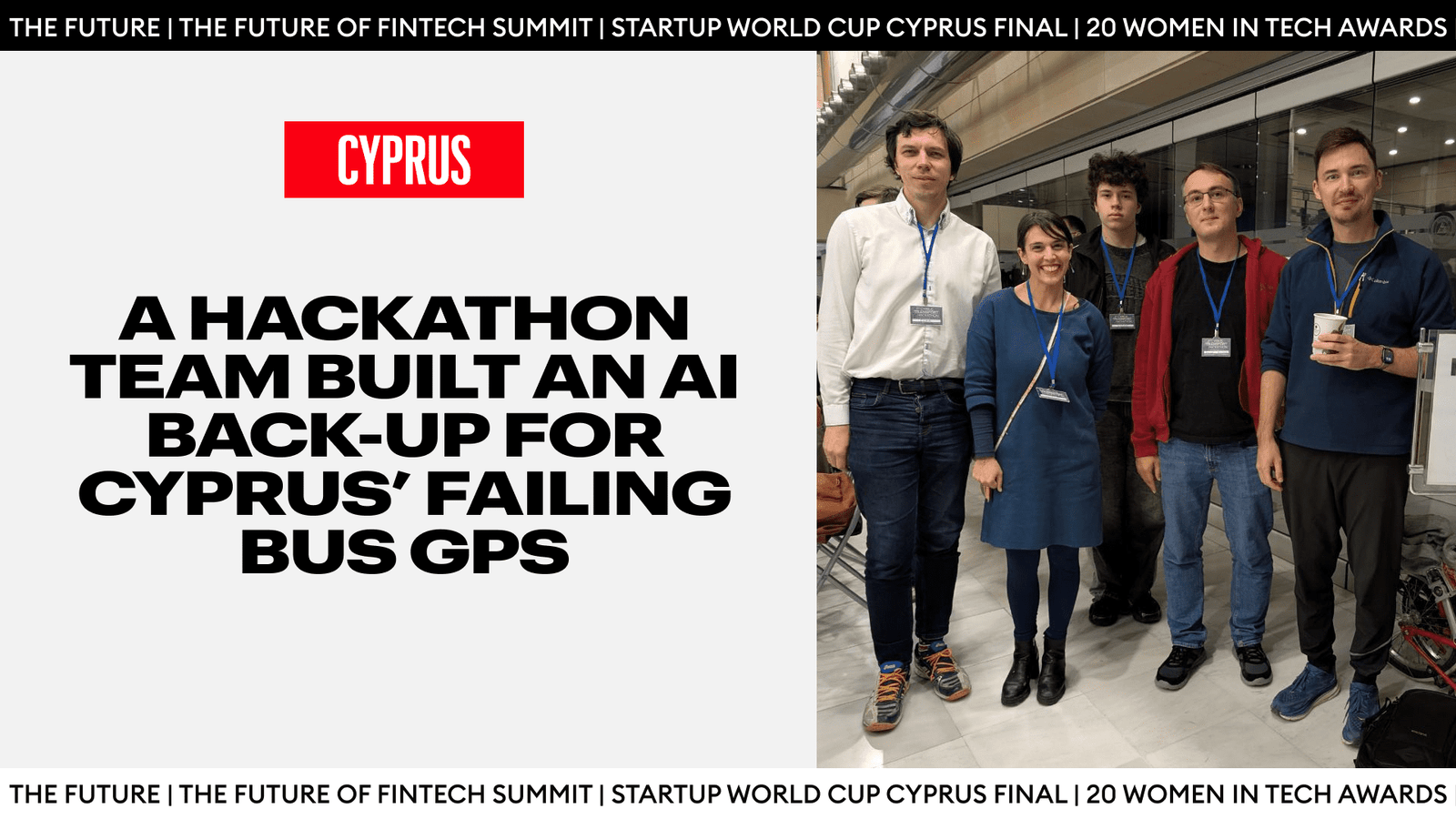
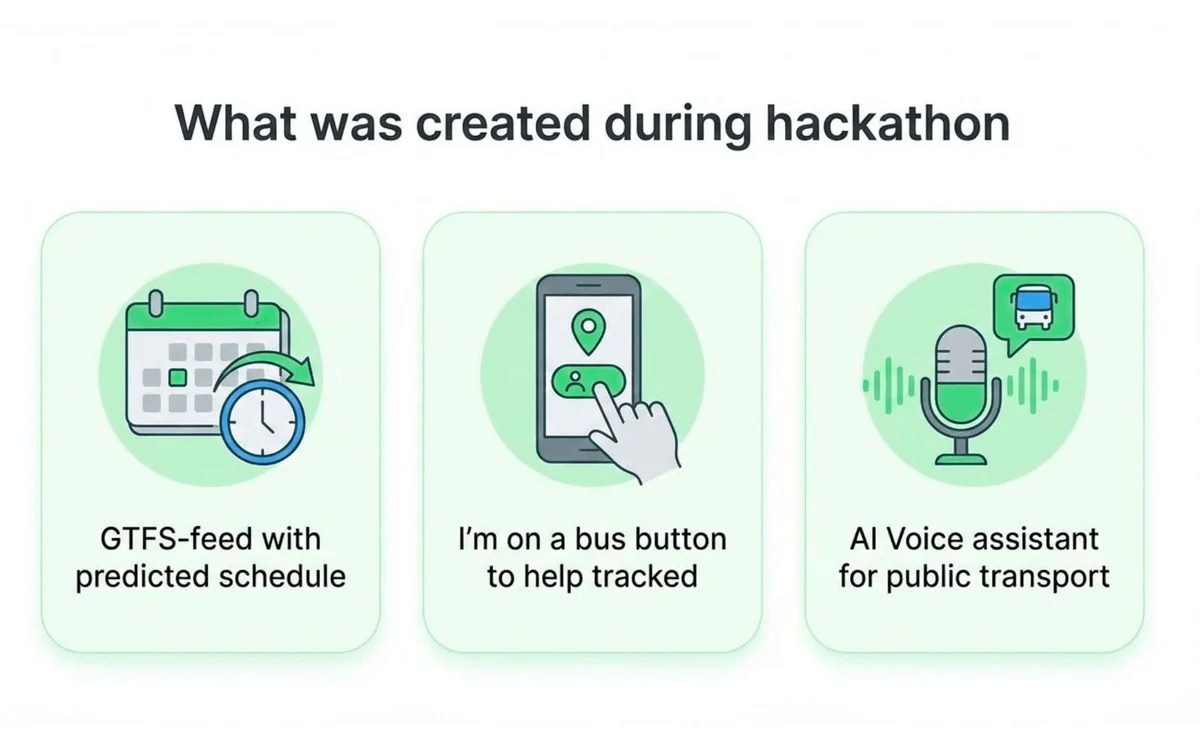
The first prize was granted to a team of local developers, including AI Business Transformation Expert Igor Akimov, Backend Engineer Roman Iakimenok, Software Engineer Sergei Vlasenko, Slava Akimov, and Architect Urban Planner Marina Kyriakou, for building an AI prediction system (machine learning model) that combines historical data patterns with crowdsourced passenger input. The promise: when GPS fails, their model fills the gap and takes over seamlessly.
What makes the project more than a one-off experiment is that the team already works with Cyprus’ transit data through platforms including cyprusbus.info, urbaneel.com, and gtfs.guru, experience that will play a critical role if the system is to plug into the standards and workflows agencies already use.
More than a Trophy
The icing on the cake (or grease on the wheels) was that this small team proved that locally built, data-first AI can solve complicated everyday problems, even ones that global tech giants have ignored.
“The real win isn’t the trophy. It’s discovering that this problem is even more critical for transit operators and government than we expected. We now have commitments for data access and integration into production systems.”
says Akimov.
For the team, the value is in bringing the problem taken seriously off the hackathon stage.
What’s Next?
The hackathon was developed with deployment in mind from the onset. It was co-organised by the Ministry of Transport, Communications and Works, the Municipality of Strovolos, the University of Cyprus (through SURF Lab and the KIOS Research and Innovation Center of Excellence), the Youth Board of Cyprus (ONEK), Hack{Cyprus}, and GDG Cyprus, and the organisers described the event as offering “visibility” and potential pilot implementation for selected ideas.
Often, it is the jump from prototype to real-world deployment in public transport where solutions fail, particularly when it comes to integration. It requires data access, operational buy-in, and a partner willing to put a new system into the messy reality of live routes.
Akimov says the team has already secured commitments around data access and a path toward integration into production systems. If that momentum holds, the win isn’t a trophy; it’s a rare outcome for a hackathon in Cyprus.
An AI fix with a very real route into the infrastructure people actually rely on.